Love in the Time of Ethnography

In David Picard’s Tourism, Magic and Modernity: Cultivating the Human Garden, the author uses analogy to shed light on life in La Réunion, a tropical tourist destination in the Indian Ocean. The volume, recently published in paperback, shows that, like plants in a garden, local life is pruned — using the shears of development and nature initiatives — to become a dazzling display for travelers to behold. Following, Picard once again embraces literary technique — on this occasion using a story of lovers — to enchant and delight the reader with the study of anthropology.


____________________________________________
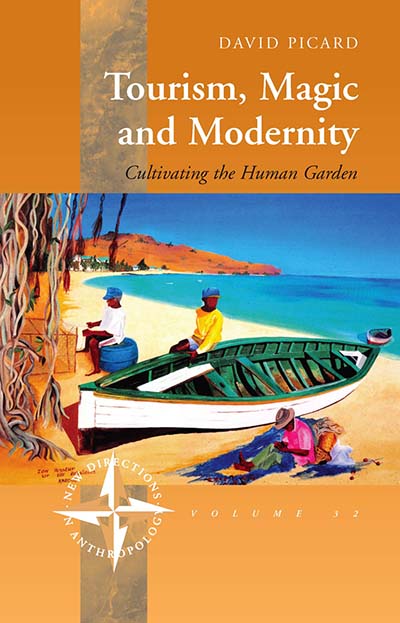


Eve-Marie and Adamsky are 20 when they first meet. They are students at the university of La Réunion, in the Western Indian Ocean. They party together, discover life and love, and progressively turn into adults. They fall in love. As with most couples, through their relationship, the two meet different worlds and family histories, and have to grapple with these differences. Their love gets entangled with the aspirations of their respective milieus.
 

Continue reading “Love in the Time of Ethnography”

A ‘Privileged’ Prisoner is Still a Prisoner

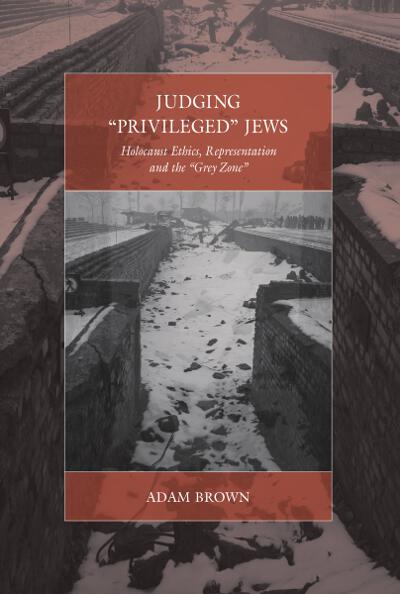
In German concentration camps, some Jewish prisoners were selected by their Nazi captors to hold more-advantaged positions within the population of the camp. This not only allowed them some protections, but also made them targets of disdain from other victims. Author Adam Brown sheds light on these “privileged” few in his volume Judging “Privileged” Jews: Holocaust Ethics, Representation, and the “Grey Zone,” published in July of last year. Following, Brown discusses about the origins of his interest in the Holocaust in general, and in this inspirational “Grey Zone,” in particular.


________________________________________________


The evolution of my book, Judging “Privileged” Jews: Holocaust Ethics, Representation and the “Grey Zone,” was – like most books no doubt – somewhat long and complex. To take the long-term view, the project began when I heard the moving personal stories spoken by survivor guides on a high school trip to the Jewish Holocaust Centre in 1999. As a non-Jewish teenager with next to no background knowledge of the event, the visit to the JHC inspired a lasting curiosity and sense of obligation to find out more.

Continue reading “A ‘Privileged’ Prisoner is Still a Prisoner”

Following the Diaspora: A Study of the Hadrami Community

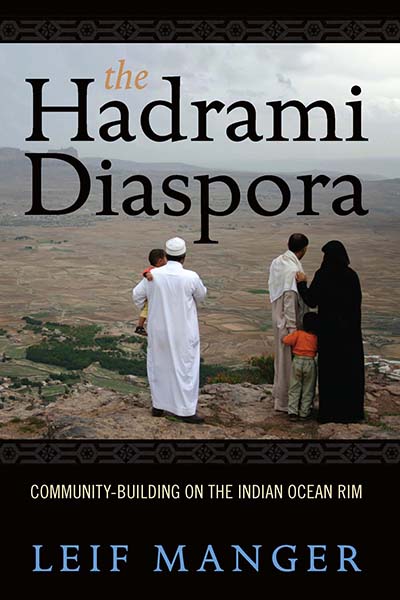
The Hadrami community’s migratory patterns throughout the Indian Ocean region have historically been propelled by trade and religious ambitions. Leif Manger’s complex ethnographic account of this community’s varied and widespread diaspora from South Yemen is explored in The Hadrami Diaspora: Community-Building on the Indian Ocean Rim, which was published this month in paperback. Following, Manger discusses his work on this volume and his time spent with this diverse community in widespread areas.


_______________________________________


Berghahn Books: What came first, your interest in Hadrami culture or your interest in migration? What drew you to these areas of study?


Leif Manger: Yemen has always been a dream for me, but I was particularly fascinated by the terraces in the mountains of the north of the country and the ecological effects of adaptations in such areas. This was due to my research interests in my early career, on intensification of agriculture, agro-pastoral interaction and development.

Continue reading “Following the Diaspora: A Study of the Hadrami Community”

Hot Off the Presses – New Journal Releases for January

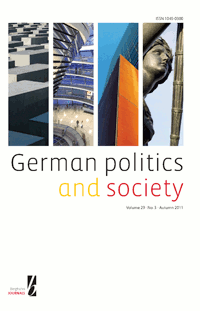
German Politics & Society
Volume 31, Issue 4
This special issue is titled “German-Polish Border Regions in Contemporary Culture and Politics: Between Regionalism and Transnationalism.”

Contributions to the History of Concepts
Volume 8, Issue 2
This issue features articles covering a variety of social, political, and cultural topics.

Social Analysis
Volume 57, Issue 3
This special issue is titled “Cutting and Connecting: ‘Afrinesian’ Perspectives on Networks, Relationality, and Exchange.”

Regions & Cohesion
Volume 3, Issue 3
This special issue is titled “Regions Without Borders? Regional Governance, Migration, and  Social Protection in Africa and Europe.”

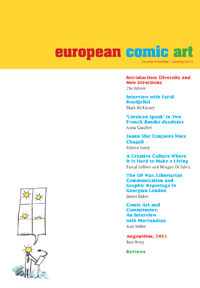
European Comic Art
Volume 6, Issue 2
In this issue, the authors devote their attention to several aspects of the dialogue between comics and other arts.

Environment and Society: Advances in Research
Volume 4, Issue 1
This issue explores human-animal relations and what it means to be ‘human’ as well as what it means to be ‘animal.’

Italian Politics
Volume 28, Issue 1
This issue features a chronological list of important Italian political events as well as a variety of articles discussing many aspects of Italian politics.

Journal of Romance Studies
Volume 13, Issue 3
This special issue is titled “Revisiting Postmemory: The Intergenerational Transmission of Trauma in Post-Dictatorship Latin American Culture.”

Sibirica
Volume 12, Issue 3
This issue touches on a range of topics related to Siberian Studies.

Critical Survey
Volume 25, Issue 2
This special issue is titled “Eco-Dystopias: Nature and Dystopian Imagination.”

Sartre Studies International
Volume 19, Issue 2
This issue inaugurates a new phase of SSI: for the first time, we are publishing articles in French as well as English.

A Class Issue: Language and Education in India

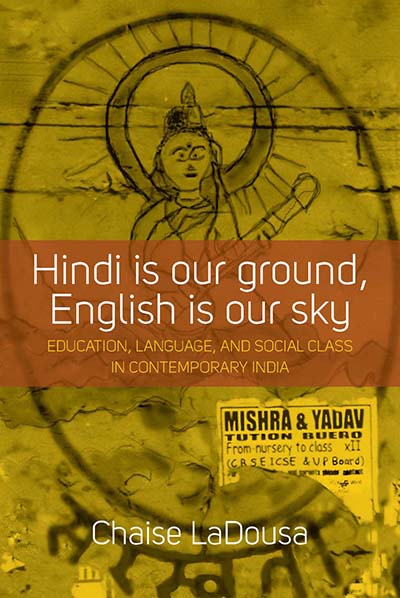
In the past three decades within India, a knowledge of the English language has become more important for economic advantage. All the while, Hindi is essential to those who wish to pursue class mobility. These “mediums” form a divide within the country’s educational system, which come to the forefront in Chaise LaDousa’s Hindi is our Ground, English is our Sky: Education, Language, and Social Class in Contemporary India, published this month. Following are two excerpts from the book, the first from the Foreword by Krishna Kumar, and the second from the Preface.

__________________________________________________


[Chaise LaDousa] has studied India’s vertical language divide in the North Indian city of Varanasi. The study takes us well beyond the shibboleths proffered about India’s linguistic plurality. The key word that enables LaDousa to enter the separate yet interwoven milieus of Varanasi is “medium.” The term is so omnipresent in the Indian urban environment that no one marvels at the versatile service it renders to India’s society and state. It resides securely in the phrase “medium of instruction” that is used across India as a public code to identify two types of schools and the opportunity markets to which they promise access.

Continue reading “A Class Issue: Language and Education in India”

Unfree, but not Exploited in Eurasia

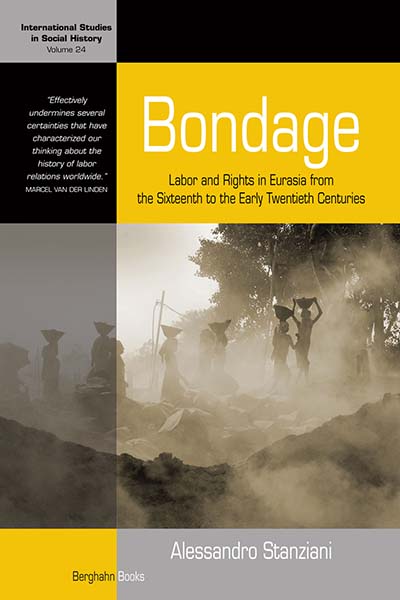
Is “unfree labor” good for business? Is it good for the unfree? Author Alessandro Stanziani aims to answer questions of labor, rights and freedoms in a comparison of Russian labor and business practices with those in Asia, Europe, and the Indian subcontinent. He covers this topic extensively in his new book, Bondage: Labor and Rights in Eurasia from the Sixteenth to the Early Twentieth Centuries, to be published this month. Below, in an excerpt from the volume, Stanziani gives an glimpse into nearly four centuries of Eurasian labor.

_____________________________________________


This book is about the evolution of labor and labor institutions in Russia as compared with Europe, Central Asia, and the Indian Ocean region, between the sixteenth and early twentieth centuries. It questions common ideas about the origin of labor institutions and market economies—their evolution and transformation in the early-modern and modern world.

Continue reading “Unfree, but not Exploited in Eurasia”

A Note on the Influence of ‘Rhetoric and Culture’

 Astonishment and Evocation: The Spell of Culture in Art and Anthropology, edited by Ivo Strecker and Markus Verne, was published earlier this year as the newest volume within the Studies of Rhetoric and Culture series. The volume and series have gained attention within the academic community, one such supporter being Michał Mokrzan, a future collaborator within the series and a scholar of rhetoric. In response to the newest volume, Mokrzan writes an entry of his own interactions with the series, series editors, and series volumes.

StreckerAstonishment
___________________________________________


Due to the fact that the Rhetoric Culture Project develops at a rapid pace – Astonishment + Evocation is the fifth volume of the Berghahn Books series Studies in Rhetoric and Culture – one can risk the thesis that we are now witnessing a crystallization of a new theoretical and methodological trend in anthropology, which can be described as a ‘rhetorical turn in anthropology’.


Continue reading “A Note on the Influence of ‘Rhetoric and Culture’”

Souvenir of the Right: Reexamining Twentieth-Century French Politics

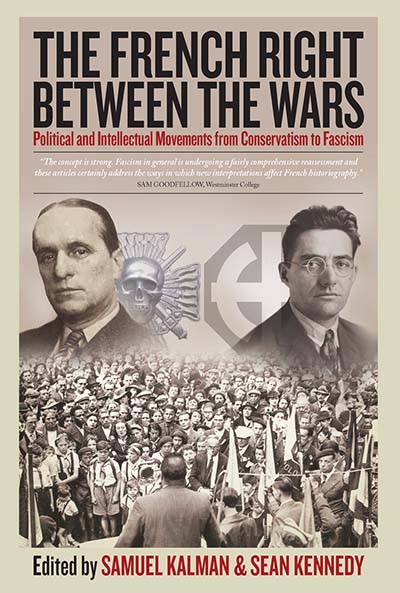
The French Right Between the Wars: Political and Intellectual Movements from Conservatism to Fascism, to be published this month, re-opens the history books on  France between World Wars I and II. In this collection of essays, scholars take a look at the polarized political scene, especially the right, within the country. Below, in an interview with editors Samuel Kalman and Sean Kennedy, the scholars speak to the challenges of compiling the collection as well as the potential controversy of writing on such a politically charged topic.


__________________________________________

Berghahn Books: What aspect of compiling an edited collection did you find most challenging?  Most rewarding?


Sean Kennedy: When we began this project I was anxious that coordinating thirteen different contributions – in terms of deadlines and ensuring consistency in format – would be a major challenge. I should not have worried so much. Our contributors did a fine job of sticking to the production schedule and carrying out editorial work.

Continue reading “Souvenir of the Right: Reexamining Twentieth-Century French Politics”

Hot Off the Presses – New Journal Releases for December

Focaal
Volume 67, Winter 2013
This issue features a theme section titled Divine kinship and politics edited by Alice Forbess and Lucia Michelutti.

French Politics, Culture & Society
Volume 31, Issue 3
This special issue is titled Algerian Legacies in Metropolitan France. It features articles that explore the topic of North-African migrants in France.

Journal of Educational Media, Memory, and Society
Volume 5, Issue 2
This issue features a special section devoted to children’s films.

Transfers
Volume 3, Issue 3
This “Asia Issue” is the first of what we hope will be a long sequence dedicated to non-Western mobility topics. We have also included a special section on rickshaws.

How the ‘Legacies of Two World Wars’ Compare to Current Conflict

In an excerpt from the Introduction, the editors explain the point of origin for The Legacies of Two World Wars: European Societies in the Twentieth Century. In the volume, published last month in paperback, contributors follow the European zeitgeist as the continent was plunged first into one war, then a second. Editors Lothar Kettenacker and Torsten Riotte pit the public feeling surrounding these World Wars with that of the U.S. people when the government invaded Iraq in 2003.


_______________________________________


The aim of this book is to trace the moods and attitudes of the people of four Western countries before, during and after the First and Second World Wars. The contributions examine public opinion in Great Britain, France, Germany and Italy during the crucial moments of the two major conflicts of the twentieth century (in their differences and similarities). The inspiration to look again at the attitudes of ordinary Europeans to the two wars came from the controversy surrounding the US invasion of Iraq in 2003.

Continue reading “How the ‘Legacies of Two World Wars’ Compare to Current Conflict”