Author Becomes Subject: Droysen as Topic of Historical Volume

Scholarship has come full circle for Johann Gustav Droysen — a historian lauded for his much-cited volume on Alexander the Great — as the author-historian is now the subject of study. Author Arthur Alfaix Assis delves into the historical theories of Droysen in What is History For? Johann Gustav Droysen and the Functions of Historiography, to be published later this month. Assis precedes the publication by sharing the root of his interest in the scholar, why he believes Droysen is important, and what Assis might have done if he did not follow the path of academia.


______________________________________________


Berghahn Books: What drew you to the study of Johann Gustav Droysen?


Arthur Alfaix Assis: I like to think that part of it has to do with the great impression left on me by the very first text I read as an undergraduate: Max Weber’s ‘Science as a Vocation’. I was a freshman at a provincial university in central Brazil, and was very eager to get in touch with serious historical and philosophical literature. But after a single week of lectures came a three-month-long strike, and the only reading assignment left was Weber’s text.

Continue reading “Author Becomes Subject: Droysen as Topic of Historical Volume”

‘Screening Nature’ Turns the Cinematic Gaze to Mother Earth

Flora, fauna and film are the foci of Screening Nature: Cinema Beyond the Human, published in November 2013. The collection, edited by Anat Pick and Guinevere Narraway, hopes to open the film-viewers’ gaze to the often-overlooked nonhuman living subjects in film. The following is an interview with Pick and Narraway on the mission of Screening Nature, and on the environmental and ecocritical challenges to the discipline of Film Studies.


________________________________


Berghahn Books: What is the idea behind the collection and how did it come about?


Anat Pick and Guinevere Narraway: Screening Nature is one installment in a bigger project to push Film Studies to engage more closely with the natural world and with issues of ecology. It is fair to say that there is currently an “ecological turn” in Film Studies, and the book is part of what we hope will be a significant paradigm shift in the way we think and talk about film. But despite the growing interest in the ecological dimensions of cinema, both in terms of cinema’s representation of nonhuman nature and animals, and in terms of cinema’s ecological impact as a consumer and emitter of fossil fuels, Film Studies departments remain staunchly humanist and anthropocentric, with most courses theorizing and making films with little regard—in the literal sense of the word—to more-than-human concerns.

Continue reading “‘Screening Nature’ Turns the Cinematic Gaze to Mother Earth”

Policy-Tracing Up, Down, Sideways

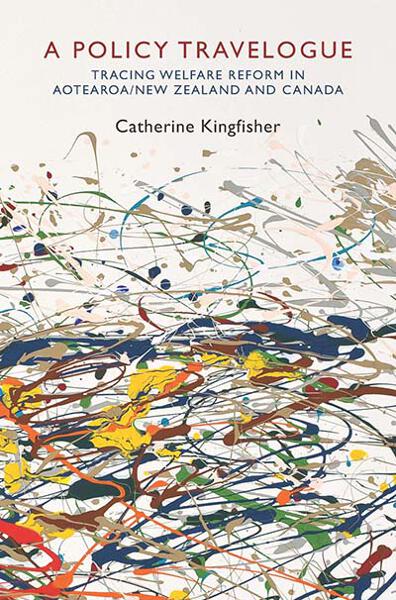
In an excerpt from the Introduction of A Policy Travelogue: Tracing Welfare Reform in Aotearoa/New Zealand and Canada, published in September, Catherine Kingfisher explains just how she came to be interested in the subject of welfare policy, and its existence as a living, working idea.


____________________________________

My interest in tracing policy began in the summer of 2000, when I was writing grant applications to work with welfare mothers in southern Alberta, where I had recently moved from Aotearoa/New Zealand. I discovered that in the early 1990s the Alberta provincial government of premier Ralph Klein, in the process of reforming its governing structures and welfare systems, had been heavily influenced by Roger Douglas, the former Finance Minister of New Zealand.

Continue reading “Policy-Tracing Up, Down, Sideways”

Forest Protection Fail: How ‘Things Fall Apart’

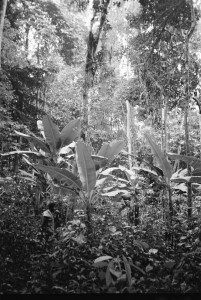
Pauline von Hellermann seeks the root causes of African deforestation in Things Fall Apart? The Political Ecology of Forest Governance in Southern Nigeria, published in September. The volume stems from Hellermann’s ethnographic and historic research within the tropical forest of Nigeria’s Edo State as she digs to uncover the failings of forest protection. The following is an excerpt from the Introduction.


____________________________________________

To international foresters and conservationists, there are clear links between recent management failure and deforestation in Nigeria. The Conservation Atlas of Tropical Forests, for example, states that Nigeria’s ‘natural forests were carefully managed in the early part of the century, [but] they have since been severely over-exploited’ (Lowe, et al. 1992: 230; see also Oates 1999). Nigerians themselves routinely blame corruption and greed amongst foresters and politicians for forest loss and the depletion of timber. Such accounts fit smoothly into the broader perception of Nigerian governments as corrupt and inefficient; into the constant refrain that ‘things fall apart’ in Nigeria.

Continue reading “Forest Protection Fail: How ‘Things Fall Apart’”

Jünger in Paris: A Writer’s Wartime Account in the City of Lights

Allan Mitchell takes a look at Ernst Jünger, an under-appreciated twentieth century writer, but an important social figure. The Devil’s Captain: Ernst Jünger in Nazi Paris, 1941-1944 follows the writer at wartime, where he spent his stint in Paris as a military officer whose chief duty was to “mingle with French intellectuals.” Below is an excerpt from the volume, which was originally published in May 2011 and is soon to be released in ebook format.


________________________________________

Very few, if any, critics of German literature would rank Ernst Jünger among the greatest writers of the twentieth century. He simply does not compare, as a novelist, with giants like Thomas Mann, Franz Kafka, or Robert Musil. His signature work, Auf den Marmorklippen, has been often justly praised for its chiseled language and allegorical imagination. But for later generations raised on soaring flights of science fiction, Jünger’s 1939 work must seem brief, rather stilted, and now somewhat dated. In any event, it pales beside Buddenbrooks and Der Zauberberg, Das Urteil and Das Schloss, or Der Mann ohne Eigenschaften.

Continue reading “Jünger in Paris: A Writer’s Wartime Account in the City of Lights”

How Social Movements in Reality (Hopefully) Revitalize Theory

Protest beyond Boders: Contentious Politics in Europe since 1945, recently published in paperback, examines protest culture since the second World War from a variety of angles — historical, political, social, and cultural. But much has changed in worldwide politics since the volume’s original March 2011 publication. Below, the editors reflect on how the reality of the political protest sphere has renewed interest in studying the underlying theories of social movements.


___________________________________________________


In recent years, we have been all caught by surprise. A sudden outbreak of confrontations and protests erupted in unrelated places, such as Bulgaria, Spain, Greece, Hungary and beyond Europe, in Tunisia, Egypt, Thailand, United States and Brazil. Most often lacking clarity in terms of organization, membership, protest demands and goals, this rise of contention erupting across the globe is far from completed. Something new is unfolding, which could not have been predicted and cannot easily fit in our categories of thinking and classifying the world.

Continue reading “How Social Movements in Reality (Hopefully) Revitalize Theory”

Past, Present, Future Changes: An Anthropologist Looks at Africa

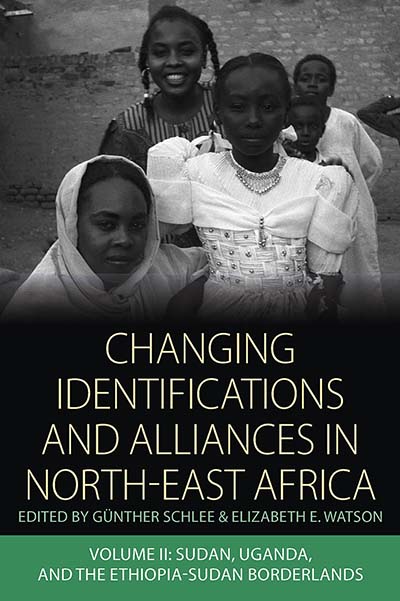
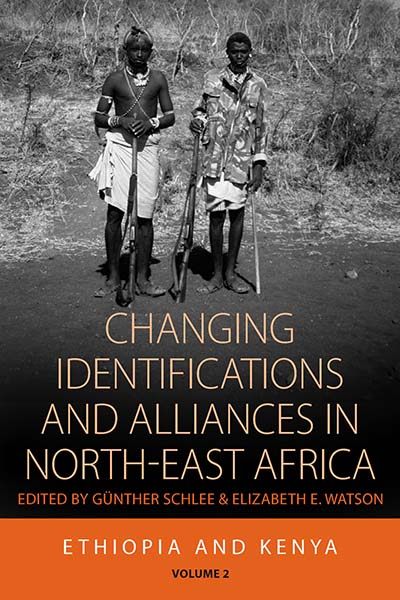
Günther Schlee traces old steps and tracks steps forward since the original publication of Changing Identifications and Alliances in North-East Africa, Volume 1 and Volume 2. The paperback versions were published in October. Following, Schlee rounds out the two-part interview with a reflection on the book’s release, and where he is proceeding within the field.


The first half of this interview is available here.

_____________________________________________________


Berghahn Books: To what extent did the initial release of the book contribute to debates among current and future academics within the field?


Günther Schlee: People use these two books as an introduction to the region. But it has also been taken up by people who have little to do with Africa. They have taken an interest in the theoretical issues we make.


Continue reading “Past, Present, Future Changes: An Anthropologist Looks at Africa”

Africa, from an Anthropologist’s-Eye View

Changing Identifications and Alliances in North-East Africa, originally published in 2009, was published in paperback in October. The two-volume collection, made up of Volume I: Ethiopia and Kenya and Volume II: Sudan, Uganda, and the Ethiopia-Sudan Borderlands, gives an overall view of the North-East of the continent and addresses the importance of the group dynamic, as it plays into politics, cultural identity, and war and peace. Co-editor Günther Schlee discusses the beginning of the collection, with its roots planted where his studies of Africa began — and how they are growing.


___________________________________________

Berghahn Books: What drew you to the study of Africa, specifically northeast Africa?


Günther Schlee: Like many students in the 1970s, I was fascinated by South America. When I studied anthropology and linguistics at Hamburg, I took Spanish up to the highest level. I read a lot about South America and followed the volatile politics of that continent very closely. When it was time to think about a PhD project, I was determined to do field research in South America. In order to identify a location and to enable myself to write a decent research proposal, I decided to go there on an exploratory visit on my own expense.

Continue reading “Africa, from an Anthropologist’s-Eye View”

The Life of Policy in Canada and New Zealand

Policies have their own lives, and these lives are not “a-cultural, rational, and straightforwardly technical,” puts forth Catherine Kingfisher in her volume, A Policy Travelogue: Tracing Welfare Reform in Aotearoa/New Zealand and Canada, published in September. Following is an excerpt from the monograph’s Introduction in which the author sets the scene for her discussion of how policy lives within welfare reform in two distinct countries.


______________________________________


I use the frames of translation and assemblage to gain insight into a range of policy-related phenomena in particular spaces and contexts of occurrence. First, I explore the transformation of objects as they are translated from one philosophical and political framework—Keynesianism—into another—neoliberalism. Brodie (2002:100) points out in this regard that the privatization characteristic of neoliberalism: “[i]nvolves much more than simply removing things from one sector and placing them in another….the thing moved is itself transformed into something quite different. Objects become differently understood and regulated.”

Continue reading “The Life of Policy in Canada and New Zealand”

The Very Human Experiences of the Other

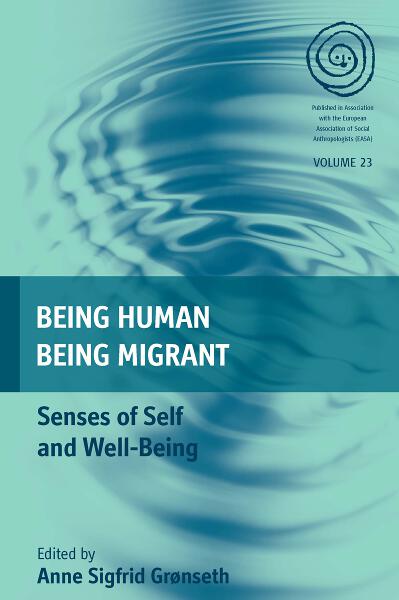
If the search for self was a game, migrants would be more than a few chips down. Having to overcome physical and cultural displacement in addition to psychological uncertainty makes the search, for those who are transient, a complicated quest. Below, in an excerpt from the Introduction of Being Human, Being Migrant: Senses of Self and Well-Being, published in October, editor Anne Sigfrid Grønseth addresses the difficulties of migration and asserts that these hardships are of larger breadth than simply issues of movement.


____________________________________


This volume is as much about being human as it is about being a migrant. It takes as its starting point from the proposition that migrant experiences tell us about the human condition, on the basis that senses of well-being, self, other and humanity are challenged when people move between shifting social and cultural contexts. Our contemporary world is characterised by an increasing degree of movement that highlights how societies and cultural units are never separate but overlapping, rapid changing and engaged in repeated processes of fission and fusion.

Continue reading “The Very Human Experiences of the Other”