Fertility, Reproduction and Sexuality

Today (March 18th) is Goddess of Fertility Day, a time when Aphrodite and other gods and goddesses of fertility are honored by pagans throughout the world in celebration of life and fertility.

———————————————————————————————————————————–

Understanding the complex and multifaceted issue of human reproduction has been, and remains, of great interest both to academics and practitioners. Fertility, Reproduction and Sexuality series includes studies by specialists in the field of social, cultural, medical, and biological anthropology, medical demography, psychology, and development studies. Current debates and issues of global relevance on the changing dynamics of fertility, human reproduction and sexuality are addressed. Below is a selection of forthcoming & newly published titles within the series:


Volume 30 Forthcoming!

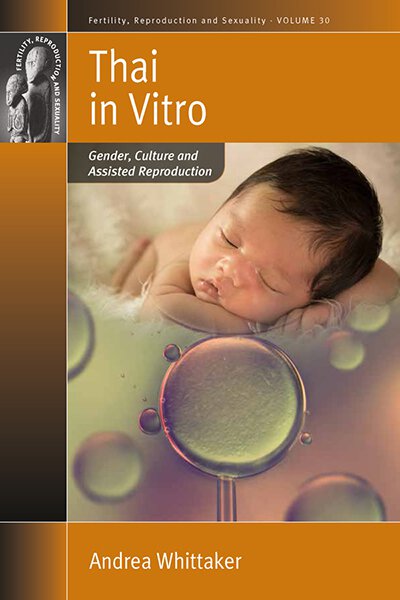
THAI IN VITRO
Gender, Culture and Assisted Reproduction
Andrea Whittaker


Continue reading “Fertility, Reproduction and Sexuality”

Roots and Recovery: Anthropologists Study Anorexia from all Angles

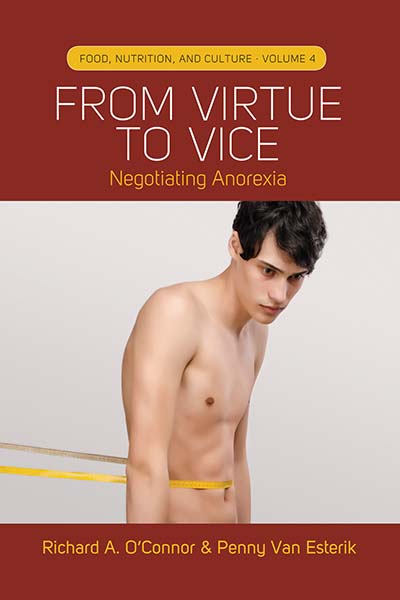
How do sufferers of anorexia recover? Richard A. O’Connor and Penny Van Esterik seek answers to this question, first by identifying root causes of the disease and then by sharing the stories of those who have made a full recovery.  From Virtue to Vice: Negotiating Anorexia, the book that resulted from their research, does not look at the affliction of anorexia from behind a glass, in fact, O’Connor’s connection to the work is deeply personal. He explains in his own words below.


_______________________


Every book has a back story. Mine is no big secret. When my daughter Amorn became anorexic it turned our family upside down. Carolyn [my wife] and I desperately wanted answers. We got a great counselor but nothing worked. The explanations we got made no sense. That wasn’t our daughter. Of course we worried we were in denial—that we just didn’t want to face the truth—and that silenced me at the time. I understood clinicians have to put people in categories and few fit perfectly. So I settled into accepting my daughter was an exception, an outlier. What mattered most was working with her caregivers for recovery.


Continue reading “Roots and Recovery: Anthropologists Study Anorexia from all Angles”

National Women’s History Month

Women’s History Month is an annual declared month that highlights the contributions of women to events in history and contemporary society. It is celebrated during March in the United States, and across Europe, corresponding with International Women’s Day on March 8. All around the world, National Women’s History Month & International Women’s day present an opportunity to celebrate the achievements of women while calling for greater equality!


Berghahn invites you to explore a special issue of Aspasia devoted to International Women’s Day. The year 2010 marked the centennial of International Women’s Day, and the year 2011 marked the centennial of its first celebrations. Inspired by these events, this issue deals with “A Hundred Years of International Women’s Day in Central, Eastern and Southeastern Europe.” Read more.


Berghahn is also pleased to offer a 25% discount on any of our Gender Studies books on orders placed within the next 30 days. At checkout, simply enter the code IWD15.


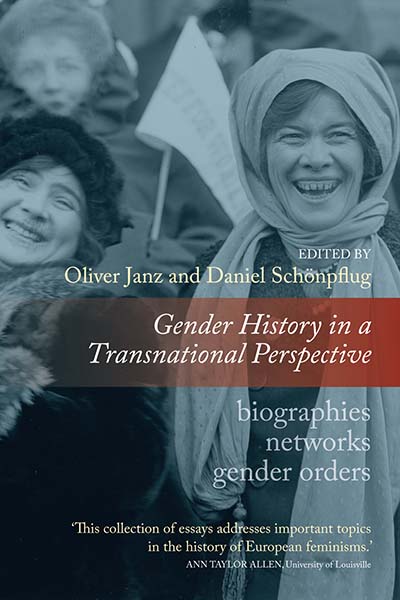
GENDER HISTORY IN A TRANSNATIONAL PERSPECTIVE
Networks, Biographies, Gender Orders
Edited by Oliver Janz and Daniel Schönpflug


Continue reading “National Women’s History Month”

Supercinematic Projection: Author Looks toward Future of Film Studies

Supercinema: Film-Philosophy for the Digital Age, originally published in May 2013, is now available in paperback. Following, author William Brown reflects on the book as a launching pad for his own studies and what he perceives as the forward trajectory of film studies. This post pairs with his reflection on the book’s initial release, which can be read here.


______________________________________


The argument in Supercinema: Film-Philosophy for the Digital Age is about the depiction and possible meanings of the continuous times and spaces that contemporary mainstream cinema often seems to depict thanks to the aesthetic possibilities opened up to, or at the very least made more easily achievable by, cinema as a result of digital technology.

Continue reading “Supercinematic Projection: Author Looks toward Future of Film Studies”

Celebrate International Women’s Day with a Special Issue!

AspasiaInternational Women’s Day is annually held on March 8 to celebrate women’s achievements. It is also known as the United Nations Day for Women’s Rights and International Peace.


In recognition of this day, Berghahn is pleased to offer a 25% discount on any of our Gender Studies books on orders placed within the next 30 days. At checkout, simply enter the code IWD15.

We would also like to invite you to explore a special issue of Aspasia devoted to International Women’s Day. The year 2010 marked the centennial of International Women’s Day, and the year 2011 marked the centennial of its first celebrations. Inspired by these events, this issue deals with “A Hundred Years of International Women’s Day in Central, Eastern and Southeastern Europe.”


VOLUME 6: Celebrating 100 Years of International Women’s Day


THEME SECTION: A Hundred Years of International Women’s Day in CESEE

From West to East: International Women’s Day, the First Decade
Rochelle Goldberg Ruthchild


Together and Apart: Polish Women’s Rights Activists and the Beginnings of International Women’s Day Around 1911
Iwona Dadej and Angelique Leszczawski-Schwerk


The Different Faces of a Celebration: The Greek Course of International Women’s Day, 1924-2010
Angelika Psarra


THE SOURCE
Kak v revoliutsionnoe vremia Vserossiiskaia Liga Ravnopraviia Zhenshchin dobilas’ izbiratel’nykh prav dlia russkikh zhenshchin (How in the revolutionary time the All-Russian League for Women’s Equal Rights won suffrage for Russian women)
Olga Zakuta


FORUM
Clio on the Margins: Women’s and Gender History in Central, Eastern and Southeastern Europe (Part One)
Edited by Krassimira Daskalova


NEWS AND MISCELLANEA
Ukrainian Women Reclaiming the Feminist Meaning of International Women’s Day: A Report about Recent Feminist Activism
Oksana Kis


In History: Churchill delivers Iron Curtain speech

On March 5th 1946, in one of the most famous orations of the Cold War period, former British Prime Minister Winston Churchill condemned the Soviet Union’s policies in Europe and declared, “From Stettin in the Baltic to Trieste in the Adriatic, an iron curtain has descended across the continent.” Churchill’s speech is considered one of the opening volleys announcing the beginning of the Cold War. Read More

———————————————————————————————————————————–

Berghahn presents a selection of relevant Cold War titles:


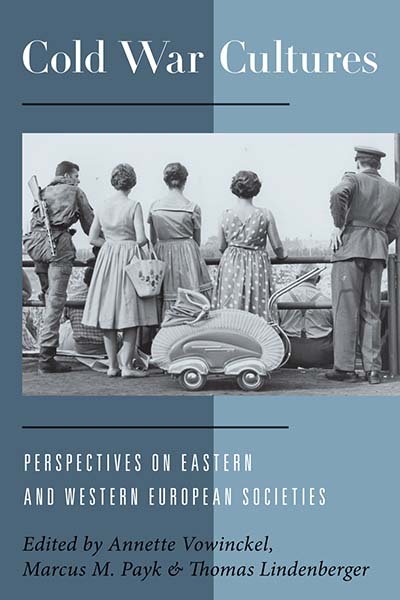
COLD WAR CULTURES
Perspectives on Eastern and Western European Societies
Edited by Annette Vowinckel, Marcus M. Payk, and Thomas Lindenberger

Continue reading “In History: Churchill delivers Iron Curtain speech”

Author of ‘Jesus Reclaimed’ Earns German Decoration

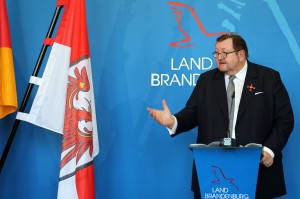
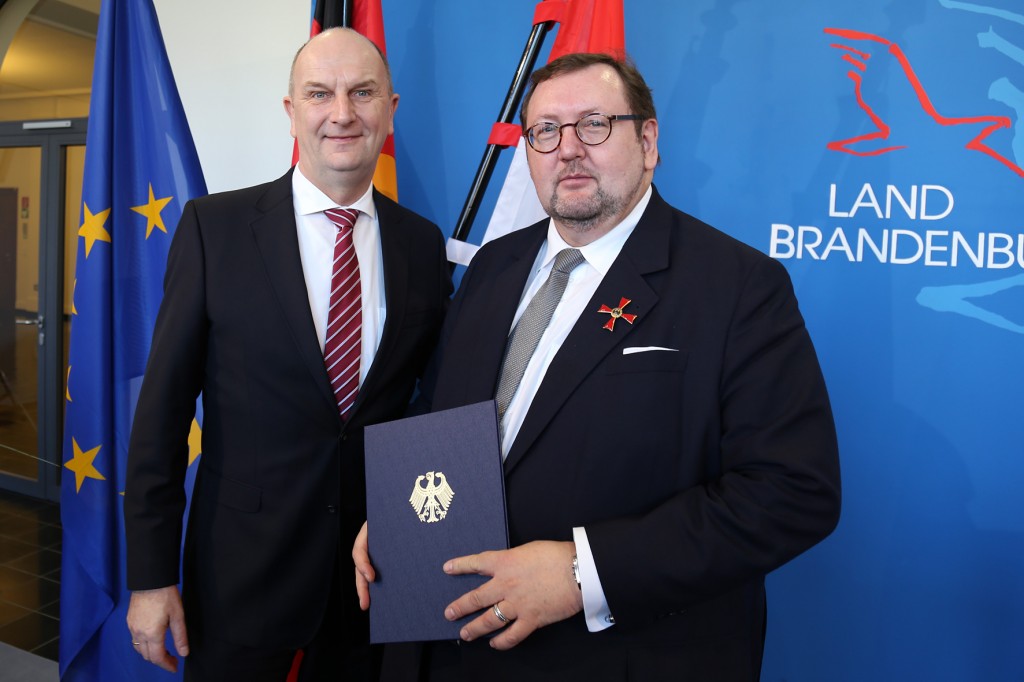
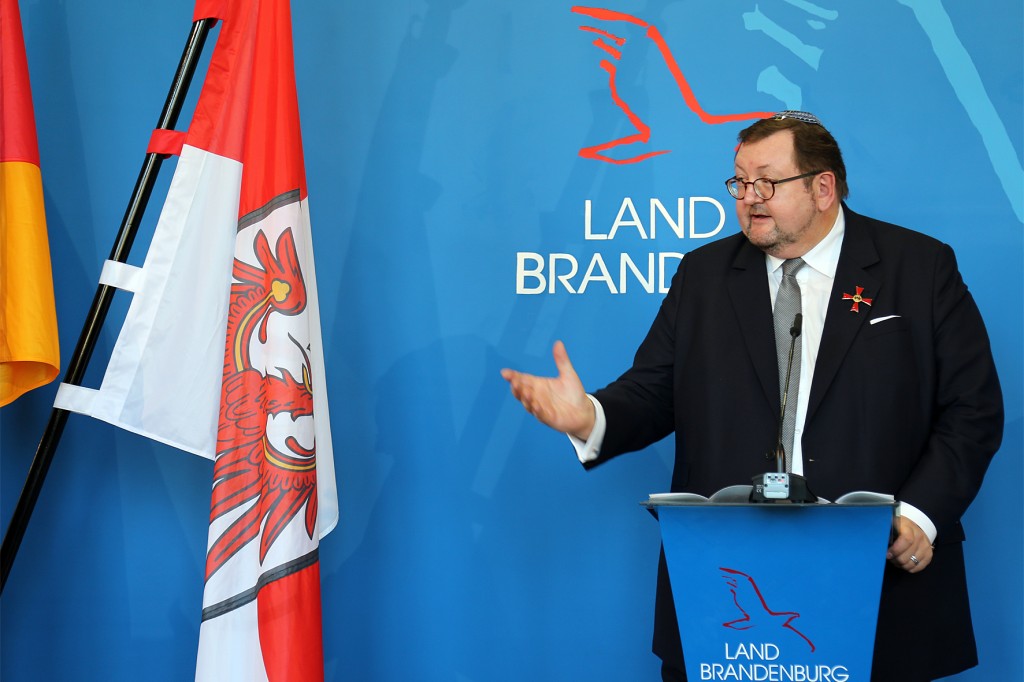
The President of the Federal Republic of Germany, Joachim Gauck, honoured Rabbi Walter Homolka with the Officers Cross of the Federal Merit Order.


On February 27, 2015, the Prime Minister of the State of Brandenburg, Dr. Dietmar Woidke, handed over the insignia in the state chancellery in Potsdam.


Woidke thanked Rabbi Homolka for the establishment of the Abraham Geiger  College in 1999 as the first rabbinical school in Continental Europe after the Holocaust.
Homolka’s initiative in 2013 also formed the School of Jewish Theology of the University of Potsdam, Germany’s Jewish Divinity School. Rabbi Homolka is a professor of Modern Jewish Thought there.


On the day of the honour Germany’s nationwide tabloid BILD voted Homolka “winner of the day.”


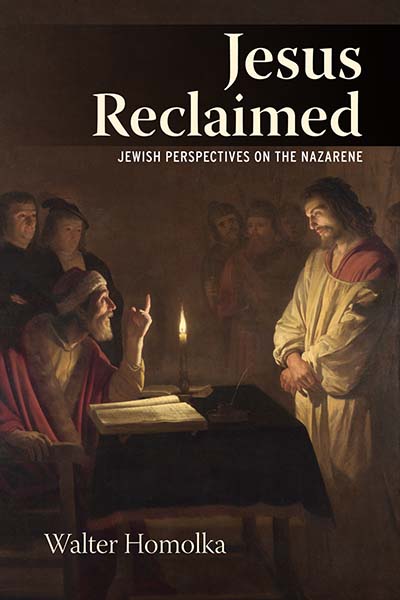
Rabbi Walter Homolka is author of Jewish Identity in Modern Times: Leo Baeck and German Protestantism (1995) and Jesus Reclaimed: Jewish Perspectives on the Nazarene (2015), and co-editor, with Albert Friedlander, of The Gate to Perfection: The Idea of Peace in Jewish Thought (1994). He is the rector of the Abraham Geiger College, Germany’s first rabbinical seminary after the Holocaust, and a professor of Modern Jewish Thought at the School of Jewish Theology of the University of Potsdam in Germany.


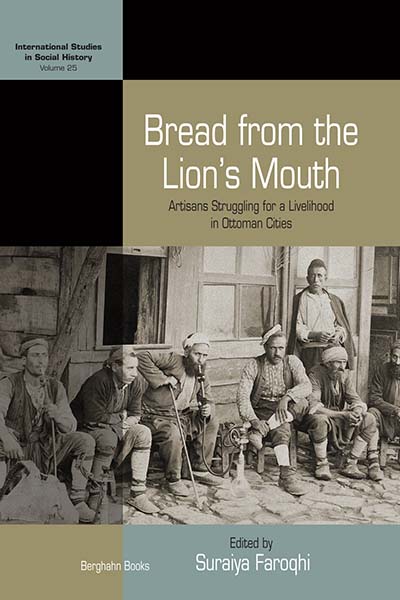
Artisan Society and Struggles in the Ottoman Empire

In recent years, there has been renewed interest in the history of the lives and work of middle eastern artisans. Bread from the Lion’s Mouth: Artisans Struggling for a Livelihood in Ottoman Cities, soon to be published, uses archival documents to re-create a scene of life in the Ottoman Empire from the fifteenth through twentieth centuries. Following, editor Suraiya Faroqhi discusses the history of this project and her interest in this region.


__________________________


What drew you to the study of artisans in Ottoman cities? Why do you think there is a renewed interest in this field today?


Perhaps because I am fond of my own work, as a historian I have for a long time been interested in people that work – as opposed to those that pray, govern, or fight. Moreover I like to see the things that artisans/artists have made; and we must keep in mind that the beautiful things we admire in museums did not come into being ‘just like that’ but are the product of human work, especially that of artisans and artists.

Continue reading “Artisan Society and Struggles in the Ottoman Empire”

Getting Reacquainted with The Cambridge Journal of Anthropology

The Cambridge Journal of Anthropology


We are delighted to announce that 2015 marks the fourth volume year that the Cambridge Journal of Anthropology has been published through Berghahn. The original journal of this name was an in-house publication based at Cambridge University, with a remit to provide a space in which innovative material and ideas could be tested.


The new Cambridge Journal of Anthropology builds on that tradition and seeks to produce new analytical tool-kits for anthropology or to take all such intellectual exploration to task. Re-acquaint yourself with the journal by exploring the special sections outlined below.


We hope you’ll be inspired by these innovative approaches that push at the boundaries of anthropology to bring you fresh insights from pioneering scholars in the field.


Volume 32
Number 2, Autumn 2014
Special Section: Risks, Ruptures and Uncertainties: Dealing with Crisis in Asia’s Emerging Economies
Asia’s ongoing economic transformation has created a variety of unexpected ruptures, discontinuities and opportunities in the lives of local citizens across the region. The articles in this section contribute to an understanding of local responses to, and strategies for coping with, risk and uncertainty as multidimensional, interwoven aspects of daily life, guided by social, economic and moral considerations.

  
Volume 32
Number 1, Spring 2014
Special Section: Epidemic Events and Processes
The articles in this collection bring together epidemiology and social anthropology. They take us through epidemics critically distinguished as crises and as events, and through epidemics understood analytically as syndemics and as productive of both proliferating ‘projects’ and a compelling quest for ever-growing intelligence and ‘real-time’ surveillance. In this collection, we see the importance of a social anthropological understanding of the human subjects that epidemics, and responses to them, can constitute–and we glimpse some of the interagentivity in the treatment responses through which the lethal problem of ‘resistance’ can be created. In the case of ‘epidemics’ in this present issue, we see the import of anthropological material as it brings to the fore issues which, in another disciplinary language, are the historically contingent ‘externalities’ of ‘disease events’.

  
Volume 31
Number 1, Spring 2013
Special Section – Climate Histories and Environmental Change: Evidence and its Interpretation. Guest Editor David Sneath
The papers in this special section explore different visions of the environment and how they engender particular ways of seeing evidence of climatic and environmental change. A key aspect of such distinctive understandings seems to be the attribution of agency within conceptions of the environment that in each case are entangled with humans. Notions of the anthropogenic and non-equilibrial environments are explored in several of the papers collected here, along with ongoing debates surrounding the concept of the Anthopocene. An awareness of climate change has brought new urgency to the project of grasping our entangled environments in the diversity of their human understandings.

  
Volume 30
Number 2, Autumn 2012
Special Section
Thisspecial section reconsiders recent anthropological accounts of ‘Naturalism’, a term increasingly used as a shorthand for a bundle of purportedly western attitudes to nature, reality and mind/body distinctions. Anthropologists and others tend to invoke ‘Naturalism’ as a foil for descriptions of alternative ontologies elsewhere (such as animism or perspectivism), or alternatively, as a philosophical account of the world which is belied by Euroamericans’ own practices. By contrast, the papers in this section attempt to take naturalism seriously as an ethnographic object in its own right: who, if anyone, is a ‘naturalist’ and what do naturalist commitments look like and entail in practice?


For a free sample issue of the journal, click here.