Honoring Polish Cinema

A Polish film “Ida” directed by Paweł Pawlikowski and written by Pawlikowski and Rebecca Lenkiewicz wins Oscar Award for Best Foreign Language Film.

The drama tells a story of a young novitiate nun Anna in 1960s Poland,  who is on the verge of taking her vows when she discovers a dark family secret dating back to the years of the Nazi occupation. Read more on the plot, cast & production.

———————————————————————————————————————————–

To celebrate Berghahn Books is proud to present a selection of titles on Polish Cinema:


POLISH FILM AND THE HOLOCAUST
Politics and Memory
Marek Haltof

Continue reading “Honoring Polish Cinema”

Identity at the Intersection of Science and Culture

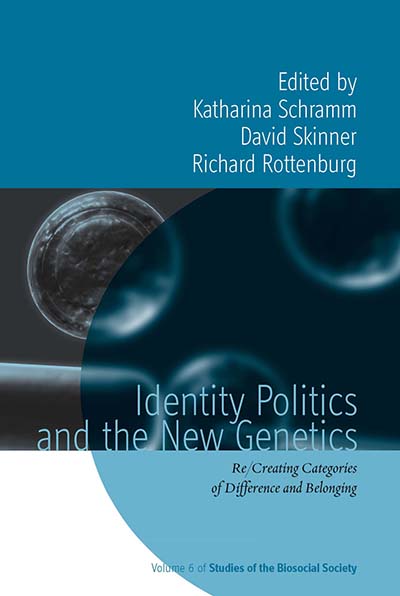
Drawing on the work of medical researchers, anthropologists, historians of science, and sociologists, Identity Politics and the New Genetics: Re/Creating Categories of Difference and Belonging explores how science and culture are used to create and perpetuate ideas of race and ethnicity. The volume was published as a paperback in November. Following, David Skinner, who co-edited the volume with Katharina Schramm and Richard Rottenburg, reflects on the volume’s reception and its distinction from other volumes on genetics and social history.


As the attention devoted to science journalist Nicholas Wade’s recent book A Troublesome Inheritance: Genes, Race, and Human History illustrates, discussion of race and genetics is habitually deemed ‘difficult’ or ‘controversial’. Wade is one of a long line of writers who portray themselves as fearless truth-seekers battling the politically correct consensus that races are social not biological types.

Continue reading “Identity at the Intersection of Science and Culture”

Seeing is Feeling: Tangible Emotion in the Work of Aronofsky


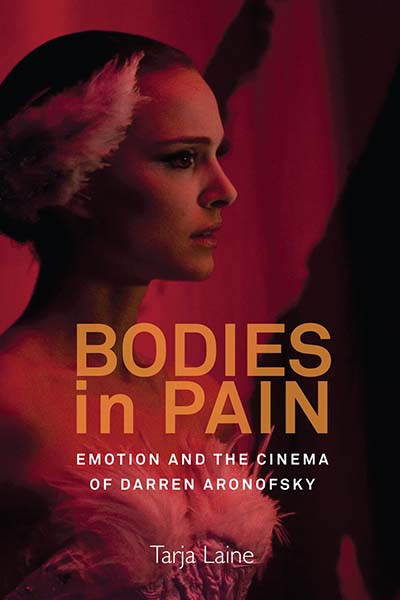
In Bodies in Pain: The Emotion and Cinema of Darren Aronofsky,  Laine explores the emotionally engaging nature of this prominent director’s work, which includes Requiem for a Dream and Black Swan, Pi and The Fountain. Following, the author explains how she came to write this book, as well as some emotional nuances in the director’s oeuvre.


In 2011 when I was asked by Mark Stanton, then-senior editor at Berghahn Books to write a book about emotion and film aesthetics in the cinema of Darren Aronofsky, my book entitled Feeling Cinema had just been released a month before. At that point I was not planning to start a new book project any time soon, and nor did I have a clue where the next idea for a book would come from, so his proposal almost appeared to me as a gift from the universe. Furthermore, since Aronofsky as a filmmaker was not an obvious choice for me to write about, it was an extra challenge to come up with an aesthetically meaningful starting point, without falling into the trap of cheap auteurism.

Continue reading “Seeing is Feeling: Tangible Emotion in the Work of Aronofsky”

Using Mental Maps to Locate Austen

The following is the second in a series of posts on Jane Austen. This is a guest post written by James Brown, contributor to a special issue of Critical Survey which is devoted to the subject of Jane Austen. James Brown is the author of the article titled “Jane Austen’s Mental Maps.”


The idea of mental maps was planted in my mind when I was a research student in Oxford. It comes from geography, especially from Peter Gould and Rodney White’s 1974 book, Mental Maps.


I’d also been an undergraduate at Oxford – one of Terry Eagleton’s students. I followed up the ideas he threw out about all manner of topics besides English literature. But as a postgraduate, things were different. I was writing about seventeenth-century drama, and Emrys Jones was my supervisor.


Emrys’s interests were wide-ranging. In the faculty’s list of research expertise, Emrys’s entry was ‘English literature 1500 to 1800’, with some later topics thrown in for good measure. He was an expert on Byron, for example. Though there were no degrees in drama at Oxford, Emrys took an obvious delight and interest in theatre. He could look forbiddingly donnish (as he does in Al Pacino’s Looking For Richard), but if he was talking about a performance he’d liked, his delight was infectious. At one of our meetings we got onto the topic of farce, and Emrys thought of a show in which Sheila Steafel had made an entrance that was side-splittingly funny because she was wearing sensible shoes. I can’t remember exactly how or why the sensible shoes were funny, but I do remember Emrys, in his book-lined room in New College, succumbing to a fit of giggles, struggling to gasp out the words ‘sensible shoes’, and wiping away tears of laughter.


Emrys proposed all manner of connections between the drama I was researching and other literature and theatre. But, to me at any rate, he seldom suggested reading something from quite another discipline. So when he recommended Gould and White’s Mental Maps the title lodged in my mind. I thought of using it in my doctoral work as a way of understanding late seventeenth-century playgoers’ perceptions of London. But in the end I didn’t use it in my thesis. So the idea remained filed away at the back of my mind, waiting for its cue. The cue was just over twenty years coming. When I saw the call for papers for the ‘Locations of Austen’ conference at Hatfield a couple of years ago, the phrase ‘mental maps’ popped back up.


As it happens, the way I’ve used the concept shows the influence of Terry Eagleton as well as of Emrys Jones. Though they were both Oxford professors of English, I suspect they felt they had little in common. Even though he’d been at Oxford for 14 years when I met him, and would remain for another 18, Terry gave the impression he was just passing through, and he’s since left. Emrys, on the other hand, seemed wedded to the place. Having been C.S. Lewis’s student, in 1955 he had been chosen by Lewis as his successor at Magdalen, and he only left Magdalen in 1984 to take up the Goldsmiths’ Chair at New College a quarter of a mile away, just the other side of Longwall Street. Yet it dawned on me, as I revised ‘Jane Austen’s Mental Maps’ for Penny Pritchard’s special issue of Critical Survey on Austen, that I had finally succeeded in bringing the two of them together. Emrys had alerted me to the idea of mental maps. But the way I describe them in my essay as performative – as being about what one can do with them rather than simply reflecting false consciousness  goes back to what I learned about ideology from Terry. Having struggled as postgraduate to reconcile what I learned from each of them, there’s a private satisfaction in finally bringing them together.


___________________________________________________________________________

James Brown is an associate research fellow in the Department of Politics at Birkbeck, and a lecturer in theatre at IES Abroad, having previously taught politics and sociology at Birkbeck and film and literature at Middlesex University.

ACCESS JAMES BROWN’S ARTICLE HERE

GET A FREE SAMPLE ISSUE OF CRITICAL SURVEY HERE  


‘Healing Roots’: Author Traces Life of Wild Plant from Farm to Pharm

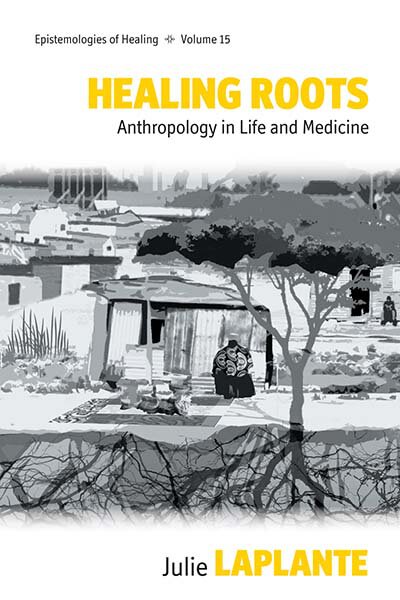
The healing powers of a plant in sub-Saharan Africa, long used for indigenous medicine, are now being harnessed as a pharmaceutical to be more widely produced and sold. Author Julie Laplante follows this path of production of Artemesia Afra from a wild-growing bush to a processed, controlled substance in her soon-to-be-published monograph, Healing Roots: Anthropology in Life and Medicine. Following, Laplante shares how her own path led her from researcher to author.


_________________________________


The journey told in the book began in August 2006 within the Biomedicine in Africa research group at the Max Planck Institute für etnologische forshung in Halle (Saale), Germany, as we were invited to explore how biomedicine is both shaping and being shaped through its practices in Africa. My own research project entitled ‘South African Roots towards Global Knowledge’ namely intended to find out how this is done through the practices of clinical trials as they aim to ‘recognize’ indigenous medicine.

Continue reading “‘Healing Roots’: Author Traces Life of Wild Plant from Farm to Pharm”

Starting with Place: Understanding Characters and Experiences in Jane Austen’s Final Novel

Critical Survey

The following is the first in a series of posts on Jane Austen. This is a guest post written by Rebecca Posusta, contributor to a special issue of Critical Survey which is devoted to the subject of Jane Austen. Rebecca Posusta is the author of the article titled “Architecture of the Mind and Place in Jane Austen’s Persuasion.”


“Architecture of the Mind and Place in Jane Austen’s Persuasion” is in essence a project that explores how the characters of Jane Austen’s final novel understand their physical, social, and psychological place. But, it is also about how the places in which they live tell the story about who they are. It is a project that began to germinate long ago, early in my scholarly career, and is the product of my earliest ideas about myself and how I fit in the world. I grew up in New Orleans, Louisiana; and, it is in New Orleans that I first met Jane Austen and found a connection to the ordinary ideas of humanness with which her novels deal. New Orleans is an old city filled with the physical remnants of a luminous past which fascinate me and ground me in my personal history.


I am descended from a long line of French Creoles on my mother’s side who arrived in New Orleans in the late eighteenth and early nineteenth century. Growing up, I remember stories my mother and grandmother used to tell of the big house on Esplanade Avenue that was lost after the Civil War, the dashing young man who dabbled in vaudeville and scandalous womanizing, the house on Verbena Street with the mom-and-pop grocery at the back, and the new house on Dodge Avenue with its cinderblock siding, fish pond, and summer house meant for sleeping in on hot summer nights prior to the advent of central air conditioning. Walking through the red-bricked French Quarter with its wrought-iron balconies and cool shaded courtyards, or along the River Road amongst the crumbling façades of the antebellum plantations, I am reminded of a troubled and turbulent past, and have often wondered about my ancestors who once walked the same streets and along the same shelled drives as I have. Who were they? What were they like? Few have told their stories, but the walls and bricks, balconies and flying staircases of the places they lived echo with their lives and experiences.


It occurs to me that even fictional characters, particularly those of Austen, are a product of the place in which they live, or at least a product of the place in which their creator lives. This may be why fiction is so appealing to us; we can see our own experiences in the experiences of others. If I start to tell my story, I begin with a place, as I have done here. Austen’s novels often begin with place as well. We meet her characters as they face a disruption in their normal domestic routine and move, change, or accept unpleasant alterations to the place in which they live. At the beginning of Persuasion, Anne Elliot defines herself by her place at Kellynch, but when she moves away from that place and can look back at it with a more critical and detached eye, she learns to define herself and her future. She learns to tell her story by the new places she occupies just like I know myself by both where I have been and where I am headed.

___________________________________________________________________________

Rebecca Posusta, M.A., is a Senior Instructor in the English Department at University of Colorado, Colorado Springs.

access Rebecca Posusta’s Article here

Get a free sample issue of critical survey here  


Simulated Shelves: Browse January 2015 New Books

We are delighted to present a selection of our newly published January 2015 titles from our core subjects of Anthropology, Economics, Environmental Studies, Film Studies, History, Jewish Studies, Medical Anthropology, and Politics, along with a selection of our New in Paperback titles.


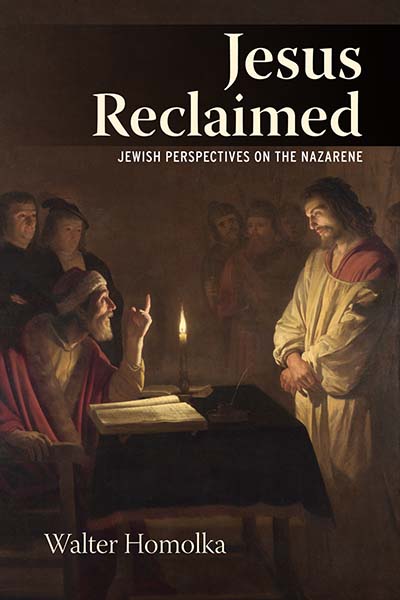
We are especially excited to announce the publication of JESUS RECLAIMED: Jewish Perspectives on the Nazarene by Walter Homolka

“This book offers a constructive contribution to the debates on the theological significance of Jewish and Christian approaches to the historical Jesus. The author’s knowledge of Jewish and Christian discourses on both sides of the Atlantic is impressive.” · Werner G. Jeanrond, University of Oxford

———————————————————————————————————————————–


JESUS RECLAIMED
Jewish Perspectives on the Nazarene
Walter Homolka
Translated by Ingrid Shafer


Continue reading “Simulated Shelves: Browse January 2015 New Books”

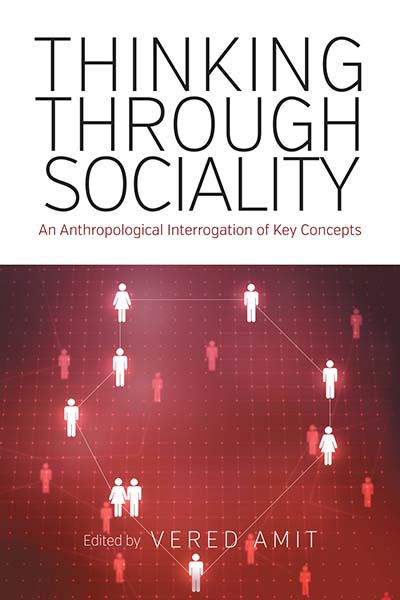
Social Exchange and Conceptual Query

Combining classic and contemporary theory, Thinking through Sociality: An Anthropological Interrogation of Key Concepts is an exploration of concepts from disjuncture to social space and field to sociability. In advance of the volume’s publication later this month, editor Vered Amit discusses its origins and purpose.


________________________________


This volume is the outcome of a continuing series of exchanges among the contributors, which took place over several years. When I initiated the first of these exchanges in 2006, I wondered why anthropologists had often resorted uncritically to relatively few, familiar concepts of sociality—such as community—in spite of the availability of a much broader range of ideas that might be effectively applied to the varied contemporary situations they were seeking to apprehend.


Continue reading “Social Exchange and Conceptual Query”

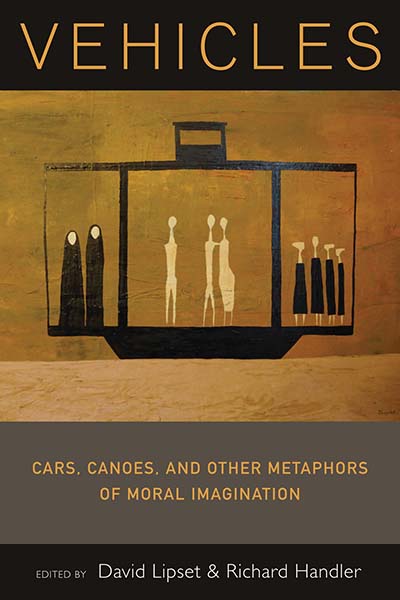
Writing for Goffman: Coincidence Drives Idea behind ‘Vehicles’

Recently published Vehicles: Cars, Canoes and other Metaphors of Moral Imagination, edited by David Lipset and Richard Handler, offers insight into the vehicle as an object that can move not only people, but also ideas. Following, Handler discusses the origination of the volume, which all came about by way of an interesting connection of coincidence.


______________________________


This volume came about serendipitously.


My friend David Lipset emailed me in the summer of 2008 with the standard “what are you working on” question. I replied that I was working on a series of essays about the great American sociologist, Erving Goffman. David wrote back to tell me the rather astounding story about his first car, a late-1950s VW Beetle that his father had bought from Goffman, in Berkeley, California, where both of them taught.


The fact that Goffman was an “early adopter” (in the U.S.) of the Beetle explained, I thought, some cryptic comments in Behavior in Public Places, where Goffman described the interactional contempt that drivers of small cars endured.


Continue reading “Writing for Goffman: Coincidence Drives Idea behind ‘Vehicles’”