Earth Day

Each year, Earth Day — April 22 — marks the anniversary of what many consider the birth of the modern environmental movement in 1970. Earth Day 1970 capitalized on the emerging consciousness, channeling the energy of the anti-war protest movement and putting environmental concerns front and center. The very first Earth day celebration brought 20 million Americans to the streets to peacefully demonstrate for environmental protection. The day finally united groups that shared common values and have been fighting against oil spills, polluting factories and power plants, raw sewage, toxic dumps, pesticides, freeways, the loss of wilderness, and the extinction of wildlife. It is now coordinated globally by the Earth Day Network, and celebrated in more than 192 countries each year, reaching out to hundreds of millions of people. Get involved to build a better future!

———————————————————————————————————————————–

In celebration of Earth Day, we are delighted to offer free access to a special virtual issue that focuses on Climate Change and features articles from a range of history, politics, and anthropology journals. http://journals.berghahnbooks.com/_uploads/Climate_Change_VI.pdf

———————————————————————————————————————————–

Happy Earth Day from Berghahn! Visit our web and for the next 30 days use code AAG15 at checkout to receive 25% discount on our Environmental Studies titles.
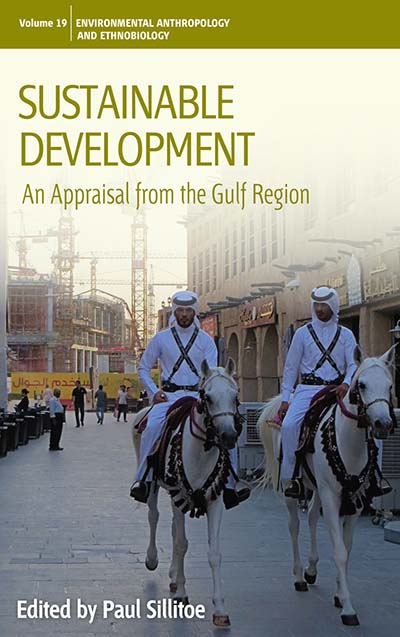
SUSTAINABLE DEVELOPMENT
An Appraisal from the Gulf Region
Edited by Paul Sillitoe

Continue reading “Earth Day”

‘More than the Sum of Our Isolated Parts’: Reflections of a Co-Author

From Virtue to Vice: Negotiating Anorexia is the result of creative and academic collaboration between Penny Van Esterik and Richard A. O’Connor. In the following post, Van Esterik reflects on the collaboration of this  pair—Van Esterik, an expert on breastfeeding, and O’Connor, an anthropologist who watched someone close suffer with anorexia—and how their book was made much stronger through their unique vantage points.
 

__________________________


Like most academics, I am a lone wolf writer, needing the silence to propel my thoughts on to screens and paper. But sometimes we become more than the sum of our isolated parts when we work together. Richard’s voice as an anthropologist was already in my work long before we began formal collaboration on From Virtue to Vice and ongoing in The Dance of Nurture [their next co-written book on breastfeeding].

Continue reading “‘More than the Sum of Our Isolated Parts’: Reflections of a Co-Author”

Tradition Taboo: Disagreements between Common Practice and Public Discourse

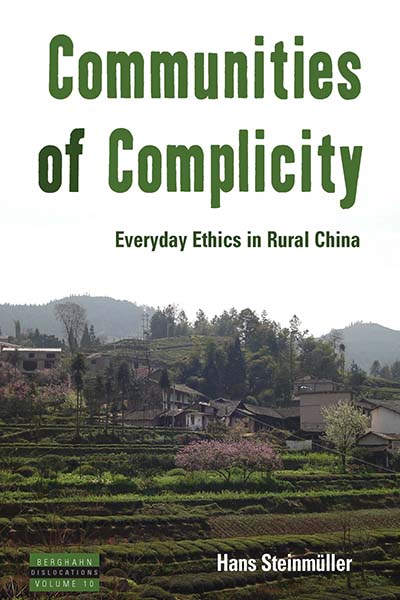
Hans Steinmüller’s Communities of Complicity: Everyday Ethics in Rural China is now available in paperback. The ethnography explores the moral uncertainties experienced by the people of the village of Zhongba in Central China as they navigate and balance the expectations of capitalism and their traditional culture. The author offers a reflection on his fieldwork in rural China and insights into Chinese culture in the following post.


____________________


The main idea of ‘Communities of Complicity’ has to do with the delicate relationship between vernacular practices and official discourse in rural China. In regards to geomancy (fengshui), rituals, gifting, and corruption discourse, for instance, official representations are often inconsistent with local practice. While it is very common to invite ritual masters for family celebrations and to give money gifts at such occasions, these practices are often described in public discourse as backwards and corrupt.

Continue reading “Tradition Taboo: Disagreements between Common Practice and Public Discourse”

Hot Off the Presses – New Journal Issues Published in March


French Politics, Culture & Society
Volume 33, Issue 1
The contributions in this special issue represent a new wave of scholarship that brings the insights of recent post-Revolutionary historiography to the process of colonial transition.


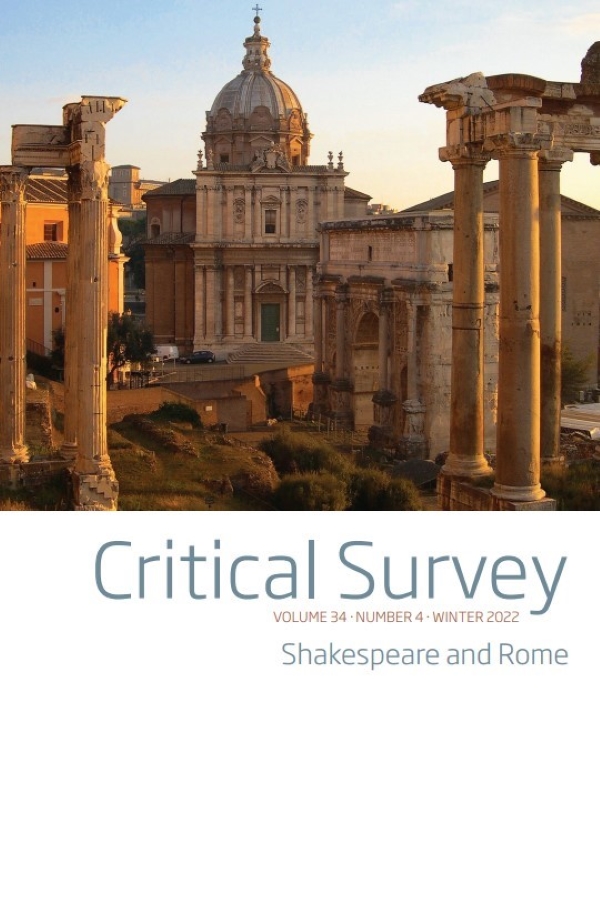
Critical Survey
Volume 26, Issue 2
This features articles which explore topics related to the many works of William Shakespeare and ends with an interview with poet and critic Ruth O’Callaghan.


Social Analysis
Volume 59, Issue 1
This special issue is titled “Stategraphy: Toward a Relational Anthropology of the State” and is based in part on papers presented at the conference “Local State and Social Security: Negotiating Deservingness and Avenues to Resources in Rural Areas,” which took place in Halle from 30 June to 2 July 2011.


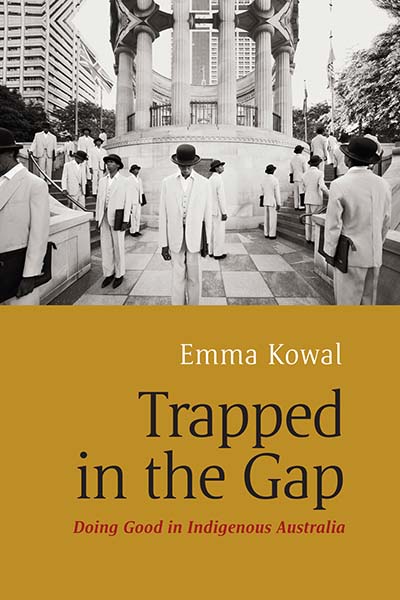
Helping without Harming and Minding the Balance

Author Emma Kowal explores the “good” that well-meaning White Australians are doing for Indigenous Australians. This path to help is charted in Trapped in the Gap: Doing Good in Indigenous Australia, a recently published book that asks the question: How can one help without harming? Following, Kowal explains the origins and reception of her work studying this group of “White anti-racists.”


___________________________________


‘You’re an anthropologist and you study… White people?’ I regularly receive a puzzled look from people when I tell them what I do. Anthropologists are supposed to study Indigenous tribes in remote locations, aren’t they? Or at least something exciting, like drug addicts or slum dwellers.


Continue reading “Helping without Harming and Minding the Balance”

Simulated Shelves: Browse March 2015 New Books

We are delighted to present a selection of our newly published March 2015 titles from our core subjects of Anthropology, Colonialism, Education, Global Health, History, Medical Anthropology, Politics, Theory & Methodology in Anthropology, and Urban Studies, along with a selection of our New in Paperback titles.

We are especially excited to announce the publication of the paperback edition of CIVILIZING NATURE edited by Bernhard Gissibl, Sabine Höhler and Patrick Kupper.

“This book makes a unique contribution to the conservation literature by enhancing one’s understanding and appreciation of the cultural meaning of nature conservation through the lens of national park development. […] Highly recommended.” · Choice

———————————————————————————————————————————–

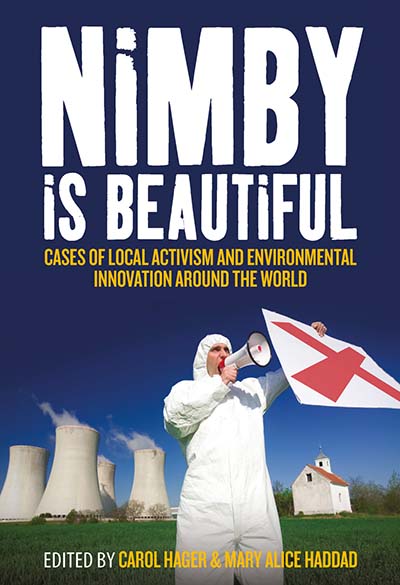
NIMBY IS BEAUTIFUL
Cases of Local Activism and Environmental Innovation Around the World
Edited by Carol Hager and Mary Alice Haddad

Continue reading “Simulated Shelves: Browse March 2015 New Books”

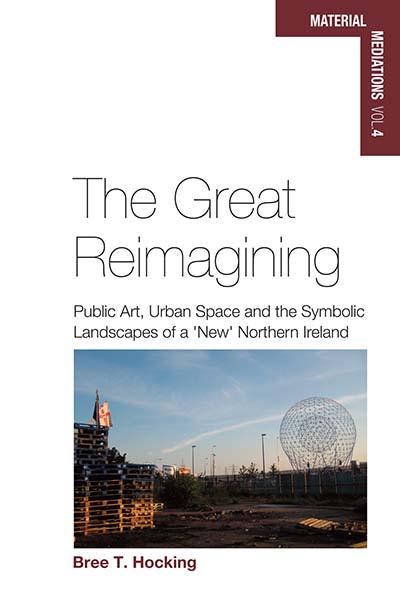
Making-Over Northern Ireland by Changing Facades & Perceptions

Through art, architecture, and “symbolic landscapes,” post-conflict Northern Ireland is changing the “face” it shows the world. Bree T. Hocking explores this new identity in The Great Reimagining: Public Art, Urban Space, and the Symbolic Landscapes of a ‘New’ Northern Ireland. In the following short essay, the author explains some of actual and perceived changes, by way of the words exchanged with a young Protestant man.


On a recent visit to Northern Ireland, I met a young Protestant man from the Shankill Road heading home after dropping off his daughter at a nearby crèche. It was hardly an extraordinary encounter—save for the fact that the man had just left his toddler at a nursery on the Catholic side of one of Belfast’s largest and oldest peace walls. (These walls, sometimes up to eight metres tall, separate many working-class neighborhoods across the city along ethno-national lines.)

Continue reading “Making-Over Northern Ireland by Changing Facades & Perceptions”

#MuseumWeek 2015

Museum Week is international: more than 800 museums, galleries and cultural institutions from across the UK, Europe, the Americas, Asia and Oceania — 29 countries in total — are officially participating in this, the first ever international Museum Week on twitter, March 23-29. ‪#‎MuseumWeek‬ 2015!

Happy Museum Week from Berghahn! Read a FREE virtual issue on Museums from Berghahn Journalshttp://bit.ly/P0ugcB  

———————————————————————————————————————————–

Berghahn is delighted to present some of the latest Museum Studies titles:


Museums and Collections Series: This series explores the potential of museum collections to transform our knowledge of the world, and for exhibitions to influence the way in which we view and inhabit that world. It offers essential reading for those involved in all aspects of the museum sphere: curators, researchers, collectors, students and the visiting public.


Forthcoming! Volume 8

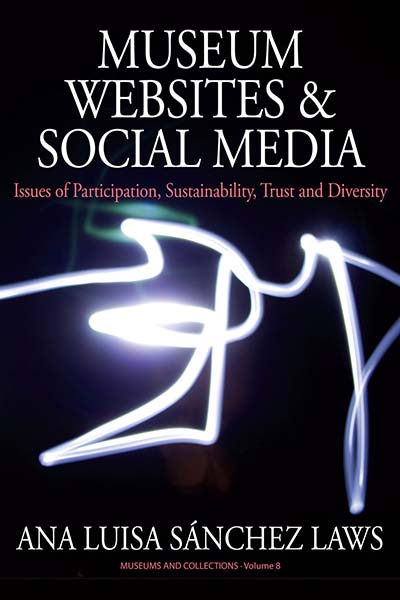
MUSEUM WEBSITES AND SOCIAL MEDIA
Issues of Participation, Sustainability, Trust and Diversity
Ana Luisa Sánchez Laws

Continue reading “#MuseumWeek 2015”

Landscape as Literary Criticism in Jane Austen’s Fiction

The following is the third in a series of posts on Jane Austen. This is a guest post written by Anne Toner, contributor to a special issue of Critical Survey which is devoted to the subject of Jane Austen. Anne Toner is the author of the article titled “Landscape as Literary Criticism: Jane Austen, Anna Barbauld and the Narratological Application of the Picturesque.” 


We are in the midst of Jane Austen bicentenary celebrations. Formidably, in the six years preceding her death in 1817, when she was only 41, Austen saw four novels published, as well as writing another complete novel (Persuasion) and revising one more (Northanger Abbey), both to be published posthumously.

Continue reading “Landscape as Literary Criticism in Jane Austen’s Fiction”

Visions of The Other: Swiss & Malagasy See, But Do They Understand?

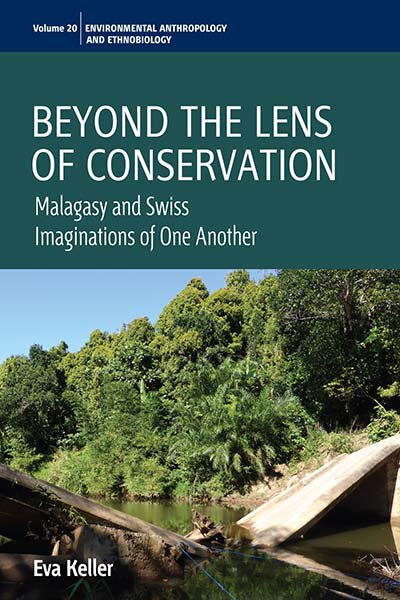
Where do Switzerland and Madagascar meet, and what do the people of each place think of those in the other? Eva Keller, in her recently published Beyond the Lens of Conservation: Malagasy and Swiss Imaginations of One Another, in seeking to connect these two places winds up highlighting the disconnect between them. Following, the author offers a brief glimpse into the volume from two directions: from a Swiss classroom looking at Madagascar and from a Malagasy man looking at a national park.


_______________________________


Read the following extract of a conversation which took place in a Swiss classroom with pupils aged between 11 and 12. My questions are in italics.


What do you know about Madagascar?


Takschan: I think there are cannibals there, I think, the people, like they eat the flesh.

Continue reading “Visions of The Other: Swiss & Malagasy See, But Do They Understand?”