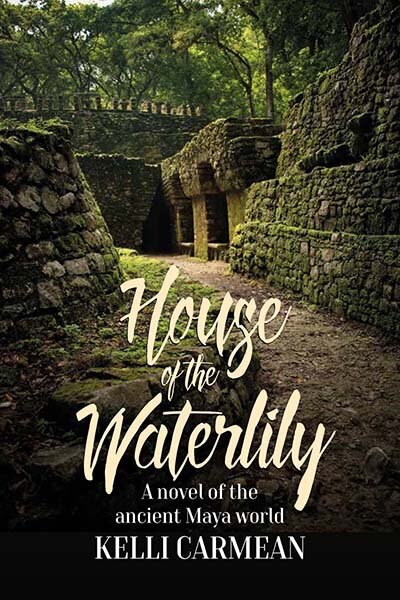
“House of the Waterlily is an excellent introduction into the world of the Classic Period Maya in large part because Carmean is a fine storyteller who weaves her narrative as beautifully as a ‘fine-spun’ huipil. This book would be an excellent addition to the course reading list for undergraduate students who are studying the ancient Maya.” · Scott Simmons, University of North Carolina, Wilmington Continue reading “SIMULATED SHELVES: Browse August 2017 NEW BOOKS” →
We are delighted to inform you that we will be attending The Royal Geographical Society Annual Conference in London, from Wednesday 30 August to Friday 1 September 2017. Please stop by our table to browse our latest selection of books at discounted prices and pick up free journal samples.
If you are unable to attend, we would like to provide you with a special discount offer. For the next 30 days, receive a 25% discount on all Geography Titles found on our website. At checkout, simply enter the discount code RGS17.
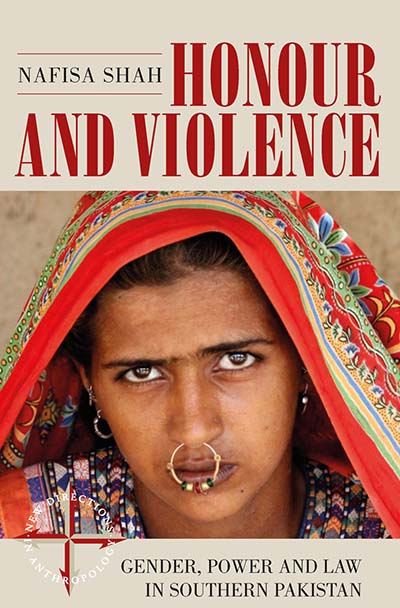
1) When did you begin working on Honour and Violence? Can you briefly tell us about your journey as a journalist, scholar, and politician following honor killings in Pakistan?
Honour and Violence is a process, a part of the journey, and not a product or a culmination. It is a coming together of different perspectives in the different roles through which I studied the phenomenon of karo kari, a practice that allows men to take lives of women in his family if accused and seen to be engaging in relationship outside or before marriage by invoking honour violation.
In 1992, as a young and fiery journalist, I travelled to Kashmore, and wrote the first story on honour based customs and practices in Upper Sindh for Newsline, a monthly news and features magazine headed by a woman editor, the late Razia Bhatti.
Then a few years later, as a Reuters fellow at Green College, Oxford I followed it up with a longer piece. My supervisor there, late Helen Callaway, was the first scholar to suggest I needed to convert these shorter journalistic pieces to something more longterm and showed me the academic route. And that’s where I built on whatever I saw and used the anthropological lens, which would allow me to communicate the problem to the wider world. Continue reading “An Interview with Nafisa Shah, Author of Honour and Violence” →
In 2001, I began teaching a first-year seminar titled “Defining Blackness.” My journey with that class and its descendants is intertwined with my relationship with the memorial landscape, concrete and virtual, of the campus of the University of North Carolina at Chapel Hill. In its initial year, the class decided to take as its focus the idea of how blackness, specifically American blackness, might mediate and alter how people experience the physical campus. In class discussions we surmised that there is a segregation of knowledge and of perception that might become manifest by examining the memorial landscape and that there are aspects of the campus that might be invisible to some but highly charged to others. Continue reading “Remembering Forgetting: A Monument to Erasure at the University of North Carolina” →
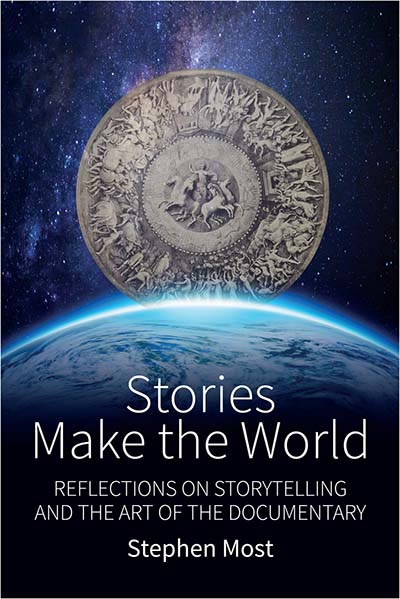
Two portraits of the young man I once was, one oil-painted, the other shaped in clay, watch over my study. More than half a century after they were made I portrayed the painter, Pedro Azabache, and the sculptor, Eduardo Calderón, in the opening chapters of Stories Make the World.
My friendships with them began unexpectedly and unforgettably. As a college student I received a grant I hadn’t applied for to go to a country I knew nothing about where languages I did not understand were spoken. I had not even studied anthropology, the field in which I was supposed to do summer research. However, I did know the destination: a pueblo named Moche.
The only book I could find about Moche mentioned a descendant of Mochica Indians who had studied painting in Lima. When I met him, Pedro Azabache led a school of fine arts in Trujillo. Seen in retrospect, my request, uttered in barely coherent Spanish, was absurd. I told him I wanted to live at his home in Moche and write about his life. The maestro replied, “Encantado.”
My friendship with Eduardo Calderón, who taught wood and ceramic sculpture in Azabache’s school of fine arts, also began encantado, with enchantment. Calderón invited me to his adobe-walled home to make the bust that now rests on my cabinet. Soon after I got there, after he had plopped clay on a small round table and after his wife, María, served us a wooden bowl filled with chicha, a corn liquor, Calderón asked, “Do you know that I am a brujo?” I did know that word, having read, in John Gillin’s Moche, A Peruvian Coastal Community, about brujeria, which means both sorcery and its antidote, a way of healing physical and psychological maladies. On the radio a cumbia was playing as Calderón, gliding into a corner of his open-air studio, pulled the head and wings of a pelican skin over his shoulders and started dancing. Soon we were wearing the bird in turn as we danced to the catchy beat.
“Esteban Most” by Pedro Azabache
That summer, one of Azabache’s students who spoke English, José Li Ning, helped me translate the artist’s journals. A sentence I puzzled over, learning the subjunctive, was something Azabache’s father had said to him: “I hope my son knows to make good use of his time.” Those wise words applied, I felt, to me. Li Ning also came to the first mesa, or all-night healing ceremony, I attended. As Calderón presided over a ritual the pre-Incaic Mochica sculpted on pottery a thousand years ago, I realized that I, the unlikely recipient of a grant to do ethnology, was making good use of my time.
After that summer, wanting better to know my Peruvian friends and their world, I returned to the Trujillo region, starting with a two-year stint in the Peace Corps. Calderón invited me to be the godfather of his daughter Josefina, which made us compadres, friends with family bonds. Years later, his granddaughter Rosi Liliana became my second goddaughter.
Decades after that, while writing the reflections on storytelling and the art of the documentary that comprise Stories Make the World, I realized: both Azabache and Calderón were storytellers. Both combined a visual medium with narrative in different forms and with different techniques than are used in documentary making. And we all moved within a current flowing from cave painting ceremonies tens of thousands of years ago and surely from visual and verbal representations of the world made long before those. I had defined myself in terms of the specific medium in which I worked, whether as a playwright, a screenwriter, or an author. Only while writing Stories Make the World did I grasp a larger identity that potentially connects every human being, for we all tell stories; our lives are shaped by them and by the stories others tell.
Wanting to share memories of Azabache and Calderón with my goddaughters and other Peruvian friends, I asked Li Ning to translate the first two chapters of my book. He and his son, a professor of English, did so. Better yet, Li Ning found a magazine that will publish the Spanish version of those chapters. I’m glad my portraits of the men who portrayed me many years ago, whose friendship enriched my life, will be widely seen in their country before long.
See an earlier blog post from Stephen Most here, and learn more about the book Stories Make the World: Reflections on Storytelling and the Art of the Documentaryhere. To stream and download films in Stories Make the World, go to www.videoproject.com/Stories.
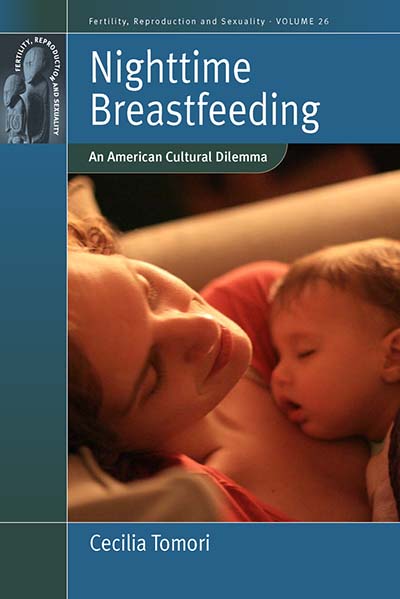
Nighttime Breastfeeding addresses the central question: why do so many American parents struggle with nighttime breastfeeding and sleep? I set out to answer this question, which emerged from my preliminary fieldwork, using the classic anthropological technique of participant observation. I spent many months immersed in fieldwork, and then many more surrounded by all the materials I had collected – piles of fieldnotes to interview recordings, brochures, photos, and, most importantly, memories of being with families who have graciously let me into their lives. I revisited key moments over and over again – recalling certain phrases, pauses, and gestures, which I could examine through the lenses offered by my anthropological training. Continue reading “Why do so many American Parents Struggle with Nighttime Breastfeeding and Sleep?” →
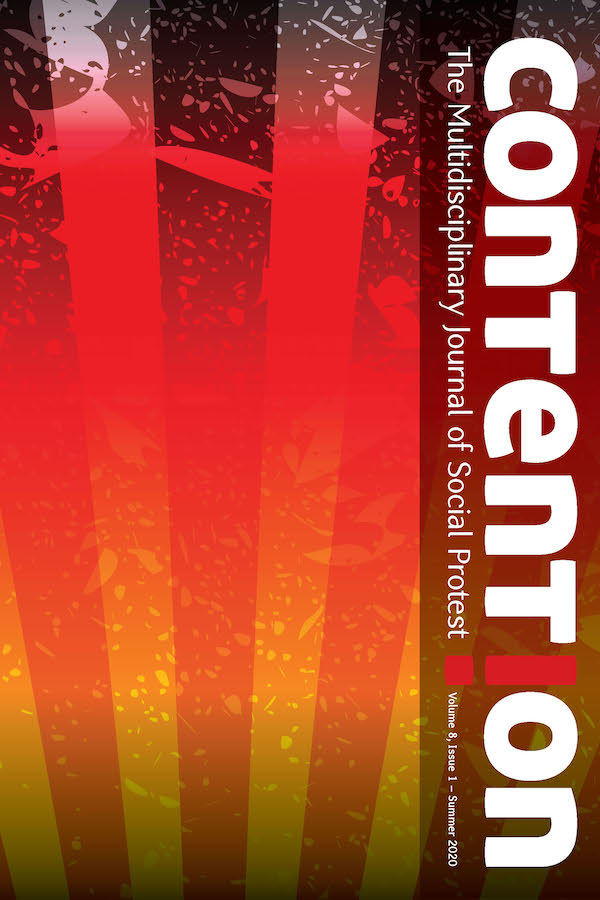
In 2011 a global wave of protest changed the way in which people saw contention. January saw two revolutions: first, in Tunisia culminating in the overthrow of then president Ben Ali; and second in Egypt with protests that would end the Mubarak regime within eighteen days. This wave of protest spread to Libya, Syria, Yemen and Bahrain changing the course of history for each country forever.
But protest would not be confined to the Middle East. Later that year the Iberian Peninsula ignited with protest and popular mass movements soon followed. The same could be seen in Italy and Greece. What had spread to Southern Europe would soon cross the Atlantic with the rise of Occupy Wall Street: first, in New York then across Northern America and finally, by 2012, across the globe as a worldwide occupy movement.
In the academic community, a fervent interest in these new protests and the general question of Contention would awaken across disciplines and in October of that year many of us came together at the University of Kent for the first international and interdisciplinary conference on social protest. Attendees ranged from across the social sciences, humanities and arts, as well as a substantial contingent of activists, revolutionaries and NGOs.
This enthusiasm led to the very first issue of Contention: The Multidisciplinary Journal of Social Protest, on Theory, Action and Impact in Social Protest. This issue was merely a collection of abstracts of the almost 200 papers presented at the conference but generated considerable excitement among our colleagues.
This became the springboard for two distinct ventures, first the creation of the Interdisciplinary Network for Social Protest Research which celebrates its fifth anniversary this year. Second, of course, was Contention which had expanded into a fully-fledged academic journal by 2013.
This year marks a similarly important step for Contention, with the move to a new publisher and to a new phase in the journal’s history. We are privileged to count among our editors a distinguished and international advisory board, as well as scholars of the highest calibre from across disciplines. The journal now attracts submissions of the highest quality and prides itself on a careful and inclusive review process.
So what’s next for Contention? Over the next five years we will aim to establish the journal as a world leading resource for social protest across disciplines. In conjunction with our partners at INSPR, we will strengthen our ties with academics and practitioners across the globe. In partnership with our publisher at Berghahn we will bring the journal to new audiences and even greater impact.
Promotion of ‘self-reliance’ for refugees has occupied a central seat in the policy arena of the international refugee regime in recent years. The United Nations High Commissioner for Refugees (UNHCR) broadly defines self-reliance as ‘the social and economic ability of an individual, a household or a community to meet essential needs in a sustainable manner’. Its guiding philosophy can be summarised as: refugees have the skills, capacity and agency to stand on their own and be able to sustain themselves without depending on external humanitarian aid. This concept has been universally embraced by policy-makers and aid agencies and has now become an increasingly visible part in refugee assistance and protection programmes worldwide.
But on the ground, what does it really mean for refugees to attain self-reliance?
While many policies have rhetorically committed to the importance of ‘helping refugees help themselves’, some fundamental questions remain unanswered.
First, do refugees have enabling conditions to achieve self-reliance? Currently, many refugees in the Global South are unable to fully exercise their right to work and to move freely due to regulations by their host governments. These impediments can severely constrain refugees’ capacity to construct meaningful livelihoods and limit their access to commercial markets. Under these restrictions, is it sensible to assume that refugees can attain self-reliance regardless of how industrious and ingenious they are?
Next, how do we determine whether refugees have achieved self-reliance? Despite its extensive promotion, there are to date no universally agreed systematic and rigorous criteria for measuring refugees’ self-reliance. Instead of using objective benchmarks, UNHCR often perceives refugees as self-reliant when they live without external assistance. Is the situation in which refugees living without aid a plausible indicator of ‘meeting their basic needs in a sustainable manner’, as defined by UNHCR?
Most importantly, for whom is refugees’ self-reliance being promoted? In theory, nurturing refugees’ self-reliance should entail a strategic shift from traditional relief aid to development-oriented support and the provision of enabling conditions for refugees to establish gainful livelihoods. Yet this is not happening in the field. Meanwhile, UNHCR and donor states usually start decreasing assistance for refugees while promoting refugees’ self-reliance. Is refugees’ self-reliance meant to empower refugees’ economic capacities or to justify cutting down aid for refugee populations?
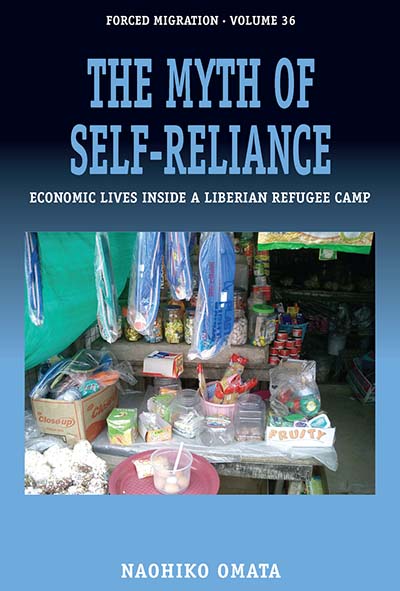
My authored book, The Myth of Self-Reliance, has explored these important but unsolved questions through a study of Buduburam refugee camp in Ghana. This Liberian refugee camp has been commended by UNHCR as an exemplary ‘self-reliant’ model in which refugees were sustaining themselves through robust businesses with little donor support. The UN refugee agency even boasted that the organization had facilitated their economic success by gradually withdrawing its assistance over the period of exile.
The book challenges the reputation of Buduburam refugee camp as a successful model for self-reliance and sheds light on considerable economic inequality between refugee households. Both qualitative and quantitative data reveal that a key livelihood resource for refugees in Buduburam was not their commercial activities but their access to overseas remittances, which had nothing to do with UNHCR’s initiatives to foster refugees’ self-reliance by withdrawing aid. While refugees who were receiving remittances were able to satisfy their basic day-to-day needs, those who had no connections to the diaspora were deeply impoverished.
There is increasing support for the idea that refugees are active and capable players with ingenuity and resilience. I agree wholeheartedly with this view in principle. However, it is irresponsible to assume that this can entirely replace the need for humanitarian aid and protection, in the absence of an enabling environment and adequate resources. Over-emphasis on the resilience, agency and capacity of refugees can obscure internal differentiations in their economic capacities, and universal celebration of refugees’ self-reliance can even undermine refugee protection and welfare. While we should certainly acknowledge and respect refugees’ capabilities and resourcefulness in the face of adversity, we should not dump all responsibilities on the shoulders of refugees alone.
Given the daunting scale of refugees globally, it is undeniable that we need to pioneer new ways to support and enable their socio-economic independence in the long-term. However, making refugee self-reliance a reality necessitates a strong commitment and investment from not only refugee but host governments, the donor community, development agencies, UNHCR, and other relief organizations.
Learn more about The Myth of Self-Reliance: Economic Lives Inside a Liberian Refugee Camphere and read the Introduction for free online.
 Join our Email List




 Paperback Original
 We are delighted to inform you that we will be attending