The Ethical Sequence of Eugenics?

If you could modify the human population to be more intelligent or more beautiful, would you? When this idea of eugenics — or selectively breeding a population with more “desirable” traits — was first popularized in the twentieth century, such contemporary figures as Winston Churchill, Theodore Roosevelt, H.G. Wells, and, not surprisingly, Adolf Hitler, were supporters. Now, with renewed interest in the science of eugenics, editors Calum MacKellar and Christopher Bechtel explore the unsavory aspects and issues in The Ethics of the New Eugenics, to be published this month. Following, the editors explain what led them to study this science, and what may be ahead for the field.


___________________________________________


What drew you to the study of eugenics?


Calum MacKellar: Over the many years that I have worked in the field of human bioethics, I have always suspected that the topic of eugenics would eventually come back to haunt society.
Continue reading “The Ethical Sequence of Eugenics?”

Uzbekistan, Social Network of Choice

In the Republic of Uzbekistan, being Uzbek has less to do with one’s lineage and more to do with one’s allegiance to a society. The advantages of this voluntary membership within the Uzbek “social network” are explored in Variations on Uzbek Identity: Strategic Choices, Cognitive Schemas and Political Constraints in Identification Processes. Below, Peter Finke discusses his attraction to Uzbekistan, his writing process, and the volume’s potentially controversial reception.


_____________________________________________

Berghahn Books: What drew you to the study of Uzbekistan, specifically “Uzbek Identity”?


Peter Finke: My general interest in Central Asia goes back a long way into childhood fantasies of roaming horse riders and the like. Most of Uzbekistan does not really fit that well into this and indeed my early research in the region was on nomadic pastoralists in Western Mongolia. It was after I took up a postdoc at the Max Planck Institute to work on identity issues that I not only switched topics but also field sites.

Continue reading “Uzbekistan, Social Network of Choice”

Policy-Tracing Up, Down, Sideways

In an excerpt from the Introduction of A Policy Travelogue: Tracing Welfare Reform in Aotearoa/New Zealand and Canada, published in September, Catherine Kingfisher explains just how she came to be interested in the subject of welfare policy, and its existence as a living, working idea.


____________________________________

My interest in tracing policy began in the summer of 2000, when I was writing grant applications to work with welfare mothers in southern Alberta, where I had recently moved from Aotearoa/New Zealand. I discovered that in the early 1990s the Alberta provincial government of premier Ralph Klein, in the process of reforming its governing structures and welfare systems, had been heavily influenced by Roger Douglas, the former Finance Minister of New Zealand.

Continue reading “Policy-Tracing Up, Down, Sideways”

The Life of Policy in Canada and New Zealand

Policies have their own lives, and these lives are not “a-cultural, rational, and straightforwardly technical,” puts forth Catherine Kingfisher in her volume, A Policy Travelogue: Tracing Welfare Reform in Aotearoa/New Zealand and Canada, published in September. Following is an excerpt from the monograph’s Introduction in which the author sets the scene for her discussion of how policy lives within welfare reform in two distinct countries.


______________________________________


I use the frames of translation and assemblage to gain insight into a range of policy-related phenomena in particular spaces and contexts of occurrence. First, I explore the transformation of objects as they are translated from one philosophical and political framework—Keynesianism—into another—neoliberalism. Brodie (2002:100) points out in this regard that the privatization characteristic of neoliberalism: “[i]nvolves much more than simply removing things from one sector and placing them in another….the thing moved is itself transformed into something quite different. Objects become differently understood and regulated.”

Continue reading “The Life of Policy in Canada and New Zealand”

The Myriad Measures of Achievement

Achievement is commonly defined as a successful completion of a given undertaking, but what it means to “achieve” is not a static idea the world over. Contributors to The Social Life of Achievement, published last month, examine meanings of achievement in countries and cultures throughout the world. Below, co-editor Nicholas J. Long addresses the term and provides insight into the background of the volume, from its inception to its subjects to its methodology.


_______________________________________________


Berghahn Books: What drew you to the study of achievement? And what inspired you to research and write about it?


Nicholas J. Long: Fieldwork! In the Riau Islands – the region of Indonesia where I’ve conducted most my research – people talk and think about achievement all the time. It’s become an integral component of the citizenship syllabus: students are taught that a good Indonesian should try to seize any opportunities for ‘achievement’ that they can. And it’s an incredibly widespread trope in public culture. I quickly realised that I wasn’t going to be able to write a good ethnography of the region without engaging in some way with this achievement discourse and how it was shaping people’s lives.

Continue reading “The Myriad Measures of Achievement”

A Reflection on ‘Japanese Tourism’

Carolin Funck and Malcolm Cooper’s Japanese Tourism: Spaces, Places and Structures, published this month, explains the nuances of Japanese tourism, both by the Japanese and within Japan by tourists from around the world. Below, the editors recall what drew them to this fascinating field of study, how the field has changed since they started writing, and how they predict it will continue to change in the future.


__________________________________________


Berghahn Books: When were you drawn to the study of Japanese tourism? What inspired your love of your subject?


Malcolm Cooper: The lack of a readily available text that brought together the several elements of Japanese tourism and chronicled its form and function over the years when I first started to teach this subject more than 10 years ago.

Continue reading “A Reflection on ‘Japanese Tourism’”

An Uprising of Historical Importance

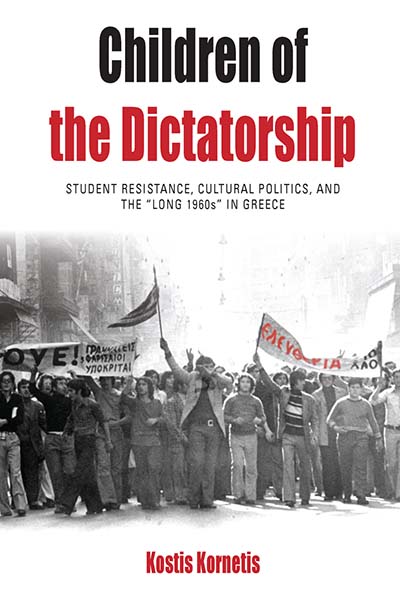
The cyclical course of history comes into sharp focus when one looks at Greek political uprisings. The widely publicized youth dissent in recent years is nothing new, but actually has earlier roots in 1973 — with different players, but with the same activist vigor. This 1970s group — later to be known as the Polytechnic Generation — comes into clear focus in newly published Children of the Dictatorship: Student Resistance, Cultural Politics and the “Long 1960s” in Greece, by Kostis Kornetis. Following is the opening to the volume’s introduction. 


___________________________________

In 2010 the well-known British Pakistani writer and political activist Tariq Ali commented that “were there a Michelin Great Protest guide, France would still be top with three stars, with Greece a close second with two stars.” Ali did not only refer to the 2005 riots in France and the 2008 civil disturbances in Greece, but to a longue durée structure of civil disobedience in the two countries that dates back to the 1960s and 1970s.


Continue reading “An Uprising of Historical Importance”

The New Namibia: Building a Nation after Apartheid

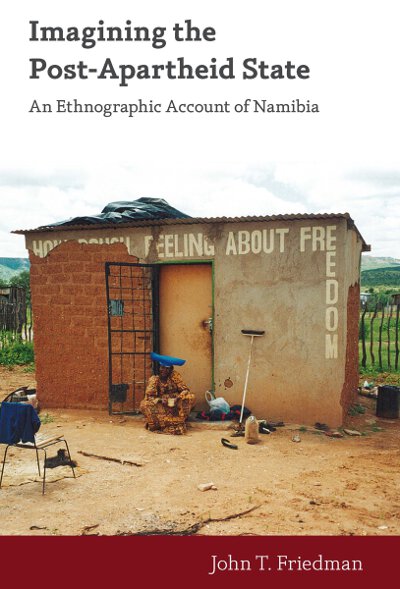
In 1990, Namibia gained its independence as a democratic state from the South African apartheid regime. Author John T. Friedman reflects on what this realistically meant and currently means for the making of a Namibian state in Imagining the Post-Apartheid State: An Ethnographic Account of Namibia, the paperback version of which was published last month after the original was published July 2011. Below the author explains his ethnographic method in an excerpt from the Introduction.


___________________________________


http://www.berghahnbooks.com/covers/FriedmanImagining.jpg

At first reading, the title of this book is likely to arouse some scepticism. How is it possible for an anthropologist to present an ethnographic account of Namibia, of an entire country? As anthropologists we are accustomed to investigate the localised, the small-scale, the village community. We are specifists, not generalists. The critic will thus be quick to suggest that any such attempt can yield only two possible outcomes: either a generalised account of ‘the Namibian people’, or a superficial survey of Namibia’s ethnic groups.

Continue reading “The New Namibia: Building a Nation after Apartheid”

Likelihood of Contact Depends on the Lifetimes of Civilizations

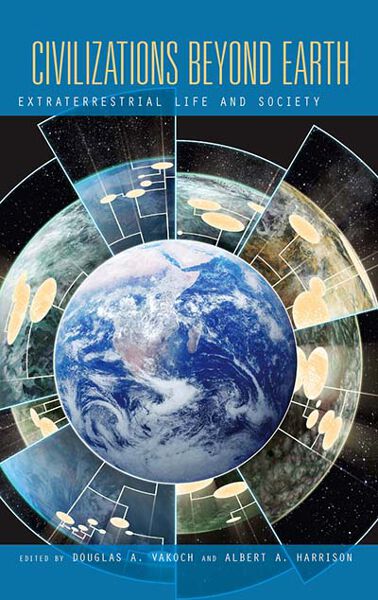
If alien civilizations are anything like terrestrial civilizations, earthly beings may never encounter beings from outer space. Civilizations Beyond Earth contributor Alan J. Penny says our greatest chance for interaction will hinge on the longevity and attention span of an alien society — which must be long enough to give us a chance to interact.


________________________________________

To consider the number of extraterrestrial civilizations that may be out there and which we can detect by their emission of radio signals, we need to think about the likelihood that a star may host a planet with a civilization that can broadcast such signals.


But we also need to think about how long such civilizations last.

Continue reading “Likelihood of Contact Depends on the Lifetimes of Civilizations”

Berghahn Author Asks: ‘Quo Vadis FEMEN?’

FEMEN is a Ukrainian feminist protest group that has become infamous for its topless protests against patriarchy. The group, founded in 2008, has since grown to be a worldwide phenomenon, and not simply because its protests are often seen as “sextreme.” Marian Rubchak, editor of Mapping Difference: The Many Faces of Women in Contemporary Ukraine, takes a look into the history and meaning of the movement, and asks: Where is it going? 


________________________________________


Marian Rubchak

The year was 2008; 17 years had passed since Ukraine declared its independence and early advocates of change began to espouse high-minded ideals designed to promote women’s rights. These incipient feminists laid the groundwork for raising an awareness of discrimination against women, and were instrumental in advancing the passage of some of the most progressive pro-women legislation Ukraine had yet seen. Fast forward to 2008 — the promising beginnings were moving very slowly, too slowly. Clearly the work of reform would need to proceed to a higher level.

Continue reading “Berghahn Author Asks: ‘Quo Vadis FEMEN?’”