Unmasking the Visages of Ukrainian Women

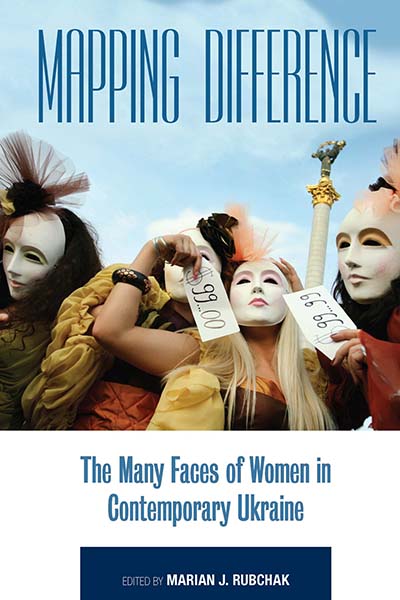
A look into the life of post-Soviet Ukrainian women, Mapping Difference: The Many Faces of Women in Contemporary Ukraine is now available in paperback. This book uncovers the virtues of women that sometimes lie just beneath negative gender stereotypes. Following, editor of the collection, Marian Rubchak, gives readers a deeper look into the volume via the book’s cover.


_________________________________


Since the demise of the Soviet “Empire of Nations”[i] in 1991 Ukraine’s women have lived in a world largely shaped by the rejection of communist values and efforts to transform a moribund socialist system into an open democratic society. Early in the transformative period this society gave rise to a small core of female activists who chose to work within the existing system, with its traditional values, to effect the changes that would return their voice to women. Although they disavowed the label of feminist as a self-descriptor their agendas clearly reflected feminist principles.
Continue reading “Unmasking the Visages of Ukrainian Women”

The Wounds of our Warriors

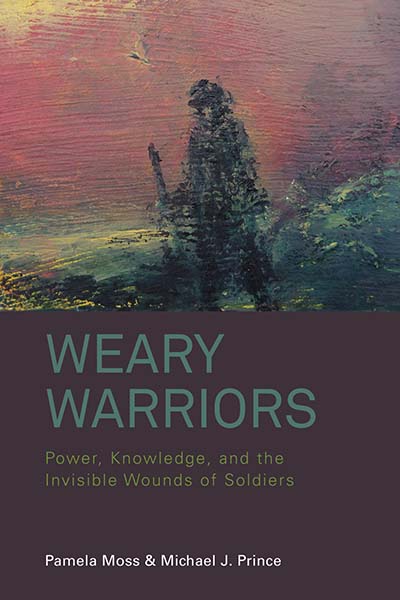
Just because one cannot see wounds does not mean they are not there. Pamela Moss and Michael J. Prince analyze war-derived psychological trauma in their co-authored volume, Weary Warriors: Power, Knowledge, and the Invisible Wounds of Soldiers. Following, the authors share their personal backgrounds and further insight into their volume.


________________________________


How were you drawn to the topic of invisible wounds of combatants?


Michael J. Prince: In a personal way, my interest in the subject of weary warriors comes from being the son of a Second World War veteran. My father served in the Royal Canadian Air Force overseas as flying officer, wireless operator and air gunner, so I grew up in a family in which these topics were, at times, discussed. In a professional way, my work on developments in welfare states highlighted the significant place of wars, soldiers, and veterans in the struggles around the formation of social programs.

Continue reading “The Wounds of our Warriors”

Women in History

Eighty six years ago on June 18, 1928, Amelia Earhart became the first woman to fly across the Atlantic as a passenger aboard a Fokker tri-motor aircraft that was piloted by Wilmer Stultz and Louis Gordon. Just four years later, in 1932 Amelia Earhart was the first woman to fly solo nonstop across the Atlantic Ocean. She completed her 2,026 mile journey in under 15 hours after departing from Harbour Grace, Newfoundland.

Forty five years later on same date, June 18, 1983, Sally Ride became the first American woman to fly to space as a crew member on space shuttle Challenger for STS-7.

To celebrate women in history we invite you to browse through some of our Gender Studies titles:

_________________________________________________________________


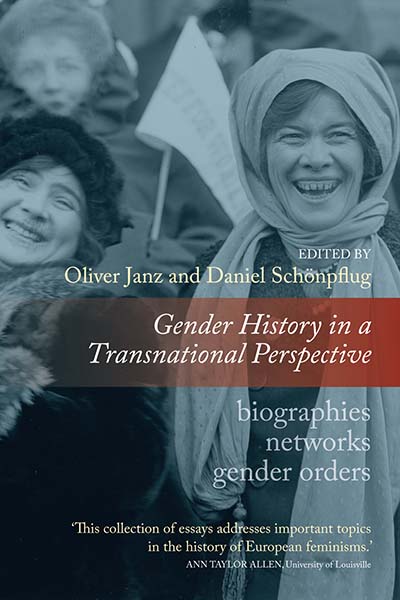
GENDER HISTORY IN A TRANSNATIONAL PERSPECTIVE
Networks, Biographies, Gender Orders
Edited by Oliver Janz and Daniel Schönpflug Continue reading “Women in History”

Simulated Shelves: Browse June’s New Books

We’re delighted to offer a selection of soon-to-be-published titles from our core subjects of Anthropology, Medical Anthropology, History, Sociology, Travel & Tourism and Urban Studies. The following list of new volumes is complete with brief descriptions of the books and a peek at each cover. 

_________________________________

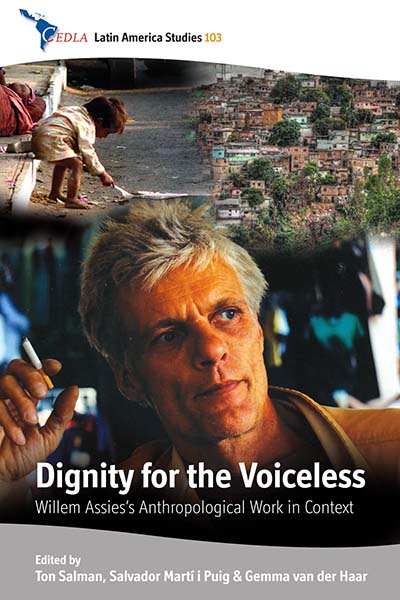
DIGNITY FOR THE VOICELESS

Willem Assies’s Anthropological Work in Context

Edited by Ton Salman, Salvador Marti i Puig, and Gemma van der Haar Continue reading “Simulated Shelves: Browse June’s New Books”

A Celebration of Asian-Pacific Heritage

In 1992, a bill was signed into law designating May as Asian-Pacific American Heritage Month. According to the Asian-Pacific Heritage website, “The month of May was chosen to commemorate the immigration of the first Japanese to the United States on May 7, 1843, and to mark the anniversary of the completion of the transcontinental railroad on May 10, 1869.” Commemorate this month with the following selection of Asia-Pacific titles, and view the complete list here.


___________________________________

Asia Pacific World

The Journal of the International Association for Asia Pacific Studies

Chief Editor: Malcolm J.M. Cooper, Ritsumeikan Asia Pacific University (APU)

Published on behalf of the International Association for Asia Pacific Studies Continue reading “A Celebration of Asian-Pacific Heritage”

Marx is the New Black

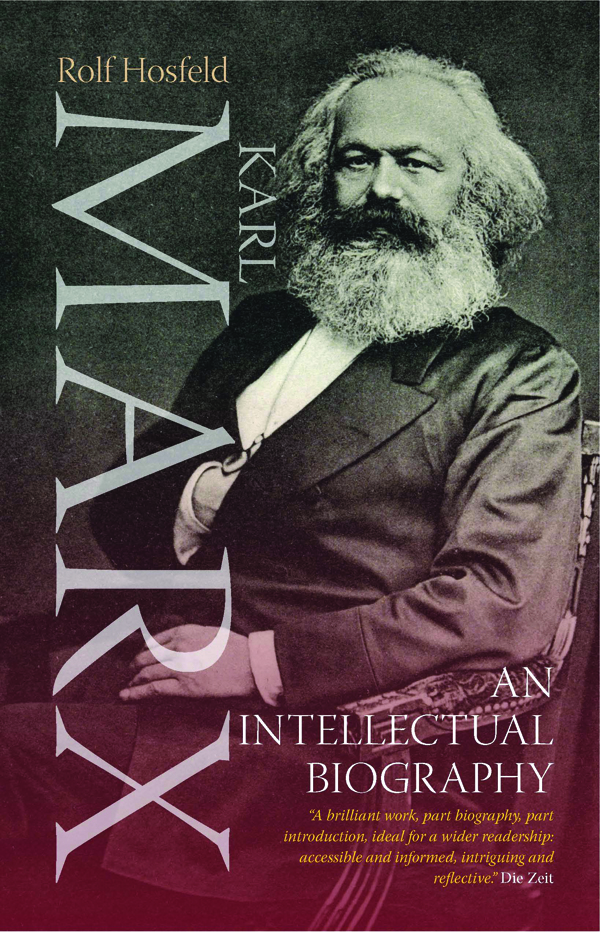
HosfeldKarlWere he still alive, the philosopher behind The Communist Manifesto and Das Kapital would be celebrating his 196th birthday today.

Marx has made a comeback recently, with new books on his life and ideas popping up more frequently, and a new wave of “Millennial Marxists” taking to social media to discuss the original socialist’s ideas in a more modern light.

In honor of the undeniable influence Karl Marx has had on economic and political discourse over the years, we invite you to take a look at our intellectual biography of the philosopher himself.


Here’s what the critics are saying about Karl Marx: An Intellectual Biography by Rolf Hosfeld:

“…an elegant compact study [that] explores Marx’s ideas in all their messy complexity.” —Times Literary Supplement

“This 200 page compendium is a deftly written biography offering an informed and informative presentation of Marx’s turbulent personal and professional life. A seminal work of impressive scholarship, [this book] is enhanced by the inclusion of an extensive bibliography making it an especially useful and highly recommended contribution to academic library reference collections and Marxist Studies supplemental reading lists.” —The Midwest Book Review

“This book is a delightful gain: biography, theory, revolutionary history, modern history—altogether convincing and gripping. The lively portrait of a brilliant, eternally radical, and strictly speaking rather apolitical, philosopher is illustrated here by Rolf Hosfeld—A great achievement.” —DeutschlandRadio


Click here to learn more!


Simulated Shelves: Browse May’s New-Book Library

This month, Berghahn’s library will expand by eleven books. The soon-to-be-published titles make up a distinct lot, ranging from Abigail Loxham’s Cinema at the Edges to Anne Eriksen’s Antiquities to Heritage to Philip Ther’s The Dark Side of Nation-States. The following list of new volumes is complete with brief descriptions of the books and a peek at each cover.

_____________________________


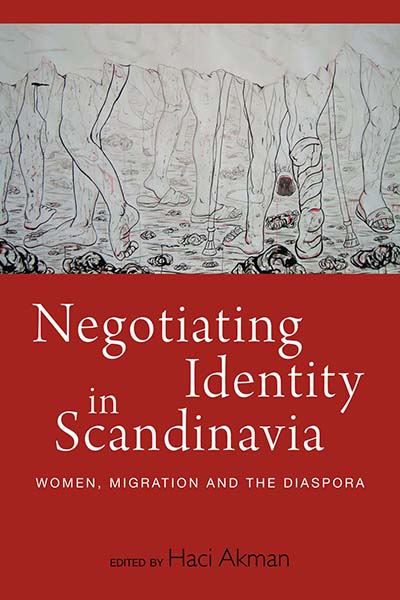
NEGOTIATING IDENTITY IN SCANDINAVIA

Women, Migration and the Disaspora

Edited by Haci Akman

Continue reading “Simulated Shelves: Browse May’s New-Book Library”

A Look through the Lens at ‘Domesticating Youth’


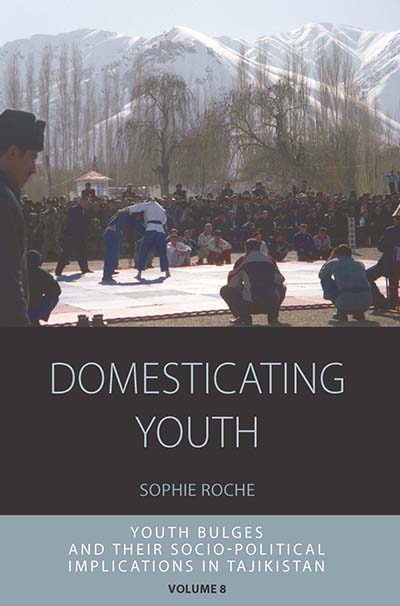
Sophie Roche’s volume Domesticating Youth: Youth Bulges and their Socio-political Implications in Tajikistan, published last month, is the fruit of her ethnographic labor in the post-Soviet republic of Tajikistan. During her fieldwork in the first decade of the 21st century, the country was in a state of transition following its civil war in the 1990s and subsequent population growth. In an earlier post, which can be read here, the author wrote of her study within the country — specifically how it changed after she left. Following she returns to her story of the country — this time through photos from her fieldwork in three locations within Tajikistan: Jirgatol, Shahritus, and Shahrigul.

Continue reading “A Look through the Lens at ‘Domesticating Youth’”

Examining ‘Public Health’: A Reflection on Reception

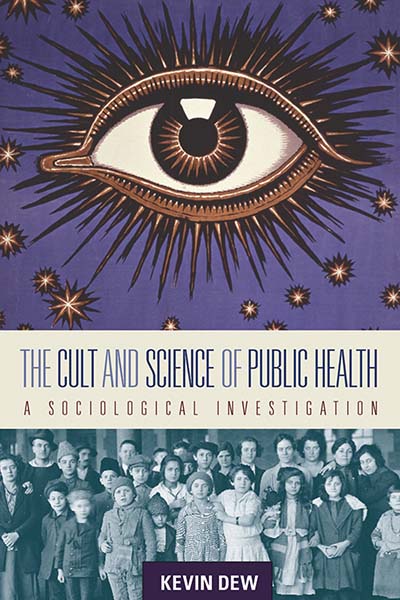
With World Health Day coming up April 7, the paperback release of Kevin Dew’s exploration of public health is quite timely. The Cult and Science of Public Health: A Sociological Investigation was published originally in February 2012 and will be published as a paperback this month. Below is a brief description of the book, and the author’s reflection on its reception since the initial publication.

________________________________________________


As a cult of humanity, public health provides a moral force in society that replaces ‘traditional’ religions in times of great diversity or heterogeneity of peoples, activities and desires. This is in contrast to public health’s foundation in science, particularly the science of epidemiology. The rigid rules of ‘scientific evidence’ used to determine the cause of illness and disease can work against the most vulnerable in society by putting sectors of the population at a disadvantage.

Continue reading “Examining ‘Public Health’: A Reflection on Reception”

‘Youth Bulge’ and Social Change in Tajikistan

It is common for a society’s population to grow exponentially after a war. In the U.S., the best example of this “youth bulge” is the population of post-World War II “Baby Boomers.” In her soon-to-be-released volume, Domesticating Youth: Youth Bulges and their Socio-political Implications in Tajikistan, Sophie Roche explores this phenomenon in post-civil war Tajikistan and what its implications may be. Following, the author reflects on her fieldwork, and shares how it felt to return to her site after a decade of absence.


_____________________________________________


With an ethnographic book a story is out in the world that has been documented for a while but that does not stop with the last page but continues to develop. Often after reading an ethnographic study I wonder what happened to the actors in the book, some of whom we are introduced very intimately; what happened to the place, the village, the authorities, the children? Where they really just living to be examples of a theory? How does the story of the people develop after the book?

Continue reading “‘Youth Bulge’ and Social Change in Tajikistan”