A New Model for Interstellar Communication

Communication between great distances is nearly instantaneous and is becoming faster every day. But when discussing communication with beings outside of our solar system, emails and text messages are still not fast enough to span the light-years of distance in one person’s lifetime. Civilizations Beyond Earth: Extraterrestrial Life and Society contributor Carl L. DeVito proposes that perhaps communication to the far reaches of space is about leaving a mark or a legacy, much like great civilizations of yore left for modern-day humans.


________________________________

 

The laws of physics and the discoveries of astronomy place serious restrictions on interstellar communication.


Stars are light-years apart, and the special theory of relativity tells us that there are restrictions on the speed at which information can be exchanged. The times involved in sending and receiving messages, which may exceed many generations, rule out a dialogue.

Continue reading “A New Model for Interstellar Communication”
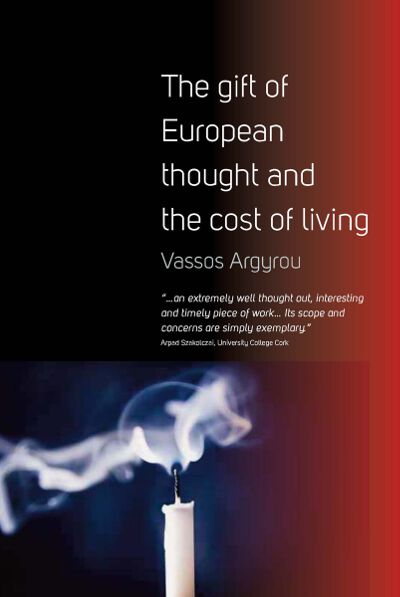
European Thought: The ‘Gift’ that Keeps Giving

Is the spread of Western, specifically European, thought truly a gift to the rest of the world, or is this dissemination simply a way of exerting cultural power? Vassos Argyrou seeks an answer to this question in his newly released volume The Gift of European Thought and the Cost of Living. Below, the author explains his inspiration for—and the challenges and rewards of—writing the book, published September 2013.


_________________________________________


Berghahn Books: What drew you to the study of “European Thought” and what are some examples of this?


Vassos Argyrou: “European thought” is a term that in a certain sense was imposed on me as it was used to make the highly contentious claim that it’s a gift to the rest of the world. It refers not only to an intellectual tradition but also to a way of life or culture—European or,  more broadly, Western culture.

Continue reading “European Thought: The ‘Gift’ that Keeps Giving”

Extra-Terrestrial Life: Good or Bad News?

Is there life beyond Earth? And how will the human race — specifically our media — react if there is? Civilizations Beyond Earth: Extraterrestrial Life and Society, which will be released as a paperback this month, is a collection of essays that address the (plausible) possibility that we are not alone in the universe. If that is true, and if we do one day make contact — wonders contributor Morris Jones — how will news outlets portray such an event? And will that lead to worldwide awe or global panic?


________________________________________________________


Let’s assume that evidence of intelligent extraterrestrial life is discovered tomorrow.


Continue reading “Extra-Terrestrial Life: Good or Bad News?”

Life Beyond Earth? Survey Says…

In 2005, a survey of 1,000 U.S. men and women of various backgrounds revealed that 6 in 10 Americans believe in the possibility of extraterrestrial life. If this slice of the public is correct, what does it mean for our world? That is one of the questions editors Douglas A. Vakoch and Albert A. Harrison attempt to answer through the collection Civilizations Beyond Earth: Extraterrestrial Life and Society, which was released in paperback August 2013. Below, volume contributor George Pettinico begs the question of the American reaction: How will the U.S. react if we discover life outside of our blue planet?

_____________________________________________


Imagine the day, if and when it should come, that the Search for Extraterrestrial Intelligence (SETI) confirms there is indeed intelligent life on other planets.


Continue reading “Life Beyond Earth? Survey Says…”

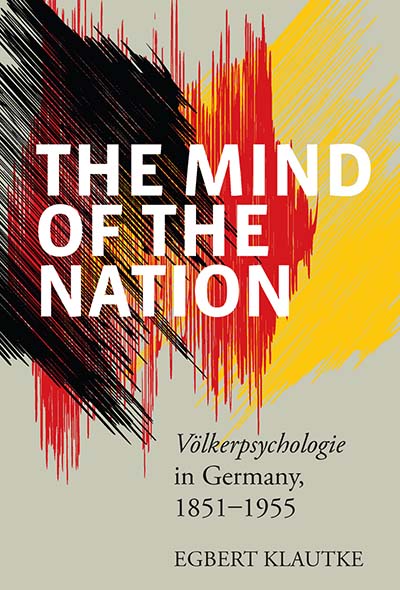
The Rise and Fall of Völkerpsychologie

Before there was cultural psychology, there was Völkerpsychologie. This social science was used as a way of looking at cultures and trying to make sense of them—an attempt often seen as stereotyping. But, in The Mind of the Nation: Völkerpsychologie in Germany, 1851-1955, to be released this month, author Egbert Klautke gives the often-overlooked social science due credit. He shares his thoughts about the volume and this particular form of psychology below.

______________________________________________________


Berghahn Books: How would you define “Folk Psychology” and what drew you to the study of it?


Egbert Klautke: “Folk Psychology” is an awkward translation of the German term Völkerpsychologie. Originally, it referred to attempts to study the psychological make-up of nations, and as such is a forerunner of today’s social psychology. However, in today’s common understanding, Völkerpsychologie equals national prejudice: it is seen as a pseudo-science not worth considering seriously. Continue reading “The Rise and Fall of Völkerpsychologie”

A Matter of Identity: What it Means to be Jewish in the 21st Century

Race, Color, Identity: Rethinking Discourses about ‘Jews’ in the Twenty-First Century, published May 2013, opens a fresh discussion about Jewish racial identity in the Twenty-First Century. Below, editor Efraim Sicher shares how a resurgence of racism, advances in genetic technology, and social and cultural constructs have given fresh breath to a discussion within the volume of what Jewishness means today.


____________________________________


Berghahn Books: Did any perceptions on the subject change from the time you started your research/compiled the contributions to the time you completed the volume?


Continue reading “A Matter of Identity: What it Means to be Jewish in the 21st Century”

Hot Off the Presses – New Book Releases

SilvermanPalimpsesticNewly released titles from Berghahn’s film studies, cultural studies, and anthropology lists:

Places of Pain: Forced Displacement, Popular Memory and Trans-local Identities in Bosnian War-torn Communities, Hariz Halilovich

The Colours of the Empire: Racialized Representations During Portuguese Colonialism, Patrícia Ferraz de Matos

The German Student Movement and the Literary Imagination: Transnational Memories of Protest and Dissent, Suzanne Rinner

Palimpsestic Memory: The Holocaust and Colonialism in French and Francophone Fiction and Film, Max Silverman

Hot Off the Presses – New Paperback Releases

JerzyNewly released paperbacks from Berghahn:
The Ju/’Hoan San of Nyae Nyae and Namibian Independence: Development, Democracy, and Indigenous Voices in Southern Africa, Megan Biesele and Robert K. Hitchcock

Jerzy Skolimowski: The Cinema of a Nonconformist, Ewa Mazierska

Avant-Garde to New Wave Czechoslovak Cinema, Surrealism and the Sixties, Jonathan L. Owen

Anthropologies of Education: A Global Guide to Ethnographic Studies of Learning and Schooling, edited by Kathryn M. Anderson-Levitt

Hot Off the Presses – New Book Releases

Newly released titles from Berghahn’s history and anthropology lists:

The Viennese Café and Fin-de-siècle Culture, edited by Charlotte Ashby, Tag Gronberg and Simon Shaw-Miller

Blood and Kinship: Matter for Metaphor from Ancient Rome to the Present, edited by Christopher H. Johnson, Bernhard Jussen, David Warren Sabean, and Simon Teuscher

A Social History of Europe, 1945-2000: Recovery and Transformation after Two World Wars, Hartmut Kaelble

Two Sides of One River: Nationalism and Ethnography in Galicia and Portugal, António Medeiros

The Golden Chain: Family, Civil Society and the State, edited by Jürgen Nautz, Paul Ginsborg, and Ton Nijhuis

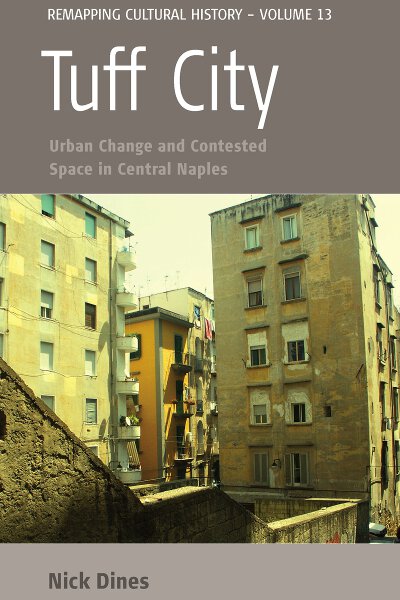
An Excerpt from Tuff City: Urban Change and Contested Space in Central Naples

Tuff City is an ethnographic history of urban renewal in the historic centre of Naples during the 1990s under the stewardship of the city’s first directly elected mayor, former communist Antonio Bassolino. Through the study of two major piazzas and a squatted centro sociale (social centre), the book explores the pivotal role of public space in the administration’s efforts to reorder and redefine a city that had hitherto been commonly regarded as an urban outcast. It thus sets out to investigate how changes to the built environment were, on the one hand, produced and publicly endorsed and, on the other, experienced and contested by different groups of people.  Understanding public space means grappling with the messy and perhaps ugly pluralism that constitutes urban life, rather than unwittingly confirming normative and institutional ideals about a ‘good’ (and, especially in the case of Naples, ‘well-behaved’) city.


The following extract is taken from the case study of DAMM located in the popular quarter of Montesanto.  As a local resident, I grew to appreciate the complex dynamics of the surrounding social milieu that some outside observers have hastily (mis)labelled ‘inner city’ or ‘working class’ and which local orthodox leftists had in the past dismissed as ‘lumpen’ and ‘pre-political’. Following the occupation of a three-storey building in 1995, the occupants of DAMM – a mix of local residents, students and cultural workers – sought to develop an alternative idea of public space through the self-management of an adjacent park and public escalator system that were built following the 1980 earthquake, but which had been left in a state of abandonment. This extract highlights a theme that lies at the heart of Tuff City, namely, how the politics of regeneration was continually stymied and reformulated through everyday uses of, and struggles over urban space. Continue reading “An Excerpt from Tuff City: Urban Change and Contested Space in Central Naples