Berghahn Books at the GSA 2015 Conference!

We are delighted to inform you that we will be attending the annual German Studies Association conference in Washington D.C., on October 1-4, 2015. Please stop by our stand to browse our latest selection of books at discounted prices & pick up some free journal samples. If you are unable to attend, we would like to provide you with a special discount offer. For the next 30 days, receive a 25% discount on all German Studies titles found on our website. At checkout, simply enter the discount code GSA15.

We hope to see you in Washington D.C.!

_________________________________________________________________________

Here is a preview of some of our newest releases on display:

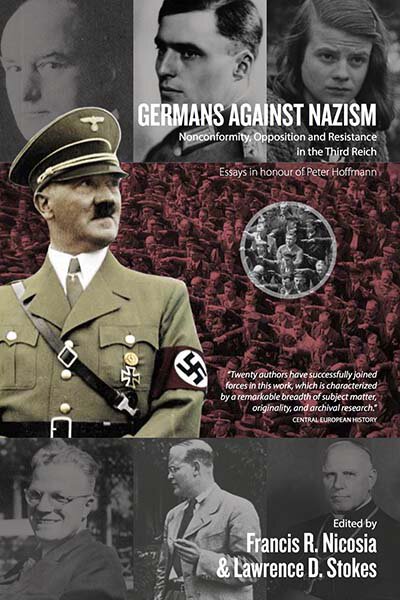
GERMANS AGAINST NAZISM
Nonconformity, Opposition and Resistance in the Third Reich: Essays in Honour of Peter Hoffmann
Edited by Francis R. Nicosia and Lawrence D. Stokes†
New and Revised Paperback Edition

Continue reading “Berghahn Books at the GSA 2015 Conference!”

Simulated Shelves: Browse August 2015 New Books

We’re delighted to offer a selection of latest releases from our core subjects of Anthropology, Film Studies, Genocide Studies, History, and Politics.


We are especially excited to announce the publication of Final Sale in Berlin, by Christoph Kreutzmüller.

“Christoph Kreutzmüller’s book is vigorously researched, elegantly structured and well-written, and succeeds in providing new information on a subject already exhaustively studied, namely ‘Aryanization’ and the destruction of business, that extends beyond the borders of Berlin.” · H-Soz-u-Kult

——————————————————————————————————————–


FINAL SALE IN BERLIN
The Destruction of Jewish Commercial Activity, 1930-1945
Christoph Kreutzmüller
Translated from the German by Jane Paulick and Jefferson Chase

Click to read the Introduction!

Continue reading “Simulated Shelves: Browse August 2015 New Books”

International Day of Democracy 2015


In 2007 the United Nations General Assembly resolved to observe 15 September as the International Day of Democracy—with the purpose of promoting and upholding the principles of democracy—and invited all member states and organizations to commemorate the day in an appropriate manner that contributes to raising public awareness. Read more about this special day at the UN website.

In honor of this year’s observance, we’ve highlighted select books and journals below.

Continue reading “International Day of Democracy 2015”

Celebrating the New School Year

“Education is the most powerful weapon which you can use to change the world.”Nelson Mandela

As the summer ends and the weather turns, the new school year begins. Although the first day varies in different parts of the world, generaly school begins in late August or early September in the northern hemisphere. Berghahn is happy to welcome everyone back with some relevant Education Studies titles.

——————————————————————————————————————–


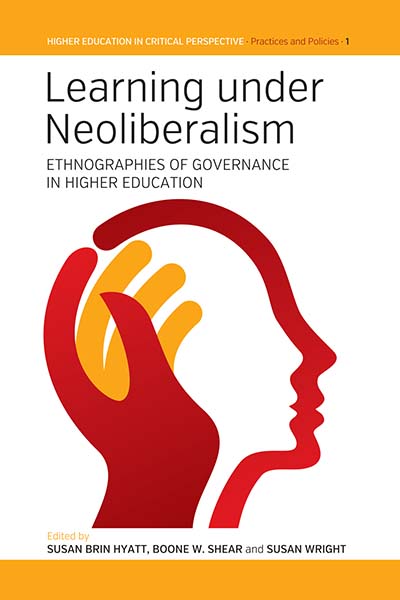
LEARNING UNDER NEOLIBERALISM
Ethnographies of Governance in Higher Education
Edited by Susan Brin Hyatt, Boone W. Shear, and Susan Wright

Volume 1, Higher Education in Critical Perspective: Practices and Policies Series

Continue reading “Celebrating the New School Year”

Simulated Shelves: Browse July 2015 New Books

We’re delighted to offer a selection of latest releases from our core subjects of Anthropology, Applied Anthropology, Education, Film Studies, History, Media Studies, Refugee & Migration Studies, Socio-Legal Studies, and Sociology, along with a selection of our New in Paperback titles.

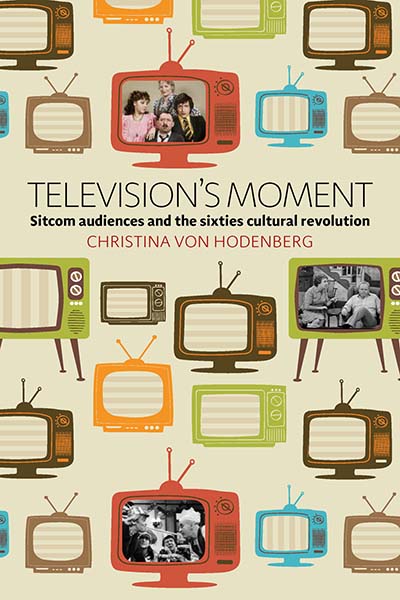
We are especially excited to announce the publication of TELEVISION’S MOMENT by Christina von Hodenberg.

“… A very interesting analysis of how sitcoms negotiated the ‘culture wars,’ paying particular attention to discussions of gender, race, and sexuality. Particularly effective here is the ability to set the text—the sitcom—into the larger context of politics, culture, and society in the three national cases the author compares… The book makes an important methodological contribution … it will make a splash with historians … and students of film and media studies.” · Robert Moeller, University of California, Irvine

———————————————————————————————————————————–


TELEVISION’S MOMENT
Sitcom Audiences and the Sixties Cultural Revolution
Christina von Hodenberg

Continue reading “Simulated Shelves: Browse July 2015 New Books”

Coming Soon: Boyhood Studies – An Interdisciplinary Journal

Boyhood StudiesWe’re pleased to announce the launch of an exciting new journal in 2015 titled Boyhood Studies: An Interdisciplinary Journal. The first issue will be published this month!


Boyhood Studies: An Interdisciplinary Journal is a peer-reviewed journal providing a forum for the discussion of boyhood, young masculinities, and boys’ lives by exploring the full scale of intricacies, challenges, and legacies that inform male and masculine developments. Boyhood Studies is committed to a critical and international scope and solicits both articles and special issue proposals from a variety of research fields including, but not limited to, the social and psychological sciences, historical and cultural studies, philosophy, and social, legal, and health studies.


Read the table of contents for the first issue here.


Read an excerpt, written by editor Diederik F. Janssen, from the Editorial of the first issue:


I am most excited to be announcing the first issue of Boyhood Studies: An Interdisciplinary Journal. The journal continues Thymos: Journal of Boyhood Studies, seven volumes of which were published between 2007 and 2013 by The Men’s Studies Press. Boyhood Studies will complement the prize-winning title Girlhood Studies: An Interdisciplinary Journal, published by Berghahn since 2008.


Having co-nurtured Thymos, initially with Miles Groth of Wagner College, on the basis of two exploratory bibliographies on boyhood and girlhood studies (unofficially web-published first in June 2005), I feel thrilled about the vitality and now co-residence of both journals ten years onward. Over the years, both journals have featured a wide range of scholarship, and have been helpful in imagining what, thereby, became eponymous fields of scholarship. I am most privileged to be able to thank both Dr. James Doyle of The Men’s Studies Press for his unrelenting dedication, his energy, and continued intellectual companionship, and Vivian Berghahn and the Berghahn production team, for their vision, support, and hard work in making this re-launch a possibility.

….

As originally envisioned in Thymos, we hope that Boyhood Studies: An Interdisciplinary Journal will be of help in making sense of all the awards, nominations, views, comments, and criticism that boy culture is, apparently, able to elicit. What (analytic) gaze do boys, young and older, deserve? What spectacle do they present to the observing eye, beyond that of the remnants or ruins of patriarchy? What do boys need from teachers, parents, friends, and loved ones? What are the latter asking of the boy? Historical, anthropological,
and practice-based contributions are all welcomed—they are all needed—to answer these global questions.


DIEDERIK F. JANSSEN is an independent researcher residing in Nijmegen, The Netherlands. A co-founder and later editor of Thymos: Journal of Boyhood Studies (The Men’s Studies Press 2007-2013), he is editor of Boyhood Studies: An Interdisciplinary Journal (Berghahn Journals), founding and current editor of Culture, Society & Masculinities (The Men’s Studies Press), and managing editor of The Journal of Men’s Studies (Sage).


Populist radical right parties and (trans)national environmental issues

Nature and CultureThis is a guest post written by Bernhard Forchtner, contributor to Volume 10: Issue 2 of the journal Nature and Culture . Bernhard Forchtner is a contributor to the article titled “The Nature of Nationalism: ‘Populist Radical Right Parties’ on Countryside and Climate.”

Conversations about “populist radical right parties” (Cas Mudde) in contemporary Europe usually turn to issues such as asylum seekers, ‘foreigners’ and the European Union. What tends to surprise audiences, however, are stories about far-right ecology. Environmental issues are, after all, issues supposedly covered by ‘the left’. However, even if far-right actors across Europe have hardly prioritised environmental protection over the last decades, these actors do intervene in such debates, making the latter meaningful on the basis of their nationalist stance. And maybe, this should not surprise us in the first place given that nature protection, in its beginnings in the 19th century, was often pushed by rather conservative forces.

In the article The Nature of Nationalism, my colleague Christoffer Kølvraa and I thus ask whether and how different types of “populist radical right parties”, the more mainstream Danish People’s Party and the more radical British National Party, have addressed the topic of the national countryside and the transnational issue of climate change.

Although differences in the ‘radicalism’ of the position of these actors exist, these differences are not fundamental. Instead, there is a fundamental difference in how national countryside and transnational climate are assessed. With regards to the countryside, both parties are ardent defenders of what they view as a quintessential national space, a position underpinned by what we call a nationalist symbolic aesthetics. That is, both parties frame the countryside in terms of its natural splendour coupled with a claim for historical continuity of the national community in this territory, thereby making manifest the political sovereignty the people enjoy over the land. In relation to the nature of climate too, the British National Party goes much further than the Danish People’s Party, the former voicing strong scepticism (if not denial) regarding the thesis of (man-made) climate change – something the latter rather insinuates. However, both parties share a symbolic materialism via which international bodies, arguably necessary in the fight against an inherently transnational phenomenon, are criticised as they apparently endanger national sovereignty and classical nationalist ideas of self-sufficiency. When nationalists justify their stance on environmental issues and claim that “we all hold our land in trust for future generations” (British National Party), one should not simply dismiss their arguments as strategic in order to attract voters. Instead, their notion of ecology and environmental protection is deeply embedded in their ideology.

While the topic has received rather scant attention in the literature to date, and thus research charters much previously unmapped territory, the topic has also proven to be challenging – something noticeable in particular in conversations with environmental activists. While the climate politics of “populist radical right parties” are easily rejected by these activists, many of their more subtle positions, for example on invasive species, cannot easily be distinguished from mainstream and even left-wing arguments. Where they exist, these similarities need to be taken seriously! As the modernization of the far-right across Europe does not seem to lose steam, more and more related, counter-intuitive cases emerge. Currently, a group of German neo-Nazis (Balaclava Küche) promotes veganism within their scene. Partly due to environmental concerns, they do so through their YouTube channel but have also offered catering service at neo-Nazi concerts, etc. In a series of interviews conducted after the completion of The Nature of Nationalism, actors (previously) belonging to “populist radical right parties” voiced ‘traditional’ views on a far-right ecology. For example, interviewees lamented about what they perceive as a cultural crisis which ignores the laws of nature. Instead, nations should be viewed as (eco)systems which – if too much alien elements enter – lose their natural equilibrium and collapse. Subsequently, “nomadic cultures and races” were rejected in favor of rooted (“sesshafte”) people who supposedly care for the environment. This can easily take an anti-Semitic twist but definitely contains a rejection of “foreigners” who are not committed to the beauty of ‘our’ country the way ‘natives’ supposedly are.

What these interviews have shown is that differences between these groups are worth investigating. While our paper foregrounds similarities based on a shared ideological ground, subsequent case-studies should equally focus on differences between various actors within a national space or across boundaries. There is work to do as these actors seem to have a future in, at least European, politics.

Learn more about the journal Nature and Culture

Bastille Day

July 14th is a celebration of French National Day or commonly known to the English speaking countries as Bastille Day. The day commemorates the beginning of the French Revolution with the storming of the Bastille on the 14th July 1789 and symbolizes the end of absolute monarchy and the birth of sovereign Nation. It is also a day of la Fête de la Fédération, a joyous celebration in 1790 that honored the new French Republic and commemorated the one year anniversary of the storming of the Bastille.


Berghahn is delighted to suggest a selection of French Studies titles, along with some Berghahn Journals articles to browse through:

_____________________________________________________________


THE BOURGEOIS REVOLUTION IN FRANCE (1789-1815)
Henry Heller

Volume 5: Berghahn Monographs in French Studies Series

Continue reading “Bastille Day”

Simulated Shelves: Browse June 2015 New Books

We’re delighted to offer a selection of latest releases from our core subjects of Anthropology, Cultural Studies, Genocide Studies, History, Medical Anthropology, Museum Studies, Social Anthropology, Sociology, and Urban Studies, along with a selection of our New in Paperback titles.

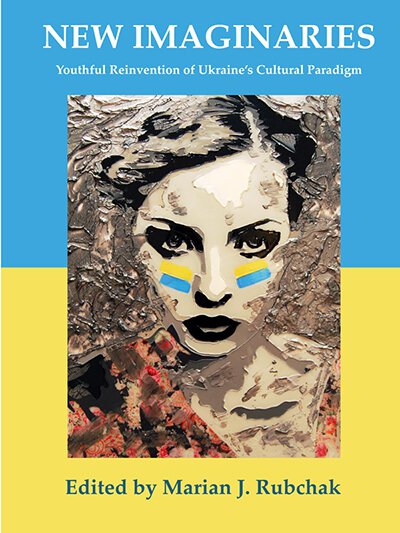
We are especially excited to announce the publication of New Imaginaries, edited and translated by Marian J. Rubchak.

“Instead of pointing out how ‘different’ Ukrainian feminism/gender studies/women’s studies is from ‘Western’ (or other) feminisms, this volume has potential to contribute to our understanding of the exciting and complex ways that feminist thought travels as one of the most important ‘ideascapes’ (à la Appadurai) of our time.” · Sarah D. Phillips, Indiana University

———————————————————————————————————————————–

NEW IMAGINARIES
Youthful Reinvention of Ukraine’s Cultural Paradigm
Edited and Translated by Marian J. Rubchak
Foreword Martha Kichorowska Kebalo

Continue reading “Simulated Shelves: Browse June 2015 New Books”