In the Beginning, There Were ‘Visions of the End’

When WWII drew to a close in the late 1940s, the fighting may have stopped, but the tension was just building. This sustained Cold War friction lasted longer than four decades, the whole time of which, the main players had ideas of how it would look when it ended. The editors and contributors of Visions of the End of the Cold War in Europe, 1945-1990, to be published next month, explore these ‘conceived programmes’ and ‘utopian aspirations.’ Below, an excerpt from the Introduction sets the scene, starting at the end, with the fall of the Wall.


___________________________________________

The fall of the Berlin Wall on 9 November 1989 quickly came to symbolize the end of the Cold War as a whole, including the liberation of Eastern Europe from Soviet rule in 1989, the unification of Germany in 1990 and the break-up of the Soviet Union in 1991. Its twentieth anniversary in autumn 2009 was therefore an opportunity to celebrate not just that particular event – however meaningful – but an extraordinary period that in barely two years led from the dismantling of the Iron Curtain to the liquidation of the whole ‘Yalta’ order.


Continue reading “In the Beginning, There Were ‘Visions of the End’”

How the ‘Legacies of Two World Wars’ Compare to Current Conflict

In an excerpt from the Introduction, the editors explain the point of origin for The Legacies of Two World Wars: European Societies in the Twentieth Century. In the volume, published last month in paperback, contributors follow the European zeitgeist as the continent was plunged first into one war, then a second. Editors Lothar Kettenacker and Torsten Riotte pit the public feeling surrounding these World Wars with that of the U.S. people when the government invaded Iraq in 2003.


_______________________________________


The aim of this book is to trace the moods and attitudes of the people of four Western countries before, during and after the First and Second World Wars. The contributions examine public opinion in Great Britain, France, Germany and Italy during the crucial moments of the two major conflicts of the twentieth century (in their differences and similarities). The inspiration to look again at the attitudes of ordinary Europeans to the two wars came from the controversy surrounding the US invasion of Iraq in 2003.

Continue reading “How the ‘Legacies of Two World Wars’ Compare to Current Conflict”

How Social Movements in Reality (Hopefully) Revitalize Theory

Protest beyond Boders: Contentious Politics in Europe since 1945, recently published in paperback, examines protest culture since the second World War from a variety of angles — historical, political, social, and cultural. But much has changed in worldwide politics since the volume’s original March 2011 publication. Below, the editors reflect on how the reality of the political protest sphere has renewed interest in studying the underlying theories of social movements.


___________________________________________________


In recent years, we have been all caught by surprise. A sudden outbreak of confrontations and protests erupted in unrelated places, such as Bulgaria, Spain, Greece, Hungary and beyond Europe, in Tunisia, Egypt, Thailand, United States and Brazil. Most often lacking clarity in terms of organization, membership, protest demands and goals, this rise of contention erupting across the globe is far from completed. Something new is unfolding, which could not have been predicted and cannot easily fit in our categories of thinking and classifying the world.

Continue reading “How Social Movements in Reality (Hopefully) Revitalize Theory”

Past, Present, Future Changes: An Anthropologist Looks at Africa

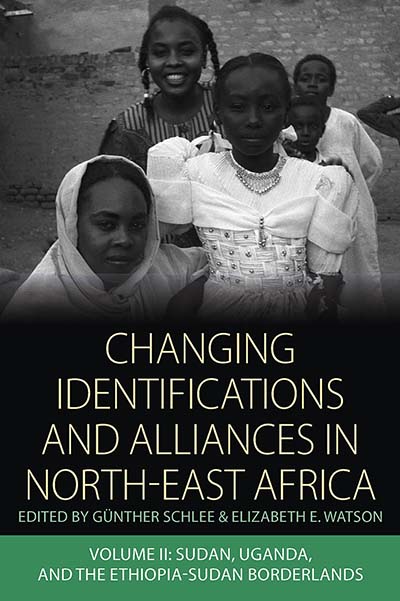
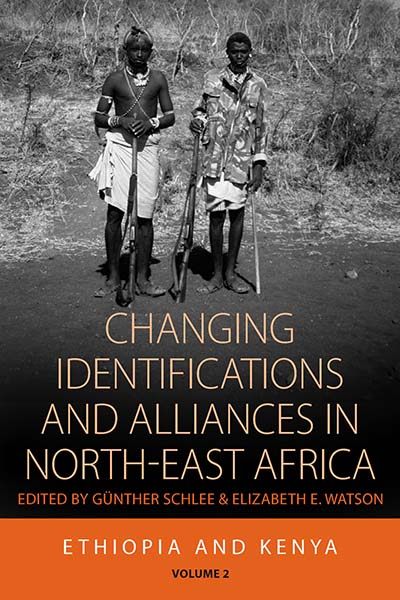
Günther Schlee traces old steps and tracks steps forward since the original publication of Changing Identifications and Alliances in North-East Africa, Volume 1 and Volume 2. The paperback versions were published in October. Following, Schlee rounds out the two-part interview with a reflection on the book’s release, and where he is proceeding within the field.


The first half of this interview is available here.

_____________________________________________________


Berghahn Books: To what extent did the initial release of the book contribute to debates among current and future academics within the field?


Günther Schlee: People use these two books as an introduction to the region. But it has also been taken up by people who have little to do with Africa. They have taken an interest in the theoretical issues we make.


Continue reading “Past, Present, Future Changes: An Anthropologist Looks at Africa”

Africa, from an Anthropologist’s-Eye View

Changing Identifications and Alliances in North-East Africa, originally published in 2009, was published in paperback in October. The two-volume collection, made up of Volume I: Ethiopia and Kenya and Volume II: Sudan, Uganda, and the Ethiopia-Sudan Borderlands, gives an overall view of the North-East of the continent and addresses the importance of the group dynamic, as it plays into politics, cultural identity, and war and peace. Co-editor Günther Schlee discusses the beginning of the collection, with its roots planted where his studies of Africa began — and how they are growing.


___________________________________________

Berghahn Books: What drew you to the study of Africa, specifically northeast Africa?


Günther Schlee: Like many students in the 1970s, I was fascinated by South America. When I studied anthropology and linguistics at Hamburg, I took Spanish up to the highest level. I read a lot about South America and followed the volatile politics of that continent very closely. When it was time to think about a PhD project, I was determined to do field research in South America. In order to identify a location and to enable myself to write a decent research proposal, I decided to go there on an exploratory visit on my own expense.

Continue reading “Africa, from an Anthropologist’s-Eye View”

The New Namibia: Building a Nation after Apartheid

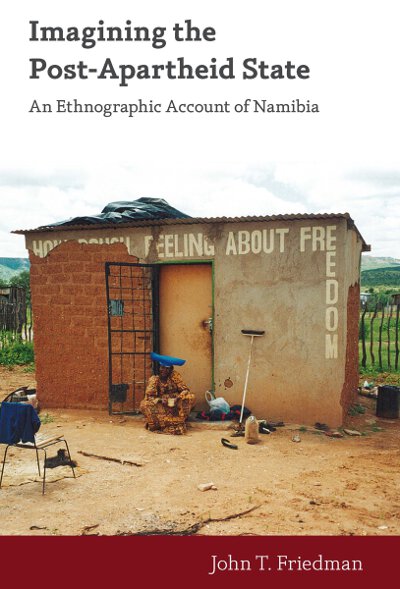
In 1990, Namibia gained its independence as a democratic state from the South African apartheid regime. Author John T. Friedman reflects on what this realistically meant and currently means for the making of a Namibian state in Imagining the Post-Apartheid State: An Ethnographic Account of Namibia, the paperback version of which was published last month after the original was published July 2011. Below the author explains his ethnographic method in an excerpt from the Introduction.


___________________________________


http://www.berghahnbooks.com/covers/FriedmanImagining.jpg

At first reading, the title of this book is likely to arouse some scepticism. How is it possible for an anthropologist to present an ethnographic account of Namibia, of an entire country? As anthropologists we are accustomed to investigate the localised, the small-scale, the village community. We are specifists, not generalists. The critic will thus be quick to suggest that any such attempt can yield only two possible outcomes: either a generalised account of ‘the Namibian people’, or a superficial survey of Namibia’s ethnic groups.

Continue reading “The New Namibia: Building a Nation after Apartheid”

Fresh Ink on a Classic: Going ‘Beyond “Writing Culture”’

In 1986, Writing Culture: The Poetics and Politics of Ethnography was published, and it changed the perception of ethnographic study from then on. Little more than 20 years later, Olaf Zenker and Karsten Kumoll took its reach further with Beyond Writing Culture: Current Intersections of Epistemologies and Representational Practices, published originally in 2010 and published as a paperback last month. Below, the editors share how their work engages with the inspiration piece, how they came to publish the collection, and the ways in which their work corresponds to and challenges the original.


_____________________________


Berghahn Books: Tell us about the original Writing Culture? How does your volume expound on the principles set forth in this groundbreaking work, and how does your volume differ?


Olaf Zenker: The publication in 1986 of Writing Culture by James Clifford and George Marcus was crucial for the discipline of anthropology as a whole. Continue reading “Fresh Ink on a Classic: Going ‘Beyond “Writing Culture”’”

Likelihood of Contact Depends on the Lifetimes of Civilizations

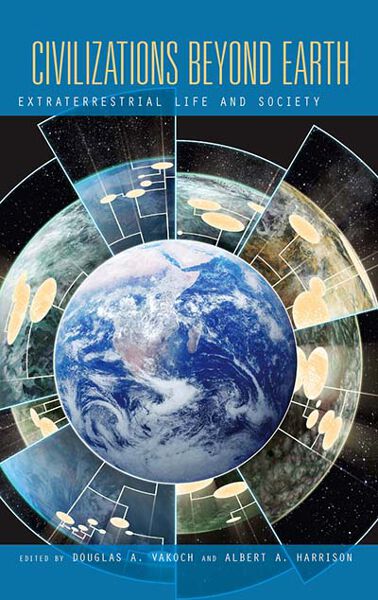
If alien civilizations are anything like terrestrial civilizations, earthly beings may never encounter beings from outer space. Civilizations Beyond Earth contributor Alan J. Penny says our greatest chance for interaction will hinge on the longevity and attention span of an alien society — which must be long enough to give us a chance to interact.


________________________________________

To consider the number of extraterrestrial civilizations that may be out there and which we can detect by their emission of radio signals, we need to think about the likelihood that a star may host a planet with a civilization that can broadcast such signals.


But we also need to think about how long such civilizations last.

Continue reading “Likelihood of Contact Depends on the Lifetimes of Civilizations”

A New Model for Interstellar Communication

Communication between great distances is nearly instantaneous and is becoming faster every day. But when discussing communication with beings outside of our solar system, emails and text messages are still not fast enough to span the light-years of distance in one person’s lifetime. Civilizations Beyond Earth: Extraterrestrial Life and Society contributor Carl L. DeVito proposes that perhaps communication to the far reaches of space is about leaving a mark or a legacy, much like great civilizations of yore left for modern-day humans.


________________________________


The laws of physics and the discoveries of astronomy place serious restrictions on interstellar communication.


Stars are light-years apart, and the special theory of relativity tells us that there are restrictions on the speed at which information can be exchanged. The times involved in sending and receiving messages, which may exceed many generations, rule out a dialogue.

Continue reading “A New Model for Interstellar Communication”

Extra-Terrestrial Life: Good or Bad News?

Is there life beyond Earth? And how will the human race — specifically our media — react if there is? Civilizations Beyond Earth: Extraterrestrial Life and Society, which will be released as a paperback this month, is a collection of essays that address the (plausible) possibility that we are not alone in the universe. If that is true, and if we do one day make contact — wonders contributor Morris Jones — how will news outlets portray such an event? And will that lead to worldwide awe or global panic?


________________________________________________________


Let’s assume that evidence of intelligent extraterrestrial life is discovered tomorrow.


Continue reading “Extra-Terrestrial Life: Good or Bad News?”