Simulated Shelves: Browse August’s New Books

We are delighted to present a selection of our newly published, and soon to be published, August titles from our core subjects of Anthropology, Environmental Studies, Film Studies, History and Politics, along with a selection of our New in Paperback titles.

———————————————————————————————————


BLOOD AND FIRE
Toward a Global Anthropology of Labor
Edited by Sharryn Kasmir and August Carbonella

Volume 13, Dislocations Series


Continue reading “Simulated Shelves: Browse August’s New Books”

Unmasking the Visages of Ukrainian Women

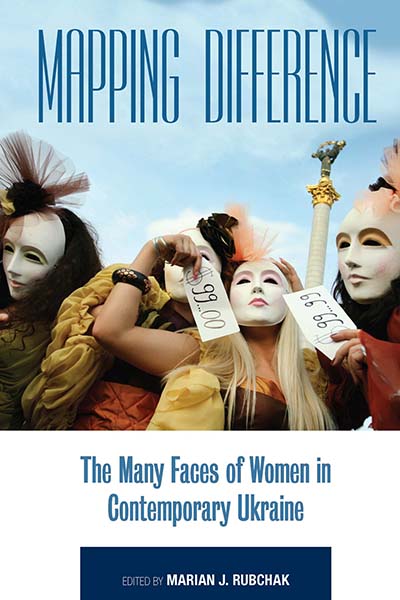
A look into the life of post-Soviet Ukrainian women, Mapping Difference: The Many Faces of Women in Contemporary Ukraine is now available in paperback. This book uncovers the virtues of women that sometimes lie just beneath negative gender stereotypes. Following, editor of the collection, Marian Rubchak, gives readers a deeper look into the volume via the book’s cover.


_________________________________


Since the demise of the Soviet “Empire of Nations”[i] in 1991 Ukraine’s women have lived in a world largely shaped by the rejection of communist values and efforts to transform a moribund socialist system into an open democratic society. Early in the transformative period this society gave rise to a small core of female activists who chose to work within the existing system, with its traditional values, to effect the changes that would return their voice to women. Although they disavowed the label of feminist as a self-descriptor their agendas clearly reflected feminist principles.

Continue reading “Unmasking the Visages of Ukrainian Women”

World Breastfeeding Week

World Breastfeeding Week (WBW) is an annual celebration which is held yearly from 1st to 7th of August in more than 120 countries.

Being organized by WABA, WHO and UNICEF, the goal is to promote exclusive breastfeeding for the first six months of life which yields tremendous health benefits, providing critical nutrients, protection from deadly diseases such as pneumonia and fostering growth. To learn more please visit www.worldbreastfeedingweek.org

———————————————————————————————————

Berghahn is delighted to present some of its relevant titles:


Fertility, Reproduction and Sexuality Series

Understanding the complex and multifaceted issue of human reproduction has been, and remains, of great interest both to academics and practitioners. This series includes studies by specialists in the field of social, cultural, medical, and biological anthropology, medical demography, psychology, and development studies.
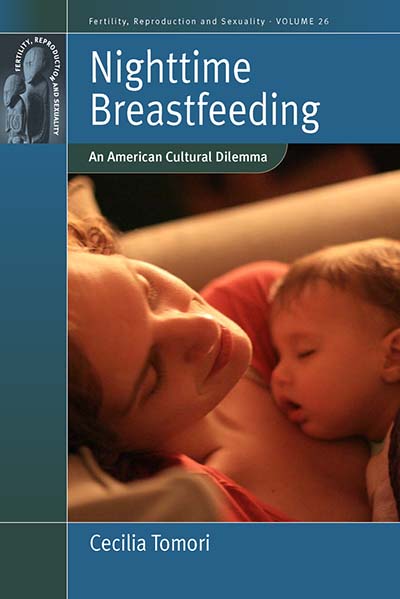
 

forthcoming!
Volume 26

NIGHTTIME BREASTFEEDING
An American Cultural Dilemma
Cecilia Tomori Continue reading “World Breastfeeding Week”

Simulated Shelves: Browse July’s New Books

We are delighted to present a selection of our newly published, and soon to be published, July titles from our core subjects of Anthropology, Cultural Studies, Film Studies, History and Medical Anthropology.

_________________________________________________________________


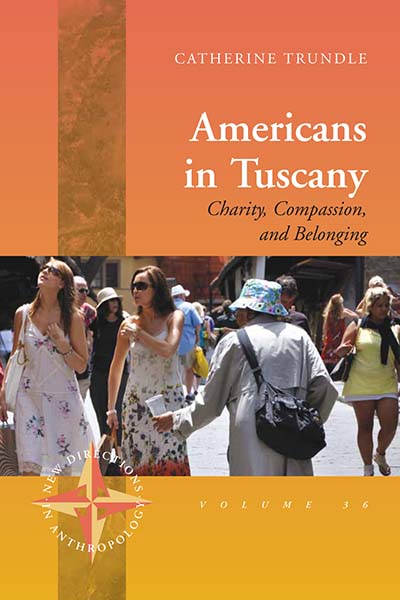
AMERICANS IN TUSCANY
Charity, Compassion, and Belonging
Catherine Trundle


Since the time of the Grand Tour, the Italian region of Tuscany has sustained a highly visible American and Anglo migrant community. Today American women continue to migrate there, many in order to marry Italian men. Confronted with experiences of social exclusion, unfamiliar family relations, and new cultural terrain, many women struggle to build local lives. Continue reading “Simulated Shelves: Browse July’s New Books”

Examining ‘Public Health’: A Reflection on Reception

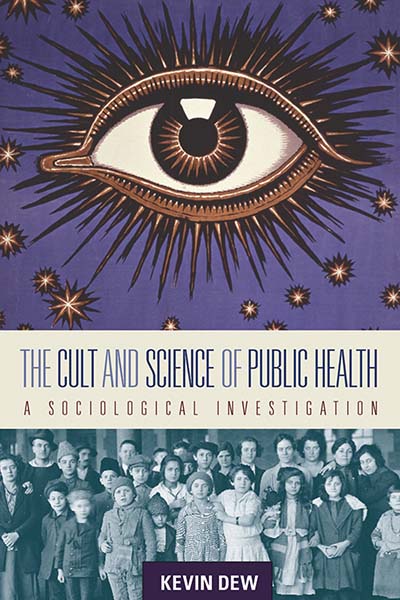
With World Health Day coming up April 7, the paperback release of Kevin Dew’s exploration of public health is quite timely. The Cult and Science of Public Health: A Sociological Investigation was published originally in February 2012 and will be published as a paperback this month. Below is a brief description of the book, and the author’s reflection on its reception since the initial publication.

________________________________________________


As a cult of humanity, public health provides a moral force in society that replaces ‘traditional’ religions in times of great diversity or heterogeneity of peoples, activities and desires. This is in contrast to public health’s foundation in science, particularly the science of epidemiology. The rigid rules of ‘scientific evidence’ used to determine the cause of illness and disease can work against the most vulnerable in society by putting sectors of the population at a disadvantage.

Continue reading “Examining ‘Public Health’: A Reflection on Reception”

Not So Different After All: Connecting British and Bengali Education Systems

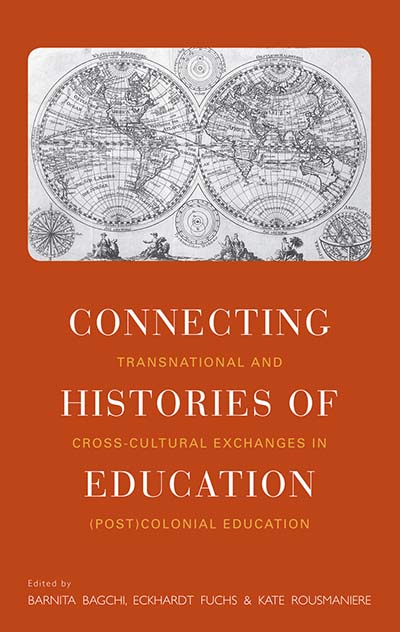
Connecting Histories of Education: Transnational and Cross-Cultural Exchanges in (Post)Colonial Education, edited by Barnita Bagchi, Eckhardt Fuchs and Kate Rousmaniere, has recently been published by Berghahn. The editors previously shared an excerpt from the volume’s Introduction, which can be read here. A second extract, this one from Mary Hilton’s chapter “A Transcultural Transaction: William Carey’s Baptist Mission, the Monitorial Method and the Bengali Renaissance,” gives readers insight into the education system shared between Britain and Bengal.


__________________________________________

To understand the early-nineteenth-century reforming mentality that drove change in both Britain and Bengal, we must first sketch those systems of basic education that prevailed in their traditional rural communities before the English industrial revolution and before the development of the fully evangelical, self-righteous and reforming mercantile thrust of English imperialism.

Continue reading “Not So Different After All: Connecting British and Bengali Education Systems”

Vienna, Dream City within a ‘Paradoxical Republic’

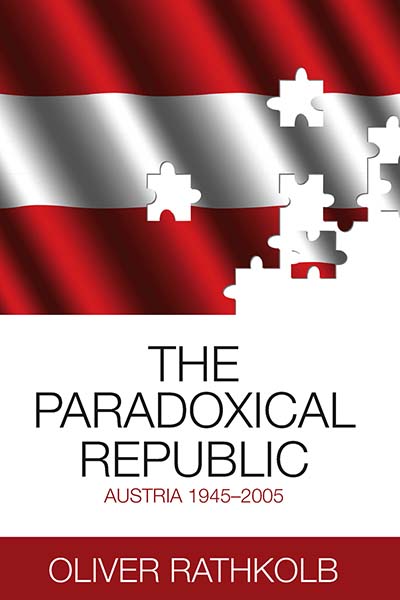
For the next three weeks, New York City will resonate with the energy of Austria. Vienna: City of Dreams will feature a slate of events presented by Carnegie Hall. Capping the festival will be symphony performances of the Vienna Philharmonic, an orchestra which has been celebrated since its first concert in 1842. This arrangement of musicians became a cultural beacon in post-World War II Austria, the subject of Oliver Rathkolb’s The Paradoxical Republic: Austria 1945-2005. Following, in an excerpt from the volume, which will soon be published as a paperback, Rathkolb discusses the Philharmonic’s presence in a discordant time.


_________________________________________________

In 1953 . . . neither the Vienna Staatsoper nor the Burgtheater had yet been rebuilt; they were not yet functional as memory sites. However, this did not detract from the importance of the aesthetic role music, notably classical music, played in the postwar era. The sense of purpose felt when the old and new political and economic elites gathered for the first Philharmonic concerts on 27 and 28 April 1945 was highly significant. There was a strong admixture of the Soviet military in the audience, deliberately encouraged by the liberal dispensation of free tickets by the Philharmonic.


Continue reading “Vienna, Dream City within a ‘Paradoxical Republic’”

Throwing Out Ideas, The Culture of ‘Urban Pollution’

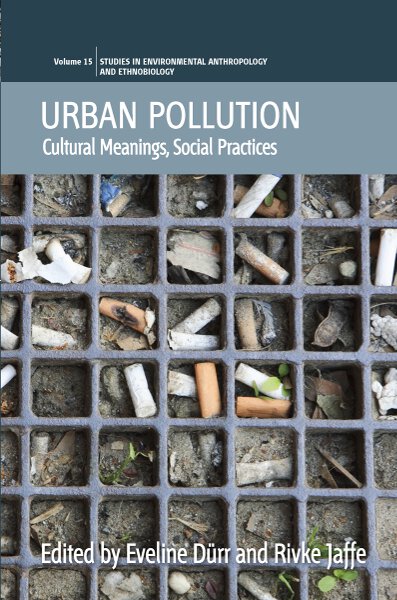
The celebrated volume of anthropologist Mary Douglas, Purity and Danger (1966), broke ground with its discussion of cleanliness, dirtiness, and sacred ritual. Editors Rivke Jaffe and Eveline Dürr took this up in their 2010-published Urban Pollution: Cultural Meanings, Social Practices. The volume, which was published as a paperback earlier this month, dusts off the concepts of clean and dirty, and looks at modern intersections of pollution and culture. Jaffe and Dürr revisit the origins and makings of the volume, below.
 

_____________________________________________


Berghahn Books: What is the idea behind the collection, and how did the book come about?


Rivke Jaffe and Eveline Dürr: We wanted put together a collection that could help bridge the divide between environmental anthropology and urban anthropology. The bulk of work in environmental anthropology has neglected cities and specifically urban pollution. Meanwhile, urban anthropologists rarely incorporate an environmental dimension in their work.

Continue reading “Throwing Out Ideas, The Culture of ‘Urban Pollution’”

Love in the Time of Ethnography

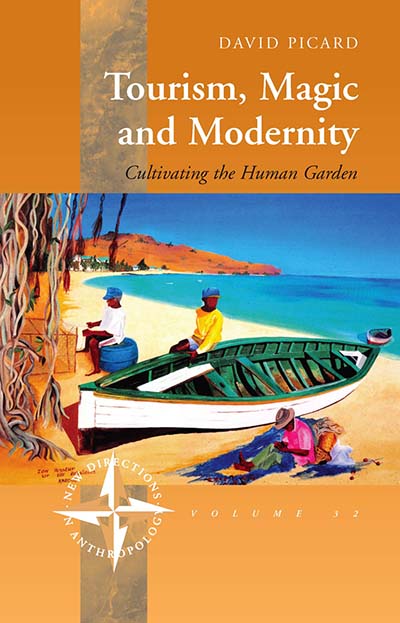
In David Picard’s Tourism, Magic and Modernity: Cultivating the Human Garden, the author uses analogy to shed light on life in La Réunion, a tropical tourist destination in the Indian Ocean. The volume, recently published in paperback, shows that, like plants in a garden, local life is pruned — using the shears of development and nature initiatives — to become a dazzling display for travelers to behold. Following, Picard once again embraces literary technique — on this occasion using a story of lovers — to enchant and delight the reader with the study of anthropology.


____________________________________________


Eve-Marie and Adamsky are 20 when they first meet. They are students at the university of La Réunion, in the Western Indian Ocean. They party together, discover life and love, and progressively turn into adults. They fall in love. As with most couples, through their relationship, the two meet different worlds and family histories, and have to grapple with these differences. Their love gets entangled with the aspirations of their respective milieus.


Continue reading “Love in the Time of Ethnography”

Following the Diaspora: A Study of the Hadrami Community

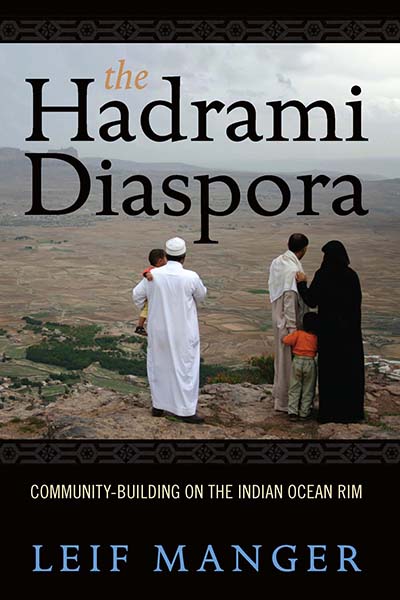
The Hadrami community’s migratory patterns throughout the Indian Ocean region have historically been propelled by trade and religious ambitions. Leif Manger’s complex ethnographic account of this community’s varied and widespread diaspora from South Yemen is explored in The Hadrami Diaspora: Community-Building on the Indian Ocean Rim, which was published this month in paperback. Following, Manger discusses his work on this volume and his time spent with this diverse community in widespread areas.


_______________________________________


Berghahn Books: What came first, your interest in Hadrami culture or your interest in migration? What drew you to these areas of study?


Leif Manger: Yemen has always been a dream for me, but I was particularly fascinated by the terraces in the mountains of the north of the country and the ecological effects of adaptations in such areas. This was due to my research interests in my early career, on intensification of agriculture, agro-pastoral interaction and development.

Continue reading “Following the Diaspora: A Study of the Hadrami Community”