The Turn of the Title

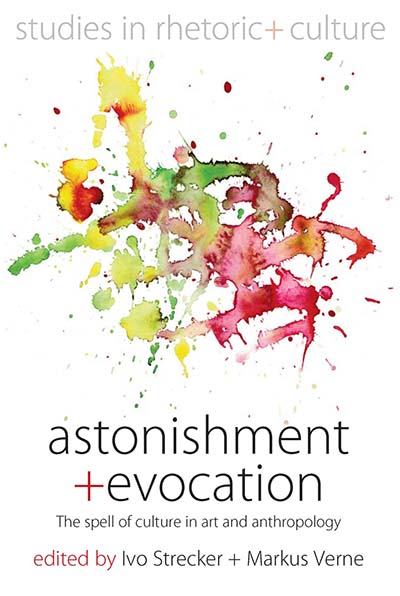
Astonishment and Evocation: The Spell of Culture in Art and Anthropology, published last month, addresses the rhetorical turn in the study of human and social sciences, with emphasis on the human reaction to and interaction with the magic of media and art. Below, co-editor Ivo Strecker spellbinds the reader with a discussion of this rhetorical turn in the study of culture.


_____________________________

I returned home from attending Ronald Soeteart and Kris Rutten’s exciting conference on “Rhetoric as Equipment for Living: Kenneth Burke, Culture and Education” (Ghent, 22-25 May 2013) and find (in my dream-mail) news that a grand book launch of Astonishment + Evocation. The Spell of Culture in Art and Anthropology is imminent with the press, television, authors, editors and staff of Berghahn Books present.

Continue reading “The Turn of the Title”

A Matter of Identity: What it Means to be Jewish in the 21st Century

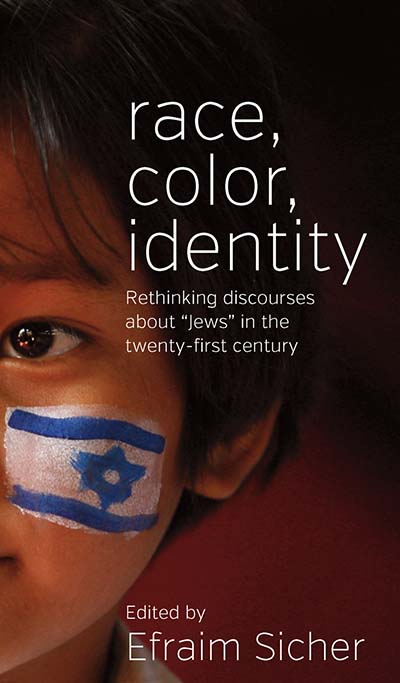
Race, Color, Identity: Rethinking Discourses about ‘Jews’ in the Twenty-First Century, published May 2013, opens a fresh discussion about Jewish racial identity in the Twenty-First Century. Below, editor Efraim Sicher shares how a resurgence of racism, advances in genetic technology, and social and cultural constructs have given fresh breath to a discussion within the volume of what Jewishness means today.


____________________________________


Berghahn Books: Did any perceptions on the subject change from the time you started your research/compiled the contributions to the time you completed the volume?

Continue reading “A Matter of Identity: What it Means to be Jewish in the 21st Century”

On the Origin of “Supercinema”

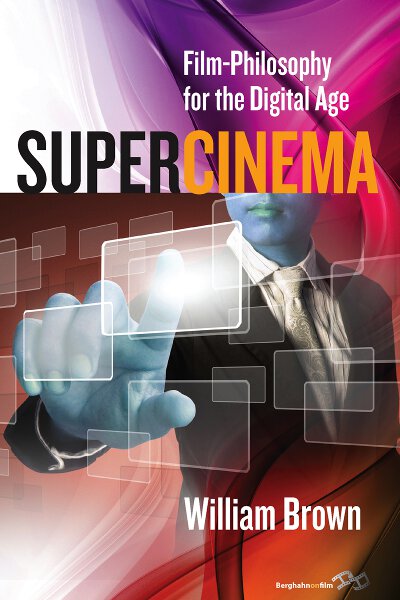
It all started in 1999 with a camera that appeared to have superpowers, and that observation led to the publication of Supercinema: Film-Philosophy for the Digital Age in May 2013.  Below, author William Brown examines the digital techniques of modern cinema in his recently published work, in which he tells the story of popular cinema hiding behind analogue cinema techniques, “analogous to that of Superman hiding his powers behind the persona of Clark Kent.”

___________________________________

My monograph, Supercinema, has two principal moments of origin.


The first moment came when watching Fight Club in 1999. I was intrigued by the way in which the camera passed – seemingly without a cut – through solid objects and empty space as if they were both permeable.

Continue reading “On the Origin of “Supercinema””

The Nazi Genocide of the Roma: Activism or Scholarship?

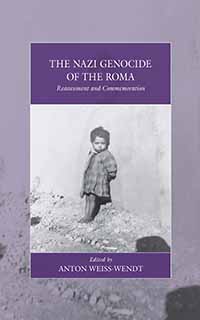
The Nazi Genocide of the Roma: Reassessment and Commemoration, to be published this month, gives voice to the plight of the lesser-studied but still widely persecuted population of the Roma in Nazi-occupied Europe. Below, editor Anton Weiss-Wendt addresses the reception of the collection, which he says begs the question: “Is this scholarship or is it activism?” 

__________________________

Weiss-WendtThe mass murder of Jews and the mass murder of Roma during the Second World War are closely interrelated.

Continue reading “The Nazi Genocide of the Roma: Activism or Scholarship?”

Hot Off the Presses – New Book Releases

SilvermanPalimpsesticNewly released titles from Berghahn’s film studies, cultural studies, and anthropology lists:

Places of Pain: Forced Displacement, Popular Memory and Trans-local Identities in Bosnian War-torn Communities, Hariz Halilovich

The Colours of the Empire: Racialized Representations During Portuguese Colonialism, Patrícia Ferraz de Matos

The German Student Movement and the Literary Imagination: Transnational Memories of Protest and Dissent, Suzanne Rinner

Palimpsestic Memory: The Holocaust and Colonialism in French and Francophone Fiction and Film, Max Silverman

Hot Off the Presses – New Book Releases

Newly released paperbacks from Berghahn:

Constructing Charisma: Celebrity, Fame, and Power in Nineteenth-Century Europe, edited by Edward Berenson and Eva Giloi
Comics in French: The Bande Dessinée in Context, Laurence Grove
News as Culture: Journalistic Practices and the Remaking of Indian Leadership Traditions, Ursula Rao
Human Nature as Capacity: Transcending Discourse and Classification, Nigel Rapport
State Practices and Zionist Images: Shaping Economic Development in Arab Towns in Israel, David A. Wesley, with a foreword by Emanuel Marx
The Ethnographic Self as Resource: Writing Memory and Experience into Ethnography, edited by Peter Collins and Anselma Gallinat

Hot Off the Presses – New Book Releases

Newly released titles from Berghahn’s history and anthropology lists:

The Viennese Café and Fin-de-siècle Culture, edited by Charlotte Ashby, Tag Gronberg and Simon Shaw-Miller

Blood and Kinship: Matter for Metaphor from Ancient Rome to the Present, edited by Christopher H. Johnson, Bernhard Jussen, David Warren Sabean, and Simon Teuscher

A Social History of Europe, 1945-2000: Recovery and Transformation after Two World Wars, Hartmut Kaelble

Two Sides of One River: Nationalism and Ethnography in Galicia and Portugal, António Medeiros

The Golden Chain: Family, Civil Society and the State, edited by Jürgen Nautz, Paul Ginsborg, and Ton Nijhuis

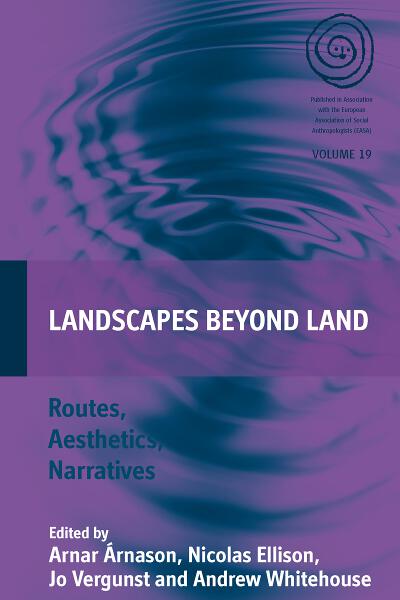
Meet the Editors – Interview with Andrew Whitehouse, co-editor of Landscapes beyond Land: Routes, Aesthetics, Narratives

Landscapes beyond Land: Routes, Aesthetics, Narratives, edited by Arnar Árnason, Nicolas Ellison, Jo Vergunst, and Andrew Whitehouse has recently been released as part of the EASA series. Here Andrew Whitehouse takes us behind the makings of the volume and shares how through his involvement he overcame his own skepticism for the usefulness of landscape as an idea in anthropology.

________________________

1. What drew you to the study of how landscapes are constituted and recollected?
We were initially encouraged by getting some funding from the UK Arts and Humanities Research Council to run a series of workshops on the theme of landscape. The four of us (myself, Jo Vergunst, Nicolas Ellison and Arnar Arnason) were all interested in environmental anthropology and we were keen to see how different anthropologists were thinking about landscapes. Nicolas is from France and one of our aims was to compare French and British approaches. This really came to the fore when we had a workshop in Paris. We also wanted to see how ethnographic writing about landscape could draw together different elements, from very direct perception to large scale and long-term structural dimensions.

2. What aspect of writing or assembling this work did you find most difficult?
Probably just the sheer task of communicating with all of the different people who have been involved in the book. That’s one of the challenges of an edited volume, I guess. Sometimes there were different perspectives within the editorial team, but in many ways we wanted the book to reflect different ideas about landscape, so that wasn’t a problem.

3. How did your perceptions of the book’s topic change from the time you started your research to the time you completed the book?
I definitely learnt a lot about landscape! When we began the series of workshops on which the book was based, I’ll confess to being a bit skeptical about the usefulness of landscape as an idea in anthropology. I thought it was a problem that it had so much baggage and that it lacked precision. I’ve come to rather like that baggage though, because it tends to take things in an interesting direction. I love the way that landscape seems to encourage us to draw nature, culture and history together.

4. If you weren’t an anthropologist, what would you have done instead?
I used to work on a nature reserve and in fact became an anthropologist initially as a way to think about that sort of landscape. I certainly wouldn’t mind working on a reserve these days. As anyone who knows me will tell you, I’m fairly obsessed with wildlife and it would be good to work outdoors a bit more than I do.

____________________

Andrew Whitehouse is a Teaching Fellow in Anthropology at the University of Aberdeen. He has conducted research in various parts of Britain and elsewhere on conservation issues and human–animal relations, with a particular focus on relations with birds through sound.

The fantasy of a historical source

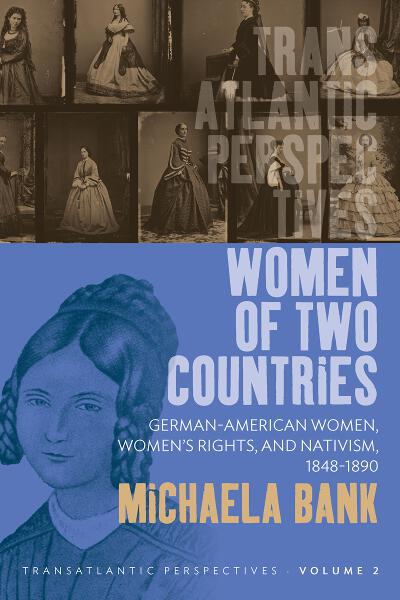
Michaela Bank’s Women of Two Countries: German-American Women, Women’s Rights and Nativism, 1848-1890 has just been released by Berghahn. The second volume in our new series Transatlantic Perspectives, it focuses on the challenges faced by three German-American feminists not only with the US women’s rights movement itself but also within their own ethnic community. In the following post, the author recounts the discovery of a seemingly significant event while undertaking her research.

_______________________________

When I first spent long days in libraries and archives to find out more about German-American women’s participation in the US women’s rights movement I stumbled over an extensive report of a German women’s rights convention that took place in 1868 near Boston. Reading the report, which had been published in a German-language paper by Karl Heinzen, who was one of the rather more radical political editors of the time, I found the presented ideas clear and expressed in sharp language. To give an example, here is what one female speaker is recorded as having said to the audience:

“I predict that, if women are granted the right to vote, the political party that seeks to limit the freedom of social life by moral police and seeks to expand the authority of the clerics by religious coercion will be significantly strengthened. What it has not achieved so far, it will conceivably achieve now with the help of American women who are generally more dependent on the representatives of religion than American men. This party’s goal will be achieved if those women’s additional votes are not made powerless by a pull in the opposite direction. And who shall and will provide this pull? Only the German women!”

Such an openly aggressive opposition to the US-American women’s rights movement among German-American women struck me as rather exceptional. I was thrilled as this convention report was a marvelous source for my study on German-American women, nativism and women’s rights in this period, and so I continued to dig deeper into the sources to find out more about it. How did the grand ladies of the US-American movement, Elizabeth Cady Stanton, Lucy Stone and other prominent advocates of women’s rights, react to this opposition?

…Yet, not all paths in historical research lead to success: I could not find any records of the Roxbury convention anywhere. Then, a few weeks later, I found a short note revealing that Karl Heinzen’s report had actually been a fictional one. Suddenly the shockingly clear and sharp language made sense to me.

Although a fantasy, it remained a fascinating report for me because it illustrated pointedly what a group of German-Americans interested in reform politics thought of the women’s rights movement and why conflict arose so often between the two groups. As I discovered, only a few German-American women were willing to stand up and raise their voice strongly and even aggressively. Such were the women who could endure the tension between their ethnic community, which was often at odds with the US-American women’s rights movement because of its nativist and prohibition stances, and the women’s rights movement that they wanted to be a part of. The efforts of Clara Neymann, Mathilde Wendt, and Mathilde Franziska Anneke for an idea of equal women’s rights are special – special, because they were not at all common while still being powerful and influential. In the end, I was still more than happy that I had found the report of the fictional convention even if it was just a „Hirngespinst“ – a pipe-dream – as a newspaper article called it.

_______________________________

 Michaela Bank received her doctoral degree in American Studies from Goethe-University in Frankfurt/Main, Germany in 2009. She was a fellow in the graduate research training group “Public Spheres and Gender Relations” funded by the German Research Foundation from 2005 to 2008. From 2008 to 2010 she was a Lecturer of American History and Gender Studies at Goethe-University in Frankfurt/Main.