Fertility, Reproduction and Sexuality

Today (March 18th) is Goddess of Fertility Day, a time when Aphrodite and other gods and goddesses of fertility are honored by pagans throughout the world in celebration of life and fertility.

———————————————————————————————————————————–

Understanding the complex and multifaceted issue of human reproduction has been, and remains, of great interest both to academics and practitioners. Fertility, Reproduction and Sexuality series includes studies by specialists in the field of social, cultural, medical, and biological anthropology, medical demography, psychology, and development studies. Current debates and issues of global relevance on the changing dynamics of fertility, human reproduction and sexuality are addressed. Below is a selection of forthcoming & newly published titles within the series:


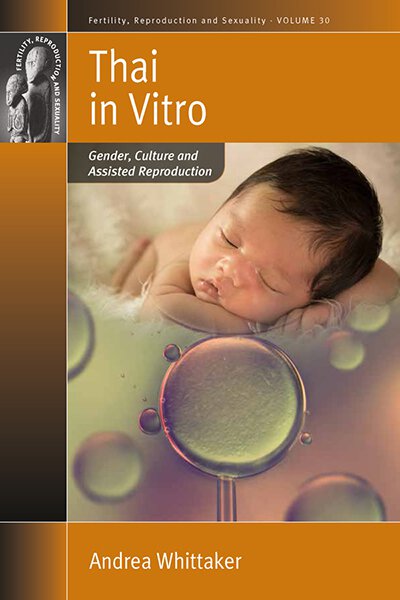
Volume 30 Forthcoming!
THAI IN VITRO
Gender, Culture and Assisted Reproduction
Andrea Whittaker


Continue reading “Fertility, Reproduction and Sexuality”

Celebrate International Women’s Day with a Special Issue!

AspasiaInternational Women’s Day is annually held on March 8 to celebrate women’s achievements. It is also known as the United Nations Day for Women’s Rights and International Peace.


In recognition of this day, Berghahn is pleased to offer a 25% discount on any of our Gender Studies books on orders placed within the next 30 days. At checkout, simply enter the code IWD15.

We would also like to invite you to explore a special issue of Aspasia devoted to International Women’s Day. The year 2010 marked the centennial of International Women’s Day, and the year 2011 marked the centennial of its first celebrations. Inspired by these events, this issue deals with “A Hundred Years of International Women’s Day in Central, Eastern and Southeastern Europe.”


VOLUME 6: Celebrating 100 Years of International Women’s Day


THEME SECTION: A Hundred Years of International Women’s Day in CESEE

From West to East: International Women’s Day, the First Decade
Rochelle Goldberg Ruthchild


Together and Apart: Polish Women’s Rights Activists and the Beginnings of International Women’s Day Around 1911
Iwona Dadej and Angelique Leszczawski-Schwerk


The Different Faces of a Celebration: The Greek Course of International Women’s Day, 1924-2010
Angelika Psarra


THE SOURCE
Kak v revoliutsionnoe vremia Vserossiiskaia Liga Ravnopraviia Zhenshchin dobilas’ izbiratel’nykh prav dlia russkikh zhenshchin (How in the revolutionary time the All-Russian League for Women’s Equal Rights won suffrage for Russian women)
Olga Zakuta


FORUM
Clio on the Margins: Women’s and Gender History in Central, Eastern and Southeastern Europe (Part One)
Edited by Krassimira Daskalova


NEWS AND MISCELLANEA
Ukrainian Women Reclaiming the Feminist Meaning of International Women’s Day: A Report about Recent Feminist Activism
Oksana Kis


In History: Churchill delivers Iron Curtain speech

On March 5th 1946, in one of the most famous orations of the Cold War period, former British Prime Minister Winston Churchill condemned the Soviet Union’s policies in Europe and declared, “From Stettin in the Baltic to Trieste in the Adriatic, an iron curtain has descended across the continent.” Churchill’s speech is considered one of the opening volleys announcing the beginning of the Cold War. Read More

———————————————————————————————————————————–

Berghahn presents a selection of relevant Cold War titles:


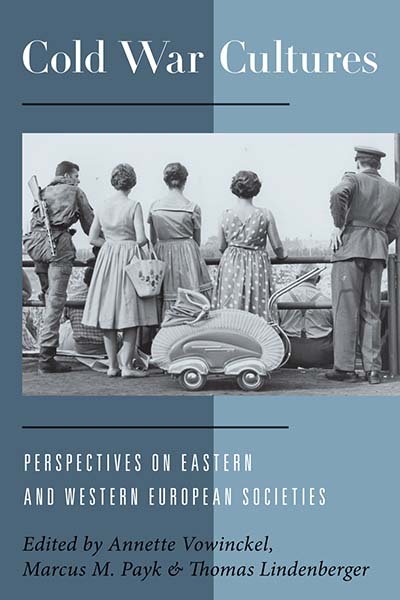
COLD WAR CULTURES
Perspectives on Eastern and Western European Societies
Edited by Annette Vowinckel, Marcus M. Payk, and Thomas Lindenberger

Continue reading “In History: Churchill delivers Iron Curtain speech”

Honoring Polish Cinema

A Polish film “Ida” directed by Paweł Pawlikowski and written by Pawlikowski and Rebecca Lenkiewicz wins Oscar Award for Best Foreign Language Film.

The drama tells a story of a young novitiate nun Anna in 1960s Poland,  who is on the verge of taking her vows when she discovers a dark family secret dating back to the years of the Nazi occupation. Read more on the plot, cast & production.

———————————————————————————————————————————–

To celebrate Berghahn Books is proud to present a selection of titles on Polish Cinema:


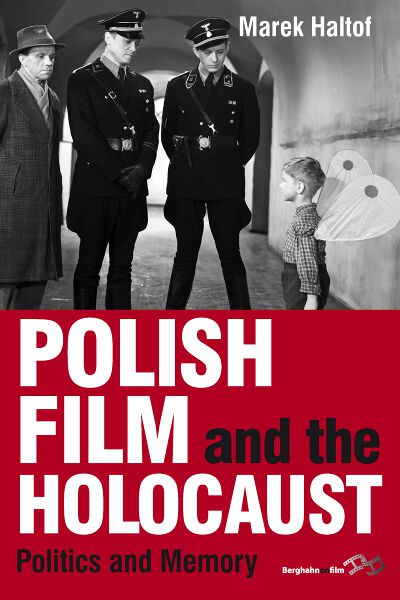
POLISH FILM AND THE HOLOCAUST
Politics and Memory
Marek Haltof

Continue reading “Honoring Polish Cinema”

Announcing 3 New Journals!

AnnouncementBerghahn Journals is delighted to announce that we will begin publishing three new journals in 2015!


These new publications will cover a range of topics across disciplines and promote academic discussion through articles, reviews, interviews, special sections, and more. For more information, please see below or click through to access the journals’ respective websites.

Boyhood Studies – An Interdisciplinary Journal

Boyhood Studies: An Interdisciplinary Journal is a peer-reviewed journal providing a forum for the discussion of boyhood, young masculinities, and boys’ lives by exploring the full scale of intricacies, challenges, and legacies that inform male and masculine developments. Boyhood Studies is committed to a critical and international scope and solicits both articles and special issue proposals from a variety of research fields including, but not limited to, the social and psychological sciences, historical and cultural studies, philosophy, and social, legal, and health studies.

One of the core missions of the journal is to initiate conversation among disciplines, research angles, and intellectual viewpoints. Both theoretical and empirical contributions fit the journal’s scope with critical literature reviews and review essays also welcomed. Possible topics include boyish and tomboyish genders; boys and schooling; boys and (post)feminisms; the folklore, mythology, and poetics of “male development”; son-parent and male student-teacher relations; young masculinities in the digital and postdigital ages; young sexualities; as well as representations of boyhoods across temporalities, geographies, and cultures.

Conflict and Society – Advances in Research

Organized violence — war, armed revolt, genocide, lynching, targeted killings, torture, routine discrimination, terrorism, trauma and suffering — is a daily reality for some while for others it is a sound bite or news clip seen in passing and easily forgotten. Rigorous scholarly research of the social and cultural conditions of organized violence, its genesis, dynamic, and impact, is fundamental to addressing questions of local and global conflict and its impact on the human condition.

Publishing peer-reviewed articles by international scholars, Conflict and Society expands the field of conflict studies by using ethnographic inquiry to establish new fields of research and interdisciplinary collaboration. An opening special section presents general articles devoted to a topic or region followed by a section featuring conceptual debates on key problems in the study of organized violence. Review articles and topical overviews offer navigational assistance across the vast and varied terrain of conflict research and comprehensive reviews of new books round out each volume. With special attention paid to ongoing debates on the politics and ethics of conflict studies research, including military-academic cooperation, Conflict and Society will be an essential forum for scholars, researchers, and policy makers in the fields of anthropology, sociology, political science, and development studies.

Screen Bodies

Screen Bodies is a peer-reviewed journal focusing on the intersection of Screen Studies and Body Studies across disciplines, institutions, and media. It is a forum promoting the discussion of research and practices through articles, reviews, and interviews that investigate various aspects of embodiment on and in front of screens. The journal considers moving and still images, whether as entertainment or for information through cinema, television, and the Internet; through the private experiences of portable and personal devices; or in institutional settings such as medical and surveillance imaging. Screen Bodies considers the portrayal, function, and reception of the body presented and conceptualized through the lenses of gender and sexuality, feminism and masculinity, trans* studies, queer theory, critical race theory, cyborg studies, and dis/ability studies.