It’s fascinating (“Can you imagine a stranger showing up on your doorstep and asking to stay for a year?”) and highly evocative (“It was so cold that night, the next morning the driver had to bring the engine back to life by lighting a small fire underneath the car”) and it gave us so much to discuss that we’ve split our discussion into two parts.
Anna’s story begins here and Part Two will follow very soon.
Hannah Arendt (14 October 1906 – 4 December 1975), German-American philosopher and political theorist, was the first to argue that there were continuities between the age of European imperialism and the age of fascism in Europe. In her pivotal work The Origins of Totalitarianism (1951), she established that theories of race, notions of racial and cultural superiority, and the right of ‘superior races’ to expand territorially were themes that connected the white settler colonies, the other imperial possessions, and the fascist ideologies of post-Great War Europe.
According to the United Nations, International Translation Day is “an opportunity to pay tribute to the work of language professionals, which plays an important role in bringing nations together, facilitating dialogue, understanding and cooperation.”
September 6th marks National Read a Book Day in the United States with International Literacy Day following closely on September 8th. To celebrate, we want to share what the Berghahn staff is currently reading and a scholarly reading from Berghahn Books we recommend for you.
This year the German Marshall Fund marks its 50th anniversary and the 75th anniversary of the Marshall Plan. On June 5, 1972 former German Chancellor Willy Brandt announced the founding of the German Marshall Fund of the United States at Harvard University. Founded by Guido Goldman through a gift from Germany as a tribute to the Marshall Plan, GMF is a non-partisan policy organization committed to the idea that the United States and Europe are stronger together. GMF champions the principles of democracy, human rights, and international cooperation, which have served as the bedrock of peace and prosperity since the end of World War II, but are under increasing strain.
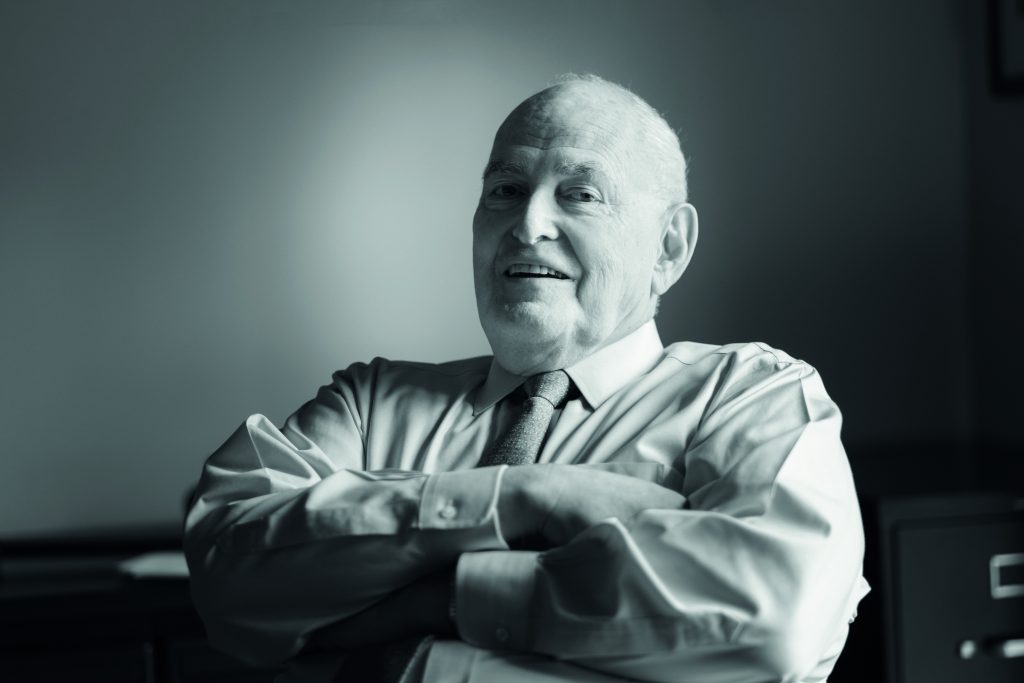
The GMF is considered one of Guido Goldman’s greatest achievements. To mark this historic moment and to honor Guido Goldman’s legacy Berghahn is featuring an excerpt from GUIDO GOLDMAN: Transatlantic Bridge Builder by Martin Klingst.
On the third anniversary of the start of the war in Ukraine, in solidarity and in an effort to deepen knowledge in social and cultural history of Ukraine, we are offering free access to these relevant journal articles and book chapters that focus on social and historical issues in Ukraine.
“[A] significant historical document and much-welcomed source for scholars of the military, social, and material history of World War I. It is also a valuable record for everyone interested in the history of war on the territories of present-day Ukraine and the eastern front in general […]”• Harvard Ukrainian Studies
Resettlers and Survivors: Bukovina and the Politics of Belonging in West Germany and Israel, 1945–1989 Gaëlle Fisher
Located on the border of present-day Romania and Ukraine, the historical region of Bukovina was the site of widespread displacement and violence as it passed from Romanian to Soviet hands and back again during World War II. This study focuses on two groups of “Bukovinians”—ethnic Germans and German-speaking Jews—as they navigated dramatically changed political and social circumstances in and after 1945. Through comparisons of the narratives and self-conceptions of these groups, this book gives a nuanced account of how they dealt with the difficult legacies of World War II, while exploring Bukovina’s significance for them as both a geographical location and a “place of memory.”
New Imaginaries: Youthful Reinvention of Ukraine’s Cultural Paradigm Edited and Translated by Marian J. Rubchak
Having been spared the constraints imposed on intellectual discourse by the totalitarian regime of the past, young Ukrainian scholars now engage with many Western ideological theories and practices in an atmosphere of intellectual freedom and uncensored scholarship. Displacing the Soviet legacy of prescribed thought and practices, this volume’s female contributors have infused their work with Western elements, although vestiges of Soviet-style ideas, research methodology, and writing linger. The result is the articulation of a “New Imaginaries” — neither Soviet nor Western — that offers a unique approach to the study of gender by presenting a portrait of Ukrainian society as seen through the eyes of a new generation of feminist scholars.
De-Commemoration: Removing Statues and Renaming Places Edited by Sarah Gensburger and Jenny Wüstenberg
“[A]n inspirational collection of diverse approaches, practices, methods, and perspectives of de-commemoration of forgoing heroes and activities, set in various cultural and geographical contexts. This is an exceedingly rare and truly global contribution.”• Mariusz Czepczyński, University of Gdańsk
In studies of a common European past, there is a significant lack of scholarship on the former Eastern Bloc countries. While understanding the importance of shifting the focus of European memory eastward, contributors to this volume avoid the trap of Eastern European exceptionalism, an assumption that this region’s experiences are too unique to render them comparable to the rest of Europe. They offer a reflection on memory from an Eastern European historical perspective, one that can be measured against, or applied to, historical experience in other parts of Europe. In this way, the authors situate studies on memory in Eastern Europe within the broader debate on European memory.
Commentary on memorials to the Holocaust has been plagued with a sense of “monument fatigue”, a feeling that landscape settings and national spaces provide little opportunity for meaningful engagement between present visitors and past victims. This book examines the Holocaust via three sites of murder by the Nazis: the former concentration camp at Buchenwald, Germany; the mass grave at Babi Yar, Ukraine; and the razed village of Lidice, Czech Republic. Bringing together recent scholarship from cultural memory and cultural geography, the author focuses on the way these violent histories are remembered, allowing these sites to emerge as dynamic transcultural landscapes of encounter in which difficult pasts can be represented and comprehended in the present. This leads to an examination of the role of the environment, or, more particularly, the ways in which the natural environment, co-opted in the process of killing, becomes a medium for remembrance.
Mapping Difference: The Many Faces of Women in Contemporary Ukraine Edited by Marian J. Rubchak
Drawn from various disciplines and a broad spectrum of research interests, these essays reflect on the challenging issues confronting women in Ukraine today. The contributors are an interdisciplinary, transnational group of scholars from gender studies, feminist theory, history, anthropology, sociology, women’s studies, and literature. Among the issues they address are: the impact of migration, education, early socialization of gender roles, the role of the media in perpetuating and shaping negative stereotypes, the gendered nature of language, women and the media, literature by women, and local appropriation of gender and feminist theory. Each author offers a fresh and unique perspective on the current process of survival strategies and postcommunist identity reconstruction among Ukrainian women in their current climate of patriarchalism.
In the 1993, May 15 was declared as International Day of Families by the United Nations to provide awareness of family related issues and to increase the knowledge of the social, economic and demographic processes affecting families. This year’s theme is Demographic Trends and Families.
In recognition of the day, Berghahn is pleased to highlight family related books and journal articles.
Victory in Europe Day is the day celebrating the formal acceptance by the Allies of World War II of Germany’s unconditional surrender of its armed forces on Tuesday, 8 May 1945, marking defeat of Nazi Germany and the end of Second World War in Europe.
In recognition of the day Berghahn is pleased to offer a selection of our WWII History books, including a selection of Open Access titles. In addition, Berghahn Journals would like to highlight relevant special issues from select history journals.
 Join our Email List