Berghahn Books will be at AAG Annual Meeting 2017!

Image result for aag annual meeting 2017

We are delighted to inform you that we will be present at the Association of American Geographers’ Annual Meeting in Boston, MA, April 5-9, 2017. Please stop by our booth #418 to browse the latest selection of books at discounted prices & pick up some free journal samples.


If you are unable to attend, we would like to provide you with a special discount offer. For the next 30 days, receive a 25% discount on all Geography and Environmental Studies titles found on our website. At checkout use discount code AAG17. Browse our newly released Geography and Environmental Studies 2017/2018 Catalog or visit our website,­ now with new enhanced subject searching features­ for a complete listing of all published and forthcoming titles.

Here is a preview of some of our newest releases on display: Continue reading “Berghahn Books will be at AAG Annual Meeting 2017!”

Stop by Berghahn Books at ASEH 2017 Conference!

We are exited to announce that we will be present at the 2017 American Society for Environmental History Conference in Chicago, IL, March 29- April 2, 2017. Please stop by the Berghahn table to browse our latest selection of books at a special discount price & pick up free journal samples.


If you are unable to attend, we would like to provide you with a special discount offer. Receive a 25% discount on all Environmental Studies titles found on our website,  Valid through May 2nd, 2017. At checkout, simply enter the discount code ASEH17. Browse our newly released Geography and Environmental Studies 2017/2018 Catalog or visit our website,­ now with new enhanced subject searching features for a complete listing of all published and forthcoming titles.

Below is a preview of some of our newest releases on display: Continue reading “Stop by Berghahn Books at ASEH 2017 Conference!”

IMPORTANT: Print Books Distribution Announcement

Berghahn Books

As we look forward to a productive 2017, Berghahn Books Inc. is undertaking significant changes to its print books distribution management.

We are delighted to announce that as of March 1st 2017, responsibility for print distribution for the Americas, Australasia, China, Taiwan, and Japan will be taken over by the Academic Services Division of the Ingram Content Group, Inc.   


Continue reading “IMPORTANT: Print Books Distribution Announcement”

Simulated Shelves: Browse August 2016 New Books

We’re delighted to offer a selection of latest releases from our core subjects of Anthropology, Peace & Conflict Studies, History, Media StudiesMedical AnthropologyRefugee and Migration Studies, Sociology, and Urban Studies, along with our New in Paperback titles.


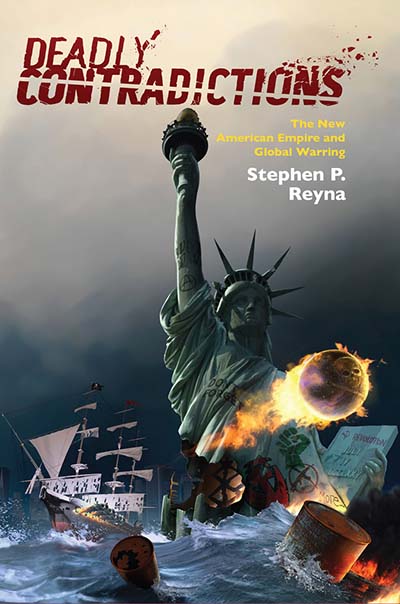
DEADLY CONTRADICTIONS
The New American Empire and Global Warring
Stephen P. Reyna

Continue reading “Simulated Shelves: Browse August 2016 New Books”

Look for Berghahn at The EASA 2016 Conference


We are delighted to inform you that we will be present at The European Association of Social Anthropologists (EASA) Conference in Milan, Italy from the 20th-23rd of July 2016. Please stop by our table to browse the latest selection of books at discounted prices, pick up some free journal samples, or chat to Marion Berghahn.

We are pleased to announce that we will be hosting a Reception in the U6 Foyer from 4.30pm on Friday, 22nd July to celebrate the launch of our New Series, Worlds in Motion and its 1st Volume, Keywords of Mobility, edited by Noel B. Salazar and Kiran Jayaram. At the reception, we will also be launching Volume 33 of our Forced Migration Series, namely The Agendas of Tibetan Refugees by Thomas Kauffmann. So if you will be in Milan, we’d be delighted if you could join us at this very special event.

If you are unable to attend the conference, we would like to provide you with a special discount offer. For the next 30 days, receive a 25% discount on all Anthropology titles found on our website. At checkout, simply enter the discount code EASA16. Visit our website­ to browse our newly published interactive online Anthropology & Sociology Catalog and EASA Series Flyer or use the new enhanced subject searching features­ for a complete listing of all published and forthcoming titles.

Continue reading “Look for Berghahn at The EASA 2016 Conference”

Berghahn titles at The Association of Social Anthropologists of the UK and Commonwealth Conference


We are delighted to inform you that Berghahn will be present at The Association of Social Anthropologists of the UK and Commonwealth Conference in Durham, UK from the 4th-7th July 2016. Please stop by our table to browse the latest selection of books at discounted prices and pick up some free journal samples.


If you are unable to attend, we would like to provide you with a special discount offer. For the next 30 days, receive a 25% discount on all Anthropology titles found on our website. At checkout, simply enter the discount code ASA16. Visit our website­ to browse our newly published interactive online Anthropology & Sociology Catalog or use the new enhanced subject searching features­ for a complete listing of all published and forthcoming titles.

Continue reading “Berghahn titles at The Association of Social Anthropologists of the UK and Commonwealth Conference”

Berghahn Books at the AAG 2016 Conference!


We are delighted to inform you that we will be present at the Association of American Geographers’ Annual Meeting in San Francisco, CA, March 29-April 2, 2016. Please stop by our booth #215 to browse the latest selection of books at discounted prices & pick up some free journal samples.


If you are unable to attend, we would like to provide you with a special discount offer. For the next 30 days, receive a 25% discount on all Geography and Environmental Studies titles found on our website. At checkout use discount code AAG16. Browse our newly released Geography and Environmental Studies 2016/2017 Catalog or visit our website,­ now with new enhanced subject searching features­ for a complete listing of all published and forthcoming titles.

Continue reading “Berghahn Books at the AAG 2016 Conference!”

The Fall of the Berlin Wall

The Berlin Wall was both the physical division between West Berlin and East Germany from 1961 to 1989 and the symbolic boundary between democracy and Communism during the Cold War.

The Berlin Wall was erected in the dead of night and for 28 years kept East Germans from fleeing to the West. The fall of the Berlin Wall happened nearly as suddenly as its rise. On the evening of November 9, 1989, an announcement made by East German government official Günter Schabowski stated, “Permanent relocations can be done through all border checkpoints between the GDR (East Germany) into the FRG (West Germany) or West Berlin.” Crowds of euphoric East Germans crossed and climbed on to the wall in celebration. Soon the wall was gone and Berlin was united for the first time since 1945. “Only today,” one Berliner spray-painted on a piece of the wall, “is the war really over.”

———————————————————————————————————

Browse Berghahn relevant titles:


THE PATH TO THE BERLIN WALL
Critical Stages in the History of Divided Germany
Manfred Wilke
Translated from the German by Sophie Perl

“…constitutes a superlative model of combining biography with the study of nationalism. The latter constitutes the most novel contribution of this well-researched, straightforward historical depiction of Kohl’s ideology and its impact upon the continuing development of German national identity… Recommended” · Choice

Continue reading “The Fall of the Berlin Wall”

Getting Reacquainted with The Cambridge Journal of Anthropology

The Cambridge Journal of Anthropology


We are delighted to announce that 2015 marks the fourth volume year that the Cambridge Journal of Anthropology has been published through Berghahn. The original journal of this name was an in-house publication based at Cambridge University, with a remit to provide a space in which innovative material and ideas could be tested.


The new Cambridge Journal of Anthropology builds on that tradition and seeks to produce new analytical tool-kits for anthropology or to take all such intellectual exploration to task. Re-acquaint yourself with the journal by exploring the special sections outlined below.


We hope you’ll be inspired by these innovative approaches that push at the boundaries of anthropology to bring you fresh insights from pioneering scholars in the field.


Volume 32
Number 2, Autumn 2014
Special Section: Risks, Ruptures and Uncertainties: Dealing with Crisis in Asia’s Emerging Economies
Asia’s ongoing economic transformation has created a variety of unexpected ruptures, discontinuities and opportunities in the lives of local citizens across the region. The articles in this section contribute to an understanding of local responses to, and strategies for coping with, risk and uncertainty as multidimensional, interwoven aspects of daily life, guided by social, economic and moral considerations.

  
Volume 32
Number 1, Spring 2014
Special Section: Epidemic Events and Processes
The articles in this collection bring together epidemiology and social anthropology. They take us through epidemics critically distinguished as crises and as events, and through epidemics understood analytically as syndemics and as productive of both proliferating ‘projects’ and a compelling quest for ever-growing intelligence and ‘real-time’ surveillance. In this collection, we see the importance of a social anthropological understanding of the human subjects that epidemics, and responses to them, can constitute–and we glimpse some of the interagentivity in the treatment responses through which the lethal problem of ‘resistance’ can be created. In the case of ‘epidemics’ in this present issue, we see the import of anthropological material as it brings to the fore issues which, in another disciplinary language, are the historically contingent ‘externalities’ of ‘disease events’.

  
Volume 31
Number 1, Spring 2013
Special Section – Climate Histories and Environmental Change: Evidence and its Interpretation. Guest Editor David Sneath
The papers in this special section explore different visions of the environment and how they engender particular ways of seeing evidence of climatic and environmental change. A key aspect of such distinctive understandings seems to be the attribution of agency within conceptions of the environment that in each case are entangled with humans. Notions of the anthropogenic and non-equilibrial environments are explored in several of the papers collected here, along with ongoing debates surrounding the concept of the Anthopocene. An awareness of climate change has brought new urgency to the project of grasping our entangled environments in the diversity of their human understandings.

  
Volume 30
Number 2, Autumn 2012
Special Section
Thisspecial section reconsiders recent anthropological accounts of ‘Naturalism’, a term increasingly used as a shorthand for a bundle of purportedly western attitudes to nature, reality and mind/body distinctions. Anthropologists and others tend to invoke ‘Naturalism’ as a foil for descriptions of alternative ontologies elsewhere (such as animism or perspectivism), or alternatively, as a philosophical account of the world which is belied by Euroamericans’ own practices. By contrast, the papers in this section attempt to take naturalism seriously as an ethnographic object in its own right: who, if anyone, is a ‘naturalist’ and what do naturalist commitments look like and entail in practice?


For a free sample issue of the journal, click here.

Using Mental Maps to Locate Austen

The following is the second in a series of posts on Jane Austen. This is a guest post written by James Brown, contributor to a special issue of Critical Survey which is devoted to the subject of Jane Austen. James Brown is the author of the article titled “Jane Austen’s Mental Maps.”


The idea of mental maps was planted in my mind when I was a research student in Oxford. It comes from geography, especially from Peter Gould and Rodney White’s 1974 book, Mental Maps.


I’d also been an undergraduate at Oxford – one of Terry Eagleton’s students. I followed up the ideas he threw out about all manner of topics besides English literature. But as a postgraduate, things were different. I was writing about seventeenth-century drama, and Emrys Jones was my supervisor.


Emrys’s interests were wide-ranging. In the faculty’s list of research expertise, Emrys’s entry was ‘English literature 1500 to 1800’, with some later topics thrown in for good measure. He was an expert on Byron, for example. Though there were no degrees in drama at Oxford, Emrys took an obvious delight and interest in theatre. He could look forbiddingly donnish (as he does in Al Pacino’s Looking For Richard), but if he was talking about a performance he’d liked, his delight was infectious. At one of our meetings we got onto the topic of farce, and Emrys thought of a show in which Sheila Steafel had made an entrance that was side-splittingly funny because she was wearing sensible shoes. I can’t remember exactly how or why the sensible shoes were funny, but I do remember Emrys, in his book-lined room in New College, succumbing to a fit of giggles, struggling to gasp out the words ‘sensible shoes’, and wiping away tears of laughter.


Emrys proposed all manner of connections between the drama I was researching and other literature and theatre. But, to me at any rate, he seldom suggested reading something from quite another discipline. So when he recommended Gould and White’s Mental Maps the title lodged in my mind. I thought of using it in my doctoral work as a way of understanding late seventeenth-century playgoers’ perceptions of London. But in the end I didn’t use it in my thesis. So the idea remained filed away at the back of my mind, waiting for its cue. The cue was just over twenty years coming. When I saw the call for papers for the ‘Locations of Austen’ conference at Hatfield a couple of years ago, the phrase ‘mental maps’ popped back up.


As it happens, the way I’ve used the concept shows the influence of Terry Eagleton as well as of Emrys Jones. Though they were both Oxford professors of English, I suspect they felt they had little in common. Even though he’d been at Oxford for 14 years when I met him, and would remain for another 18, Terry gave the impression he was just passing through, and he’s since left. Emrys, on the other hand, seemed wedded to the place. Having been C.S. Lewis’s student, in 1955 he had been chosen by Lewis as his successor at Magdalen, and he only left Magdalen in 1984 to take up the Goldsmiths’ Chair at New College a quarter of a mile away, just the other side of Longwall Street. Yet it dawned on me, as I revised ‘Jane Austen’s Mental Maps’ for Penny Pritchard’s special issue of Critical Survey on Austen, that I had finally succeeded in bringing the two of them together. Emrys had alerted me to the idea of mental maps. But the way I describe them in my essay as performative – as being about what one can do with them rather than simply reflecting false consciousness  goes back to what I learned about ideology from Terry. Having struggled as postgraduate to reconcile what I learned from each of them, there’s a private satisfaction in finally bringing them together.


___________________________________________________________________________

James Brown is an associate research fellow in the Department of Politics at Birkbeck, and a lecturer in theatre at IES Abroad, having previously taught politics and sociology at Birkbeck and film and literature at Middlesex University.

ACCESS JAMES BROWN’S ARTICLE HERE

GET A FREE SAMPLE ISSUE OF CRITICAL SURVEY HERE