Author of ‘Jesus Reclaimed’ Earns German Decoration

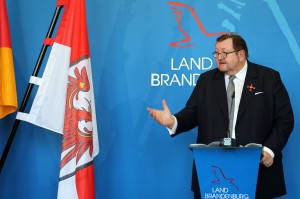
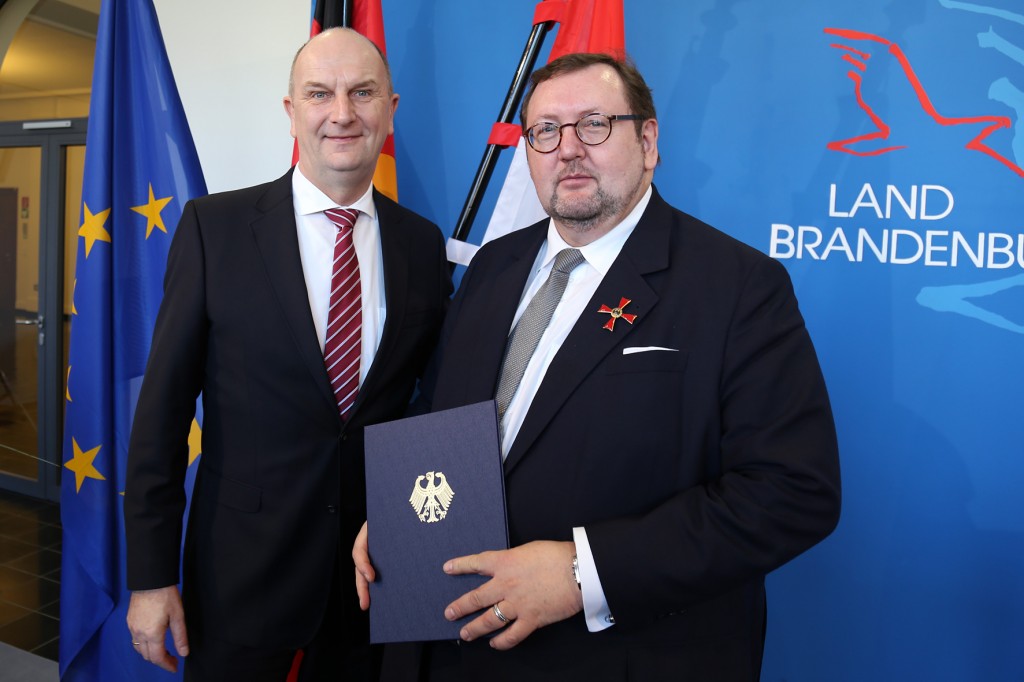
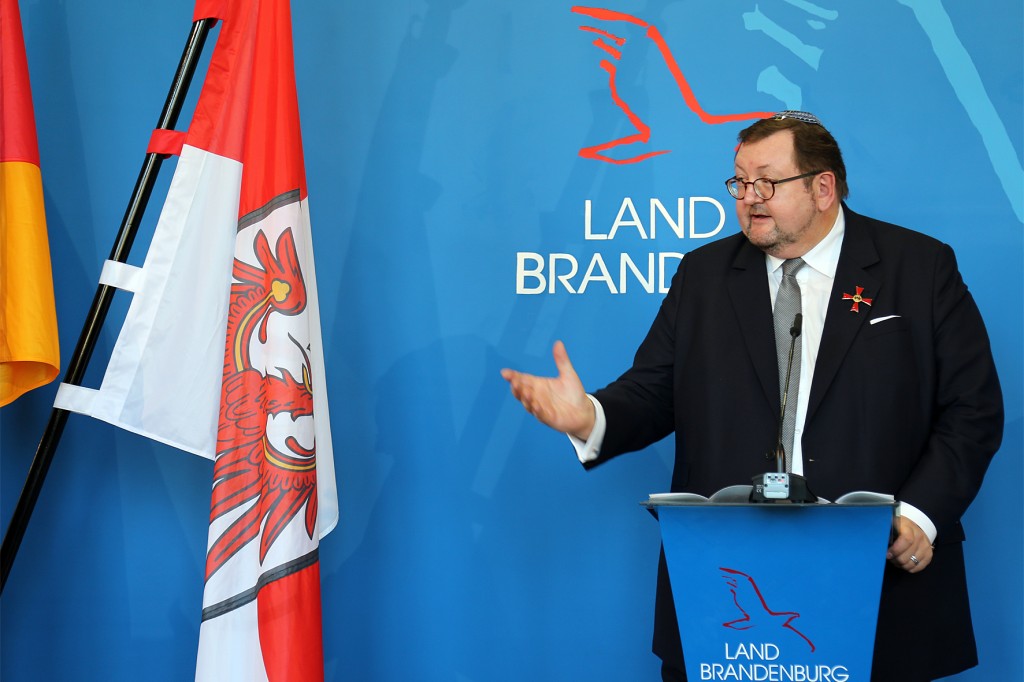
The President of the Federal Republic of Germany, Joachim Gauck, honoured Rabbi Walter Homolka with the Officers Cross of the Federal Merit Order.


On February 27, 2015, the Prime Minister of the State of Brandenburg, Dr. Dietmar Woidke, handed over the insignia in the state chancellery in Potsdam.


Woidke thanked Rabbi Homolka for the establishment of the Abraham Geiger  College in 1999 as the first rabbinical school in Continental Europe after the Holocaust.
Homolka’s initiative in 2013 also formed the School of Jewish Theology of the University of Potsdam, Germany’s Jewish Divinity School. Rabbi Homolka is a professor of Modern Jewish Thought there.


On the day of the honour Germany’s nationwide tabloid BILD voted Homolka “winner of the day.”


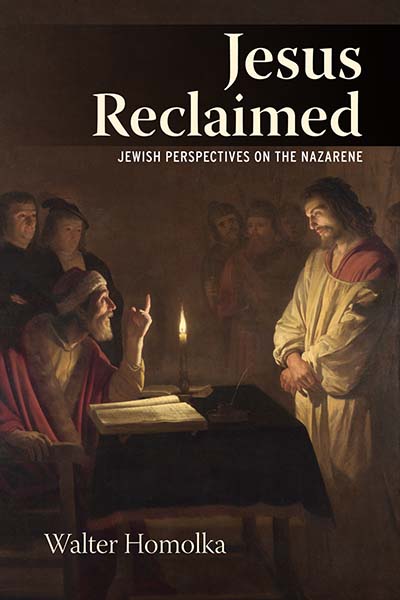
Rabbi Walter Homolka is author of Jewish Identity in Modern Times: Leo Baeck and German Protestantism (1995) and Jesus Reclaimed: Jewish Perspectives on the Nazarene (2015), and co-editor, with Albert Friedlander, of The Gate to Perfection: The Idea of Peace in Jewish Thought (1994). He is the rector of the Abraham Geiger College, Germany’s first rabbinical seminary after the Holocaust, and a professor of Modern Jewish Thought at the School of Jewish Theology of the University of Potsdam in Germany.
 

Writing for Goffman: Coincidence Drives Idea behind ‘Vehicles’

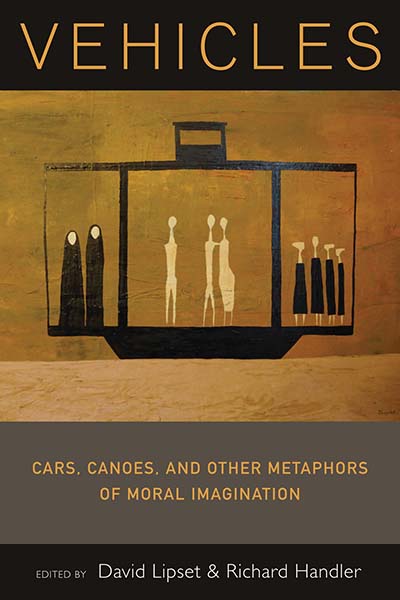
Recently published Vehicles: Cars, Canoes and other Metaphors of Moral Imagination, edited by David Lipset and Richard Handler, offers insight into the vehicle as an object that can move not only people, but also ideas. Following, Handler discusses the origination of the volume, which all came about by way of an interesting connection of coincidence.


______________________________


This volume came about serendipitously.


My friend David Lipset emailed me in the summer of 2008 with the standard “what are you working on” question. I replied that I was working on a series of essays about the great American sociologist, Erving Goffman. David wrote back to tell me the rather astounding story about his first car, a late-1950s VW Beetle that his father had bought from Goffman, in Berkeley, California, where both of them taught.


The fact that Goffman was an “early adopter” (in the U.S.) of the Beetle explained, I thought, some cryptic comments in Behavior in Public Places, where Goffman described the interactional contempt that drivers of small cars endured.


Continue reading “Writing for Goffman: Coincidence Drives Idea behind ‘Vehicles’”

International Holocaust Remembrance Day

International Holocaust Remembrance Day, established by the United Nations General Assembly, is an international memorial day on 27 January commemorating the victims of the Holocaust. It commemorates the genocide that resulted in the death of an estimated 6 million Jews, 1 million Gypsies, 250,000 mentally and physically disabled people, and 9,000 homosexual men by the Nazi regime and its collaborators.


January 27th, 2015 also marks the 70th anniversary of the liberation of the Nazis’ most notorious concentration camp, Auschwitz, also known as Auschwitz-Birkenau. Most of about 1.1 million people that passed through the gates between 1940 and 1945 never left, many of them murdered in the camp’s gas chambers. Only some 200,000 are believed to have survived that fate. No one knows how many of the survivors remain alive today, but it’s a group that is dwindling as age takes its toll. To mark the liberation’s anniversary, about 300 former Auschwitz prisoners are travelling to Oświęcim, Poland, to pay tribute on Jan. 27 at Birkenau’s Gate of Death, the unloading ramp at the camp’s rail entrance.

———————————————————————————————————————————–

In honor of the UN’s Holocaust Remembrance Day, Berghahn has made several relevant journal articles freely available through a special virtual issue. You may access the issue through this link: bit.ly/Holocaust-Remembrance-Day

———————————————————————————————————————————–

Berhahn Books would also like to present a selection of relevant titles on the history of the Holocaust and Genocide Studies.


JEWISH HISTORIES OF THE HOLOCAUST
New Transnational Approaches
Edited by Norman J. W. Goda

Continue reading “International Holocaust Remembrance Day”

Today in History

Vladimir Ilyich Ulyanov, alias Lenin (Russian: Ле́нин) died of a brain hemorrhage on January 21st, 1924 at the age of 54. Lenin was one of the Russian leading political figures and revolutionary thinkers of the 20th century. He masterminded the Bolshevik take-over of power in Russia in 1917 serving as head of government of the Russian Soviet Federative Socialist Republic, and of the Soviet Union from 1922 until his death. Under his administration, the Russian Empire was replaced by the Soviet Union and all wealth including land, industry and business was nationalized.

Lenin had a significant influence not only on the history of Russia but on the international Communist movement and was one of the most influential and controversial figures of the 20th century. Following the dissolution of the USSR in 1991, reverence for Lenin declined among the post-Soviet generations, yet he remains an important historical figure for the Soviet-era generations.

———————————————————————————————————————————–

Berghahn Books presents a selection of titles on Russian & Soviet history and culture:


Forthcoming in Paperback!

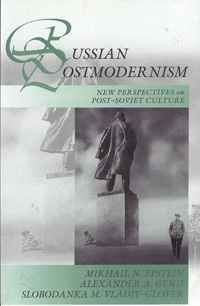
RUSSIAN POSTMODERNISM
New Perspectives on Post-Soviet Culture
Mikhail N. Epstein, Alexander A. Genis, and Slobodanka M. Vladiv-Glover
With an Introduction by Thomas Epstein

Continue reading “Today in History”

Space and Place

Unlike a painting or a sculpture, architectural sites cannot be work of a single artist. They arise from collaborations among historical figures, architects, engineers, bankers, and many more. Some structures become much more than just a place to live, work, worship or be entertained, instead they become symbols embedded with cultural knowledge, history and social value.


Berghahn is delighted to bring Space and Place Series to your attention. This series provides ethnographically rich analyses of the cultural organization and meanings of these sites of space, architecture, landscape, and places of the body. Contributions examine the symbolic meanings of space and place, the cultural and historical processes involved in their construction and contestation, and how they communicate with wider political, religious, social, and economic institutions.

———————————————————————————————————————————-


Volume 15 Forthcoming! 

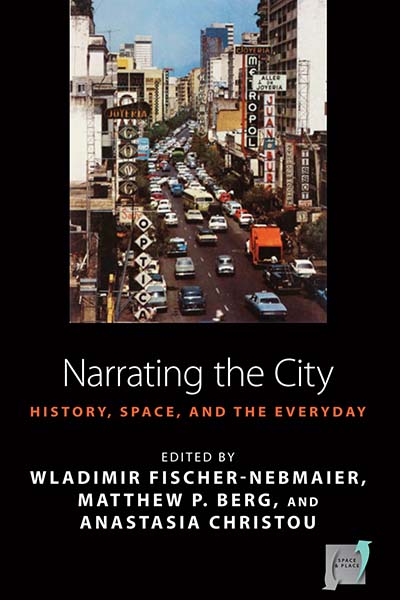
NARRATING THE CITY
Histories, Space and the Everyday
Edited by Wladimir Fischer-Nebmaier, Matthew P. Berg, and Anastasia Christou

Continue reading “Space and Place”

Simulated Shelves: Browse December’s New Books

We are delighted to present a selection of our newly published December titles from our core subjects of Cultural Studies, History and Politics, along with a selection of our New in Paperback titles.

———————————————————————————————————————————–


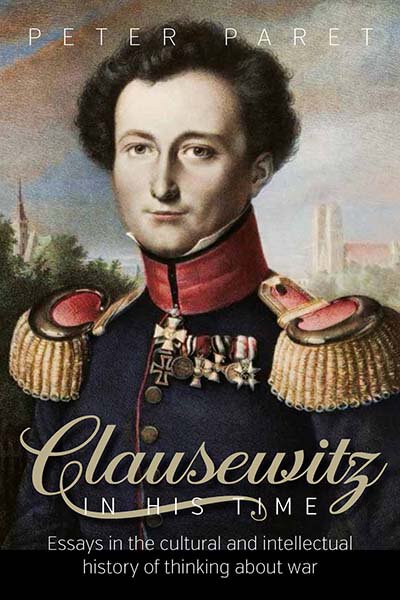
CLAUSEWITZ IN HIS TIME
Essays in the Cultural and Intellectual History of Thinking about War
Peter Paret

Continue reading “Simulated Shelves: Browse December’s New Books”

Looking Back through Anthropology

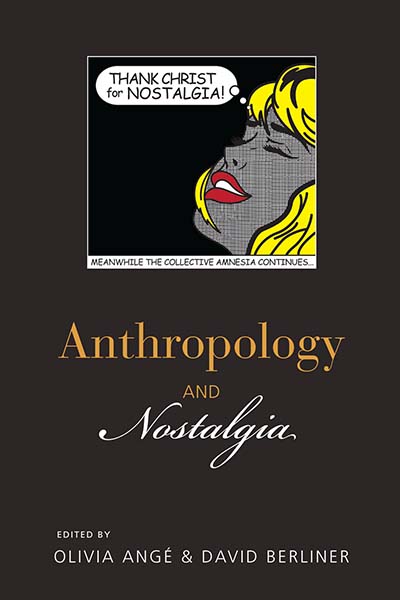
Although nostalgia seems to permeate much of modern (especially Western) society, there are few detailed anthropological accounts of this longing for the past. Editors Olivia Angé and David Berliner seek to fill this gap and explore this phenomenon in their newly published volume, Anthropology and Nostalgia. Following, the editors look back on the creation of their volume and look forward to its reception within the social science community.
 

_______________________________________


What drew you to the study of nostalgia, especially as it relates to the social sciences?


Well, nostalgia is a central notion that permeates present-day discourses and practices. In many parts of the world, there seems to be a current overdose of nostalgia, a reaction to the modern acceleration deployed in universes as diverse as nationalism, heritage policies, vintage consumerism, the tourism industry, and religious and ecological movements.

Continue reading “Looking Back through Anthropology”

International Migrants Day

On December 18, the international community recognizes and celebrates the rights of migrants around the world. In 1990 the UN General Assembly approved the International Convention on the Protection of the Rights of All Migrant Workers and Members of Their Families (commonly referred to as the Migrant Worker’s Convention or Migrant Rights Convention). This is the day to express our support and solidarity with all immigrants.

———————————————————————————————————————————–

In honor of this observance, Berghahn Journals presents a special virtual issue dedicated to migration with hope that this will contribute to the overall discussion of the lives of migrants.

Click Here to Access the Special Virtual Issue! 

———————————————————————————————————————————–

Berghahn is also delighted to present a selection of titles on Refugee & Migration Studies:


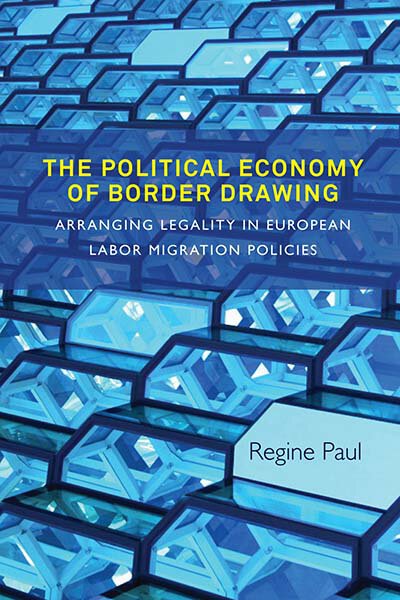
THE POLITICAL ECONOMY OF BORDER DRAWING
Arranging Legality in European Labor Migration Policies
Regine Paul

Continue reading “International Migrants Day”

Simulated Shelves: Browse November’s New Books

We are delighted to present a selection of our newly published November titles from our core subjects of History, Media Studies, Medical Anthropology, Sociology and Urban Studies, along with a selection of our New in Paperback titles.

———————————————————————————————————————————–


U.S. FOREIGN POLICY AND THE OTHER
Edited by Michael Patrick Cullinane and David Ryan

Continue reading “Simulated Shelves: Browse November’s New Books”