Five Myths about Anorexia

By Richard O’Connor, author of From Virtue to Vice


Richard O’Connor, professor of anthropology at the University of the South, is the author of From Virtue to Vice: Negotiating Anorexia. His book, written with Penny van Esterik, is Volume 4 in our Food, Nutrition and Culture Series that takes an anthropological perspective to human nutrition and food habits. In this blog post, Professor O’Connor debunks five commonly held beliefs on the disease that benefits clinicians, patients, and the friends and family of those who struggle with anorexia.

  Continue reading “Five Myths about Anorexia”

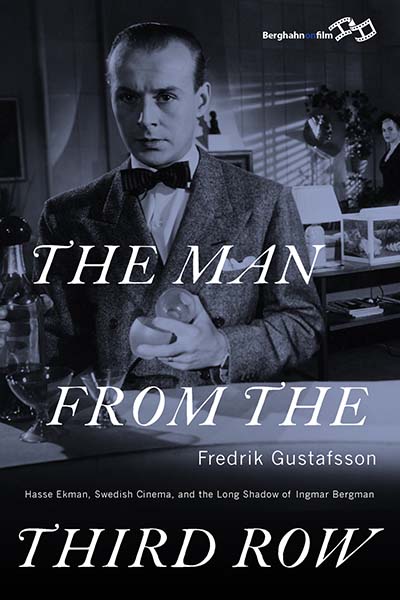
Five Favorite Hasse Ekman Films

by Fredrik Gustafsson

The Man From the Third RowHasse Ekman made his first film as writer and director, the screwball comedy With You in My Arms, in 1940 and following that successful debut he wrote and directed over 40 films and one TV-series before he retired in 1965. Most of these films are good, there are very few failures, but forced to pick just five films these are the once I choose:

Continue reading “Five Favorite Hasse Ekman Films”

Words Matter: ‘Race’ in American Campaign Rhetoric

by Augustine Agwuele.

sa-57-cvr

Augustine Agwuele is the author of the article “Culture Trumps Scientific Fact: ‘Race’ in US American Language” appearing in Volume: 60 Issue: 2 of Social Analysis: The International Journal of Social and Cultural Practice.


Momma she send me to school, I get educated

I get educated, so sophisticated

Not under-rated but really elevated

West African youths quickly appropriated this 1983 lyrical refrain of Eek-a-Mus as it aligns with the singular message about education flogged into them since kindergarten. Education liberates, elevates, promotes, empowers, and places one on a distinguished pedestal. Continue reading “Words Matter: ‘Race’ in American Campaign Rhetoric”

I Want To Be Greedy for the United States

drumpfThis is a post by Jared Poley, author of The Devil’s Riches: A Modern History of Greed (Now in Paperback!). The Financial Times called this book “…a thought-provoking study of a subject that is too often taken for granted, rather than subjected to critical examination.”

Back in late January 2016, just before the Iowa caucus, Donald Trump held an event in support of military veterans. Exhorting the crowd to donate to veteran’s charities and critiquing the power held by lobbyists over the political system, Trump took the opportunity to express what might be called his theory of financial success and how it related to larger geopolitical realities.

Continue reading “I Want To Be Greedy for the United States”

At the Threshold of Modernity: Vienna’s pivotal years in the 1870s

by Ulrich E. Bach

Tropics of ViennaFrom the digital perspective of today, visual media reproduced in 19th century publications often appear quaint if not antiquated. To be sure, daguerreotypes and photographs could already capture cityscapes, but due to technological limitations, these reproductions were too static and timeless in order to represent contemporary life in newspapers. The busy everyday life in the contemporary metropolis was better captured in graphic illustrations, which were printed and distributed in huge quantities. For this reason, I chose Franz Kollarz’ xylograph “Auf dem Dach der Rotunde” (1873) as the book cover of Tropics of Vienna: Colonial Utopias of the Habsburg Empire. For me, the optimistic World Exhibition visitors—gazing like explorers—encapsulate not only the optimistic spirit of the time, but also give a glimpse into the general societal aspirations of the Habsburg Empire.

Continue reading “At the Threshold of Modernity: Vienna’s pivotal years in the 1870s”

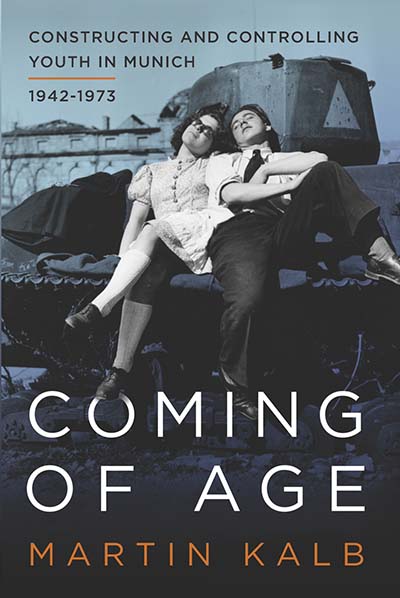
The Rowdy Boy & the Deviant Girl: Constructing Youth in Munich, 1942-1973

by Martin Kalb

Coming of AgeI did not anticipate that I would focus on images or constructs of youth in Munich. My research was originally tied to denazification in Nuremberg, later Bavaria more broadly. That interest took shape as I was working in the Stadtarchiv City Archive in Nuremberg for several months, and while I was helping organize a database tied to individuals with connections to National Socialism. I dug deeper, looked into the main study on denazification in Bavaria at the time, and wondered how Nuremberg might fit into all that. Later on, once I began my Ph.D. program in the United States, I continued to look into the scholarship, maybe with a fresh mind given a broader change in scenery. In this context I was reading through Die Süddeutsche Zeitung newspaper on microfilm in the library one evening. At the time, it was among the few daily newspapers I could access for Bavaria. One headline struck me: “Bavarian Problems: Youth-Food-Export.” I wondered, how could the state of the young be as important as economic recovery? What was the obsession tied to youth about?

Continue reading “The Rowdy Boy & the Deviant Girl: Constructing Youth in Munich, 1942-1973”

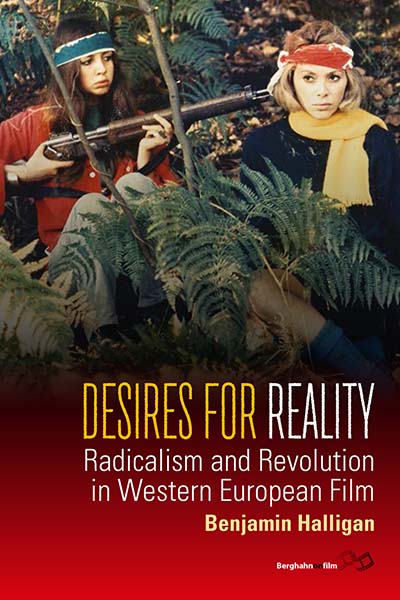
Youth in Revolt: Radicalism & Revolution in European Film

by Benjamin Halligan


My new book concerns Western European film, as allied to protest – around the “Summer of Love” of 1967, and then the “events” of 1968. The book ends with a consideration of film-making as a forum for the regrouping of radical sensibilities, and laboratory for the development of new strategies of political film-making. This latter phase occurred in the immediate aftermath of the failure of the seemingly revolutionary upheavals of that time.


Continue reading “Youth in Revolt: Radicalism & Revolution in European Film”

The Life of a Native Hawaiian: A Perspective on Hawaii–US Relations

By Judith Schachter

The following is an excerpt from The Legacies of a Hawaiian Generation. Author Judith Schachter remembers a friendship that began at a May 1989 meeting of the Waimānalo Senior Citizens Association. The Legacies of a Hawaiian Generation by Judith Schachter is now available in paperback.


Continue reading “The Life of a Native Hawaiian: A Perspective on Hawaii–US Relations”

A Walk of Life: Entering Catholic West Belfast

Zenkerby Olaf Zenker


Ethnographer Olaf Zenker details a walk through the Catholic side of Ireland in this excerpt from his book Irish/ness is all Around Us: Language Revivalism and the Culture of Ethnic Identity in Northern Ireland, now available in paperback. Read Chapter One for free. 


On a Friday afternoon in September 2004, shortly before returning home from my ethnographic fieldwork, I took my video camera and filmed a walk from the city centre into Catholic West Belfast up to the Beechmount area, where I had lived and conducted much of my research. I had come to Catholic West Belfast with the intention of learning about locally prevailing senses of ethnic identity. Yet I soon found out that virtually every local Catholic I talked to seemed to see him- or herself as ‘Irish’, and apparently expected other locals to do the same. My open questions such as ‘What ethnic or national identity do you have?’ at times even irritated my interlocutors, not so much, as I figured out, because they felt like I was contesting their sense of identity but, to the contrary, because the answer ‘Irish’ seemed so obvious. ‘What else could I be?’ was a rhetorical question I often encountered in such conversations, indicating to me that, for many, Irish identity went without saying. If that was the case, then what did being Irish mean to these people? What made somebody Irish, and where were local senses of Irishness to be found?

Continue reading “A Walk of Life: Entering Catholic West Belfast”

Jihadist Interpretation of Dreams

By Iain R. Edgar


Excerpted from The Dream in Islam: From Qur’anic Tradition to Jihadist Inspiration by Iain R. Edgar.


Research has shown that some jihadists take, or at least claim to take, dreams into consideration when they make decisions to join a group, become a foreign fighter, volunteer for operations, or pursue particular military strategies. There are several examples of jihadists claiming to make such decisions almost entirely based on al­leged dreams. Thus far there is limited evidence of this in relation to the Islamic State (IS), but there are three important cases worth mentioning.


Continue reading “Jihadist Interpretation of Dreams”