 Join our Email List




Tag: author article
Resilience and transformation in the Vietnamese marketplace
Myths around Men
by Dr Robin A Hadley, author of How is a Man Supposed to be a Man
Continue reading “Myths around Men”The Story behind ’Crafting Chinese Memories’
by Katherine Swancutt
Katherine Swancutt is the editor of Crafting Chinese Memories: The Art and Materiality of Storytelling.
Continue reading “The Story behind ’Crafting Chinese Memories’”Capacity Building in Ethnographic Comparison
by Rachel Douglas-Jones and Justin Shaffner, editors of Hope and Insufficiency: Capacity Building in Ethnographic Comparison
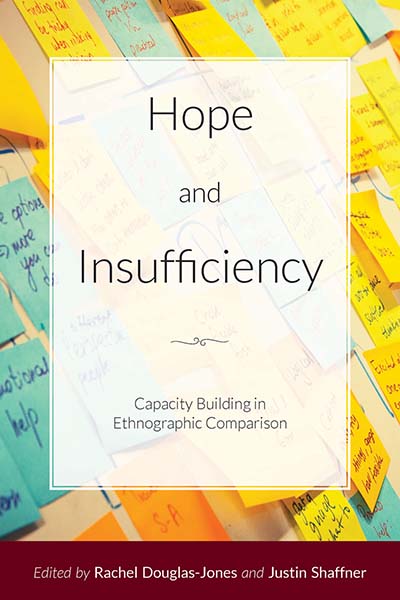
We open our new edited collection Hope and Insufficiency by traveling the world in workshops. Three capacity building events, ranging from Paramaribo to Addis Ababa, sketched as thumbnails, form our introductory paragraph. These three events, drawn from thousands, simply demonstrate the breadth of topics to which it is applied. Capacity building, or its more recent iteration as capacity development, is, we argue, both ubiquitous and under-theorised within the social sciences. The title of our book identifies characteristics of capacity building’s intervention: as we put it, hope and insufficiency interplay in a way that makes the idea of capacity building persuasive.
Continue reading “Capacity Building in Ethnographic Comparison”Crafting Chinese Memories: The Art and Materiality of Storytelling
by Katherine Swancutt
Katherine Swancutt is the author of Crafting Chinese Memories: The Art and Materiality of Storytelling.
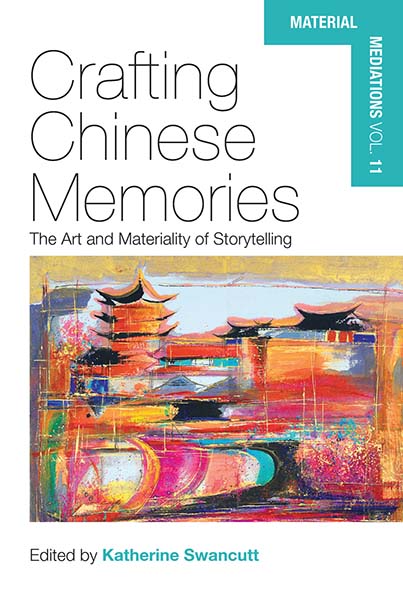
Storytelling is always an entertaining and lively theme, but it’s surprisingly elusive to come to grips with conceptually. This is especially the case when pairing storytelling with other great warhorses of social theory like art, materiality, and memory, which often require fine-grained interdisciplinary detail to bring them fully to light. Factor in the study of China from ancient times to the present day – with an expansive focus that includes not only the Han ethnic majority, but also China’s ethnic minorities, the strange, and the Other – and you have the makings of a rather epic volume on one of the oldest and richest civilizations in the world. Crafting Chinese Memories sets out to do all of this through original essays on Chinese art, film, historiography, literature, socialism, imagination, fantasy, race, colonialism, statelessness, personal memoirs, elite inner circles, legends, ethnography, mimesis, and gestures to what counts as ‘memorable’. Wearing multiple disciplinary hats at once, each of the volume’s contributors explores personal, social, and cultural memories in and of China. Their contributions reveal the myriad mise-en-abyme (or ‘stories within a story’) that unfold through the memory works of artists, filmmakers, novelists, life writers, civil servants, and indigenous storytellers. Readers are invited to treat themselves to this enthralling panorama of memory-making that unfolds within and beyond China’s borders.
Continue reading “Crafting Chinese Memories: The Art and Materiality of Storytelling”Delta Life: Exploring Dynamic Environments where Rivers Meet the Sea
Edited by Franz Krause and Mark Harris
Franz Krause and Mark Harris are the editors of Delta Life: Exploring Dynamic Environments where Rivers Meet the Sea (Open Access).
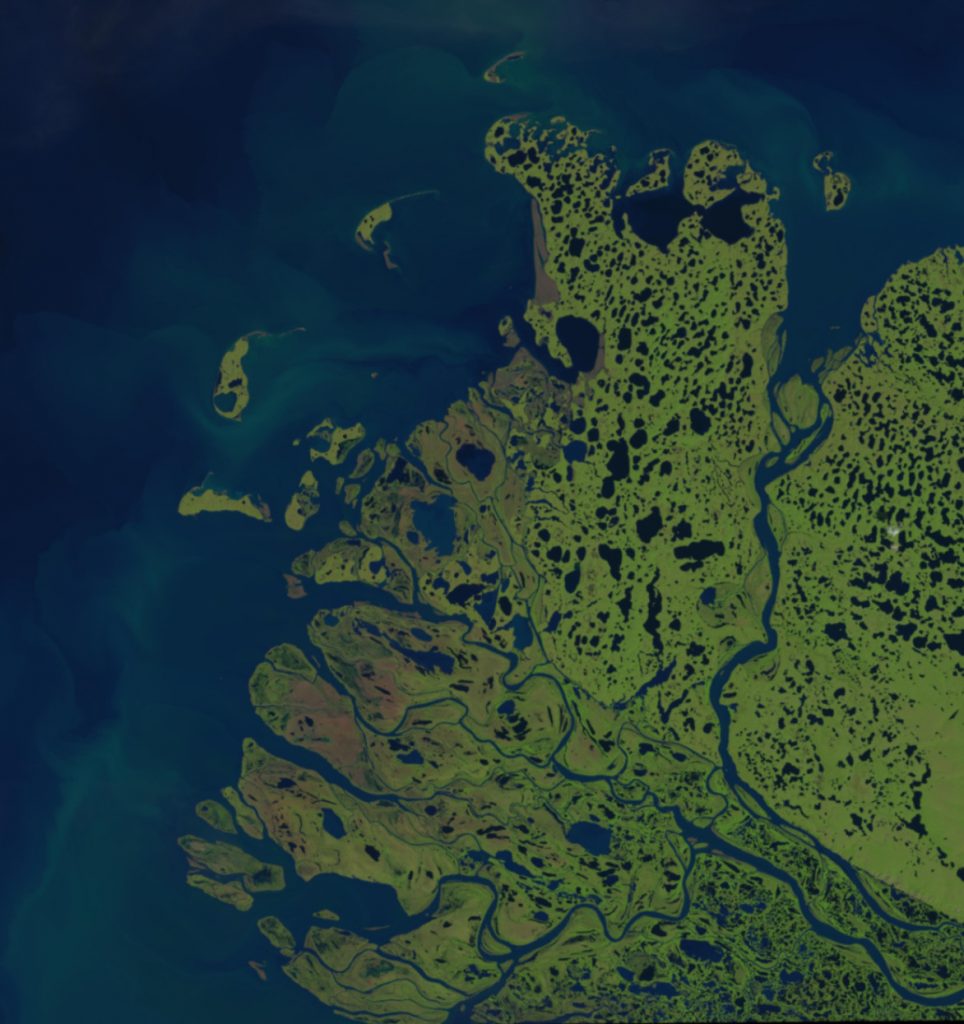
What is a river delta? There is a popular answer to this question among people who have had geography lessons and seen satellite images of deltas: usually, a delta is the area formed by the sediments of a river as it spills into another waterbody. It often features a fascinating network of meandering channels and distributaries, and its human land uses must adapt to the vagaries of a dynamic terrain characterized by land subsistence, flood risk, rampant erosion and high sediment loads.
Identity in Peer Review: Fostering New Voices by Changing Editorial Practices

by Joanna Cobley and Conal McCarthy
Researchers at all stages and levels are encouraged to publish. Academic publications, including Museums Worlds: Advances in Research, undergo a peer review process. The purpose of peer review is to ensure research integrity while encouraging new ideas, knowledges and experimental methods to emerge. In fact, peer review fosters researcher development for the researcher and reviewer, and for the entire publishing team working behind the scenes, including the journal editors, copyeditors and publishing house editors. As a result, peer review develops a dynamic community of practitioners.
Continue reading “Identity in Peer Review: Fostering New Voices by Changing Editorial Practices”Of Soldiers and Dreamers: Peter Lilienthal in Latin America

by Claudia Sandberg
Claudia Sandberg is the author of Peter Lilienthal : A Cinema of Exile and Resistance.
Sitting at a wooden bench, the young woman Marcela follows the teacher attentively. She has decided to take part in the literacy campaign that was launched by the Unidad Popular government. In a group with other woman, they have gathered in the meeting place and school of the shanty town community La Victoria, situated at the fringes of the Chilean capital, to get trained for this task. The teacher in front holds up a poster that shows a family of three generations. Below appears the Spanish word HOGAR (home). Marcela protests that this image surely does not represent the reality of many people. The other women chime in by referring to their own situation; they are married, divorced, or widowed, they live alone, with their children or with their parents. The word home means something different to each one of them.
Continue reading “Of Soldiers and Dreamers: Peter Lilienthal in Latin America”TRANSBORDER MEDIA SPACES: AYUUJK VIDEOMAKING BETWEEN MEXICO AND THE US

Ingrid Kummels
As a response to the Covid-19 pandemic, social arrangements allowing people to carry on despite the restrictions on mobility forced upon them became predominant across the world. From work (home office) and education (home schooling) to birthday parties, meetings, conferences and political campaigns (Zoom, etc.) diverse aspects of life were reoriented to adapt to the requirements of “social distancing” – although this term is a misnomer, since the actual challenge consists of overcoming physical distance. Even countries that are leaders in high-tech have had a hard time adjusting, since they had failed to consider the necessary widespread availability of equipment, training and creativity to remotely organize a community, its social life and leisure for long periods of time.
Continue reading “TRANSBORDER MEDIA SPACES: AYUUJK VIDEOMAKING BETWEEN MEXICO AND THE US”