Revealing the ‘Vanished History’ of the Holocaust

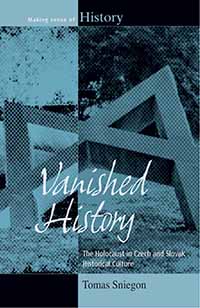
Although in Slovakia, Bohemia and Moravia (parts of Czechoslovakia), more than a quarter million lives were claimed during the Holocaust, these deaths have been mostly concealed in post-World War II Czech and Slovak history. A Czech native himself, author Tomas Sniegon shines a light on this cover up in Vanished History: The Holocaust in Czech and Slovak Historical Culture, to be published this month. Following, Sniegon uses the example of Oskar Schindler — famous as the protagonist of the 1993 film Schindler’s List — to explain just how much was hidden from citizens of the Czech Republic and Slovakia.


_____________________________
Film hero Oskar Schindler, played by Liam Neeson, entered the 1990s in the Steven Spielberg’s film Schindler’s List as a new symbol of a so-called “Good citizen of the Third Reich,” which provoked both positive and negative reactions worldwide. However, very few at the same time knew that the real Oskar Schindler — far more complicated than the film character — had never lived in Germany until the World War II and thus actually had never been a “genuine-German German.”

Continue reading “Revealing the ‘Vanished History’ of the Holocaust”
Filmic Multiple Reality Syndrome

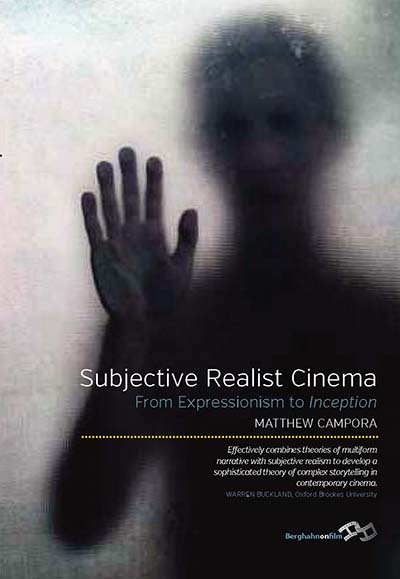
The nonlinear narratives of such films as Mulholland Drive, Memento, and Eternal Sunshine of the Spotless Mind come into sharper focus in Matthew Campora’s newly released book Subjective Realist Cinema: From Expressionism to Inception. Following, the author introduces an excerpt to his book, tells the reader of his initial inspiration to write it, and gives insight into “multiform narrative.”


______________________________

What follows is an excerpt from my book Subjective Realist Cinema. I have chosen to present it here because it contains some of the key ideas of the book, as well as a brief analysis of the film that inspired my interest in complex narrative cinema in the first place, Terry Gilliam’s Brazil. Watching it teenager, I found Brazil confusing, even incomprehensible. However, I was also fascinated by it and suspected there was more to the film than I had grasped. When I returned to it years later and discovered that I was able to comprehend it in a way that had eluded me earlier, I was even more intrigued. How could I have NOT grasped what seemed so simple to me now? That the key to understanding the film lay in recognizing the shifts between Sam Lowry’s nightmarish waking world on the one hand, and his imagination, dreams, and hallucinations on the other. The lack of clearly marked shifts between the film’s different ontological levels had created a complexity that I was not accustomed to, and solving the puzzle the film posed had proven tremendously satisfying. I began seeking out similar films in order to understand how they created their effects and what follows is fragment of the work that has grown out of the years spent with these films.

Continue reading “Filmic Multiple Reality Syndrome”

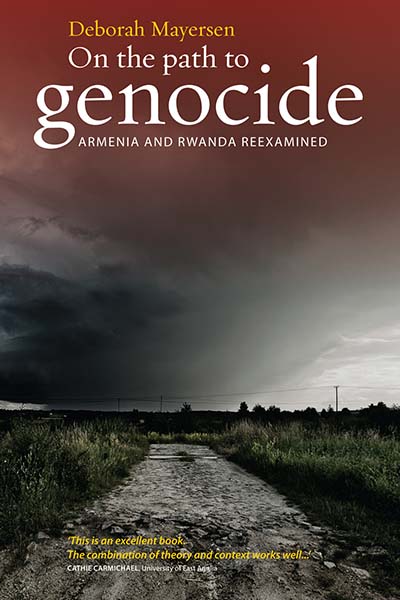
Tracing the Path Toward and Away From Genocide

How and why does genocide occur, and how can we identify these warning signs to prevent it in the future? In On the Path to Genocide: Armenia and Rwanda Reexamined, Deborah Mayersen looks to conflicts in 1915 Turkey and 1994 Rwanda to answer these difficult questions. Following, the author explains the path to her study of genocide, traces her steps to the book, and points to where her research will take her in the future.


__________________________________________


Berghahn Books: What attracted you to study the genocide of Armenian and Rwandan peoples?


Deborah Mayersen: As a school student, I learned about the Holocaust and the international promise of ‘Never Again’ in its wake. Yet at University, I learned about the betrayal of this promise, with the genocides in Cambodia and Rwanda for example. I wanted to understand more about the history of genocide, and why it has become so prevalent in the modern world. This led me to examine in greater detail these two genocides, at the opening and closing of the twentieth century.

Continue reading “Tracing the Path Toward and Away From Genocide”

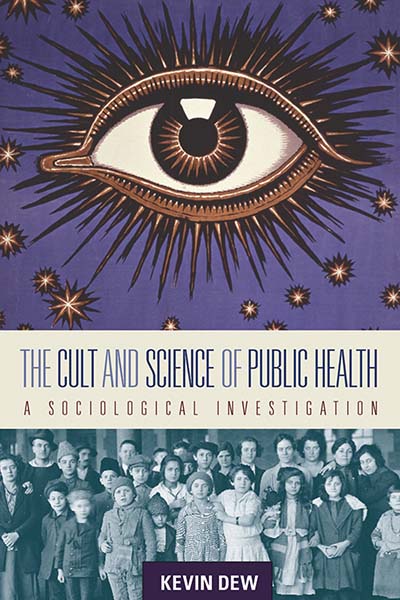
Examining ‘Public Health’: A Reflection on Reception

With World Health Day coming up April 7, the paperback release of Kevin Dew’s exploration of public health is quite timely. The Cult and Science of Public Health: A Sociological Investigation was published originally in February 2012 and will be published as a paperback this month. Below is a brief description of the book, and the author’s reflection on its reception since the initial publication.

________________________________________________


As a cult of humanity, public health provides a moral force in society that replaces ‘traditional’ religions in times of great diversity or heterogeneity of peoples, activities and desires. This is in contrast to public health’s foundation in science, particularly the science of epidemiology. The rigid rules of ‘scientific evidence’ used to determine the cause of illness and disease can work against the most vulnerable in society by putting sectors of the population at a disadvantage.

Continue reading “Examining ‘Public Health’: A Reflection on Reception”

Doubly Disenfranchised: A Firsthand Account of Life as a Mizrahi Woman

The largest population of Mizrahi Jews, those with origins in Middle Eastern countries, lives in Israel. However, in this country Mizrahim are historically and currently disenfranchised, with preference given to Jews of European descent, or Ashkenazi. In Wrapped in the Flag of Israel: Mizrahi Single Mothers and Bureaucratic Torture, to be published this month, Smadar Lavie, herself a Mizrahi Jewish woman, explores the Israeli bureaucratic system and Mizrahi women’s relationship with it. Following, the author answers the question: What aspect of writing Wrapped in the Flag of Israel did you find most challenging? Most rewarding?


_____________________________________


Most challenging was weaving a text out of two decades worth of fieldwork data. Though I started my research efforts in 1990 as a tenured professor at U. C. Davis, the bulk of the fieldwork was collected during my years as a Mizrahi single mother on welfare between 1999-2007. For a typical book-length ethnography, most scholars spend a total of around two years in the field collecting data, supported by grants and sabbaticals. Afterward, they return to their home university and write the book manuscript, also supported by grants and sabbaticals.

Continue reading “Doubly Disenfranchised: A Firsthand Account of Life as a Mizrahi Woman”

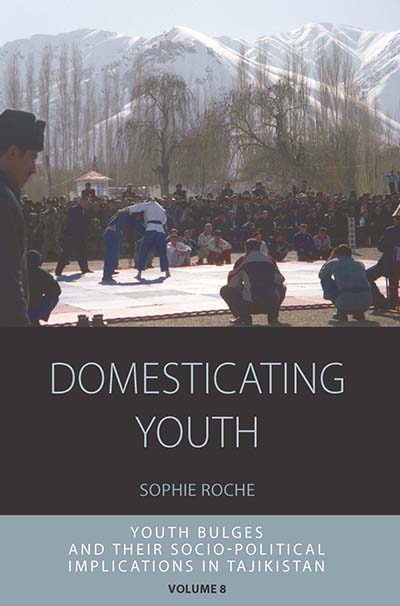
‘Youth Bulge’ and Social Change in Tajikistan

It is common for a society’s population to grow exponentially after a war. In the U.S., the best example of this “youth bulge” is the population of post-World War II “Baby Boomers.” In her soon-to-be-released volume, Domesticating Youth: Youth Bulges and their Socio-political Implications in Tajikistan, Sophie Roche explores this phenomenon in post-civil war Tajikistan and what its implications may be. Following, the author reflects on her fieldwork, and shares how it felt to return to her site after a decade of absence.


_____________________________________________


With an ethnographic book a story is out in the world that has been documented for a while but that does not stop with the last page but continues to develop. Often after reading an ethnographic study I wonder what happened to the actors in the book, some of whom we are introduced very intimately; what happened to the place, the village, the authorities, the children? Where they really just living to be examples of a theory? How does the story of the people develop after the book?

Continue reading “‘Youth Bulge’ and Social Change in Tajikistan”

The Author and Ingmar Bergman: Two Legacies Endure

John Orr’s proposal for a text on Swedish director Ingmar Bergman first came to Berghahn in 2009. In September 2010, however, the prominent film scholar passed away with a manuscript in peer review. It was Professor Orr’s wife, Anne, who took up the finalization of the book, shepherding it through stages of review, revision and production to its publication. Now, this month, The Demons of Modernity: Ingmar Bergman and European Cinema will be published. Following, Anne Orr, who wrote about her experience in the volume’s Afterword, briefly introduces the book and what it meant to help bring it to fruition.


_____________________________________

When my husband John Orr died suddenly during the writing of The Demons of Modernity, it was comforting to be assured by two of the foremost experts on Ingmar Bergman – Peter Cowie and Maaret Koskinen – that they considered the manuscript as it stood an original and worthwhile contribution to studies of Bergman.

Continue reading “The Author and Ingmar Bergman: Two Legacies Endure”

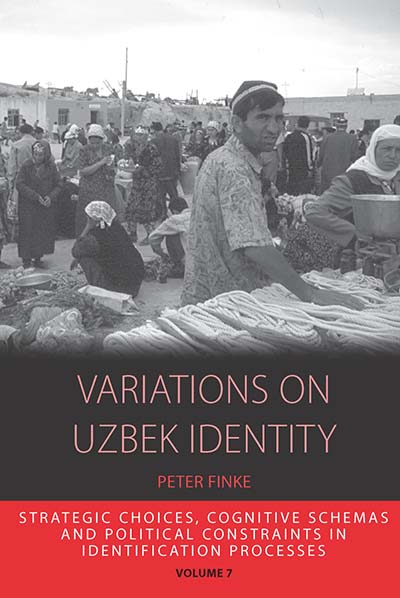
Uzbekistan, Social Network of Choice

In the Republic of Uzbekistan, being Uzbek has less to do with one’s lineage and more to do with one’s allegiance to a society. The advantages of this voluntary membership within the Uzbek “social network” are explored in Variations on Uzbek Identity: Strategic Choices, Cognitive Schemas and Political Constraints in Identification Processes. Below, Peter Finke discusses his attraction to Uzbekistan, his writing process, and the volume’s potentially controversial reception.


_____________________________________________

Berghahn Books: What drew you to the study of Uzbekistan, specifically “Uzbek Identity”?


Peter Finke: My general interest in Central Asia goes back a long way into childhood fantasies of roaming horse riders and the like. Most of Uzbekistan does not really fit that well into this and indeed my early research in the region was on nomadic pastoralists in Western Mongolia. It was after I took up a postdoc at the Max Planck Institute to work on identity issues that I not only switched topics but also field sites.

Continue reading “Uzbekistan, Social Network of Choice”

Throwing Out Ideas, The Culture of ‘Urban Pollution’

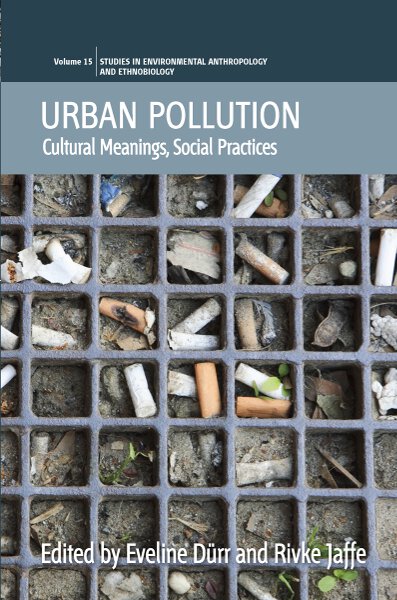
The celebrated volume of anthropologist Mary Douglas, Purity and Danger (1966), broke ground with its discussion of cleanliness, dirtiness, and sacred ritual. Editors Rivke Jaffe and Eveline Dürr took this up in their 2010-published Urban Pollution: Cultural Meanings, Social Practices. The volume, which was published as a paperback earlier this month, dusts off the concepts of clean and dirty, and looks at modern intersections of pollution and culture. Jaffe and Dürr revisit the origins and makings of the volume, below.
 

_____________________________________________


Berghahn Books: What is the idea behind the collection, and how did the book come about?


Rivke Jaffe and Eveline Dürr: We wanted put together a collection that could help bridge the divide between environmental anthropology and urban anthropology. The bulk of work in environmental anthropology has neglected cities and specifically urban pollution. Meanwhile, urban anthropologists rarely incorporate an environmental dimension in their work.

Continue reading “Throwing Out Ideas, The Culture of ‘Urban Pollution’”

Love in the Time of Ethnography

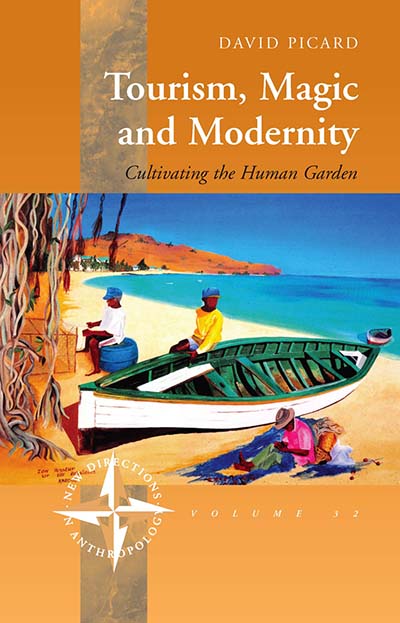
In David Picard’s Tourism, Magic and Modernity: Cultivating the Human Garden, the author uses analogy to shed light on life in La Réunion, a tropical tourist destination in the Indian Ocean. The volume, recently published in paperback, shows that, like plants in a garden, local life is pruned — using the shears of development and nature initiatives — to become a dazzling display for travelers to behold. Following, Picard once again embraces literary technique — on this occasion using a story of lovers — to enchant and delight the reader with the study of anthropology.


____________________________________________


Eve-Marie and Adamsky are 20 when they first meet. They are students at the university of La Réunion, in the Western Indian Ocean. They party together, discover life and love, and progressively turn into adults. They fall in love. As with most couples, through their relationship, the two meet different worlds and family histories, and have to grapple with these differences. Their love gets entangled with the aspirations of their respective milieus.


Continue reading “Love in the Time of Ethnography”