A ‘Privileged’ Prisoner is Still a Prisoner

In German concentration camps, some Jewish prisoners were selected by their Nazi captors to hold more-advantaged positions within the population of the camp. This not only allowed them some protections, but also made them targets of disdain from other victims. Author Adam Brown sheds light on these “privileged” few in his volume Judging “Privileged” Jews: Holocaust Ethics, Representation, and the “Grey Zone,” published in July of last year. Following, Brown discusses about the origins of his interest in the Holocaust in general, and in this inspirational “Grey Zone,” in particular.


________________________________________________

 

The evolution of my book, Judging “Privileged” Jews: Holocaust Ethics, Representation and the “Grey Zone,” was – like most books no doubt – somewhat long and complex. To take the long-term view, the project began when I heard the moving personal stories spoken by survivor guides on a high school trip to the Jewish Holocaust Centre in 1999. As a non-Jewish teenager with next to no background knowledge of the event, the visit to the JHC inspired a lasting curiosity and sense of obligation to find out more.

Continue reading “A ‘Privileged’ Prisoner is Still a Prisoner”
Following the Diaspora: A Study of the Hadrami Community

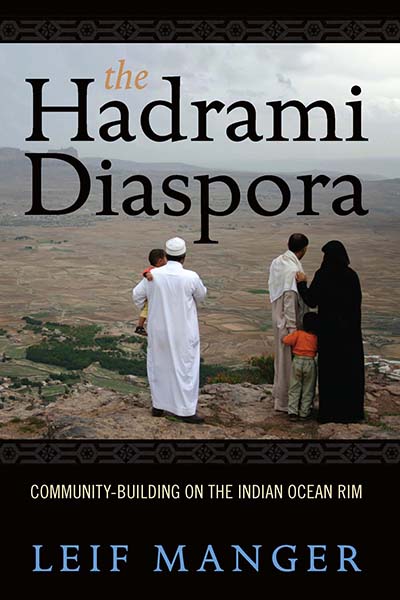
The Hadrami community’s migratory patterns throughout the Indian Ocean region have historically been propelled by trade and religious ambitions. Leif Manger’s complex ethnographic account of this community’s varied and widespread diaspora from South Yemen is explored in The Hadrami Diaspora: Community-Building on the Indian Ocean Rim, which was published this month in paperback. Following, Manger discusses his work on this volume and his time spent with this diverse community in widespread areas.


_______________________________________


Berghahn Books: What came first, your interest in Hadrami culture or your interest in migration? What drew you to these areas of study?


Leif Manger: Yemen has always been a dream for me, but I was particularly fascinated by the terraces in the mountains of the north of the country and the ecological effects of adaptations in such areas. This was due to my research interests in my early career, on intensification of agriculture, agro-pastoral interaction and development.

Continue reading “Following the Diaspora: A Study of the Hadrami Community”

Author Becomes Subject: Droysen as Topic of Historical Volume

Scholarship has come full circle for Johann Gustav Droysen — a historian lauded for his much-cited volume on Alexander the Great — as the author-historian is now the subject of study. Author Arthur Alfaix Assis delves into the historical theories of Droysen in What is History For? Johann Gustav Droysen and the Functions of Historiography, to be published later this month. Assis precedes the publication by sharing the root of his interest in the scholar, why he believes Droysen is important, and what Assis might have done if he did not follow the path of academia.


______________________________________________


Berghahn Books: What drew you to the study of Johann Gustav Droysen?


Arthur Alfaix Assis: I like to think that part of it has to do with the great impression left on me by the very first text I read as an undergraduate: Max Weber’s ‘Science as a Vocation’. I was a freshman at a provincial university in central Brazil, and was very eager to get in touch with serious historical and philosophical literature. But after a single week of lectures came a three-month-long strike, and the only reading assignment left was Weber’s text.

Continue reading “Author Becomes Subject: Droysen as Topic of Historical Volume”

The Very Human Experiences of the Other

If the search for self was a game, migrants would be more than a few chips down. Having to overcome physical and cultural displacement in addition to psychological uncertainty makes the search, for those who are transient, a complicated quest. Below, in an excerpt from the Introduction of Being Human, Being Migrant: Senses of Self and Well-Being, published in October, editor Anne Sigfrid Grønseth addresses the difficulties of migration and asserts that these hardships are of larger breadth than simply issues of movement.


____________________________________


This volume is as much about being human as it is about being a migrant. It takes as its starting point from the proposition that migrant experiences tell us about the human condition, on the basis that senses of well-being, self, other and humanity are challenged when people move between shifting social and cultural contexts. Our contemporary world is characterised by an increasing degree of movement that highlights how societies and cultural units are never separate but overlapping, rapid changing and engaged in repeated processes of fission and fusion.

Continue reading “The Very Human Experiences of the Other”

Star-Studded Regime: A Look at Film Celebrity in Fascist Italy

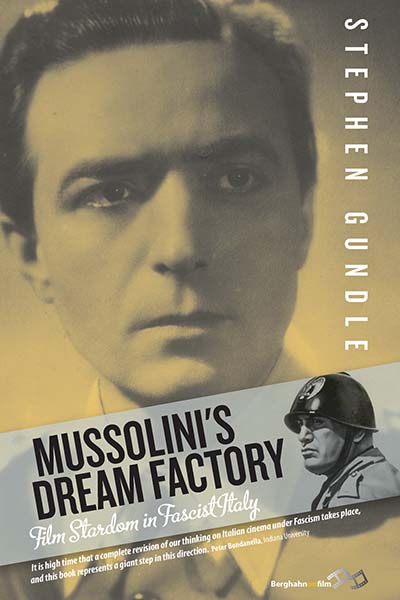
Celebrities today can perform political functions by sponsoring causes, supporting or opposing governments and shaping opinion. In Fascist Italy, celebrities also played an important role and the regime was well aware of the possible uses and dangers of their popularity. This important connection has been overlooked by scholars of both film and of Italian political history. Focusing on a period from the 1920s through 1945, Mussolini’s Dream Factory: Film Stardom in Fascist Italy looks at the star power of these often-overlooked celebrities and the fate of their careers after WWII. Author Stephen Gundle expands on these ideas and shares his thoughts on the subject, below.


_______________________________________________


Berghahn Books: What drew you to the study of film and film stardom in Fascist Italy?


Stephen Gundle: There are lots of books written about fascist Italy and it seems to be a topic that endlessly fascinates.  In the last few years books have appeared on topics such as the police force, diplomacy, road-building, women’s fashions and everyday life. Yet there are few books on fascist cinema – which is largely ignored by historians and neglected by film scholars who tend to concentrate on neorealism or other aspects of postwar cinema.

Continue reading “Star-Studded Regime: A Look at Film Celebrity in Fascist Italy”

Care and Anti-Care in Greece

In her book Capricious Borders: Minority, Population, and Counter-conduct between Greece and Turkey, published earlier this year, Olga Demetriou examines the mechanisms through which particular groups of people are turned into “minorities.” At the center of these processes she identifies naming, genealogy and state care, as key modes of governmentality. Discussing a recent incident of biopolitical policing, the author shows here how “state care” continues to have more relevance as a repressive rather than an empowering mechanism in the minoritization context.


 ______________________________________


In Greece, the “management of population” (in the sense of a Foucauldian biopolitics of demography, spatial order, classification, and knowledge production) has long been racialized.


This racialism has fluctuated through different political conjunctures yielding differing policies of birth rate monitoring and incentivization. Last month “care” emerged as a tool of biopolitical policing in a discussion that went well beyond the bounds of Greece, after authorities arrested a couple raising a child who was “not their own.” The couple was Roma, the child at first assumed not, and much of the racialized presentation of the incident turned on the stereotypical discourse about “Gypsies stealing children.”

Continue reading “Care and Anti-Care in Greece”

SETI: An Alien Concept?

If there is extra-terrestrial life in the Universe, how might it communicate? In Science, SETI, and Mathematics, to be published this month, author Carl DeVito seeks to answer this question in a conversational way, explaining the role of mathematics in the Search for Extra-Terrestrial Intelligence (SETI). DeVito explores the science and history behind the search, and shares the many questions associated with it, especially those regarding language and communication.


_________________________________


The early workers in the search for extra-terrestrial intelligence were concerned with the technical problems of sending and receiving radio signals across inter-stellar distances.


 

Slowly, however, the deeper questions inherent in this endeavor rose to prominence: questions about the nature of intelligence, the nature of language, and the philosophical/psychological motivation behind this search.

Continue reading “SETI: An Alien Concept?”

The New Namibia: Building a Nation after Apartheid

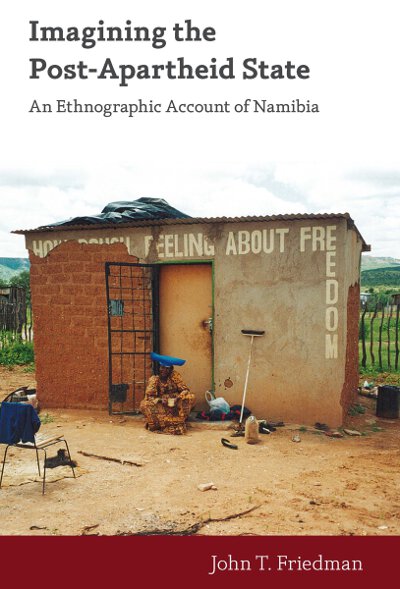
In 1990, Namibia gained its independence as a democratic state from the South African apartheid regime. Author John T. Friedman reflects on what this realistically meant and currently means for the making of a Namibian state in Imagining the Post-Apartheid State: An Ethnographic Account of Namibia, the paperback version of which was published last month after the original was published July 2011. Below the author explains his ethnographic method in an excerpt from the Introduction.


___________________________________


http://www.berghahnbooks.com/covers/FriedmanImagining.jpg

At first reading, the title of this book is likely to arouse some scepticism. How is it possible for an anthropologist to present an ethnographic account of Namibia, of an entire country? As anthropologists we are accustomed to investigate the localised, the small-scale, the village community. We are specifists, not generalists. The critic will thus be quick to suggest that any such attempt can yield only two possible outcomes: either a generalised account of ‘the Namibian people’, or a superficial survey of Namibia’s ethnic groups.

Continue reading “The New Namibia: Building a Nation after Apartheid”

Key to Transformation is Understanding the ‘Fatherland’

The parallels between the political environment of the “Arab Spring” countries and Cold War Germany can be striking, according to Alexander Clarkson, author of Fragmented Fatherland: Immigration and Cold War Conflict in the Federal Republic of Germany, 1945-1980. In these cases, when diaspora communities returned to their countries of origin, there was an energy for activism and a flurry of political activity. Following, Clarkson notes that taking a page from West German history could prove useful in modern Libyan, Syrian and Tunisian politics.


____________________________________________


In the chaotic days after the Ghadaffi regime lost control of the city of Benghazi in February 2011, hundreds of exiled Libyans returned to the liberated parts of their country to help play a role in the transformation of a state that had been under authoritarian rule for more than forty years.

Continue reading “Key to Transformation is Understanding the ‘Fatherland’”

European Thought: The ‘Gift’ that Keeps Giving

Is the spread of Western, specifically European, thought truly a gift to the rest of the world, or is this dissemination simply a way of exerting cultural power? Vassos Argyrou seeks an answer to this question in his newly released volume The Gift of European Thought and the Cost of Living. Below, the author explains his inspiration for—and the challenges and rewards of—writing the book, published September 2013.


_________________________________________


Berghahn Books: What drew you to the study of “European Thought” and what are some examples of this?


Vassos Argyrou: “European thought” is a term that in a certain sense was imposed on me as it was used to make the highly contentious claim that it’s a gift to the rest of the world. It refers not only to an intellectual tradition but also to a way of life or culture—European or,  more broadly, Western culture.

Continue reading “European Thought: The ‘Gift’ that Keeps Giving”