International Dance Day

dance-430554_1920International Dance Day was introduced in 1982 by the International Dance Council (CID, Conseil International de la Danse), a UNESCO partner NGO, and is celebrated yearly, on April 29. The main purpose is to celebrate dance, revel in the universality of this art form, cross all political, cultural and ethnic barriers, and bring people together with a common language – dance. For more information and list of events please visit the official webpage https://www.international-dance-day.org/index.html.


To celebrate the occasion we would like to highlight our Dance and Performance Studies Series, which explores dance, music and bodily movement in cultural contexts at the juncture of history, ritual and performance in an interconnected world. We are pleased to offer a 25% discount on our Performance Studies titles, valid for the next two weeks, through  May 13th, 2019 . Enter code IDD19 at checkout. Berghahn Journals is also offering full access to select journal articles until May 5th, 2019.
Continue reading “International Dance Day”

Berghahn Books at SAA 2019 Conference!

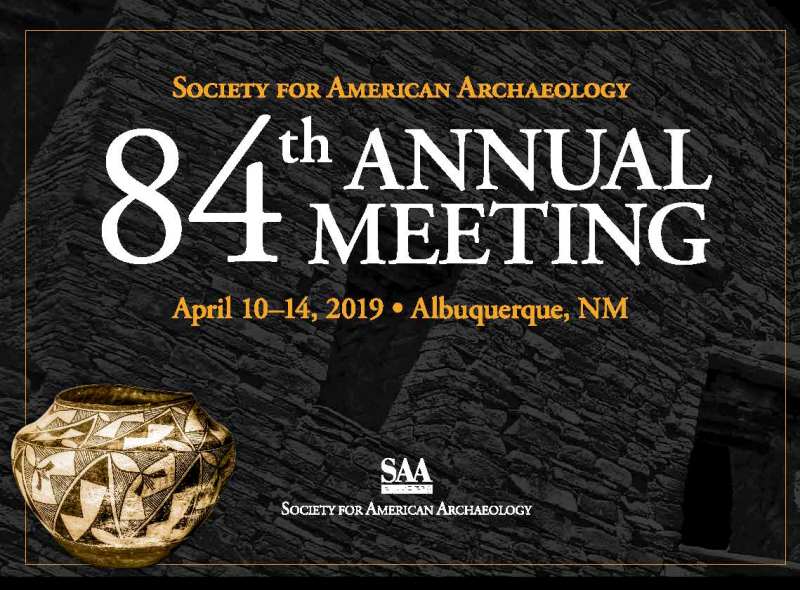
Image result for society of american archeologyWe are delighted to inform you that we will be attending the Society for American Archaeology (SAA) 84th annual meeting in Albuquerque, New Mexico on April 10 – 14, 2019. Please stop by our Booth #302 to browse our latest selection of books at special discounted prices and pick up free journal samples.


If you are unable to attend, we would like to provide you with a special discount offer. For the next 30 days, receive a 25% discount on all Archaeology titles found on our website. At checkout, simply enter the discount code SAA2019.


Visit our website­ to browse new enhanced subject searching features­ for a complete listing of titles and don’t forget about our expanding list of eBooks available for download directly via our site. Visit our Archaeology eBook site.


Continue reading “Berghahn Books at SAA 2019 Conference!”

World Water Day

water-101688_1920
World Water Day is an annual event celebrated on March 22. The day focuses attention on the importance of freshwater and advocates for the sustainable management of freshwater resources. For an opportunity to learn more about water related issues and how to take action to make a difference please visit www.worldwaterday.org
In recognition of this year’s World Water Day, Berghahn Books is happy to offer 25% discount on all relevant titles. Visit our webpage and enter code Water19 at checkout. Offer valid through April 22, 2019.

We’re also delighted to offer FREE access to the following articles from Nature and Culture until March 31st, 2019:

Continue reading “World Water Day”

Celebrating Indigenous Peoples’ Day


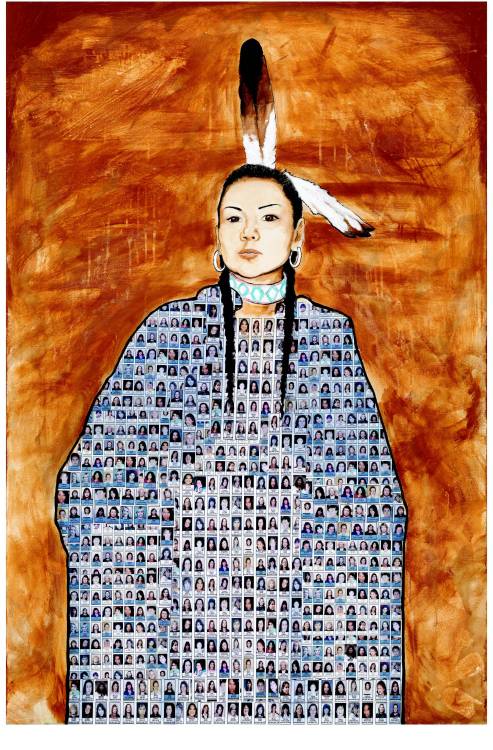
Monday, October 8th is Indigenous Peoples’ Day in the United States. As a counter-celebration to Columbus Day, Indigenous Peoples’ Day is a holiday that celebrates Indigenous peoples across various localities in the United States.


With the hopes of promoting understanding of Indigenous communities around the world, we present a selection of titles below which highlight many different aspects of Indigenous peoples and cultures.


Berghahn Journals is delighted to offer full access to Girlhood Studies until the end of the year using the code GIRL2018Follow these steps to redeem.


Continue reading “Celebrating Indigenous Peoples’ Day”

Happy World Tourism Day

global-2566114_1920


September 27th is World Tourism Day and this year’s theme is Tourism and the Digital Transformation. The purpose of WTD is to raise awareness of the role of tourism within the international community and a unique opportunity to explore potential contribution of digital technologies to sustainable tourism development. For more information please visit wtd.unwto.org.


Berghahn is happy to present a selection of relevant titles and offer a limited time 25% discount on all our Travel and Tourism books. Simply enter discount code WTD18 at checkout, valid through October 27th, 2018.


For a limited time, we’re pleased to offer FREE access to select journal articles in honor of World Tourism Day. See below for details.


Continue reading “Happy World Tourism Day”

Celebrate International Women’s Day

 The event has been celebrated on March 8 since 1913.International Women’s Day (IWD) is celebrated all across Europe on March 8, corresponding with Women’s History Month in the United States. In the US March is an annual declared month that highlights the contributions of women to events in history and contemporary society. All around the world, International Women’s day and National Women’s History Month present an opportunity to celebrate the social, economic, cultural and political achievements of women while calling for greater equality! For more information on this year’s theme, events around the globe and on how you can take part in creating a more gender inclusive world please visit internationalwomensday.com.

In recognition of the day Berghahn is pleased to offer 25% discount on any of our Gender Studies books on orders place on our website before the end of March. Visit our webpage and simply enter the code IWD18 at checkout.

Check out a special virtual journal issue here. 
Continue reading “Celebrate International Women’s Day”

Why Every Country Must Become “An Immigrant Country”

TheoriaThis is a guest post written by Adam K Webb, contributor to Volume 62, Number 142 of the journal Theoria. Adam K Webb is the author of the article titled “Not an Immigrant Country? Non-Western Racism and the Duties of Global Citizenship.”


What is an “immigrant country”? The phrase brings to mind for most people countries like America and Australia made up largely of settlers from elsewhere and their descendants.

But the striking thing about the phrase is how often it is used in denial. Germany, despite receiving millions of guest workers from Turkey and elsewhere, insisted until the 1990s that it was “not an immigrant country,” before eventually having to recognise reality and adjust its laws to fit. Most of Europe now is made up of “immigrant countries,” so to speak. Continue reading “Why Every Country Must Become “An Immigrant Country””

Margaret Chan: Understanding the Chinese Warrior-Defender of Boundaries

This post is the transcript of an electronic interview between D. S. Farrer and Margaret Chan. Farrer is the special issue editor for Social Analysis Volume 58, Issue 1, and Chan is the author of the article “Tangki War Magic The Virtuality of Spirit Warfare and the Actuality of Peace,” appearing in that issue. Below, Chan answers a series of questions related to her article in Social Analysis.


This is the fourth in a series of interviews with contributors to this volume. Find the previous contributions on our blog.

Continue reading “Margaret Chan: Understanding the Chinese Warrior-Defender of Boundaries”

How does violence relate to belief?

This post is the transcript of an electronic interview between D. S. Farrer and Iain Sinclair. Farrer is the special issue editor for Social Analysis Volume 58, Issue 1, and Sinclair is the author of the article War Magic and Just War in Indian Tantric Buddhism appearing in that issue. Below, Sinclair answers a series of questions related to his article in Social Analysis.

This is the third in a series of interviews with contributors to this volume. Read D. S. Farrer’s interview here, and Jean-Marc De Grave’s interview here.


Continue reading “How does violence relate to belief?”

Getting Reacquainted with The Cambridge Journal of Anthropology

The Cambridge Journal of Anthropology


We are delighted to announce that 2015 marks the fourth volume year that the Cambridge Journal of Anthropology has been published through Berghahn. The original journal of this name was an in-house publication based at Cambridge University, with a remit to provide a space in which innovative material and ideas could be tested.


The new Cambridge Journal of Anthropology builds on that tradition and seeks to produce new analytical tool-kits for anthropology or to take all such intellectual exploration to task. Re-acquaint yourself with the journal by exploring the special sections outlined below.


We hope you’ll be inspired by these innovative approaches that push at the boundaries of anthropology to bring you fresh insights from pioneering scholars in the field.


Volume 32
Number 2, Autumn 2014
Special Section: Risks, Ruptures and Uncertainties: Dealing with Crisis in Asia’s Emerging Economies
Asia’s ongoing economic transformation has created a variety of unexpected ruptures, discontinuities and opportunities in the lives of local citizens across the region. The articles in this section contribute to an understanding of local responses to, and strategies for coping with, risk and uncertainty as multidimensional, interwoven aspects of daily life, guided by social, economic and moral considerations.

  
Volume 32
Number 1, Spring 2014
Special Section: Epidemic Events and Processes
The articles in this collection bring together epidemiology and social anthropology. They take us through epidemics critically distinguished as crises and as events, and through epidemics understood analytically as syndemics and as productive of both proliferating ‘projects’ and a compelling quest for ever-growing intelligence and ‘real-time’ surveillance. In this collection, we see the importance of a social anthropological understanding of the human subjects that epidemics, and responses to them, can constitute–and we glimpse some of the interagentivity in the treatment responses through which the lethal problem of ‘resistance’ can be created. In the case of ‘epidemics’ in this present issue, we see the import of anthropological material as it brings to the fore issues which, in another disciplinary language, are the historically contingent ‘externalities’ of ‘disease events’.

  
Volume 31
Number 1, Spring 2013
Special Section – Climate Histories and Environmental Change: Evidence and its Interpretation. Guest Editor David Sneath
The papers in this special section explore different visions of the environment and how they engender particular ways of seeing evidence of climatic and environmental change. A key aspect of such distinctive understandings seems to be the attribution of agency within conceptions of the environment that in each case are entangled with humans. Notions of the anthropogenic and non-equilibrial environments are explored in several of the papers collected here, along with ongoing debates surrounding the concept of the Anthopocene. An awareness of climate change has brought new urgency to the project of grasping our entangled environments in the diversity of their human understandings.

  
Volume 30
Number 2, Autumn 2012
Special Section
Thisspecial section reconsiders recent anthropological accounts of ‘Naturalism’, a term increasingly used as a shorthand for a bundle of purportedly western attitudes to nature, reality and mind/body distinctions. Anthropologists and others tend to invoke ‘Naturalism’ as a foil for descriptions of alternative ontologies elsewhere (such as animism or perspectivism), or alternatively, as a philosophical account of the world which is belied by Euroamericans’ own practices. By contrast, the papers in this section attempt to take naturalism seriously as an ethnographic object in its own right: who, if anyone, is a ‘naturalist’ and what do naturalist commitments look like and entail in practice?


For a free sample issue of the journal, click here.