We’re delighted to offer a selection of latest releases from our core subjects of Anthropology, Applied Anthropology, Medical Anthropology, Theory & Methodology in Anthropology, Film Studies, History, Museum Studies, Political Economy, Social Anthropology and Sociology, along with a selection of our New in Paperback titles.
_________________________________________________________________________
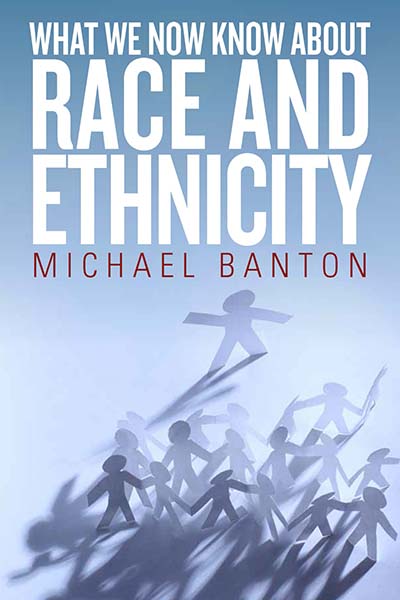 WHAT WE NOW KNOW ABOUT RACE AND ETHNICITY
by Michael Banton
Attempts of nineteenth-century writers to establish “race” as a biological concept failed after Charles Darwin opened the door to a new world of knowledge. Yet this word already had a place in the organization of everyday life and in ordinary English language usage. This book explains how the idea of race became so important in the USA, generating conceptual confusion that can now be clarified. Developing an international approach, it reviews references to “race,” “racism,” and “ethnicity” in sociology, anthropology, philosophy, and comparative politics and identifies promising lines of research that may make it possible to supersede misleading notions of race in the social sciences.
Read Introduction: The Paradox
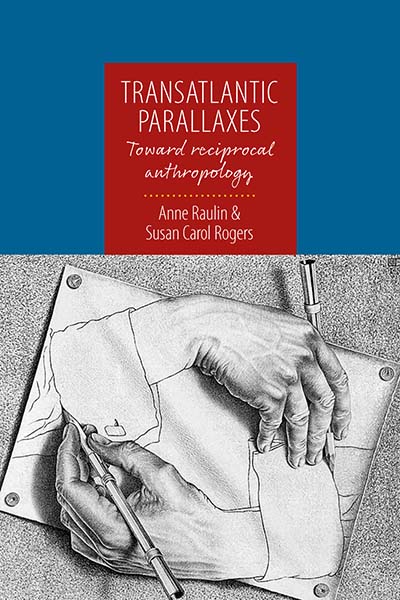 TRANSATLANTIC PARALLAXES
Toward Reciprocal Anthropology
Edited by Anne Raulin and Susan Carol Rogers
Translated by Juliette Radcliffe Rogers
Anthropological inquiry developed around the study of the exotic. Now that we live in a world that seems increasingly familiar, putatively marked by a spreading sameness, anthropology must re-envision itself. The emergence of diverse national traditions in the discipline offers one intriguing path. This volume, the product of a novel encounter of American anthropologists of France and French anthropologists of the United States, explores the possibilities of that path through an experiment in the reciprocal production of knowledge. Simultaneously native subjects, foreign experts, and colleagues, these scholars offer novel insights into each other’s societies, juxtaposing glimpses of ourselves and a familiar “others” to productively unsettle and enrich our understanding of both.
Read Introduction: Toward reciprocal anthropology
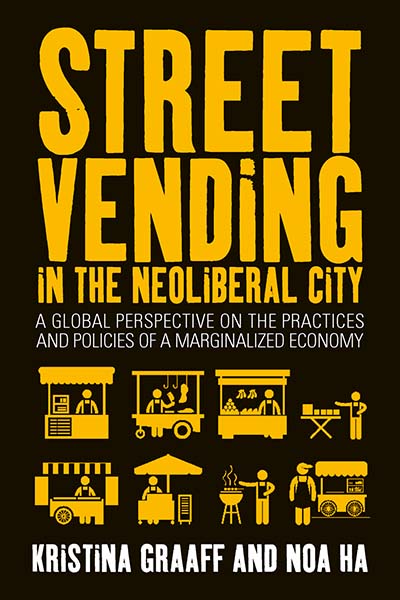 STREET VENDING IN THE NEOLIBERAL CITY
A Global Perspective on the Practices and Policies of a Marginalized Economy
Edited by Kristina Graaff and Noa Ha
Examining street vending as a global, urban, and informalized practice found both in the Global North and Global South, this volume presents contributions from international scholars working in cities as diverse as Berlin, Dhaka, New York City, Los Angeles, Calcutta, Rio de Janeiro, and Mexico City. The aim of this global approach is to repudiate the assumption that street vending is usually carried out in the Southern hemisphere and to reveal how it also represents an essential—and constantly growing—economic practice in urban centers of the Global North. Although street vending activities vary due to local specificities, this anthology illustrates how these urban practices can also reveal global ties and developments.
Read Introduction: Street Vending in the (Neoliberal) City: A Global Perspective on the Practices and Policies of a Marginalized Economy
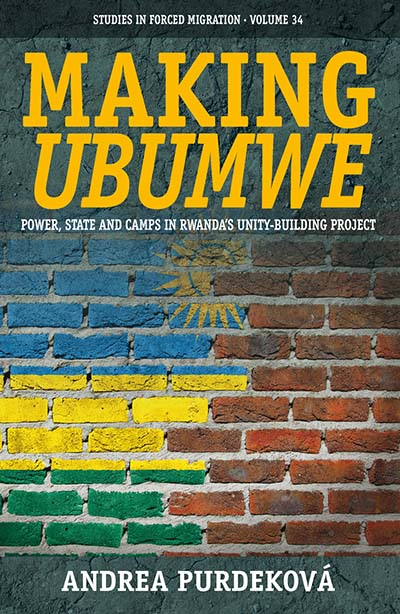 MAKING UBUMWE
Power, State and Camps in Rwanda’s Unity-Building Project
Andrea Purdeková
Volume 34, Forced Migration
Since the end of the Rwandan genocide, the new political elite has been challenged with building a unified nation. Reaching beyond the better-studied topics of post-conflict justice and memory, the book investigates the project of civic education, the upsurge of state-led neo-traditional institutions and activities, and the use of camps and retreats shape the “ideal” Rwandan citizen. Rwanda’s ingando camps offer unique insights into the uses of dislocation and liminality in an attempt to anchor identities and desired political roles, to practically orient and symbolically place individuals in the new Rwandan order, and, ultimately, to create additional platforms for the reproduction of political power itself.
Read PART I: INTRODUCTION
 MEDIA, ANTHROPOLOGY AND PUBLIC ENGAGEMENT
Edited by Sarah Pink and Simone Abram
Volume 9, Studies in Public and Applied Anthropology
Contemporary anthropology is done in a world where social and digital media are playing an increasingly significant role, where anthropological and arts practices are often intertwined in museum and public intervention contexts, and where anthropologists are encouraged to engage with mass media. Because anthropologists are often expected and inspired to ensure their work engages with public issues, these opportunities to disseminate work in new ways and to new publics simultaneously create challenges as anthropologists move their practice into unfamiliar collaborative domains and expose their research to new forms of scrutiny. In this volume, contributors question whether a fresh public anthropology is emerging through these new practices.
Read Introduction: Mediating Publics and Anthropology: An Introduction
 REGIMES OF IGNORANCE
Anthropological Perspectives on the Production and Reproduction of Non-Knowledge
Edited by Roy Dilley and Thomas G. Kirsch
Volume 29, Methodology & History in Anthropology
Non-knowledge should not be simply regarded as the opposite of knowledge, but as complementary to it: each derives its character and meaning from the other and from their interaction. Knowledge does not colonize the space of ignorance in the progressive march of science; rather, knowledge and ignorance are mutually shaped in social and political domains of partial, shifting, and temporal relationships. This volume’s ethnographic analyses provide a theoretical frame through which to consider the production and reproduction of ignorance, non-knowledge, and secrecy, as well as the wider implications these ideas have for anthropology and related disciplines in the social sciences and humanities.
Read Introduction: Regimes of Ignorance: An Introduction
 CULTURE, CATASTROPHE, AND RHETORIC
The Texture of Political Action
Edited by Robert Hariman and Ralph Cintron
Volume 7, Studies in Rhetoric and Culture
This volume explores political culture, especially the catastrophic elements of the global social order emerging in the twenty-first century. By emphasizing the texture of political action, the book theorizes how social context becomes evident on the surface of events, and analyzes the performative dimensions of political experience. The attention to catastrophe allows for an understanding of how ordinary people contend with normal system operation once it is indistinguishable from system breakdown. Through an array of case studies, the book provides an account of change as it is experienced, negotiated, and resisted in specific settings that define a society’s capacity for political action.
Read more
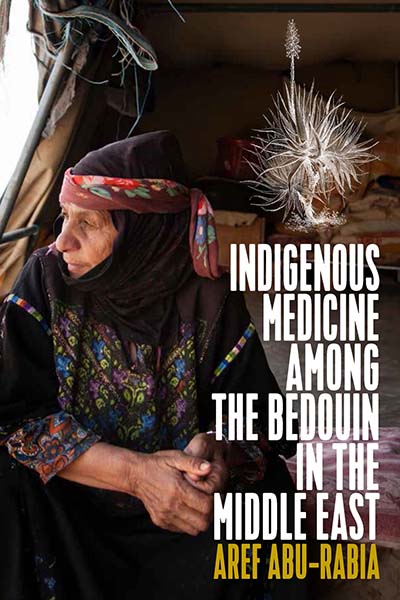 INDIGENOUS MEDICINE AMONG THE BEDOUIN IN THE MIDDLE EAST
Aref Abu-Rabia
Modern medicine has penetrated Bedouin tribes in the course of rapid urbanization and education, but when serious illnesses strike, particularly in the case of incurable diseases, even educated people turn to traditional medicine for a remedy. Over the course of 30 years, the author gathered data on traditional Bedouin medicine among pastoral-nomadic, semi-nomadic, and settled tribes. Based on interviews with healers, clients, and other active participants in treatments, this book will contribute to renewed thinking about a synthesis between traditional and modern medicine — to their reciprocal enrichment.
Read Introduction
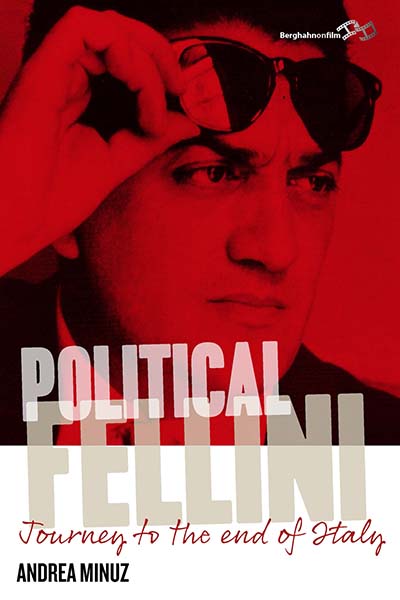 POLITICAL FELLINI
Journey to the End of Italy
Andrea Minuz
Translated from the Italian by Marcus Perryman
Federico Fellini is often considered a disengaged filmmaker, interested in self-referential dreams and grotesquerie rather than contemporary politics. This book challenges that myth by examining the filmmaker’s reception in Italy, and by exploring his films in the context of significant political debates. By conceiving Fellini’s cinema as an individual expression of the nation’s “mythical biography,” the director’s most celebrated themes and images — a nostalgia for childhood, unattainable female figures, fantasy, the circus, carnival — become symbols of Italy’s traumatic modernity and perpetual adolescence.
Read Introduction: Political Fellini?
 MUSEUM WEBSITES AND SOCIAL MEDIA
Issues of Participation, Sustainability, Trust and Diversity
Ana Luisa Sánchez Laws
Volume 8, Museums and Collections
Online activities present a unique challenge for museums as they harness the potential of digital technology for sustainable development, trust building, and representations of diversity. This volume offers a holistic picture of museum online activities that can serve as a starting point for cross-disciplinary discussion. It is a resource for museum staff, students, designers, and researchers working at the intersection of cultural institutions and digital technologies. The aim is to provide insight into the issues behind designing and implementing web pages and social media to serve the broadest range of museum stakeholders.
Read more
 VIKTOR FRANKL’S SEARCH FOR MEANING
An Emblematic 20th-Century Life
Timothy Pytell
Volume 23, Making Sense of History
First published in 1946, Viktor Frankl’s memoir Man’s Search for Meaning remains one of the most influential books of the last century, selling over ten million copies worldwide and having been embraced by successive generations of readers captivated by its author’s philosophical journey in the wake of the Holocaust. This long-overdue reappraisal examines Frankl’s life and intellectual evolution anew, from his early immersion in Freudian and Adlerian theory to his development of the “third Viennese school” amid the National Socialist domination of professional psychotherapy. It teases out the fascinating contradictions and ambiguities surrounding his years in Nazi Europe, including the experimental medical procedures he oversaw in occupied Austria and a stopover at the Auschwitz concentration camp far briefer than has commonly been assumed. Throughout, author Timothy Pytell gives a penetrating but fair-minded account of a man whose paradoxical embodiment of asceticism, celebrity, tradition, and self-reinvention drew together the complex strands of twentieth-century intellectual life.
Read Introduction: Viktor Frankl and Man’s Search for Meaning
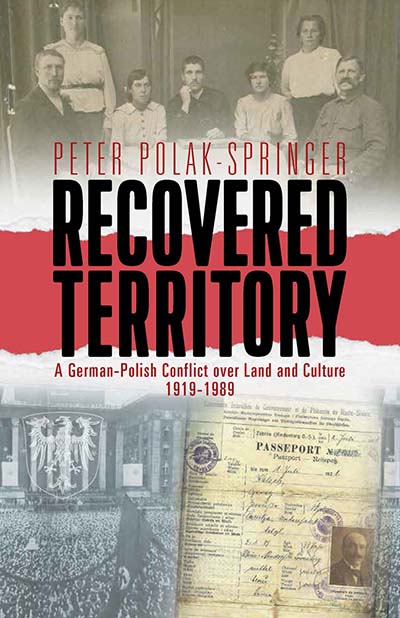 RECOVERED TERRITORY
A German-Polish Conflict over Land and Culture, 1919-1989
Peter Polak-Springer
Upper Silesia, one of Central Europe’s most important industrial borderlands, was at the center of heated conflict between Germany and Poland and experienced annexations and border re-drawings in 1922, 1939, and 1945. This transnational history examines these episodes of territorial re-nationalization and their cumulative impacts on the region and nations involved, as well as their use by the Nazi and postwar communist regimes to legitimate violent ethnic cleansing. In their interaction with—and mutual influence on—one another, political and cultural actors from both nations developed a transnational culture of territorial rivalry. Architecture, spaces of memory, films, museums, folklore, language policy, mass rallies, and archeological digs were some of the means they used to give the borderland a “German”/“Polish” face. Representative of the wider politics of twentieth-century Europe, the situation in Upper Silesia played a critical role in the making of history’s most violent and uprooting eras, 1939–1950.
Read Introduction
 BEYOND THE DIVIDE
Entangled Histories of Cold War Europe
Edited by Simo Mikkonen and Pia Koivunen
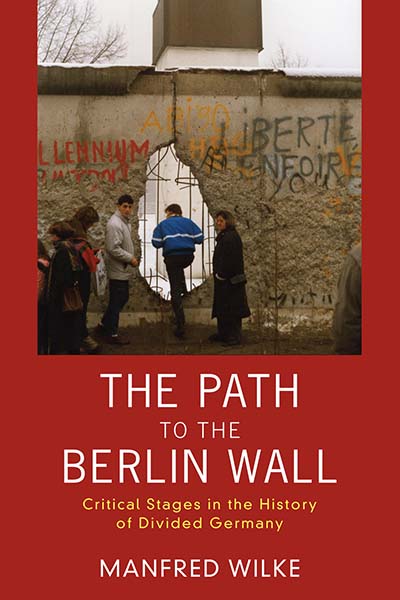
Cold War history has emphasized the division of Europe into two warring camps with separate ideologies and little in common. This volume presents an alternative perspective by suggesting that there were transnational networks bridging the gap and connecting like-minded people on both sides of the divide. Long before the fall of the Berlin Wall, there were institutions, organizations, and individuals who brought people from the East and the West together, joined by shared professions, ideas, and sometimes even through marriage. The volume aims at proving that the post-WWII histories of Western and Eastern Europe were entangled by looking at cases involving France, Denmark, Poland, Romania, Switzerland, and others.
Read Introduction: Beyond the Divide
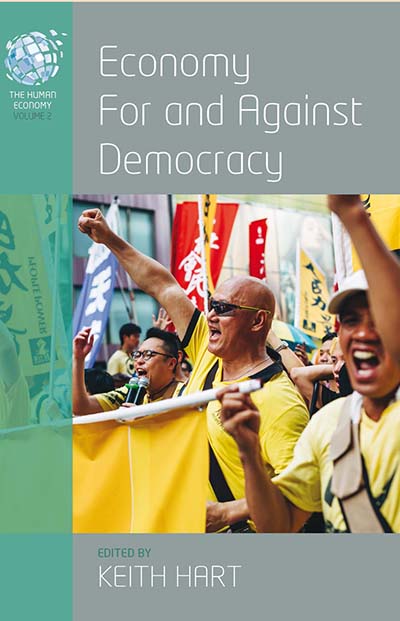 ECONOMY FOR AND AGAINST DEMOCRACY
Edited by Keith Hart
Volume 2, The Human Economy
Political constitutions alone do not guarantee democracy; a degree of economic equality is also essential. Yet contemporary economies, dominated as they are by global finance and political rent-seekers, often block the realization of democracy. The comparative essays and case studies of this volume examine the contradictory relationship between the economy and democracy and highlight the struggles and visions needed to make things more equitable. They explore how our collective aspirations for greater democracy might be informed by serious empirical research on the human economy today. If we want a better world, we must act on existing social realities.
Read Introduction
_________________________________________________________________________
New in Paperback:
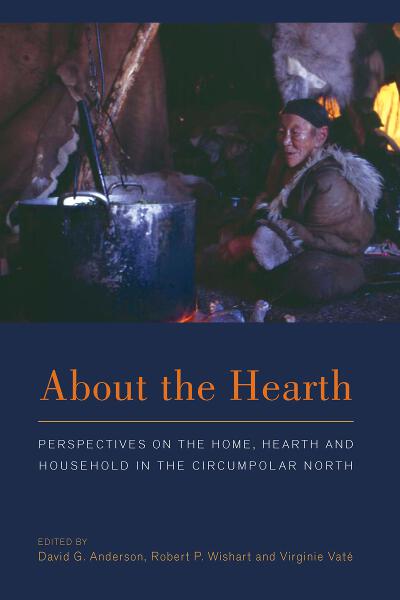 ABOUT THE HEARTH
Perspectives on the Home, Hearth and Household in the Circumpolar North
Edited by David G. Anderson, Robert P. Wishart, and Virginie Vaté
“Each chapter offers something interesting for the reader…One can list bright and sometimes provocative ideas put forth by each contributor…The main advantage of this book is the ability to spark interest among the most diverse groups of specialists in the field of indigenous cultures.” · Social Anthropology/Anthropologie sociale
 THE DEATH OF THE BIG MEN AND THE RISE OF THE BIG SHOTS
Custom and Conflict in East New Britain
Keir Martin
Volume 3, ASAO Studies in Pacific Anthropology
“Readers of this anthropological study will most likely be familiar with discussions in the anthropology of Melanesia around individualism and other effects of the encroachment of global capitalism on rural communities. They will be pleasantly surprised by how elegantly and unpretentiously Martin tackles some of these issues, through an investigation of land and custom during the aftermath of an environmental disaster in East New Britain, Papua New Guinea…a wonderful study.” · Asia Pacific Journal of Anthropology
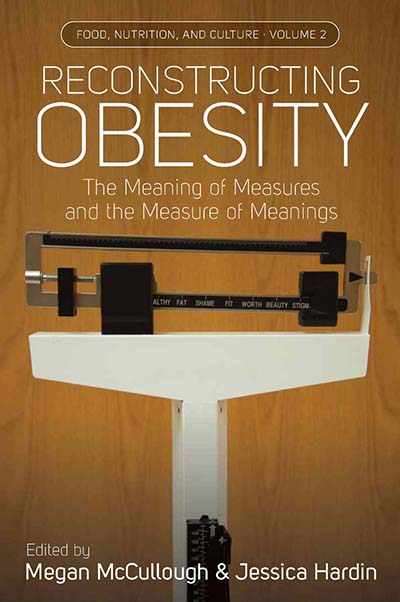 RECONSTRUCTING OBESITY
The Meaning of Measures and the Measure of Meanings
Edited by Megan McCullough and Jessica Hardin
Afterword by Stephen T. McGarvey
Volume 2, Food, Nutrition, and Culture
“This is not a book that seeks to discredit health research and leave others to do the work of finding a better way to conduct it; rather, it aims to improve health research by providing useful avenues for critique and suggestions for ways forward. In this sense, it works as a very practical guide for those working in the health professions, whether as researchers or healthcare providers, to better understand “obesity” and “overweight” and, importantly, fat people in social and environmental context… it makes a welcome and necessary intervention into the business of health research, provision, and discourse, as well as its public reception.” · Fat Studies Journal
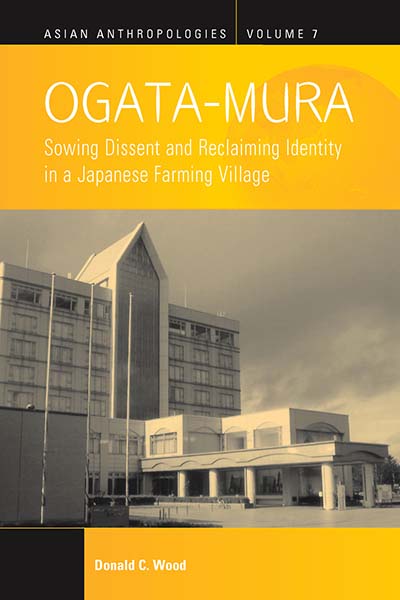 OGATA-MURA
Sowing Dissent and Reclaiming Identity in a Japanese Farming Village
Donald C. Wood
Volume 7, Asian Anthropologies
“In his densely detailed, long-term study of Ogata-mura, Wood has taken us a lifetime away from the first studies of Japanese villages carried out by foreigners in the 1930s and 1950s… Wood presents an excellent analysis of the conflict between the view held by some residents that farming is a way of life and the conviction by others that it is a business like any other. The authorities have proved remarkably tone-deaf to the implications of this contrast, not only in Ogata-mura, but on the national level as well. Wood is able to provide a degree of detail that most ethnographers would envy.” · Asian Anthropology
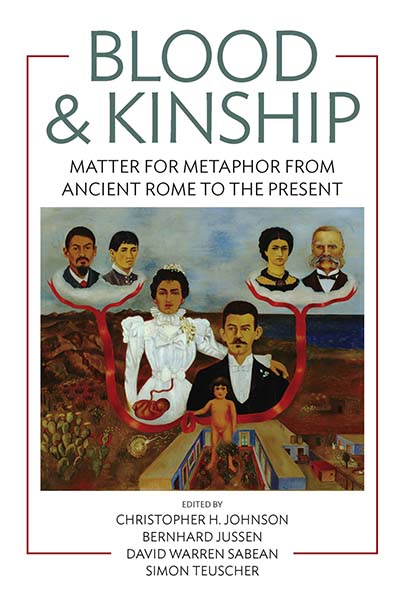 BLOOD AND KINSHIP
Matter for Metaphor from Ancient Rome to the Present
Edited by Christopher H. Johnson, Bernhard Jussen, David Warren Sabean, and Simon Teuscher
“This is a book of astonishing quality, comprising a wealth of outstanding studies that underline the various shifts and mutations that took place mostly in the late medieval and late modern periods. It is true that issues of gender could play a more prevalent role and that discourses and semantic issues are largely privileged over visual matters, cultural practices, and material culture, but rather than a critique this is an invitation for further investigations on those aspects. In any case, those limitations certainly do not make this book less inspiring and pioneering regarding the history of the blood metaphor and its shifting meanings.” · Contributions to the History of Concepts
 WIND OVER WATER
Migration in an East Asian Context
Edited by David W. Haines, Keiko Yamanaka, and Shinji Yamashita
“Wind Over Water is the most up-to-date edited compilation on migration in East Asia, successfully raises a range of theoretical and methodological issues, and shines the spotlight on new fields of inquiry that will surely spur further research.” · International Migration Review
“In sixteen substantive chapters, this collection presents a dramatic picture of the diversity of Asian mobility…all the studies are worth reading…[They offer] an introductory overview, which should whet the reader’s appetite to explore the themes further.” · The Journal of Asian Studies
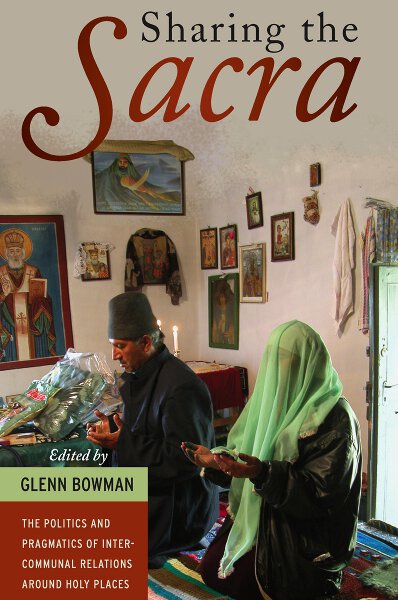 SHARING THE SACRA
The Politics and Pragmatics of Intercommunal Relations around Holy Places
Edited by Glenn Bowman
“Using ethnographic and historical approaches, the chapters in this book show that [contrary to what is often believed] religious spaces are frequently peacefully shared by different religious groups…and reveal how inter-faith and inter-religious discursive formations are produced..by believers, state officials, and transnational institutions. Thus the volume provides important theoretical and methodological tools for an anthropology of inter-religious relations.” · Journal of the Royal Anthropological Institute
 JAPANESE TOURISM
Spaces, Places and Structures
Carolin Funck and Malcolm Cooper
“The volume’s scope suggests how daunting the editors’ task was, and they do a credible job, addressing issues ranging from governmental policy to heritage tourism to the possibilities of virtual tourism in the 21st century. This is a good introduction to the subject… what the authors do accomplish is significant, particularly for comparative tourism studies…Highly recommended.” · Choice
 Join our Email List




 We are delighted to inform you that we will be attending the 114th annual meeting of American Anthropological Association being held November 18-22, 2015, in Denver CO. Please stop by Booths 215 & 217 to browse our selection of books and pick up free journals samples.