 Join our Email List




Tag: africa
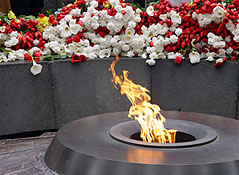 April 24 marks the 103rd anniversary of the Armenian Genocide. Armenian Genocide Remembrance Day is held annually to recognize and mourn more than 1.5 million victims of the Armenian Genocide, the most tragic element of Armenian history.
Africa Week

This week is Africa Week! Africa Week celebrates and showcases Africa’s continuous advancements and achievements with respect to social, economic, political and environmental development. Read more here
In honor of Africa Week, we would like to provide you with a special discount offer. Receive a 50% discount on all African Studies titles found on our website until November 17, 2017. At checkout, simply enter the discount code UNAF17. Browse our newly published online African Studies 2017 Catalog or use the subject searching features on our website for a complete listing of all published and forthcoming titles.
Visit Berghahn Books at ECAS 2017!
 We are delighted to inform you that we will be attending the 7th European Conference on African Studies in Basel, Switzerland from the 29th June – 1st July 2017. Please stop by to browse our selection of titles on display, and take away some free journal samples.
If you are unable to attend, we would like to provide you with a special discount offer. Valid through August 1st, use discount code ECAS17 at checkout and receive a 25% discount on all African Studies titles found on our website.
Visit Berghahn booth #316 at the African Studies Association Meeting 2016
We are delighted to inform you that we will be present at 59th Annual Meeting of the ASA in Washington DC, December 1 – 3, 2016. Please stop by our booth #316 to browse the latest selection of books at discounted prices & pick up some free journal samples.
If you are unable to attend, we would like to provide you with a special discount offer. For the next 30 days, receive a 25% discount on all African Studies titles found on our website. At checkout, simply enter the discount code AfSA16. Browse our newly published online African Studies 2017 Catalog or use the subject searching features on our website for a complete listing of all published and forthcoming titles.
The AfSA Annual Meeting is the largest gathering of Africanist scholars in the world, with an attendance of about 2,000 scholars and professionals. For more information on the program, events, theme, other exhibitors and location please visit African Studies Association webpage. Continue reading “Visit Berghahn booth #316 at the African Studies Association Meeting 2016”
International Dance Day

First introduced in 1982 by the International Dance Council and now celebrated yearly on April 29th, the International Dance Day brings attention to the art of dance. It revels the universality of this art form that crosses all political, cultural and ethnic barriers and brings people together with a common language – Dance!
———————————————————————————————————————————–
“Let us read, and let us dance; these two amusements will never do any harm to the world.” – Voltaire
———————————————————————————————————————————–
To celebrate the Dance Day we invite you to browse Dance & Performance Studies series. Visit series webpage and use code DPS16 at checkout to receive 25% discount on all titles within the series (valid for the next 30 days).
Why Every Country Must Become “An Immigrant Country”
 This is a guest post written by Adam K Webb, contributor to Volume 62, Number 142 of the journal Theoria. Adam K Webb is the author of the article titled “Not an Immigrant Country? Non-Western Racism and the Duties of Global Citizenship.”
What is an “immigrant country”? The phrase brings to mind for most people countries like America and Australia made up largely of settlers from elsewhere and their descendants.
But the striking thing about the phrase is how often it is used in denial. Germany, despite receiving millions of guest workers from Turkey and elsewhere, insisted until the 1990s that it was “not an immigrant country,” before eventually having to recognise reality and adjust its laws to fit. Most of Europe now is made up of “immigrant countries,” so to speak. Continue reading “Why Every Country Must Become “An Immigrant Country””
Habits of Austerity
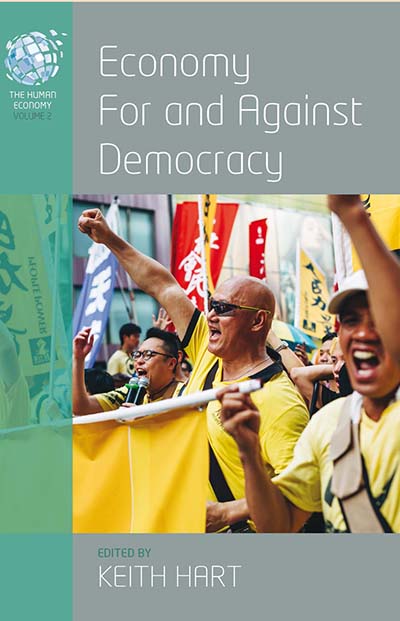 The following is a guest blog post written by Jürgen Schraten. Below, Schraten discusses his chapter in the recently published book, Economy for and Against Democracy.
I wrote the first chapter of the book Economy For and Against Democracy, edited by Keith Hart and published this month by Berghahn Books – you can buy the book here with a 50% discount until 20 December; use the code HAR449. The chapter is titled “Habits of austerity: financialisation and new ways of dealing with money”. As the title suggests, it focuses on the financialisation of everyday life in South Africa within the global context of the concomitant expansion of financialised markets and government austerity policies.
Freedom to move, freedom to stay: the EU migration crisis through the lens of migrant West Africa
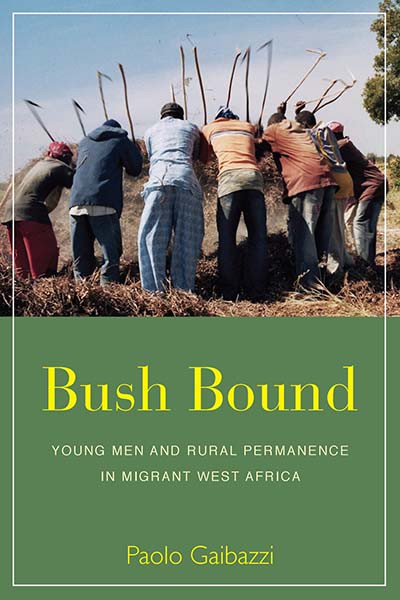 The following is a guest blog post written by Paolo Gaibazzi, Social Anthropologist and Research Fellow at the Centre for Modern Oriental Studies (ZMO). Gaibazzi is also the author of Bush Bound: Young Men and Rural Permanence in Migrant West Africa. Below, Gaibazzi discusses how ‘staying put’ may shed light on current West African migrations.
How can the experience of a small, migrant-sending West African village contribute thoughts on the current migration crisis in Europe? Sabi is a rural community in the Gambia River valley with a long history of male international emigration in which I have had the privilege to live and do research. The resulting book – titled Bush Bound – is an account of how migration pervades everyday life in the community, but especially of how people continue staying on the land. I suggest that this small but significant laboratory of (im)mobility might help us rethink the assumptions about freedom, movement and sedentariness informing, and often distorting, European debates about African immigration.
Visions of The Other: Swiss & Malagasy See, But Do They Understand?
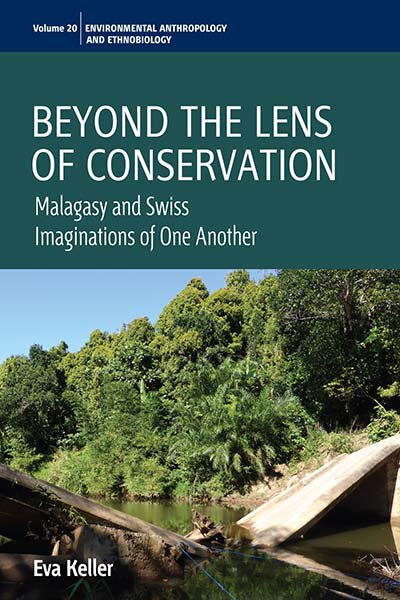 Where do Switzerland and Madagascar meet, and what do the people of each place think of those in the other? Eva Keller, in her recently published Beyond the Lens of Conservation: Malagasy and Swiss Imaginations of One Another, in seeking to connect these two places winds up highlighting the disconnect between them. Following, the author offers a brief glimpse into the volume from two directions: from a Swiss classroom looking at Madagascar and from a Malagasy man looking at a national park.
_______________________________
Read the following extract of a conversation which took place in a Swiss classroom with pupils aged between 11 and 12. My questions are in italics.
What do you know about Madagascar?
Takschan: I think there are cannibals there, I think, the people, like they eat the flesh.
Continue reading “Visions of The Other: Swiss & Malagasy See, But Do They Understand?”
‘Healing Roots’: Author Traces Life of Wild Plant from Farm to Pharm
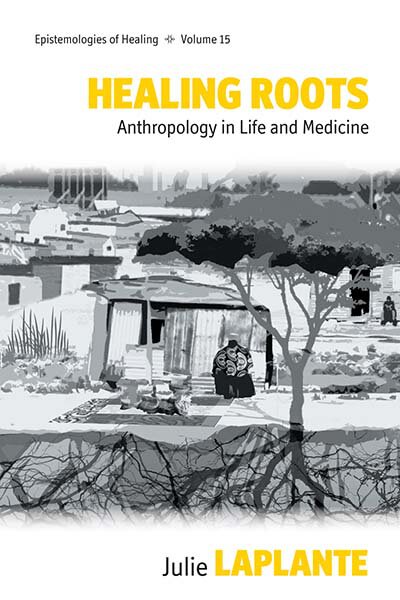 The healing powers of a plant in sub-Saharan Africa, long used for indigenous medicine, are now being harnessed as a pharmaceutical to be more widely produced and sold. Author Julie Laplante follows this path of production of Artemesia Afra from a wild-growing bush to a processed, controlled substance in her soon-to-be-published monograph, Healing Roots: Anthropology in Life and Medicine. Following, Laplante shares how her own path led her from researcher to author.
_________________________________
The journey told in the book began in August 2006 within the Biomedicine in Africa research group at the Max Planck Institute für etnologische forshung in Halle (Saale), Germany, as we were invited to explore how biomedicine is both shaping and being shaped through its practices in Africa. My own research project entitled ‘South African Roots towards Global Knowledge’ namely intended to find out how this is done through the practices of clinical trials as they aim to ‘recognize’ indigenous medicine.
Continue reading “‘Healing Roots’: Author Traces Life of Wild Plant from Farm to Pharm”