Prose and Economic Development in an African Village

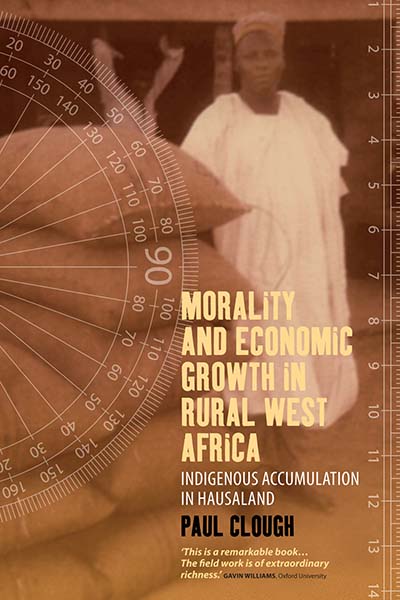
Paul Clough spent many years studying the economic situation of the Marmara village, in Hausaland, northern Nigeria. His work there began in 1977-1979, then was followed by stints in 1985, 1996, and 1998. In Morality and Economic Growth in Rural West Africa: Indigenous Accumulation in Hausaland, his book based on that fieldwork, the author explores the economic growth and accumulation of this non-capitalistic, polygynous society through boom and bust periods. Following is the author’s reflection on his book, fieldwork, and forged relationships.


________________________________


What drew you to the field of African studies? Specifically, what drew you to Hausaland in Nigeria?


All of this happened by accident when I was very young. I wanted to be a volunteer, to work in the field of development. Since the Peace Corps in early 1970 would not send me to Latin America (perhaps because I had no Spanish), I managed through other channels to find a teaching post in northern Nigeria. I arrived at Kano Airport in late 1970, when I was only twenty-two, knowing next to nothing about Africa or Hausaland.


But I fell in love immediately.

Continue reading “Prose and Economic Development in an African Village”
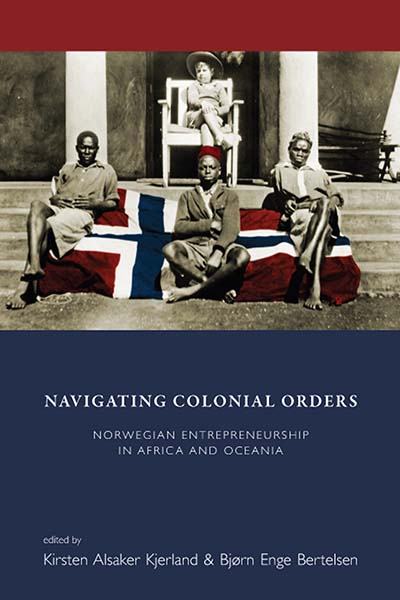
Holdings of the Kingdom of Norway


When considering powerhouses of colonization, most do not rank Norway among the likes of England and France. However, this country did have numerous outposts and much influence in Africa and Oceania. These territories come into focus in Navigating Colonial Orders: Norwegian Entrepreneurship in Africa and Oceania, which was published this month. Following, editors Kirsten Alsaker Kjerland and Bjørn Enge Bertelsen share insights into their book.


_______________________________


What drew you to the study of the entrepreneurial efforts of Norwegians in colonial Africa and Oceania? How was Norway’s involvement different from its counterparts in the rest of Europe at the time? How were they the same?


When looking at classical representations of colonial Africa, Oceania or, also, Latin America, one is struck by how the large colonizing countries have monopolized history. What struck us when starting to follow Norwegians that went abroad in the late 1800s and early 1900s was that this was simply not the case: The various colonial settings that we have examined have uncovered great diversity in terms of non-indigenous inhabitants and, thus, revealed different forms of colonial dynamics than what has often been contained in colonial histories of the major countries.

Continue reading “Holdings of the Kingdom of Norway”

Forest Protection Fail: How ‘Things Fall Apart’

Pauline von Hellermann seeks the root causes of African deforestation in Things Fall Apart? The Political Ecology of Forest Governance in Southern Nigeria, published in September. The volume stems from Hellermann’s ethnographic and historic research within the tropical forest of Nigeria’s Edo State as she digs to uncover the failings of forest protection. The following is an excerpt from the Introduction.


____________________________________________

To international foresters and conservationists, there are clear links between recent management failure and deforestation in Nigeria. The Conservation Atlas of Tropical Forests, for example, states that Nigeria’s ‘natural forests were carefully managed in the early part of the century, [but] they have since been severely over-exploited’ (Lowe, et al. 1992: 230; see also Oates 1999). Nigerians themselves routinely blame corruption and greed amongst foresters and politicians for forest loss and the depletion of timber. Such accounts fit smoothly into the broader perception of Nigerian governments as corrupt and inefficient; into the constant refrain that ‘things fall apart’ in Nigeria.

Continue reading “Forest Protection Fail: How ‘Things Fall Apart’”

Past, Present, Future Changes: An Anthropologist Looks at Africa

Günther Schlee traces old steps and tracks steps forward since the original publication of Changing Identifications and Alliances in North-East Africa, Volume 1 and Volume 2. The paperback versions were published in October. Following, Schlee rounds out the two-part interview with a reflection on the book’s release, and where he is proceeding within the field.


The first half of this interview is available here.

_____________________________________________________


Berghahn Books: To what extent did the initial release of the book contribute to debates among current and future academics within the field?


Günther Schlee: People use these two books as an introduction to the region. But it has also been taken up by people who have little to do with Africa. They have taken an interest in the theoretical issues we make.


Continue reading “Past, Present, Future Changes: An Anthropologist Looks at Africa”

Africa, from an Anthropologist’s-Eye View

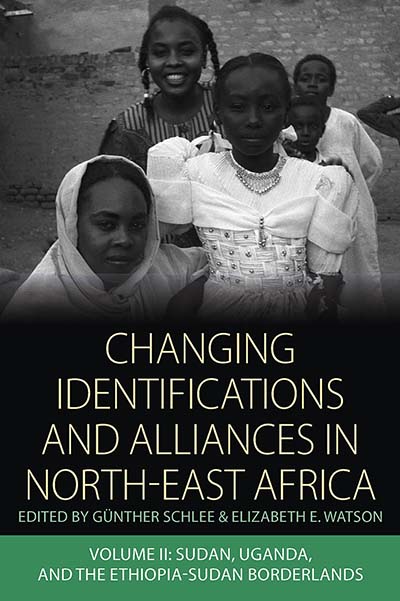
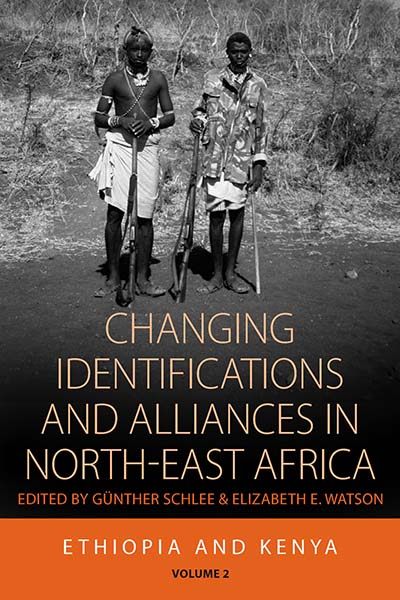
Changing Identifications and Alliances in North-East Africa, originally published in 2009, was published in paperback in October. The two-volume collection, made up of Volume I: Ethiopia and Kenya and Volume II: Sudan, Uganda, and the Ethiopia-Sudan Borderlands, gives an overall view of the North-East of the continent and addresses the importance of the group dynamic, as it plays into politics, cultural identity, and war and peace. Co-editor Günther Schlee discusses the beginning of the collection, with its roots planted where his studies of Africa began — and how they are growing.


___________________________________________

Berghahn Books: What drew you to the study of Africa, specifically northeast Africa?


Günther Schlee: Like many students in the 1970s, I was fascinated by South America. When I studied anthropology and linguistics at Hamburg, I took Spanish up to the highest level. I read a lot about South America and followed the volatile politics of that continent very closely. When it was time to think about a PhD project, I was determined to do field research in South America. In order to identify a location and to enable myself to write a decent research proposal, I decided to go there on an exploratory visit on my own expense.

Continue reading “Africa, from an Anthropologist’s-Eye View”

The New Namibia: Building a Nation after Apartheid

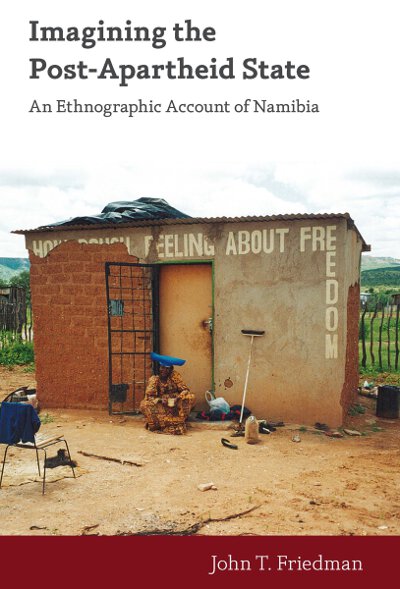
In 1990, Namibia gained its independence as a democratic state from the South African apartheid regime. Author John T. Friedman reflects on what this realistically meant and currently means for the making of a Namibian state in Imagining the Post-Apartheid State: An Ethnographic Account of Namibia, the paperback version of which was published last month after the original was published July 2011. Below the author explains his ethnographic method in an excerpt from the Introduction.


___________________________________


http://www.berghahnbooks.com/covers/FriedmanImagining.jpg

At first reading, the title of this book is likely to arouse some scepticism. How is it possible for an anthropologist to present an ethnographic account of Namibia, of an entire country? As anthropologists we are accustomed to investigate the localised, the small-scale, the village community. We are specifists, not generalists. The critic will thus be quick to suggest that any such attempt can yield only two possible outcomes: either a generalised account of ‘the Namibian people’, or a superficial survey of Namibia’s ethnic groups.

Continue reading “The New Namibia: Building a Nation after Apartheid”

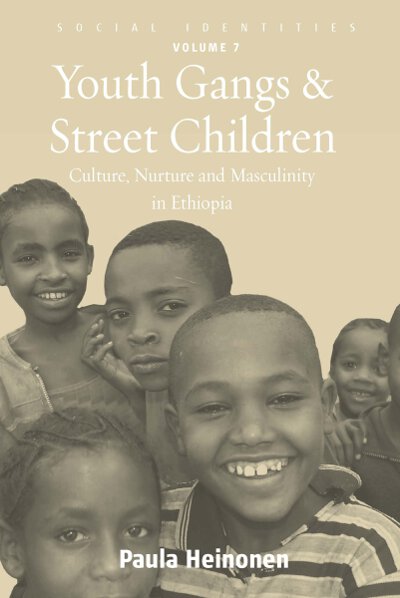
Down, Not Out: Ethiopian Youth on the Street

Paula Heinonen’s decade of research and reflection led to the publication of Youth Gangs and Street Children: Culture, Nurture, and Masculinity in Ethiopia, which was published as a paperback in June 2013. Based on careful observations and interviews, the volume provides insight into common misconceptions of why  Ethiopian boys and girls take to the street.  


______________________________________________

Before embarking on my six years longitudinal field research and four years of follow-up enquiry and reflection, I read extensively on the street children phenomena worldwide.

Continue reading “Down, Not Out: Ethiopian Youth on the Street”

Paul Stoller: Retzius Reflections

Paul Stoller, whose article “Embodying Knowledge: Finding a Path in the Village of the Sick” appeared in Ways of Knowing, edited by Mark Harris, earned the 2013 Anders Retzius medal for excellence in anthropology—an honor bestowed every three years—April 24. Below, Stoller reflects on his life’s work that helped him earn the award.


__________________________________________


stoller
Paul Stoller

Milestones in life compel you to think about where you’ve been, where you are and where you are going.


In 2012 I received an email, marked as “possible spam,” that invited me to Stockholm in April 2013 to receive the Anders Retzius Gold Medal in Anthropology, which is given once every three years.

Continue reading “Paul Stoller: Retzius Reflections”

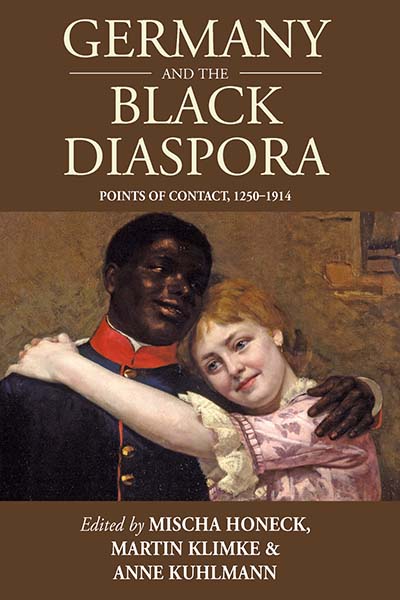
Remembering African-German Points of Contact

Eight centuries of German and African interactions up until World War I are often glossed over in historical literature.  The contributors to Germany and the Black Diaspora: Points of Contact, 1250-1914, published last month, seek to illuminate these intersections and share popular sentiments of the time. Below, co-editor Martin Klimke describes a significant—and still remarkable—relic of this pre-WWI period.


______________________________________________________


For more than ten years now, visitors to the German Historical Museum in Berlin have paused in amazement before a painting unlike any other in the museum’s collection.

Continue reading “Remembering African-German Points of Contact”

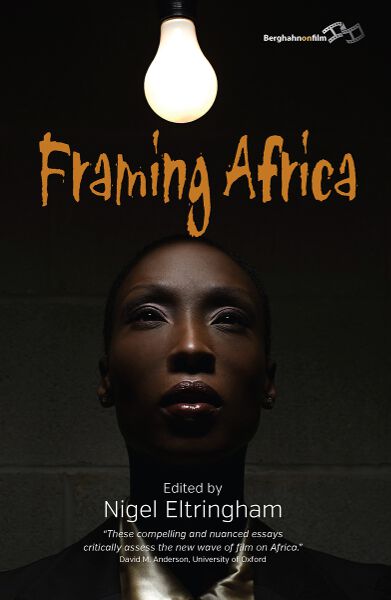
A Moving Picture: The Evolution of Africa on Screen

The perception of Africa through the lens has certainly changed since the films of the 1950s. That change in the way viewers see Africa in twenty-first century film is the topic of Framing Africa: Portrayals of a Continent in Contemporary Mainstream Cinema, published in June 2013. Below, the collection editor Nigel Eltringham discusses the changing frame of Africa in mainstream cinema.

_______________________________________________________

In November 2004, I attended the annual meeting of the African Studies Association in New Orleans. A flier inserted into the conference programme invited participants to a private screening of a new film, Hotel Rwanda, at a small arts cinema nearby.

Continue reading “A Moving Picture: The Evolution of Africa on Screen”