Hot Off the Presses – New Journal Issues Published in September & October


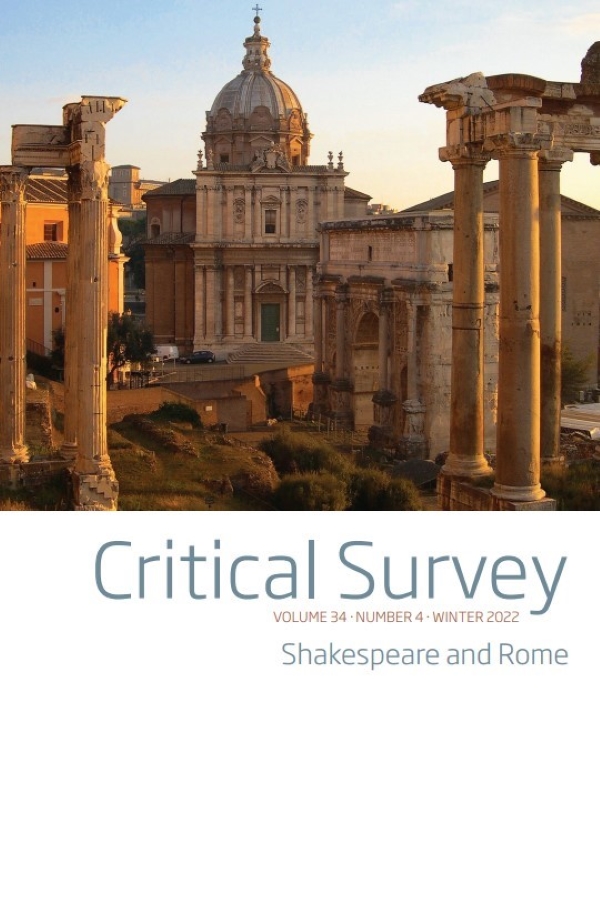
Anthropology in Action: Journal for Applied Anthropology in Policy and Practice
Volume 22, Number 2
This issue features articles focusing on issues related to the Research Excellence Framework, the impact agenda, and debates surrounding open access. On December 18 2014, the results of the U.K.’s Research Excellence Framework (REF) evaluation exercise were released. This was made more complex by the fact that for the first time, 20% of the overall scoring of a unit of assessment was attributed to research ‘impact’. This issue of Anthropology in Action is dedicated to exploring issues raised by these events.


Continue reading “Hot Off the Presses – New Journal Issues Published in September & October”

Happy Halloween!

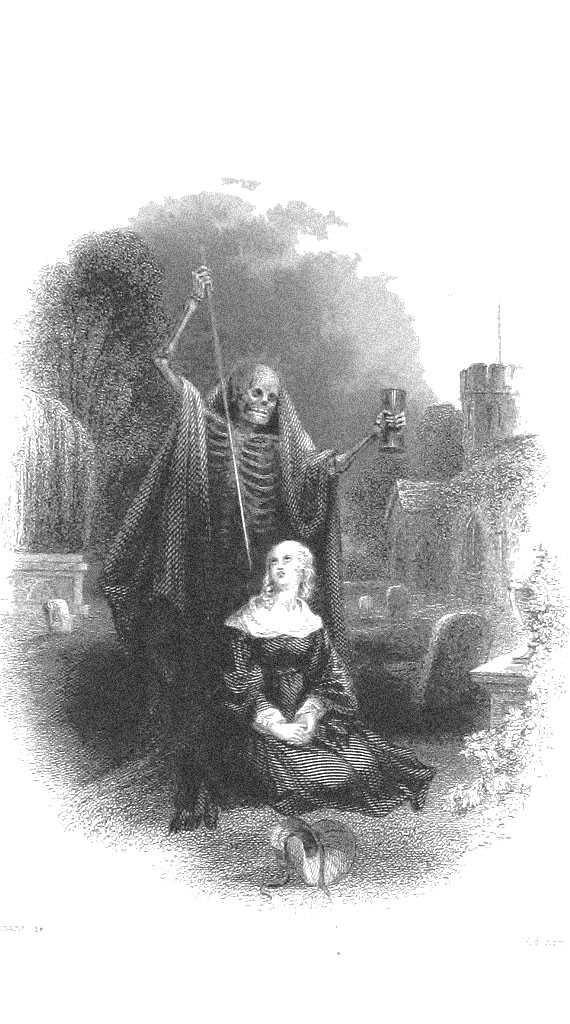
Happy Halloween from Berghahn Journals! Celebrate with some spooky articles:

0


The Life of the Death of ‘The Fighting Fairy Woman of Bodmin’: Storytelling around the Museum of Witchcraft

Anthropological Journal of European Cultures, Volume 22, Number 1


The World of the Dead as Viewed among the Negev Bedouin

Anthropology of the Middle East, Volume 7, Number 2


Experiencing Satan in Early Modern Scotland

Critical Survey, Volume 23, Number 2


Dirty Mamma’: Horror, Vampires, and the Maternal in Late Nineteenth-Century Gothic Fiction

Critical Survey, Volume 15, Number 3


Adolescence in Action: Screening Narratives of Girl Killers

Girlhood Studies, Volume 7, Number 2


Witch City and Mnemonic Tourism

Journeys, Volume 7, Number 2


Monstrous Appetites and Positive Emotions in True Blood, The Vampire Diaries, and The Walking Dead

Projections, Volume 7, Number 1


Existentialism and Art-Horror

Sartre Studies International, Volume 16, Number 1


Shamanic Battleground: Magic, Sorcery, and Warrior Shamanism in Venezuela

Social Analysis, Volume 58, Number 1


Solving the Mystery of Nancy Drew

The following is a guest blog post written by Michael G. Cornelius, author of the article Sexuality, Interruption, and Nancy Drew, which appeared in Volume 8, Number 2 of the journal Girlhood Studies.


It’s admittedly an odd thing, to be a Nancy Drew scholar.
 
Strictly speaking, “Nancy Drew Scholar” is not the official occupation listed on my tax forms. And when strangers ask me what I do for a living—whenever such casual conversations between strangers bubble up, such as on an airplane—I never reply “Nancy Drew scholar.” I usually say “English teacher” or “professor” or even “medievalist” (which raises more than a few eyebrows on its own, trust me.) And, at the risk of sounding like an actor who worries about typecasting, I’m more than a Nancy Drew scholar. I write on a wide variety of subject matter: sword-and-sandal movies; science fiction; sexuality in the premodern and early modern eras—a quick perusal of my CV would reveal books and articles with words like “Chaucer” and “Shakespeare” and “Gawain” in the titles (there’s also one that includes the word “Farts,” but that’s a subject of a whole different blog post.)
Continue reading “Solving the Mystery of Nancy Drew”

Researching Girls of Color

The following is a guest blog post written by Sharon Lamb, co-author of the article Pride and Sexiness: Girls of Color Discuss Race, Body Image, and Sexualization, which appeared in Volume 8, Number 2 of the journal Girlhood Studies.


Way back when, my/our research group was interested in the issue of sexualization of girls and how girls conceived of it. We wanted to dive into the dilemma and critique of the APA Sexualization of Girls Task Force Report that suggested the co-authors, myself included, represented girls as dupes of the media, rather than shapers of it who make their own meaning from it. Typically, I have found, White middle class feminist students have been interested in the idea of sexualization although that may have been a result of my being a White middle class feminist (in their eyes, that is, — I wasn’t always middle class!). But that year, in the research group, a woman of color joined us and she was also doing a Practicum at a charter school (with 7th-12th grade students) that was quite diverse, more diverse that we at the time realized. She offered to make the connection for us and so we set about thinking through the questions we wanted to ask girls themselves about what is sexy and what is sexualization, and how race and ethnicity might intersect with their ideas.

Continue reading “Researching Girls of Color”

Simulated Shelves: Browse September 2015 New Books

We’re delighted to offer a selection of latest releases from our core subjects of Anthropology, Development Studies, Medical Anthropology, Politics, Refugee & Migration Studies and Urban Studies, along with a selection of our New in Paperback titles.

_________________________________________________________________________


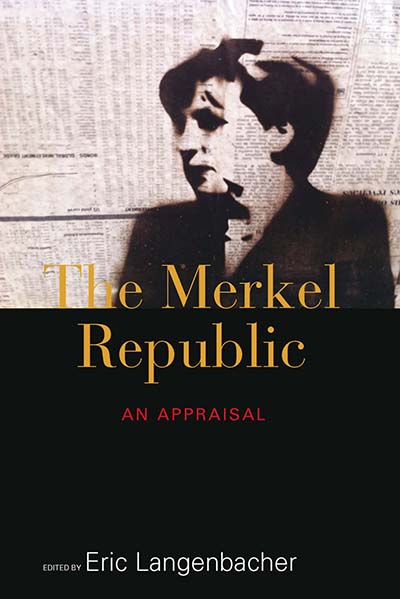
THE MERKEL REPUBLIC
An Appraisal
Edited by Eric Langenbacher

Continue reading “Simulated Shelves: Browse September 2015 New Books”

Berghahn Books at the GSA 2015 Conference!

We are delighted to inform you that we will be attending the annual German Studies Association conference in Washington D.C., on October 1-4, 2015. Please stop by our stand to browse our latest selection of books at discounted prices & pick up some free journal samples. If you are unable to attend, we would like to provide you with a special discount offer. For the next 30 days, receive a 25% discount on all German Studies titles found on our website. At checkout, simply enter the discount code GSA15.

We hope to see you in Washington D.C.!

_________________________________________________________________________

Here is a preview of some of our newest releases on display:

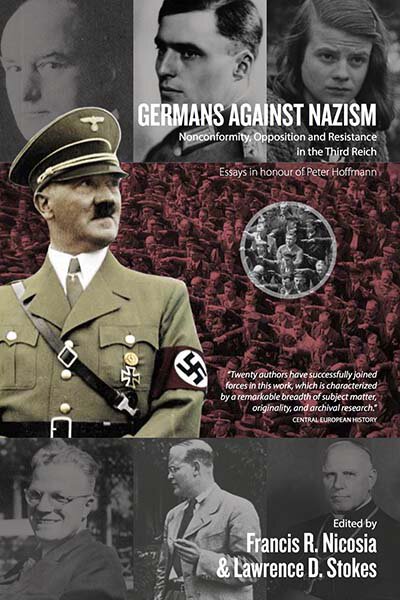
GERMANS AGAINST NAZISM
Nonconformity, Opposition and Resistance in the Third Reich: Essays in Honour of Peter Hoffmann
Edited by Francis R. Nicosia and Lawrence D. Stokes†
New and Revised Paperback Edition

Continue reading “Berghahn Books at the GSA 2015 Conference!”

“Bureaucrats are the evil sisters of ethnographers”: Discussing a new anthropology of bureaucracy

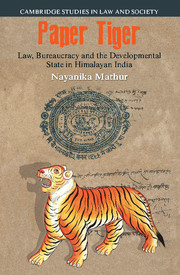
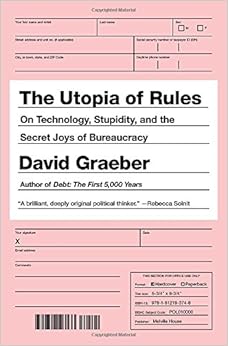
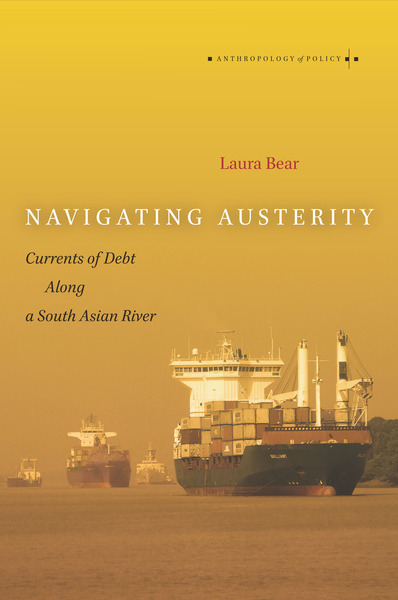
David Graeber, Laura Bear and Nayanika Mathur were recently in conversation at the London School of Economics (LSE) on the anthropology of bureaucracy. They reflected on the connections between their recent publications that propose a new anthropology of bureaucracy (Bear, Navigating Austerity: Currents of debt Along a South Asian River, Stanford 2015; Graeber, The Utopia of Rules: On Technology, Stupidity, and the Secret Joys of Bureaucracy, Melville, 2015; Mathur, Paper Tiger: Law, Bureaucracy, and the Developmental State in Himalayan India, Cambridge, 2015, Bear and Mathur, Remaking the Public Good: A New Anthropology of Bureaucracy, The Cambridge Journal of Anthropology, Spring 2015).

From a wide-ranging discussion that is available in full here, we present a short summary:

What can the post-office tell us about bureaucracy? How do postal services and the bureaucrats that serve in them embody particular public goods and their inequalities? It is important to focus on the history of the politics of race and class in postal services across the world. For instance, in the United States the post office was once seen as the realisation of solid public service and middle class respectability. With the systematic dismantling of the welfare state, however, it becomes a space of racialized violence expressed in the phrase “going postal.” In Germany there is a distinct history with different break points. It began as a public good drawing on military codes, to become (as shown in Stefan Zweig’s The Post Office Girl) a site of social ressentiment and Freudian angst associated with the rise of new right and left wing politics in the 1920s-30s. In the UK its recent progressive privatisation tracks a different trajectory of aspiration and inequality defined by shareholder politics.

How are bureaucracies both moral and military technologies?

Our comparison of different postal services led us towards a discussion of the technologies that found new bureaucracies. Services such as the railways, postal services, the telegraph are often considered as military technologies – particularly in the context of colonialism. However, these are also moral technologies as they are attempts to shape the legitimacy of rule. The bureaucrat and technician bear the burden of efficiency and of performing a particular kind of ethical self. So bureaucrats and their technologies simultaneously enact utopias and lines of violent force. This is a highly confusing combination for citizens as they interact with them.

Why does the history of bureaucracy matter?

Citizens’ encounters with bureaucracies vary across time and space. How can we reflect on bureaucracy through a historical and comparative frame? Our various research sites of the United States, India, and Madagascar offer interesting points of contrast. In India we discuss how, even today, the state and its associated bureaucratic apparatus is believed to embody an abstract vision of justice; one that it is never able to approximate in practice but the ideal is always held out as a promise. In Madagascar, on the other hand, the state was considered akin to a natural disaster – something you speedily get out of the way of. What methods of comparison at a middle range of analysis are possible across these diverse forms? Technology offers an obvious entry point (as our discussions have shown so far), but what about common usages of language and their performative effects?

What does language reveal about bureaucracy; especially about contemporary financialised bureaucracies?

All three monographs as well as our special issue on the public good explore the financialisation of bureaucratic structures the world over. In this context, it becomes particularly important to pay attention to the common language that is being deployed in public discourse and the new words that are gaining prominence. David has looked at ‘deregulation’ in the United States while Laura, Nayanika, and the contributors to their special issue study the effects of ‘austerity,’ ‘transparency,’ ‘consensus,’ ‘accountability,’ and ‘efficiency.’ Our attempt here is to recast the study of bureaucracy through an ethnographic tracing of the new public goods circulated by usages of these ethically loaded words; and the forms of precarious citizenship that they generate. Taking efficiency as an example, we discussed how the ends of this efficiency are never considered—the accumulation of more profits for the private sector.

Is it difficult to study bureaucracy? Is it possible to not study bureaucracy?

Our conversation lingered on how difficult it remains – despite the recent spate of ethnographies – to study bureaucracy anthropologically. Our 3 monographs and the special issue of CJA are recent attempts to overcome this longstanding anthropological difficulty. We all underlined that it remains impossible to escape bureaucracy, be it in our roles as academics in the UK or ethnographers in India and Madagascar or just residents of our own countries. The bureaucrat is the evil sister of the anthropologist in their techniques; therefore we have to find ways to maintain our position as the ‘good sister.’ It is vital to find new ways through which we can study and articulate bureaucracy as more than ‘boring’ or ‘necessary.’

How can we articulate the violence of bureaucracy through the study of paperwork?

A growing ethnography of paperwork has successfully made the violence within bureaucratic procedure visible. David has written of the struggles surrounding his mother’s illness as he encountered the American health system. He makes the point that the supreme idiocy of paperwork is a mere manifestation of the systemic violence of bureaucracy. Our encounter with it is paradoxical; we understand it won’t let us in, yet we still desire to be recognized by it. Laura has written on the tortuous petitions that Anglo-Indian and Bengali railway workers sent to the bureaucracy in colonial India seeking individual recognition (Bear 2007); and Nayanika has looked at how transparency is materially made by documents in contemporary development work in India (Mathur 2012).

How is contemporary paperwork in financialised bureaucracies different from past forms?

We all agreed that the new public good of transparency is critical in changing the forms of paperwork. It remains a largely uncriticised public good in the contemporary world even as it does the work of masking new forms of opacity and state control. What is the relationship between secrecy and government today? How does the discourse of transparency change Weber’s idea of the official secret – that most wonderful bureaucratic invention? All of us gave examples of the manner in which transparency and secrecy operate in our experience and ethnography. We agreed that there is a need for a more robust anthropology of secrecy and spying. The doublethink and triplethink that is central to bureaucracy needs to be elaborated and acknowledged.

Are the bureaucrats conspiring?

Talk of secrecy led, inevitably, to the way in which the existence of bureaucracies enables conspiracy theories. The analytical problem is that bureaucracies provoke conspiracy theories and accounts of centralised control; so how can we identify the difference between a ‘real’ and ‘imagined’ causal chain in our ethnographic analysis? How can we track both and disentangle the ways in which they mutually support each other? We discussed how Foucault’s decentralised model of state power is not sufficient to capture this complexity. Class inequality is especially important in the study of conspiracy theories; the middle classes and bureaucrats do ‘strategy’ while the working classes are labelled as ‘paranoid.’ We reflected on how states sometimes feed people who are conspiracy theorists with conspiracies to prove that they are ‘insane.’

What constitutes bureaucratic honour and what is its class politics?

If we are to think of bureaucracies as animated spaces inhabited by individuals with particular deals then we need to more clearly consider how bureaucratic honour operates. We need in particular (in an anti-Foucauldian move) to explore its class politics. Examples ranged from military honour under apartheid and post-apartheid regimes in South Africa; to the colonial and post-colonial railway bureaucracy to lower-level development workers in the Indian Himalaya.

How do bureaucracies work in relation to the market now?

We ended by discussing how bureaucracies enable capital accumulation and greater collusion between the market and the state. The distinction between the public and the private that bureaucracy is so intent on upholding is morally real in the personas of bureaucrats; yet is structurally unreal because of the ways in which state institutions now directly funnel profits towards corporate organisations. A need to expose this process of accumulation as well as the morality that underlies bureaucratic action is absolutely critical. This is an approach that we all take in our published and continuing research.
Click here to listen to the discussion in its entirety.

Click here to browse articles in the special issue of The Cambridge Journal of Anthropology on bureaucracy and the public good.


Final Sale in Berlin: What Happened to Berlin’s Jewish Businesses?

Final Sale in Berlin


The following is a guest blog post written by Christoph Kreutzmüller, author of Final Sale in Berlin: The Destruction of Jewish Commercial Activity, 1930-1945, which is newly published this year.

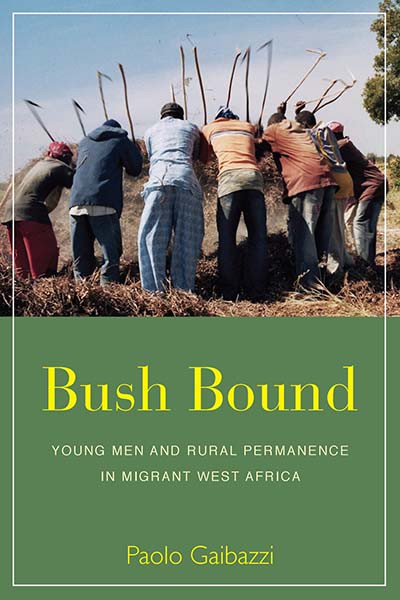
The following is a guest blog post written by Paolo Gaibazzi, Social Anthropologist and Research Fellow at the Centre for Modern Oriental Studies (ZMO). Gaibazzi is also the author of Bush Bound: Young Men and Rural Permanence in Migrant West Africa. Below, Gaibazzi discusses how ‘staying put’ may shed light on current West African migrations. – See more at: http://berghahnbooks.com/blog/bush-bound-gaibazzi#sthash.xtLXufKN.dpuf

Continue reading “Final Sale in Berlin: What Happened to Berlin’s Jewish Businesses?”

Freedom to move, freedom to stay: the EU migration crisis through the lens of migrant West Africa

Bush BoundThe following is a guest blog post written by Paolo Gaibazzi, Social Anthropologist and Research Fellow at the Centre for Modern Oriental Studies (ZMO). Gaibazzi is also the author of Bush Bound: Young Men and Rural Permanence in Migrant West Africa. Below, Gaibazzi discusses how ‘staying put’ may shed light on current West African migrations.

How can the experience of a small, migrant-sending West African village contribute thoughts on the current migration crisis in Europe? Sabi is a rural community in the Gambia River valley with a long history of male international emigration in which I have had the privilege to live and do research. The resulting book – titled Bush Bound – is an account of how migration pervades everyday life in the community, but especially of how people continue staying on the land. I suggest that this small but significant laboratory of (im)mobility might help us rethink the assumptions about freedom, movement and sedentariness informing, and often distorting, European debates about African immigration.

Continue reading “Freedom to move, freedom to stay: the EU migration crisis through the lens of migrant West Africa”

Simulated Shelves: Browse August 2015 New Books

We’re delighted to offer a selection of latest releases from our core subjects of Anthropology, Film Studies, Genocide Studies, History, and Politics.


We are especially excited to announce the publication of Final Sale in Berlin, by Christoph Kreutzmüller.

“Christoph Kreutzmüller’s book is vigorously researched, elegantly structured and well-written, and succeeds in providing new information on a subject already exhaustively studied, namely ‘Aryanization’ and the destruction of business, that extends beyond the borders of Berlin.” · H-Soz-u-Kult

——————————————————————————————————————–


FINAL SALE IN BERLIN
The Destruction of Jewish Commercial Activity, 1930-1945
Christoph Kreutzmüller
Translated from the German by Jane Paulick and Jefferson Chase

Click to read the Introduction!

Continue reading “Simulated Shelves: Browse August 2015 New Books”