The Myriad Measures of Achievement

Achievement is commonly defined as a successful completion of a given undertaking, but what it means to “achieve” is not a static idea the world over. Contributors to The Social Life of Achievement, published last month, examine meanings of achievement in countries and cultures throughout the world. Below, co-editor Nicholas J. Long addresses the term and provides insight into the background of the volume, from its inception to its subjects to its methodology.


_______________________________________________


Berghahn Books: What drew you to the study of achievement? And what inspired you to research and write about it?
 

Nicholas J. Long: Fieldwork! In the Riau Islands – the region of Indonesia where I’ve conducted most my research – people talk and think about achievement all the time. It’s become an integral component of the citizenship syllabus: students are taught that a good Indonesian should try to seize any opportunities for ‘achievement’ that they can. And it’s an incredibly widespread trope in public culture. I quickly realised that I wasn’t going to be able to write a good ethnography of the region without engaging in some way with this achievement discourse and how it was shaping people’s lives.

Continue reading “The Myriad Measures of Achievement”

A Reflection on ‘Japanese Tourism’

Carolin Funck and Malcolm Cooper’s Japanese Tourism: Spaces, Places and Structures, published this month, explains the nuances of Japanese tourism, both by the Japanese and within Japan by tourists from around the world. Below, the editors recall what drew them to this fascinating field of study, how the field has changed since they started writing, and how they predict it will continue to change in the future.


__________________________________________


Berghahn Books: When were you drawn to the study of Japanese tourism? What inspired your love of your subject?


Malcolm Cooper: The lack of a readily available text that brought together the several elements of Japanese tourism and chronicled its form and function over the years when I first started to teach this subject more than 10 years ago.

Continue reading “A Reflection on ‘Japanese Tourism’”

Old World Topic, New Discussion: A Look at Migration and Belonging

Who migrates, when they migrate, where they migrate, and why they migrate has a huge effect on cultural identity, acceptance and belonging. This is a hot current topic on news cycles worldwide, but it is certainly not a new phenomenon. Looking from a European perspective, editors Steven King and Anne Winter add an important contribution to this discussion with Migration, Settlement and Belonging in Europe, 1500-1930s: Comparative Perspectives, to be published this month. Below, the editors discuss the volume and their aim to make sense of these experiences across borders of place and time.


________________________________________


The British print and online media has for the last year been awash with compelling stories about abuses of the welfare system: the mother who has 11 children and feels the state should fund her life choices; the recent immigrants who are entitled to welfare benefits notwithstanding a lack of accumulated contribution; the ‘disabled’ welfare claimants who are exposed as professional dancers or scuba divers.
Continue reading “Old World Topic, New Discussion: A Look at Migration and Belonging”

Are Law-Maker, Law-Breaker So Different?

In the past, the world’s political economy has not always been built through honorable dealings. In fact, not much may have been, according to the recently published volume The Hidden History of Crime, Corruption, and States, which sheds light on such shadowy parts of economic history. Below, editor Renate Bridenthal develops this idea to share how those in power and those illicitly taking power may not be so different after all.


____________________________________


A specter is haunting history. The ghostly presence of economic crime as political power has been all but absent in history writing, but not in history itself.


Like dark matter, its synergy has been palpable if not always visible. Yet in our time, more and more emerges from the shadows, exposed in newspapers and tried in courts, and compels us to consider the history of the illicit political economy and its effects in past and present.

Continue reading “Are Law-Maker, Law-Breaker So Different?”

Fresh Ink on a Classic: Going ‘Beyond “Writing Culture”’

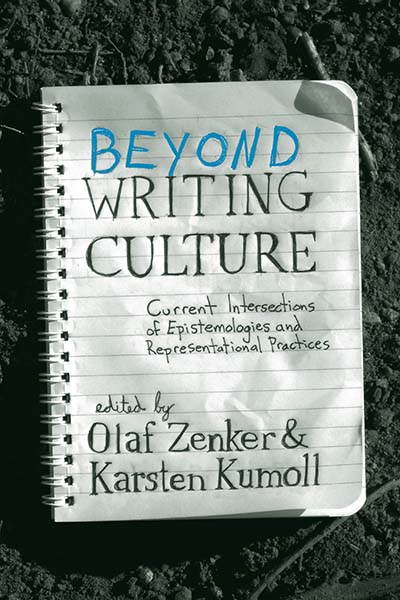
In 1986, Writing Culture: The Poetics and Politics of Ethnography was published, and it changed the perception of ethnographic study from then on. Little more than 20 years later, Olaf Zenker and Karsten Kumoll took its reach further with Beyond Writing Culture: Current Intersections of Epistemologies and Representational Practices, published originally in 2010 and published as a paperback last month. Below, the editors share how their work engages with the inspiration piece, how they came to publish the collection, and the ways in which their work corresponds to and challenges the original.


_____________________________


Berghahn Books: Tell us about the original Writing Culture? How does your volume expound on the principles set forth in this groundbreaking work, and how does your volume differ?


Olaf Zenker: The publication in 1986 of Writing Culture by James Clifford and George Marcus was crucial for the discipline of anthropology as a whole. Continue reading “Fresh Ink on a Classic: Going ‘Beyond “Writing Culture”’”

Good Borders Make Good Neighbors

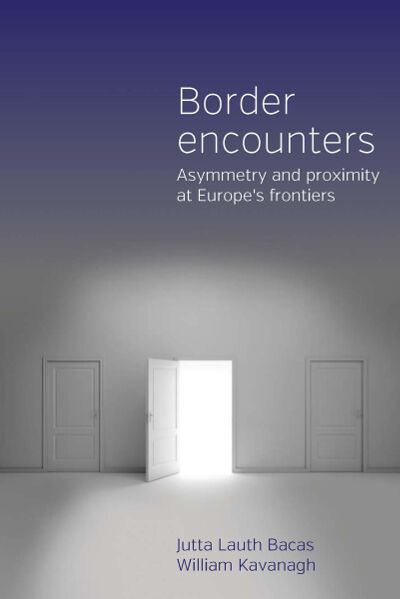
What are the social impacts as European political borders are being redefined? Using a variety of case studies, editors William Kavanagh and Jutta Lauth Bacas seek to answer that question in Border Encounters: Asymmetry and Proximity at Europe’s Frontiersto be published this month. The editors and contributors examine the implications as borders are strengthened in some parts of the continent, and weakened in others. Below, Kavanagh and Lauth Bacas share their thoughts on the volume.


________________________________________________


Berghahn Books: What drew you to the study of political and social borders? Why is this study important?
 

Jutta Lauth Bacas: The core experience which triggered my interest in border studies and in the topic of irregular crossing at a maritime border was my encounter with destroyed inflatable dinghies having been used by refugees to enter a Greek border island clandestinely.

Continue reading “Good Borders Make Good Neighbors”

Berghahn Author Asks: ‘Quo Vadis FEMEN?’

FEMEN is a Ukrainian feminist protest group that has become infamous for its topless protests against patriarchy. The group, founded in 2008, has since grown to be a worldwide phenomenon, and not simply because its protests are often seen as “sextreme.” Marian Rubchak, editor of Mapping Difference: The Many Faces of Women in Contemporary Ukraine, takes a look into the history and meaning of the movement, and asks: Where is it going? 


________________________________________


Marian Rubchak

The year was 2008; 17 years had passed since Ukraine declared its independence and early advocates of change began to espouse high-minded ideals designed to promote women’s rights. These incipient feminists laid the groundwork for raising an awareness of discrimination against women, and were instrumental in advancing the passage of some of the most progressive pro-women legislation Ukraine had yet seen. Fast forward to 2008 — the promising beginnings were moving very slowly, too slowly. Clearly the work of reform would need to proceed to a higher level.

Continue reading “Berghahn Author Asks: ‘Quo Vadis FEMEN?’”

Looking ‘Against the Grain’ at German-Jewish Intellectuals

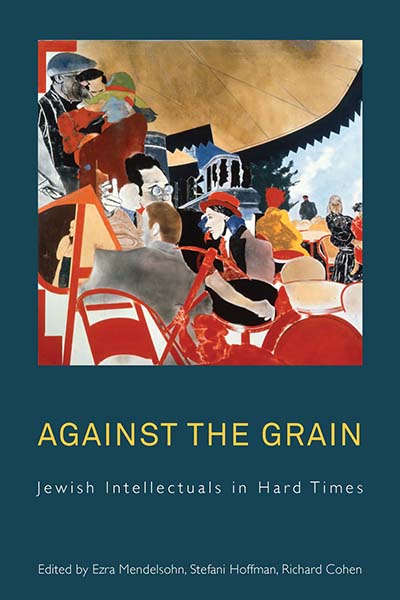
German-Jewish intellectuals in the twentieth century are the focus of Against the Grain: Jewish Intellectuals in Hard Times, published this month. The volume, edited by Ezra Mendelsohn, Stefani Hoffman, and Richard I. Cohen, looks at the key figures of German-Jewish thought: Scholem, Strauss, and Kohn, and examines how such thinkers reacted to, and were impacted by, the collection of crises lived by Central European Jews. Below, co-editor Mendelsohn speaks about the volume’s potential to “stir” the field and what brought him to the study in the first place.


____________________________________________


Berghahn Books: What drew you to the study of the trials and tribulations of Jewish men and women in the twentieth century?


Ezra Mendelsohn: The main reason resides in my  interest in the history of my own family.  Both my parents were born in Tsarist Russia, and both ended up in the United States, having lived for some time in British Palestine. 

Continue reading “Looking ‘Against the Grain’ at German-Jewish Intellectuals”

Reconstructing the Measure and Meaning of Obesity

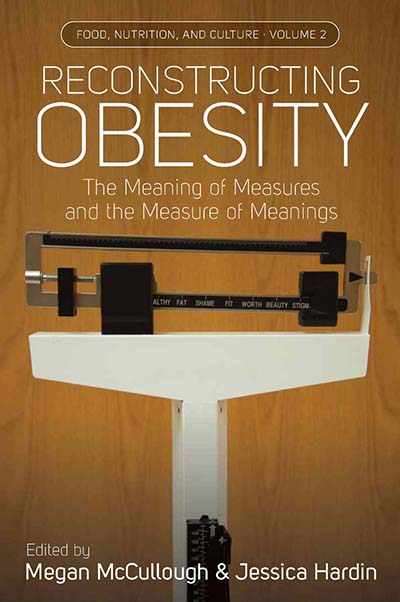
Obesity is a worldwide problem, and affecting more people all the time. In their timely collection, editors Jessica Hardin and Megan McCullough examine this growing epidemic in their soon-to-be-released book, Reconstructing Obesity: The Meaning of Measures and the Measure of Meanings.The editors analyze the cultural causes and effects to open a new discussion about fatness and obesity.

_________________________________

I asked my students, fresh off a lively discussion about dieting and religious fasting, if any of them would consider taking a new course I was designing called,“Fatness and Obesities.” Only one student raised her hand. What if I change the course’s title – but not its content – to “The Politics of Body Size”? At this suggestion, they all raised their hands. What is the difference?

-Jessica Hardin

Continue reading “Reconstructing the Measure and Meaning of Obesity”

A Matter of Morality

Originally published in 2009, The Anthropology of Moralities, edited by Monica Heintz, will be published in paperback this month. The collection deals with the collision of moralities as human beings exist on a more and more globalized scale. Below, the editor discusses what first interested her in a moral study and what made it, and keeps it, important to the field of anthropology.


____________________________________________


Somehow after 1989 the Eastern bloc got obsessed with values. How could it be otherwise for people who had lived with double sets of values in the public and private spheres and who saw all their public values officially collapse in one night?

Continue reading “A Matter of Morality”