To Embroider the Voice with its Own Needle

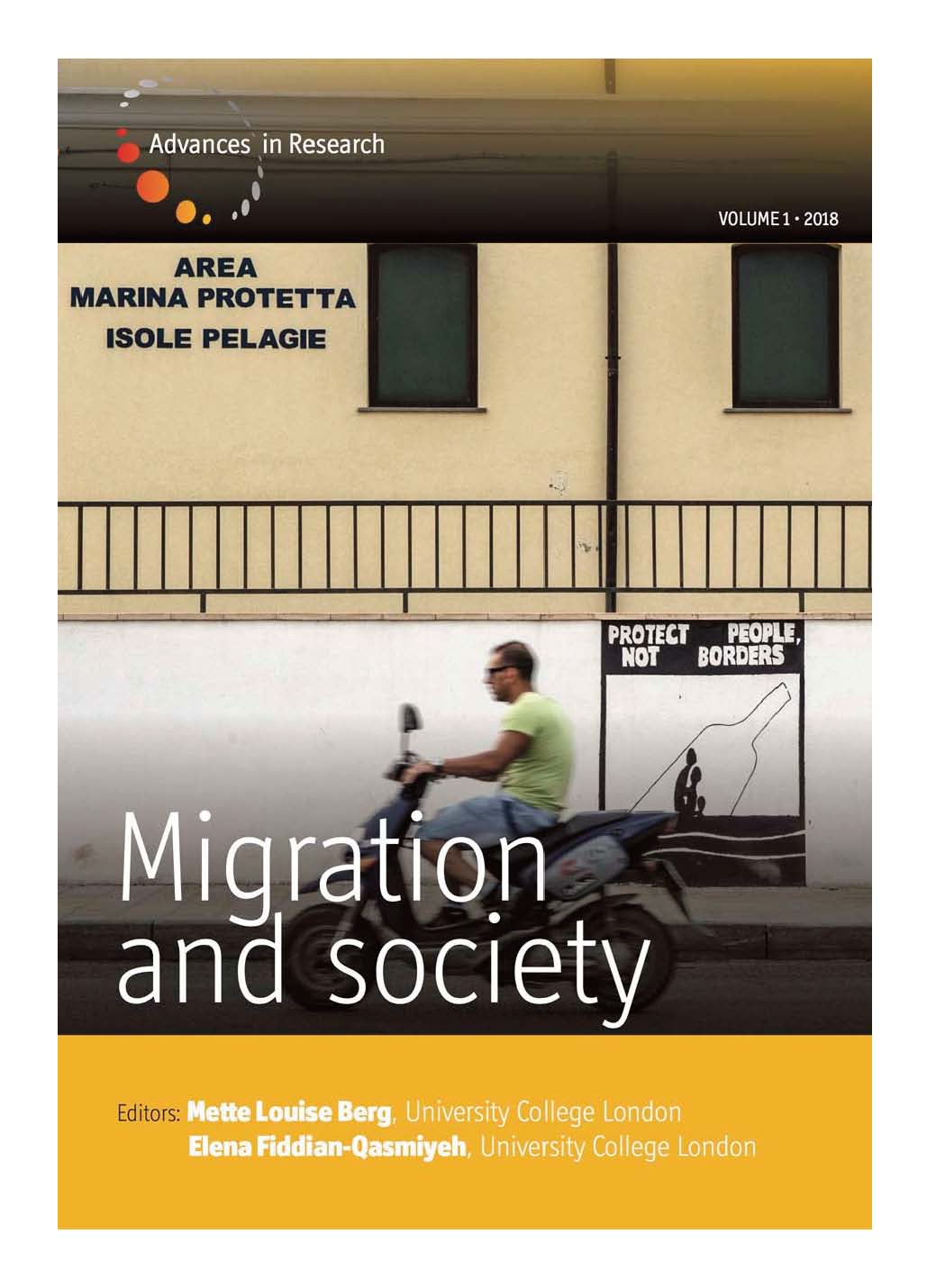
ARMS high res coverYousif M. Qasmiyeh
Creative Encounters Editor, Migration and Society

In poetry we hunt down details in the hope of preserving them and, in so doing, we assert our commitment to re-reading the daily and re-inventing the becoming.

In Creative Encounters, our modest aim, in this inaugural edition of Migration and Society, is to embroider the voice with its own needle: an act proposed to problematise the notion of the voice; something that cannot be given (to anyone) since it must firmly belong to everyone from the beginning. In voice, we look for our own meaning in this narrow-vast world. We look for something to cling to for the sake of passing time – something that reminds us of our presence as scattered voices.

In Mohamed Assaf’s poems, published in this edition of Creative Encounters, nothing seems young save the poet or more precisely his real age. In his observations, memories are as conspicuous as the sky on a clear day and as precise as an archivist’s. He writes what takes him back to his place: Syria, but also what he sees in the vicinity of his body – the body which has had to endure multiple flights in multiple times. Not with our approval but in spite of it, Mohamed writes the archive of what it means to live a life whose meaning is reduced to one’s own survival – a bodily survival – in the midst of such formidable physical and aesthetic destruction.

Mohamed’s name as printed in English M-o-h-a-m-e-d is not the name which was conferred upon him by the woman who gave birth to him in the place of his Arabic language. Rather, it is the transliterated twin of his name. It may be considered an equivalence or another proper noun which marks a change that will always be carried in the name, that is: the pronunciation of the new. Or, more pertinently, a trace of his definite name which is, as his poetry, still travelling in all directions.

Five poems by Mohamed Assaf*

Five poems were written by Mohamed Assaf – a young Syrian boy who currently lives in Oxford with his family and studies at Oxford Spires Academy – under the mentorship of the poet Kate Clanchy. View the Poems.

*Five Poems by Mohamed Assaf will be available to access until 1/31/2019.

To access the entire inaugural issue of Migration and Society until 1/31/2019, please use code: MS2019. To redeem, please visit: www.berghahnjournals.com/redeem.
Are There Sustainable Cities in the Arctic?

by Robert Orttung

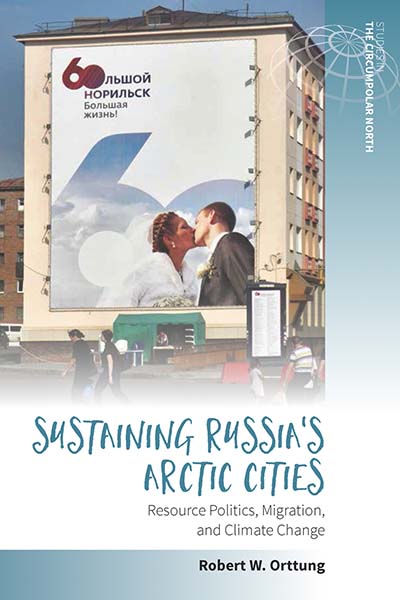
Robert Orttung is the author of Sustaining Russia’s Arctic Cities: Resource Politics, Migration, and Climate Changewhich will be available in paperback in 2018. We’re offering 25% off the paperback with code ORT427 on our website.

More than four million people live in the Arctic, but so far few scholars have addressed urban conditions there. In fact, most people living in the Arctic reside in cities. Sustaining Russia’s Arctic Cities: Resource Politics, Migration, and Climate Change is one of the first to try to examine how sustainable these cities are.

The edited volume Sustaining Russia’s Arctic Cities grew out of a multi-disciplinary and multi-national team of scholars interested in the Arctic. The idea to focus on cities came from one of the book’s contributors, Nikolay Shiklomanov, during a meeting of faculty with an interest in the Arctic at George Washington University. Participants represented both natural scientists who study permafrost and climate change, and social scientists interested in migration and energy development. Cities proved to be the meeting ground where all of our interests converged. As resource extraction continues in the Arctic, more workers are moving to the region and building more infrastructure there. However, the extraction and subsequent combustion of fossil fuels leads to warming in many parts of the Arctic, typically at a rate much faster than on other parts of the planet.

The focus of this book is on Russian cities in the Arctic because Russia has gone the farthest of the Arctic countries in developing urban space in the far north. Stalin built large cities in the region as did subsequent Soviet leaders in an effort to develop the rich resources found there.

The book addresses the question of how humans can live in the Arctic while having minimal impact on the environment. There are no easy answers, so the various chapters consider the history of Arctic development in the Soviet Union and post-Soviet Russia, policy-making processes for the Arctic in Moscow, the administration of specific Arctic cities, the nature of the workers who make their living in the Arctic, the prospects for land and sea transportation in the region, and what we know about the future climate.

This book is the first of several that we hope to publish in an on-going research project. Currently, Sustaining Russia’s Arctic Cities serves as a foundation for developing an Arctic Urban Sustainability Index. This index will examine five types of variables – economic, social, environmental, governance and planning. The Index is in its early stages and we are reporting progress over time at our project website. The most recent publications include two reports in the 2017 Arctic Yearbook. The project has the support of the National Science Foundation Partnerships for International Research and Education.

We hope that readers from a wide variety of disciplines and perspectives will find the book useful in starting to think more serious about cities in the Arctic. Ultimately, we hope that this research program will lead to useful advice for mayors and other Arctic policy makers as they try to improve lives for the citizens of Arctic cities.


Robert W. Orttung is the research director for the George Washington University Sustainability Collaborative. He is also an associate research professor at GW’s Elliott School of International Affairs. He has written and edited numerous books on Russia and energy politics.

David Émile Durkheim, Father of Mind

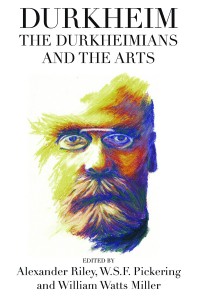
Commonly credited as the father of modern sociology, David Émile Durkheim (born on April 15, 1858) drew on the philosophies of Karl Marx and Auguste Compte to create his own. In turn, his philosophy inspired Marcel Mauss, Claude Lévi-Strauss, and Michel Foucault, among many others, including Alexander Tristan Riley, W.S.F. Pickering, and William Watts Miller, whose edited collection Durkheim, the Durkheimians, and the Arts is now available in paperback. Below, Riley shares what brought him to the study of Durkheim, a prediction of the collection’s reception, and what he would ask the philosopher if given the chance. 


Durkheim and the ArtsBerghahn Books: What drew you to the study of David Émile Durkheim?

  Continue reading “David Émile Durkheim, Father of Mind”

Introducing Ted Nannicelli as the New Editor of Projections: The Journal for Movies and Mind

Ted Nannicelli, Film and Television Studies, University of Queensland

The first thing I would like to do in my capacity as the new editor of Projections is to warmly thank the outgoing editor, Stephen Prince, for his outstanding stewardship of the journal over the past six years. Already a success when Stephen took over in 2012, Projections has only improved since then. It has been a great pleasure for me to work with Stephen as one of the associate editors over the past few years, and I am delighted that Stephen will remain involved with the journal in some capacity, since he has recently been elected the new president of the Society for Cognitive Studies of the Moving Image (SCSMI).
 
This is an opportune moment to note a few other recent changes. First, Projections is no longer associated with the Forum for Movies and Mind. As a result of this change, we have instituted a new editorial board, although some previous members will be continuing their service. I would like to extend my sincere thanks to all those associated with the Forum for Movies and Mind-in particular, Bruce Sklarew and others who conceived of and established Projections as an academic journal. I am also especially grateful to the outgoing members of the editorial board, whose service has established Projections as an academically rigorous, theoretically pluralistic journal.

Although Projections‘s only formal association now is with the SCSMI, our continued success is dependent upon our ability to maintain and expand a wide and diverse readership that significantly exceeds the SCSMI’s membership. I especially hope that those of you who began subscribing to Projections in conjunction with its affiliation with the Forum for Movies and Mind will continue to support us.
 
In addition, the two new associate editors, Tim Smith and Aaron Taylor, and I have our sights set on further expanding Projections‘s interdisciplinary scope and its readership. We have updated our statement of aims and scope accordingly, and we invite you to spread the word to others. We would be grateful if, even if you are already a regular individual subscriber, you could take a moment to complete the library recommendation form on our website so that Projections can also be available to students and colleagues at your institution.
 
In keeping with our commitment to interdisciplinary exchange, we are also introducing several new submission formats that are outlined in the “guidelines for submission” section on our website. Our aim is twofold: to make the minimal criteria for publication in Projections more explicit and to generate greater dialogue between researchers working in different scholarly traditions. We also hope that the new format options broaden the appeal of Projections as a destination for high-quality research among a broader and more diverse group of scholars.
 
I think that the collection of articles in the current issue* of Projections is indicative of the extent to which we have already successfully begun to publish excellent research from a variety of disciplinary perspectives-and it is also suggestive our future direction: it includes contributions by scholars based in English and comparative literature, film and media studies, psychology, and philosophy.
 
This issue begins with two articles that revisit Russian classical film theory in light of recent developments in neuroscience and psychology. First, Maria Belodubrovskaya explores the affinities between Sergei Eisenstein’s concept of “attractions” and the preconscious, automatic responses identified by contemporary neuroscience. Next, Sermin Ildirar and Louise Ewing present the results of their attempt to replicate the results of Lev Kuleshov’s famous editing experiments.
 
The following three articles investigate conceptual issues relating to film interpretation broadly construed to include narrative comprehension. Peter Alward offers a close analysis of Withnail and I (Bruce Robinson, 1987) in support of his argument for what philosophers of art call “the value-maximizing” account of art interpretation, which suggests that our higher-order interpretations ought to be partly guided by considerations of which interpretation(s) would make the artwork most artistically valuable. In contrast, Hannah Wojciehowski’s analysis of Arrival (Denis Villeneuve, 2016) focuses on a lower-order interpretive matter-namely, the viewer’s process of piecing together the narrative of a puzzle film. One implication of Wojciehowski’s article-that the filmmakers’ intentional jumbling of narrative pieces in a particular fashion affords them control over the viewer’s ability to arrive at a correct understanding of the story at the appropriate time-intriguingly chimes with Belodubrovskaya’s discussion of Eisenstein’s “cine-fist” in relation to contemporary action cinema. Wojciehowski’s analysis of Arrival also segues nicely into the concluding article, in which Veerle Ros and Miklós Kiss develop a new account, based on Torben Grodal’s PECMA (perception, emotion, cognition, motor action) flow model, of viewers’ engagement with narratively complex films.
 
Following Ros and Kiss’s article are several book reviews that we are publishing at once to hand over a clean slate to Aaron Taylor, our new associate editor in charge of book reviews. As with the articles, I am impressed by the diversity of perspectives represented in the books reviewed here, and I hope you will be, too.
 
*This issue will publish April 2018


Projections: The Journal for Movies and Mind is published
in association with The Society for Cognitive Studies of the Moving Image


Winner of the 2008 AAP/PSP Prose Award for Best New Journal in the Social Sciences & Humanities!


Introducing Contention: The Multidisciplinary Journal of Social Protest

In 2011 a global wave of protest changed the way in which people saw contention. January saw two revolutions: first, in Tunisia culminating in the overthrow of then president Ben Ali; and second in Egypt with protests that would end the Mubarak regime within eighteen days. This wave of protest spread to Libya, Syria, Yemen and Bahrain changing the course of history for each country forever.

But protest would not be confined to the Middle East. Later that year the Iberian Peninsula ignited with protest and popular mass movements soon followed. The same could be seen in Italy and Greece. What had spread to Southern Europe would soon cross the Atlantic with the rise of Occupy Wall Street: first, in New York then across Northern America and finally, by 2012, across the globe as a worldwide occupy movement.

In the academic community, a fervent interest in these new protests and the general question of Contention would awaken across disciplines and in October of that year many of us came together at the University of Kent for the first international and interdisciplinary conference on social protest. Attendees ranged from across the social sciences, humanities and arts, as well as a substantial contingent of activists, revolutionaries and NGOs.

This enthusiasm led to the very first issue of Contention: The Multidisciplinary Journal of Social Protest, on Theory, Action and Impact in Social Protest. This issue was merely a collection of abstracts of the almost 200 papers presented at the conference but generated considerable excitement among our colleagues.

This became the springboard for two distinct ventures, first the creation of the Interdisciplinary Network for Social Protest Research which celebrates its fifth anniversary this year. Second, of course, was Contention which had expanded into a fully-fledged academic journal by 2013.

This year marks a similarly important step for Contention, with the move to a new publisher and to a new phase in the journal’s history. We are privileged to count among our editors a distinguished and international advisory board, as well as scholars of the highest calibre from across disciplines. The journal now attracts submissions of the highest quality and prides itself on a careful and inclusive review process.

So what’s next for Contention? Over the next five years we will aim to establish the journal as a world leading resource for social protest across disciplines. In conjunction with our partners at INSPR, we will strengthen our ties with academics and practitioners across the globe. In partnership with our publisher at Berghahn we will bring the journal to new audiences and even greater impact.

We look forward to your help along the way!

Benjamin Abrams and Giovanni A Travaglino

Editors

America, ‘Moby Dick,’ and the Other

“John Quincy Adams warned Americans not to search abroad for monsters to destroy, yet such figures have frequently habituated the discourses of U.S. foreign policy,” offers a succinct summation of newly published U.S. Foreign Policy and the Other. Following, editors Michael Patrick Cullinane and David Ryan use Herman Melville’s classic Moby Dick as a cautionary tale, explaining that the U.S. should revise its policy of “othering” to avoid a fate similar to that of Captain Ahab and crew.


____________________________


Herman Melville’s Moby Dick persists in literary history as one of the greatest American novels. The book takes readers on a terminal voyage in the Pequod as it sails over oceans in search of a monstrous white whale that robbed its captain, Captain Ahab, of his leg on an earlier expedition. As literature goes, this classic depicts the struggle for identity, identification, and the distinctiveness between the self and the “other.”

Continue reading “America, ‘Moby Dick,’ and the Other”

Caryn Berg Named Archaeology Editor for Berghahn Books

CBerg

We’re pleased to announce that Caryn Berg has been appointed as the first archaeology editor for Berghahn Books. For the past ten years, she was the archaeology editor for Left Coast Press, which was recently sold to Taylor and Francis. She has also worked as an educator and consulting archaeologist. Dr. Berg, who earned her Ph.D. from the University of Colorado at Boulder, will work remotely from her home outside Denver.


“Caryn came to us warmly recommended by Mitch Allen, founder of Left Coast Press, with whom she built up one of the most highly regarded archaeology lists,” Publisher Marion Berghahn said.  “This will add for us a new and exciting subject to our list.”


Some of the many titles Dr. Berg acquired for Left Coast Press include The National Historic Preservation Act: Past, Present, and Future, edited by Kimball M Banks and Ann M. Scott, Digging Atari, by Andrew Reinhard, Richard Rothaus, and William Caraher and Violence and Warfare among Hunter-Gatherers, edited by Mark W. Allen and Terry L. Jones.


Dr. Berg’s diverse experience informs her interest in the applications of archaeology in academia, private industry, museums, and government. In her new role with Berghahn Books, Dr. Berg will acquire books that amplify a wide range of practical archaeology methodology, theory, and case studies that represent research from around the world. She plans to attend several academic conferences for the firm including the Society for American Archaeology, the Society for Historical Archaeology, and the World Archaeological Congress.


“There is a need for a broad range of archaeological books that focus on methods, theoretical approaches, as well as case studies describing the results of research around the globe,” Dr. Berg said.   “With Berghahn Books, I will seek to meet the book needs of this wide range of archaeologists while still maintaining the scholarly standards set by the firm.”


Connect with Dr. Berg on Facebook and Twitter!


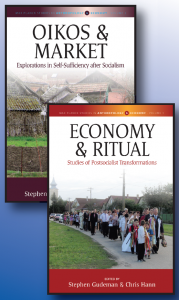
Between Anthropology and Economy: an Interview with Stephen Gudeman

Stephen Gudeman is a Series Editor for Berghahn’s Max Planck Studies in Anthropology and Economy Series. Below, he answers our questions about his work.


Working with Chris Hann, you have started a new Series with Berghahn Books exploring the connection between economics and anthropology: Max Planck Studies in Anthropology and Economy. Can you explain what we may learn covering this ground? How can anthropology help the study of economics, which is generally a quantitative discipline?


Continue reading “Between Anthropology and Economy: an Interview with Stephen Gudeman”

Roots and Recovery: Anthropologists Study Anorexia from all Angles

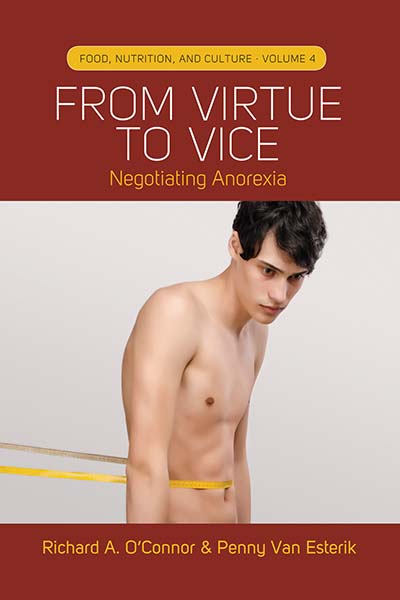
How do sufferers of anorexia recover? Richard A. O’Connor and Penny Van Esterik seek answers to this question, first by identifying root causes of the disease and then by sharing the stories of those who have made a full recovery.  From Virtue to Vice: Negotiating Anorexia, the book that resulted from their research, does not look at the affliction of anorexia from behind a glass, in fact, O’Connor’s connection to the work is deeply personal. He explains in his own words below.


_______________________


Every book has a back story. Mine is no big secret. When my daughter Amorn became anorexic it turned our family upside down. Carolyn [my wife] and I desperately wanted answers. We got a great counselor but nothing worked. The explanations we got made no sense. That wasn’t our daughter. Of course we worried we were in denial—that we just didn’t want to face the truth—and that silenced me at the time. I understood clinicians have to put people in categories and few fit perfectly. So I settled into accepting my daughter was an exception, an outlier. What mattered most was working with her caregivers for recovery.


Continue reading “Roots and Recovery: Anthropologists Study Anorexia from all Angles”