Revealing the ‘Vanished History’ of the Holocaust

Although in Slovakia, Bohemia and Moravia (parts of Czechoslovakia), more than a quarter million lives were claimed during the Holocaust, these deaths have been mostly concealed in post-World War II Czech and Slovak history. A Czech native himself, author Tomas Sniegon shines a light on this cover up in Vanished History: The Holocaust in Czech and Slovak Historical Culture, to be published this month. Following, Sniegon uses the example of Oskar Schindler — famous as the protagonist of the 1993 film Schindler’s List — to explain just how much was hidden from citizens of the Czech Republic and Slovakia.


_____________________________
Film hero Oskar Schindler, played by Liam Neeson, entered the 1990s in the Steven Spielberg’s film Schindler’s List as a new symbol of a so-called “Good citizen of the Third Reich,” which provoked both positive and negative reactions worldwide. However, very few at the same time knew that the real Oskar Schindler — far more complicated than the film character — had never lived in Germany until the World War II and thus actually had never been a “genuine-German German.”

Continue reading “Revealing the ‘Vanished History’ of the Holocaust”
Filmic Multiple Reality Syndrome

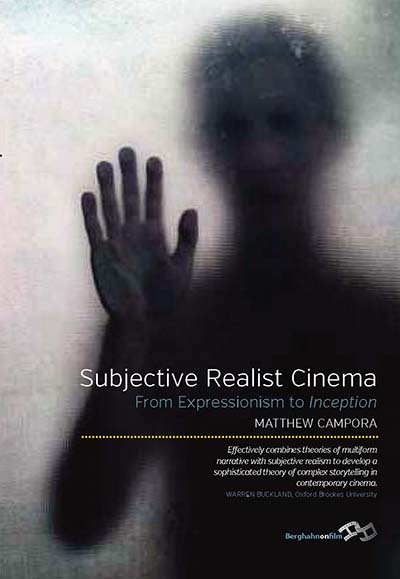
The nonlinear narratives of such films as Mulholland Drive, Memento, and Eternal Sunshine of the Spotless Mind come into sharper focus in Matthew Campora’s newly released book Subjective Realist Cinema: From Expressionism to Inception. Following, the author introduces an excerpt to his book, tells the reader of his initial inspiration to write it, and gives insight into “multiform narrative.”


______________________________

What follows is an excerpt from my book Subjective Realist Cinema. I have chosen to present it here because it contains some of the key ideas of the book, as well as a brief analysis of the film that inspired my interest in complex narrative cinema in the first place, Terry Gilliam’s Brazil. Watching it teenager, I found Brazil confusing, even incomprehensible. However, I was also fascinated by it and suspected there was more to the film than I had grasped. When I returned to it years later and discovered that I was able to comprehend it in a way that had eluded me earlier, I was even more intrigued. How could I have NOT grasped what seemed so simple to me now? That the key to understanding the film lay in recognizing the shifts between Sam Lowry’s nightmarish waking world on the one hand, and his imagination, dreams, and hallucinations on the other. The lack of clearly marked shifts between the film’s different ontological levels had created a complexity that I was not accustomed to, and solving the puzzle the film posed had proven tremendously satisfying. I began seeking out similar films in order to understand how they created their effects and what follows is fragment of the work that has grown out of the years spent with these films.

Continue reading “Filmic Multiple Reality Syndrome”

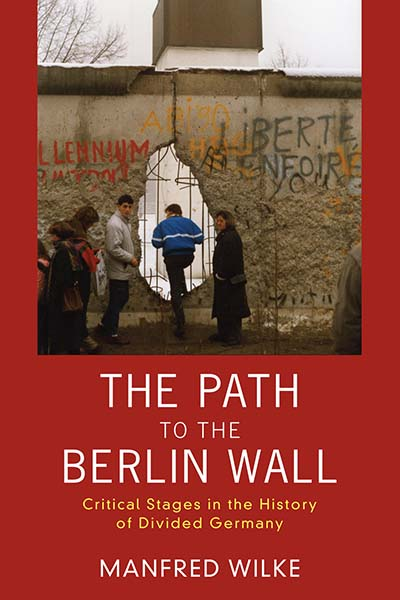
A Lived Journey: Tracing ‘The Path to the Berlin Wall’

The Berlin Wall may have been erected in 1961, but the figurative foundation was laid in 1945, as the Soviet Union’s Communist Party and its allies made selections of their areas of influence. In The Path to the Berlin Wall: Critical Stages in the History of Divided Germany, author Manfred Wilke traces the events that led to the eventual construction of the Berliner Mauer. Wilke’s original volume was translated from German into English by Sophie Perl. Following is Perl’s interview with the author about his book.

Continue reading “A Lived Journey: Tracing ‘The Path to the Berlin Wall’”

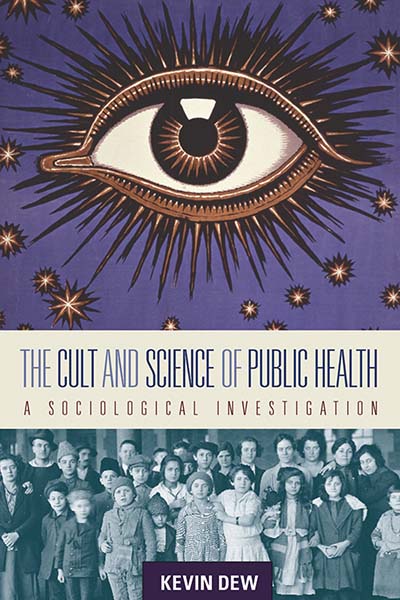
Examining ‘Public Health’: A Reflection on Reception

With World Health Day coming up April 7, the paperback release of Kevin Dew’s exploration of public health is quite timely. The Cult and Science of Public Health: A Sociological Investigation was published originally in February 2012 and will be published as a paperback this month. Below is a brief description of the book, and the author’s reflection on its reception since the initial publication.

________________________________________________


As a cult of humanity, public health provides a moral force in society that replaces ‘traditional’ religions in times of great diversity or heterogeneity of peoples, activities and desires. This is in contrast to public health’s foundation in science, particularly the science of epidemiology. The rigid rules of ‘scientific evidence’ used to determine the cause of illness and disease can work against the most vulnerable in society by putting sectors of the population at a disadvantage.

Continue reading “Examining ‘Public Health’: A Reflection on Reception”

Doubly Disenfranchised: A Firsthand Account of Life as a Mizrahi Woman

The largest population of Mizrahi Jews, those with origins in Middle Eastern countries, lives in Israel. However, in this country Mizrahim are historically and currently disenfranchised, with preference given to Jews of European descent, or Ashkenazi. In Wrapped in the Flag of Israel: Mizrahi Single Mothers and Bureaucratic Torture, to be published this month, Smadar Lavie, herself a Mizrahi Jewish woman, explores the Israeli bureaucratic system and Mizrahi women’s relationship with it. Following, the author answers the question: What aspect of writing Wrapped in the Flag of Israel did you find most challenging? Most rewarding?


_____________________________________


Most challenging was weaving a text out of two decades worth of fieldwork data. Though I started my research efforts in 1990 as a tenured professor at U. C. Davis, the bulk of the fieldwork was collected during my years as a Mizrahi single mother on welfare between 1999-2007. For a typical book-length ethnography, most scholars spend a total of around two years in the field collecting data, supported by grants and sabbaticals. Afterward, they return to their home university and write the book manuscript, also supported by grants and sabbaticals.

Continue reading “Doubly Disenfranchised: A Firsthand Account of Life as a Mizrahi Woman”

Storms, Sickness, Suspicions: The Darker Side of Migration

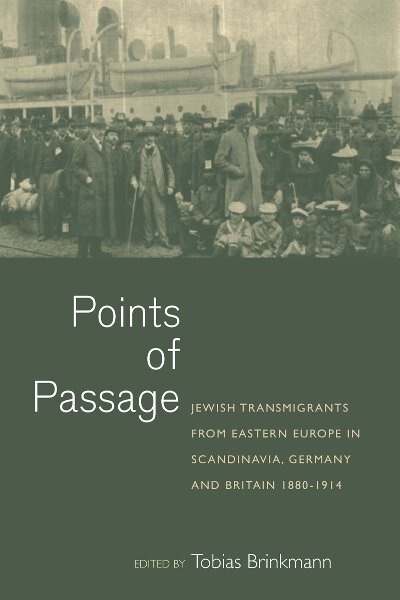
In Points of Passage: Jewish Migrants from Eastern Europe in Scandinavia, Germany, and Britain 1880-1914, published last October, contributors reveal some of the less-savory aspects of immigration (of which there were many). Following, in an excerpt from the newly published volume, editor Tobias Brinkmann gives two examples of passengers enduring misery before arriving on the supposed paradise of North American soil. This is the second entry about the book; read the former here.
_______________________________________

The essay collection “Points of Passage” seeks to shift attention from the well-known success story of Jewish immigration in the United States to the journey. On which paths did Jewish (and other) migrants travel from Eastern Europe to the ports on the North Sea and across the Atlantic between the 1880s and the 1920s, and which obstacles did they face? Researching the paths of migration can be much more challenging than studying immigration.

Continue reading “Storms, Sickness, Suspicions: The Darker Side of Migration”

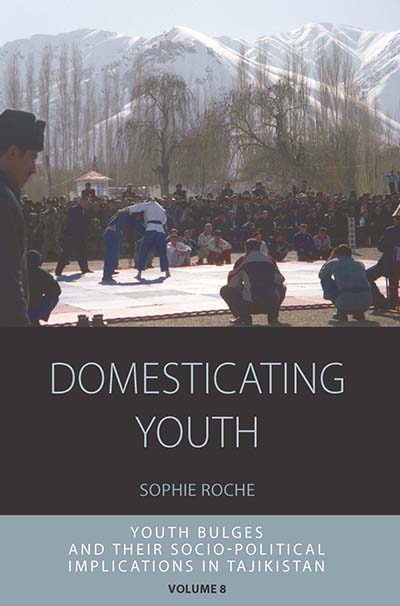
‘Youth Bulge’ and Social Change in Tajikistan

It is common for a society’s population to grow exponentially after a war. In the U.S., the best example of this “youth bulge” is the population of post-World War II “Baby Boomers.” In her soon-to-be-released volume, Domesticating Youth: Youth Bulges and their Socio-political Implications in Tajikistan, Sophie Roche explores this phenomenon in post-civil war Tajikistan and what its implications may be. Following, the author reflects on her fieldwork, and shares how it felt to return to her site after a decade of absence.


_____________________________________________


With an ethnographic book a story is out in the world that has been documented for a while but that does not stop with the last page but continues to develop. Often after reading an ethnographic study I wonder what happened to the actors in the book, some of whom we are introduced very intimately; what happened to the place, the village, the authorities, the children? Where they really just living to be examples of a theory? How does the story of the people develop after the book?

Continue reading “‘Youth Bulge’ and Social Change in Tajikistan”

Egress and Ingress: Exploring ‘Points of Passage’

Ellis Island in New York City is a historically recognized entrance point for European migrants to the United States. But if this is so well-known, then why do we know so little about the points of departure? This is one of many research questions that informed the writing of Points of Passage: Jewish Migrants from Eastern Europe in Scandinavia, Germany, and Britain 1880-1914, published last October. Following, an excerpt from the volume — bookended by comments from editor Tobias Brinkmann — delves deeper into these queries.


 _________________________________________


When I began researching the history of Jewish migrations in the 1990s I concentrated on immigrants. I collected sources on the settlement of Jewish immigrants from small villages in the Central and Eastern European countryside in Chicago between 1840 and 1900. Within a few years the immigrants built a Jewish community, prospered economically and became respected members of Chicago’s social and political circles. My first book concentrated on two major research questions that continue to drive immigration studies: the impact of forces strengthening or weakening ethnic communities, and the impact of assimilation processes on immigrants.

Continue reading “Egress and Ingress: Exploring ‘Points of Passage’”

The Reciprocal Relationship of Media and Movement

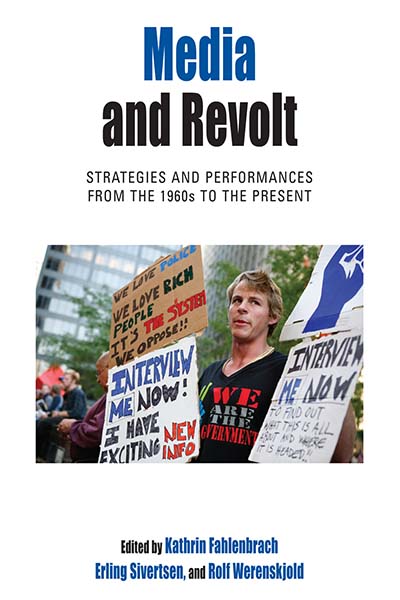
Editors Kathrin Fahlenbrach, Erling Sivertsen and Rolf Werenskjold’s volume Media and Revolt: Strategies and Performances from the 1960s to the Present was published last month. Following, the editors introduce the timely volume and share an excerpt from the Introduction. 


__________________________________________________


Looking at journals, television, or on the internet in these days, news dealing with protests abounds: the upheavals around the Euro-Maidan in the Ukraine, anti-governmental protests in Bangkok, the “Occupy-Gezi-Park”-manifestations in Istanbul or protest actions of NGOs like Greenpeace against oil companies or whale hunters. Obviously protest has an enormous “news value”: it offers spectacular pictures, it makes evident political conflicts and decisions by polarizing their actors, and it offers media the chance to perform as center of society.

Continue reading “The Reciprocal Relationship of Media and Movement”

Variations on an Educational Theme

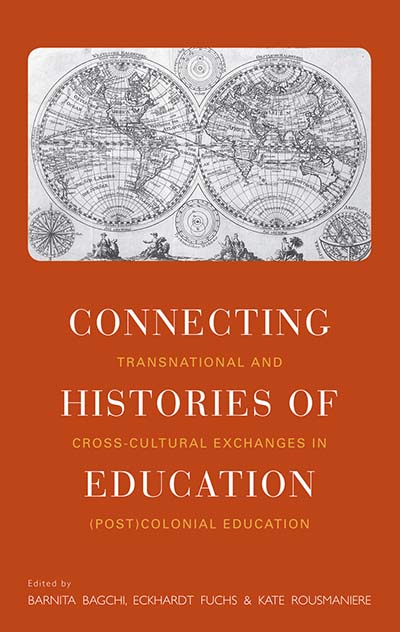
When the traditional educational system of colonizing societies was disseminated to indigenous societies, it was not accepted by the colonized “as-is,” but was adopted as merely an underlying framework. This hybridization led to a multitude of varied, yet similar, educational systems across the post-imperialized world. In the following excerpt from the Introduction of Connecting Histories of Education: Transnational and Cross-Cultural Exchanges in (Post)Colonial Education, to be published this month, editors Barnita Bagchi, Eckhardt Fuchs and Kate Rousmaniere further explain the connections within modern educational culture.


______________________________

Connecting Histories of Education bears a double meaning. The volume connects historians of education from South Asia and other parts of the world to enhance a comparative perspective and create a wider research network beyond the Euro-Western world. In addition, it presents local, regional, national and transnational research, with the goal of highlighting the interconnectedness of histories of education in the modern world.

Continue reading “Variations on an Educational Theme”