Anthropology in Action is now Open Access

We are delighted to announce that Anthropology in Action (AiA) will be published as an open access journal as of 2018. Thanks to the generous support that we have received from a global network of libraries as part of the Knowledge Unlatched Select programme, there are no submission charges or article-processing charges (APCs) for authors of articles published under this arrangement. The initial funding is for three years (2018–2020), and during this time we will also make the backfiles of the journal freely available. This is an exciting moment not just for the journal but for its authors, as it offers them a great opportunity to further enhance the reach of their articles. We greatly appreciate the support of Knowledge Unlatched and its Title Selection Committee in choosing AiA and would like to express our thanks to the supporting institutions whose collective resources have removed the financial burden of open access from the journal’s authors.

There are many benefits to open access, especially for a journal like AiA, whose applied approach to anthropology finds resonance in many fields outside of anthropology, where access to anthropology resources may be limited. Yet, despite the proliferation of open access mandates for research, sustainable open access models remain a challenge and ultimately a barrier for many scholars. This is especially the case for many of our authors, for whom access to APC funds are limited, as is often the case for research funding in general across the social sciences and the humanities. Therefore, we are encouraged by the collaborative efforts driven by Knowledge Unlatched, which brings together libraries to pool their resources to fund the books and journals they feel merit their support. To be selected by a community of respected scholarly librarians is a testament to the mission of AiA, and we are very pleased about the benefit that this programme will bring to our authors.

We anticipate that the open access benefit of this programme will be very attractive to many authors, and the Editors encourage you to submit your contributions accordingly for publication consideration. However, while the move to open access changes the form of distribution of the articles published starting this year, there is no change to the submission process, which will continue to be handled through our traditional route as outlined on the ‘Info for Authors’ tab on the AiA website, where you can find guidelines and instructions. Articles must be just as relevant to our remit and scope as before, and will continue to undergo the same thorough peer-review process that has long been established for our selection process. No preferential treatment or scheduling will be given to anyone for whom open access is a condition.

We look forward to continuing to bring our readers articles that foster the broader application of anthropological approaches to practical problems, now with further opportunities for the interdisciplinary exchange of research within and outside of academia that AiA advocates thanks to open access.


Christine McCourt & Berghahn Books

April 2018


Visit Berghahn Books at LASA Conference


We are delighted to inform you that we will be present at the Latin American Studies Association Conference in Barcelona, Spain, May 23-26, 2018. Please stop by our table to browse the latest selection of books at discounted prices & pick up some free journal samples.


If you are unable to attend, we would like to provide you with a special discount offer. For the next 30 days, receive a 25% discount on all titles listed below. At checkout, simply enter the discount code LASA18


Visit our website­ to browse our newly published interactive online Latin American Studies Catalog or use the new enhanced subject searching features­ for a complete listing of all published and forthcoming titles.


Continue reading “Visit Berghahn Books at LASA Conference”

1968: Looking on 50 Years Later


The year 1968 brought a wave of anti-authoritarian political activity across Europe and beyond which may have been seen as a decisive turning point in the Western world. The protests and social movements of 1968 comprised a worldwide escalation of social and political conflicts and marked the climax of protests that simultaneously captured most industrialized Western countries.
Here, we gather a short reading list of titles that explore the effects of these protest movements on the political, social, and symbolic order of the societies they called into question:


Continue reading “1968: Looking on 50 Years Later”

Changes in the Uses and Meanings of Money

By Smoki Musaraj and Ivan Small


How we think about and what we think of as money is constantly changing. And in many cases, those changes are driven in locales that are not necessarily centers of global capital. Consider for the instance of the relatively recent introduction of “mobile money”. In 2007, the Kenyan mobile network operator, Safaricom, launched a mobile payment service named M-Pesa. The service enabled people with no bank accounts (and no access to bank branches) to send and receive money via their mobile phone. By 2011, the service had enlisted 17 million subscribers; by 2014, it was estimated to have double the number of people using formal financial services in Kenya (from 30 percent in 2006 to 65 percent in 2014); in 2018, Google Play started accepting payments via M-Pesa for apps bought online in Kenya. M-Pesa is routinely cast as a technological innovation from the postcolonial South that is ushering in a new wave of financial exclusion for the so-called “unbanked.” Over the last decade, leading international organizations such as The World Bank, government agencies such as USAID, industry trade bodies such as GSMA, and private philanthropic foundations such as the Bill and Melinda Gates Foundation and Mastercard Foundation have embraced (and are heavily investing in) mobile money and other electronic and digital financial instruments for the purpose of financial inclusion. The proliferation of mobile money in the global South and its embrace as a quick-fix to financial inclusion raises a number of questions of interest to scholars and policymakers of money and development: How, if at all, do new forms of money impact people’s everyday financial lives? How do these technologies intersect with other financial repertoires as well as other socio-cultural institutions? How do these technologies of financial inclusion shape the global politics and geographies of difference and inequality?


Continue reading “Changes in the Uses and Meanings of Money”

Armenian Genocide Remembrance Day

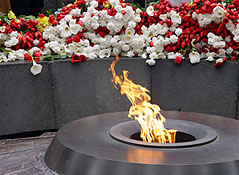
Photo by K.VrtanesyanApril 24 marks the 103rd anniversary of the Armenian Genocide.  Armenian Genocide Remembrance Day is held annually to recognize and mourn more than 1.5 million victims of the Armenian Genocide, the most tragic element of Armenian history.
For a limited time, take advantage of a special 25% discount off all of our War and Genocide Series titles by entering the code WG18 in your shopping cart.
For more information on Armenian Genocide please visit armenian-genocide.org.
In recognizing the significance of the occasion we would like to bring to your attention a range of Armenian Genocide titles, including our War and Genocide Series, which reflects a growing interest in the study of war and genocide within the framework of social and cultural history.  Continue reading “Armenian Genocide Remembrance Day”

International Day for Monuments and Sites

Logo18avril OK2i


Celebrated yearly on April 18th, the International Day for Monuments and Sites  encourages local communities and individuals throughout the world to consider the importance of cultural heritage to their lives and to promote awareness of its diversity and vulnerability and the efforts required to protect and conserve it. Sharing stories through heritage sites is a way to transfer knowledge between generations which is a crucial step in cultural development, characterizing the human experience since time immemorial.

For more information on ICOMOS (International Council on Monuments and Sites) and IDMS 2018 please visit www.icomos.org


In joining the celebration Berghahn is pleased to offer 25% discount, valid for next 30 days, on relevant History & Museum Studies titles. At checkout, simply enter the code IDMS18.


Continue reading “International Day for Monuments and Sites”

World Health Day

Image result for universal health care symbolWorld Health Day is annually held on April 7, under the sponsorship of the World Health Organization (WHO), to mark WHO’s founding, and is seen as an opportunity by the organization to draw worldwide attention to a subject of major importance to global health each year. For more information and this year’s theme please visit WHO webpage.

In recognition of the day Berghahn would like to showcase a range of related titles, delivering scholarly, informed opinion. Valid through May 7th, we are pleased to offer a 25% discount on any of our Medical Anthropology titles ordered directly through Berghahn webpage. At checkout, simply enter the code WHD18.

Please note that all the titles listed below are also available as ebooks. More information is available here.


Continue reading “World Health Day”