Migration: A World on the Move

On this day, November 12, 1954, Ellis Island, the gateway to America, shut it doors after processing more than 12 million immigrants since opening in 1892. Today, an estimated 40 percent of all Americans can trace their roots through Ellis Island, located in New York Harbor off the New Jersey coast.

United Nations has estimated that more people than ever are living abroad. In 2013, 232 million people, or 3.2 percent of the world’s population, were international migrants, compared with 175 million in 2000 and 154 million in 1990. The magnitude and complexity of international migration makes it an important force in development and a high-priority issue for both developing and developed countries.


———————————————————————————————————————————–

Browse some of Berghahn relevant titles on Refugee & Migration Studies:


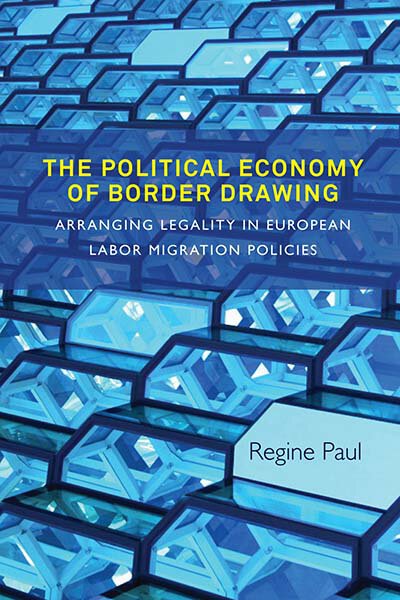
THE POLITICAL ECONOMY OF BORDER DRAWING
Arranging Legality in European Labor Migration Policies
Regine Paul

Continue reading “Migration: A World on the Move”

25th Anniversary of the Fall of the Wall

From 1961 to 1989, the city of Berlin was divided by the most visible sign of the Cold War: a wall more than 140km (87 miles) long. On 9 November 1989, East German authorities announced they would allow free access between east and west Berlin. Crowds of euphoric East Germans crossed and climbed on to the wall, leading to a reunited Germany.


Berlin is marking the 25th anniversary of the fall of the wall by “rebuilding” it with glowing white balloons. Some 8,000 illuminated helium balloons will trace a 15km-long section of the wall, snaking around the city, for just one weekend (7 to 9 November). The installation will come to an end on the evening of 9 November, when volunteers will release the balloons and set them free, soaring into the night sky to the strains of Beethoven’s 9th Symphony, played by the European Youth Orchestra. The balloons are made out of a biodegradable material so will not harm the environment. For a full story and more information on the event please visit ibtimes.co.uk


———————————————————————————————————

Browse Berghahn relevant titles:
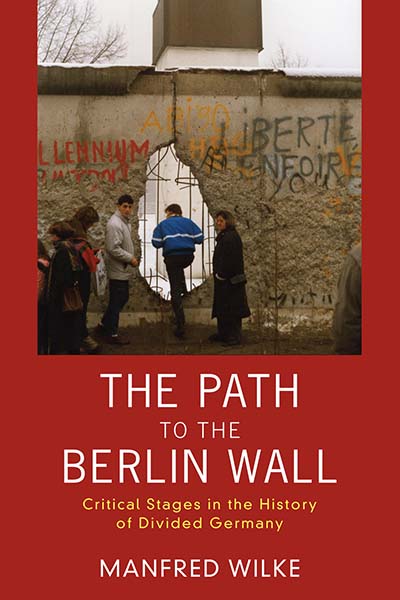
 

THE PATH TO THE BERLIN WALL
Critical Stages in the History of Divided Germany
Manfred Wilke
Translated from the German by Sophie Perl

Continue reading “25th Anniversary of the Fall of the Wall”

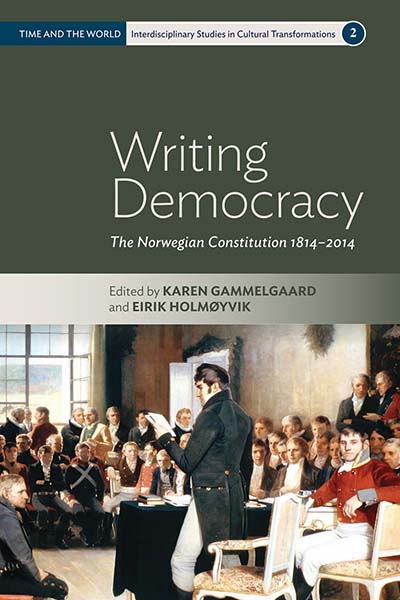
The Norwegian Constitution, A ‘Living Document’


When it was signed May 17, 1814, the Constitution of Norway was considered one of the most radical Constitutions of the day. To celebrate the 200th year since it was first enacted, editors Karen Gammelgaard and Eirik Holmøyvik and their contributors have written a collection of historical accounts about the document. Their book Writing Democracy: The Norwegian Constitution 1814-2014 was published this month. Following, the editors provide more information about the history of this guiding document as well as the history of the volume.


What drew you to the study of the Norwegian Constitution?


For researchers in Norway it has been impossible not to be drawn to the Norwegian Constitution these last few years due to the bicentenary in 2014.

Continue reading “The Norwegian Constitution, A ‘Living Document’”

“When I read Machiavelli, Marx rang true”

The below is a special guest post written by Manjeet Ramgotra, contributor to Theoria, Issue 139, and author of ‘Conservative Roots of Republicanism.’


My article “Conservative Roots of Republicanism” is a result of research I conducted for my PhD.  Initially, I had begun to work on Rousseau.  I developed a critique of Pocock’s understanding of republicanism as antithetical to liberalism founded on a discourse of rights and the social contract.  I contended that as Rousseau combines republicanism, rights and the social contract, that Pocock’s view must be ill-founded.  As I began to work on Rousseau and a critique of Pocock’s Machiavellian Moment, my advisers recommended that I read Montesquieu who influenced Rousseau and Machiavelli, the central character of Pocock’s work.  I included these thinkers in my study and was further advised to examine Cicero.  On reading works of Cicero, I realized that although all individuals can promote the public good, not all participate on an equal basis in the political realm.  In fact, the people participate only on a partial basis to protect their freedom to live in security from the arbitrary domination of the nobility.  On reading Machiavelli’s Discourses, it became clear that the class struggle between the nobles (the haves) and the people (the have-nots) was essential to his republicanism.  In fact the unequal participation of each class to protect its own interests – political authority and control for the nobles and political liberty or the freedom to live in security and without fear of arbitrary domination for the people – made Marx’s claim that history is about the struggle between social classes ring true.  However, I did not adopt a structuralist or a Marxist approach; rather much of my argument is a result of exegetical and contextual analysis. Continue reading ““When I read Machiavelli, Marx rang true””

Mes de la Herencia Hispana

September 15th – October 15th is Hispanic Heritage Month which celebrates the histories, the heritage, the cultures and contributions made by Hispanic and Latino Americans to the United States.


September 15th was chosen as a starting point for the celebration because it is the anniversary of independence for Latin American countries Costa Rica, El Salvador, Guatemala, Honduras and Nicaragua. In addition, Mexico and Chile celebrate their independence days on September 16 and September 18, respectively.

——————————————————————————————————————–

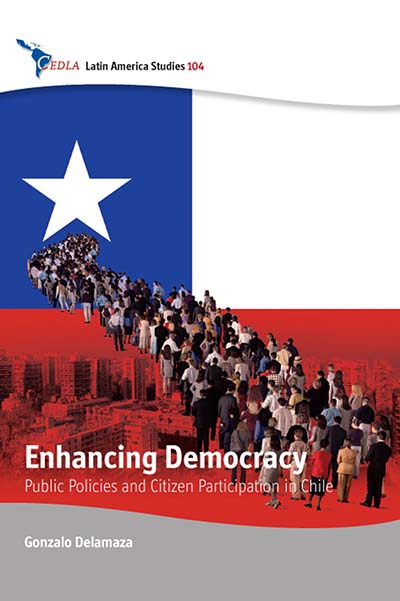
Berghahn is delighted to highlight the CEDLA Latin America Studies Series published in Association with the Centre for Latin American Research and Documentation. CEDLA is an inter-university centre for research and documentation on Latin America whose series represents the results of original research on Latin America in the field of the Social Sciences, understood in a broad sense to include History, Economics and Geography.


Volume 104 Forthcoming in November 2014!
ENHANCING DEMOCRACY
Public Policies and Citizen Participation in Chile
Gonzalo Delamaza
Continue reading “Mes de la Herencia Hispana”

Celebrate International Day of Democracy with Berghahn Journals!

Democratic Theory

Dear Colleague,

In honor of the International Day of Democracy on September 15th, and to celebrate the recent publication of our newest journal Democratic Theory, we have compiled a list of articles on the topic of democracy and democratic issues. You may also view the table of contents for the forthcoming issue of Democratic Theory here. We hope you enjoy.

–Berghahn Journals

On Democracy:
Democratic Theory, Volume 1, Number 1


Regions & Cohesion, Volume 3, Number 1
 
Italian Politics, Volume 28, Number 1
 
 
French Politics, Culture & Society, Volume 26, Number 2
 
Theoria, Volume 58, Number 127
 
Learning and Teaching, Volume 2, Number 3
 
Asia Pacific World, Volume 2, Number 1
 
Sartre Studies International, Volume 11, Numbers 1-2
 
German Politics & Society, Volume 25, Number 2
 
French Politics, Culture & Society, Volume 20, Number 3
 
Nature and Culture, Volume 1, Number 2
 
Social Analysis, Volume 50, Number 1

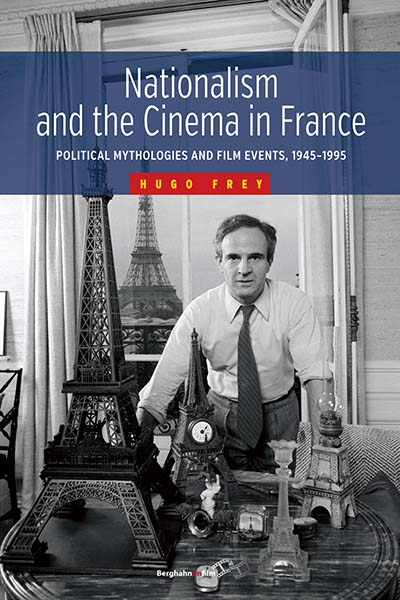
The Political Backdrop of French Film

Fifty years of French cinema get their close-up in Hugo Frey’s Nationalism and the Cinema in France: Political Mythologies and Film Events, 1945-1995, published in July. Following, the author offers readers a new angle on the volume, which is itself a fresh perspective on French film against a nationalistic backdrop.


____________________________


Why did you write this book? What were your original aims?


The motivations for undertaking this research are complicated and now date from some time ago. Having written a study of the director Louis Malle (2004), I wanted to continue to develop my knowledge of French cinema, while still connecting to my other interests in national historiography and the collective memory of the Vichy period. However, I did not want to work on a conventional book about either ‘great French films of recent times’ or indeed something that just rehashed familiar debates already presented in titles such as Henry Rousso’s The Vichy Syndrome.

Continue reading “The Political Backdrop of French Film”

Simulated Shelves: Browse August’s New Books

We are delighted to present a selection of our newly published, and soon to be published, August titles from our core subjects of Anthropology, Environmental Studies, Film Studies, History and Politics, along with a selection of our New in Paperback titles.

———————————————————————————————————


BLOOD AND FIRE
Toward a Global Anthropology of Labor
Edited by Sharryn Kasmir and August Carbonella

Volume 13, Dislocations Series


Continue reading “Simulated Shelves: Browse August’s New Books”

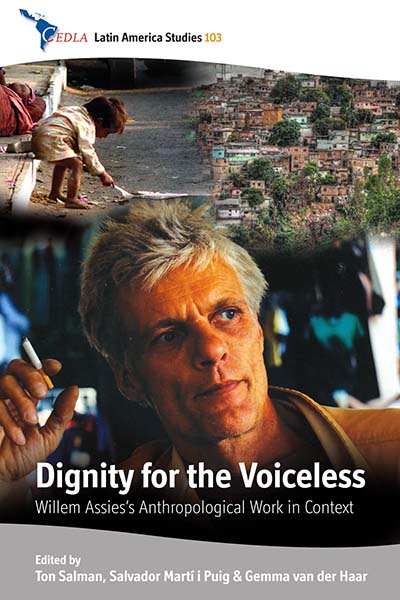
Giving a Voice: Sharing Work of the Late Willem Assies

Renowned Dutch anthropologist Willem Assies’ lifework was a study of Latin American politics. Up to his unexpected death in 2010, Assies had made strides in bringing awareness to the situations of the downtrodden, those considered “voiceless.” In Dignity for the Voiceless: Willem Assies’s Anthropological Work in Context, editors Ton Salman, Salvador Marti i Puig, and Gemma van der Haar have given the political anthropologist his own voice once again. Following, the editors provide further insight into their recently published volume.


____________________________________


In 2010, Willem Assies, an astute and prolific Latin Americanist and political anthropologist, died unexpectedly, at the age of 55. The book launched today brings together some of his finest writing. Assies would always gave central stage to the collective and multi-layered actor and not the system — but he would constantly do so within the context of restrictions, pressures, conditioning factors and contradictions, to provide the actor with a real setting of operation.

Continue reading “Giving a Voice: Sharing Work of the Late Willem Assies”