Tracing the Path Toward and Away From Genocide

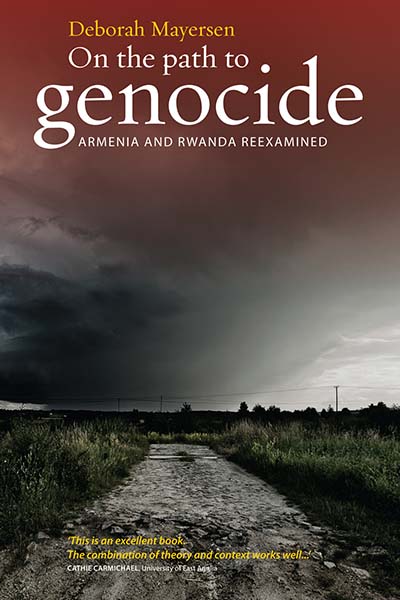
How and why does genocide occur, and how can we identify these warning signs to prevent it in the future? In On the Path to Genocide: Armenia and Rwanda Reexamined, Deborah Mayersen looks to conflicts in 1915 Turkey and 1994 Rwanda to answer these difficult questions. Following, the author explains the path to her study of genocide, traces her steps to the book, and points to where her research will take her in the future.


__________________________________________
 

Berghahn Books: What attracted you to study the genocide of Armenian and Rwandan peoples?


Deborah Mayersen: As a school student, I learned about the Holocaust and the international promise of ‘Never Again’ in its wake. Yet at University, I learned about the betrayal of this promise, with the genocides in Cambodia and Rwanda for example. I wanted to understand more about the history of genocide, and why it has become so prevalent in the modern world. This led me to examine in greater detail these two genocides, at the opening and closing of the twentieth century.

Continue reading “Tracing the Path Toward and Away From Genocide”
Conception to Delivery: Sharing an Account of Mizrahi Mothers

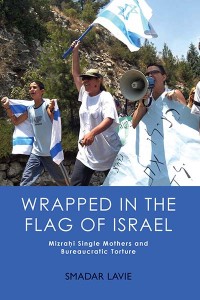
Smadar Lavie’s soon-to-be-published book Wrapped in the Flag of Israel: Mizrahi Single Mothers and Bureaucratic Torture is a personally inspired account that  stems from her own life as a single mother in Israel. Following, the author reveals how this inspiration became a book, and speculates about how this account will be received. This is the second of the author’s reflections on the Berghahn blog, read the first here.


_________________________________


http://berghahnbooks.com/blog/wp-content/uploads/2014/04/LavieWrapped-e1397829882448.jpgBerghahn Books: What inspired your love of your subject? When?
 

Smadar Lavie: My years in Israel as a welfare mother forced me to become my own informant. Those years were full of hardship. I am using the privilege of my U. C. Berkeley education and the power and proficiency of my English words to call attention to the plight of all Mizrahi single mothers in the State of Israel.

Continue reading “Conception to Delivery: Sharing an Account of Mizrahi Mothers”

Transnational Ahead of Its Time: Author Examines Council of Women

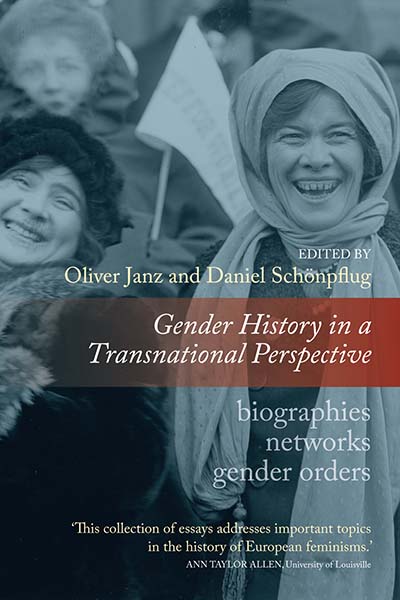
National borders are broken down in Oliver Janz and Daniel Schönpflug’s soon-to-be-released collection Gender History in a Transnational Perspective: Networks, Biographies, Gender Orders. The contributors examine historic cross-continent networks of European feminists. Following a short introduction from the author is a excerpt from Karen Offen’s chapter, in which the author examines the International Council of Women, which she considers “transnational” before the term was coined.

____________________________________


Karen Offen introduces this first part of the volume with reflections on a fundamental question: Can the category “transnational” be applied to the early international women’s movement, even though its representatives did not yet employ the term.


Historical scholarship is pressed to justify anachronistic terminology. It seems, though, that its use is often unavoidable, since historians’ implicit and explicit questions about the past always stem from their own present. Also, from a theoretical and methodological point of view, employing anachronistic terms allows for clearer analytical terminology as the linguistic horizon of the contemporaries is often ambivalent, contradictory and multifold. 

Continue reading “Transnational Ahead of Its Time: Author Examines Council of Women”

A Lived Journey: Tracing ‘The Path to the Berlin Wall’

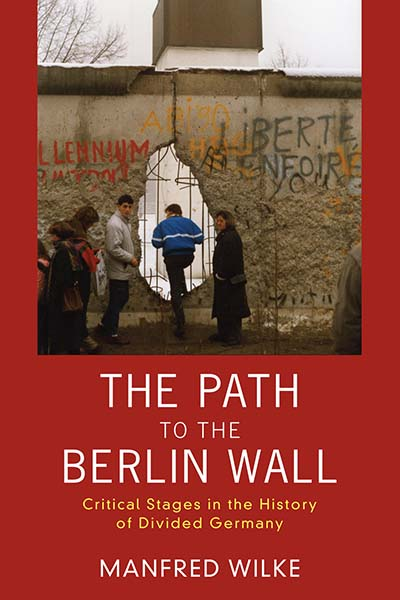
The Berlin Wall may have been erected in 1961, but the figurative foundation was laid in 1945, as the Soviet Union’s Communist Party and its allies made selections of their areas of influence. In The Path to the Berlin Wall: Critical Stages in the History of Divided Germany, author Manfred Wilke traces the events that led to the eventual construction of the Berliner Mauer. Wilke’s original volume was translated from German into English by Sophie Perl. Following is Perl’s interview with the author about his book.

Continue reading “A Lived Journey: Tracing ‘The Path to the Berlin Wall’”

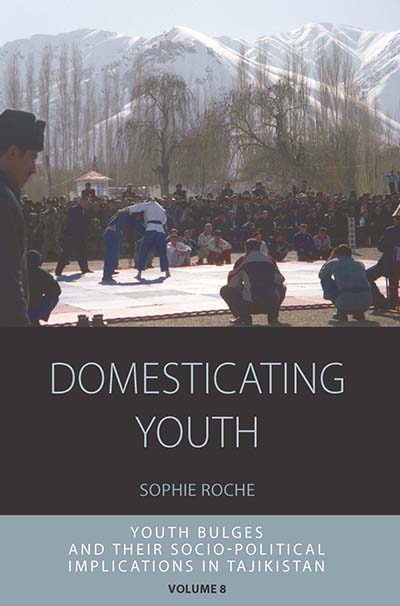
A Look through the Lens at ‘Domesticating Youth’


Sophie Roche’s volume Domesticating Youth: Youth Bulges and their Socio-political Implications in Tajikistan, published last month, is the fruit of her ethnographic labor in the post-Soviet republic of Tajikistan. During her fieldwork in the first decade of the 21st century, the country was in a state of transition following its civil war in the 1990s and subsequent population growth. In an earlier post, which can be read here, the author wrote of her study within the country — specifically how it changed after she left. Following she returns to her story of the country — this time through photos from her fieldwork in three locations within Tajikistan: Jirgatol, Shahritus, and Shahrigul.

Continue reading “A Look through the Lens at ‘Domesticating Youth’”

Doubly Disenfranchised: A Firsthand Account of Life as a Mizrahi Woman

The largest population of Mizrahi Jews, those with origins in Middle Eastern countries, lives in Israel. However, in this country Mizrahim are historically and currently disenfranchised, with preference given to Jews of European descent, or Ashkenazi. In Wrapped in the Flag of Israel: Mizrahi Single Mothers and Bureaucratic Torture, to be published this month, Smadar Lavie, herself a Mizrahi Jewish woman, explores the Israeli bureaucratic system and Mizrahi women’s relationship with it. Following, the author answers the question: What aspect of writing Wrapped in the Flag of Israel did you find most challenging? Most rewarding?


_____________________________________


Most challenging was weaving a text out of two decades worth of fieldwork data. Though I started my research efforts in 1990 as a tenured professor at U. C. Davis, the bulk of the fieldwork was collected during my years as a Mizrahi single mother on welfare between 1999-2007. For a typical book-length ethnography, most scholars spend a total of around two years in the field collecting data, supported by grants and sabbaticals. Afterward, they return to their home university and write the book manuscript, also supported by grants and sabbaticals.

Continue reading “Doubly Disenfranchised: A Firsthand Account of Life as a Mizrahi Woman”

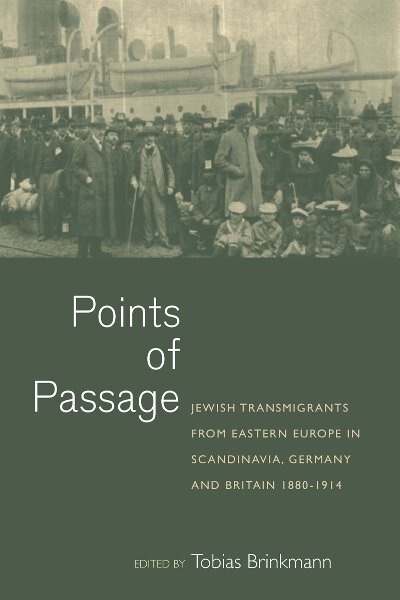
Storms, Sickness, Suspicions: The Darker Side of Migration

In Points of Passage: Jewish Migrants from Eastern Europe in Scandinavia, Germany, and Britain 1880-1914, published last October, contributors reveal some of the less-savory aspects of immigration (of which there were many). Following, in an excerpt from the newly published volume, editor Tobias Brinkmann gives two examples of passengers enduring misery before arriving on the supposed paradise of North American soil. This is the second entry about the book; read the former here.
_______________________________________

The essay collection “Points of Passage” seeks to shift attention from the well-known success story of Jewish immigration in the United States to the journey. On which paths did Jewish (and other) migrants travel from Eastern Europe to the ports on the North Sea and across the Atlantic between the 1880s and the 1920s, and which obstacles did they face? Researching the paths of migration can be much more challenging than studying immigration.

Continue reading “Storms, Sickness, Suspicions: The Darker Side of Migration”

‘Youth Bulge’ and Social Change in Tajikistan

It is common for a society’s population to grow exponentially after a war. In the U.S., the best example of this “youth bulge” is the population of post-World War II “Baby Boomers.” In her soon-to-be-released volume, Domesticating Youth: Youth Bulges and their Socio-political Implications in Tajikistan, Sophie Roche explores this phenomenon in post-civil war Tajikistan and what its implications may be. Following, the author reflects on her fieldwork, and shares how it felt to return to her site after a decade of absence.


_____________________________________________


With an ethnographic book a story is out in the world that has been documented for a while but that does not stop with the last page but continues to develop. Often after reading an ethnographic study I wonder what happened to the actors in the book, some of whom we are introduced very intimately; what happened to the place, the village, the authorities, the children? Where they really just living to be examples of a theory? How does the story of the people develop after the book?

Continue reading “‘Youth Bulge’ and Social Change in Tajikistan”

The Ethical Sequence of Eugenics?

If you could modify the human population to be more intelligent or more beautiful, would you? When this idea of eugenics — or selectively breeding a population with more “desirable” traits — was first popularized in the twentieth century, such contemporary figures as Winston Churchill, Theodore Roosevelt, H.G. Wells, and, not surprisingly, Adolf Hitler, were supporters. Now, with renewed interest in the science of eugenics, editors Calum MacKellar and Christopher Bechtel explore the unsavory aspects and issues in The Ethics of the New Eugenics, to be published this month. Following, the editors explain what led them to study this science, and what may be ahead for the field.


___________________________________________


What drew you to the study of eugenics?


Calum MacKellar: Over the many years that I have worked in the field of human bioethics, I have always suspected that the topic of eugenics would eventually come back to haunt society.

Continue reading “The Ethical Sequence of Eugenics?”

The Author and Ingmar Bergman: Two Legacies Endure

John Orr’s proposal for a text on Swedish director Ingmar Bergman first came to Berghahn in 2009. In September 2010, however, the prominent film scholar passed away with a manuscript in peer review. It was Professor Orr’s wife, Anne, who took up the finalization of the book, shepherding it through stages of review, revision and production to its publication. Now, this month, The Demons of Modernity: Ingmar Bergman and European Cinema will be published. Following, Anne Orr, who wrote about her experience in the volume’s Afterword, briefly introduces the book and what it meant to help bring it to fruition.


_____________________________________

When my husband John Orr died suddenly during the writing of The Demons of Modernity, it was comforting to be assured by two of the foremost experts on Ingmar Bergman – Peter Cowie and Maaret Koskinen – that they considered the manuscript as it stood an original and worthwhile contribution to studies of Bergman.

Continue reading “The Author and Ingmar Bergman: Two Legacies Endure”