Hot Off the Presses: New Journal Releases from Berghahn


Nature and Culture
Volume 8, Issue 1, Spring 2013
Special Symposium on Nature, Science, and Politics, or: Policy Assessment to Promote Sustainable Development, focusing on better understanding science-policy interaction and conducting policy assessments that are supportive of sustainable development.

Anthropology of the Middle East
Volume 7, Issue 2, Winter 2012
This issue includes articles on rituals of healing and mourning, on marriage, and on the significance of hair as an application of religious law in Judaism.

Nomadic Peoples
Volume 16, Issue 2, Winter 2012
The three research articles in this issue tell unorthodox stories of change and adaptation in West African livestock trade, pastoral and agropastoral groups in Niger, Mongolia pastoralists. The second half of the issue is dedicated to the Dana +10 conference held on 11–13 April 2012.

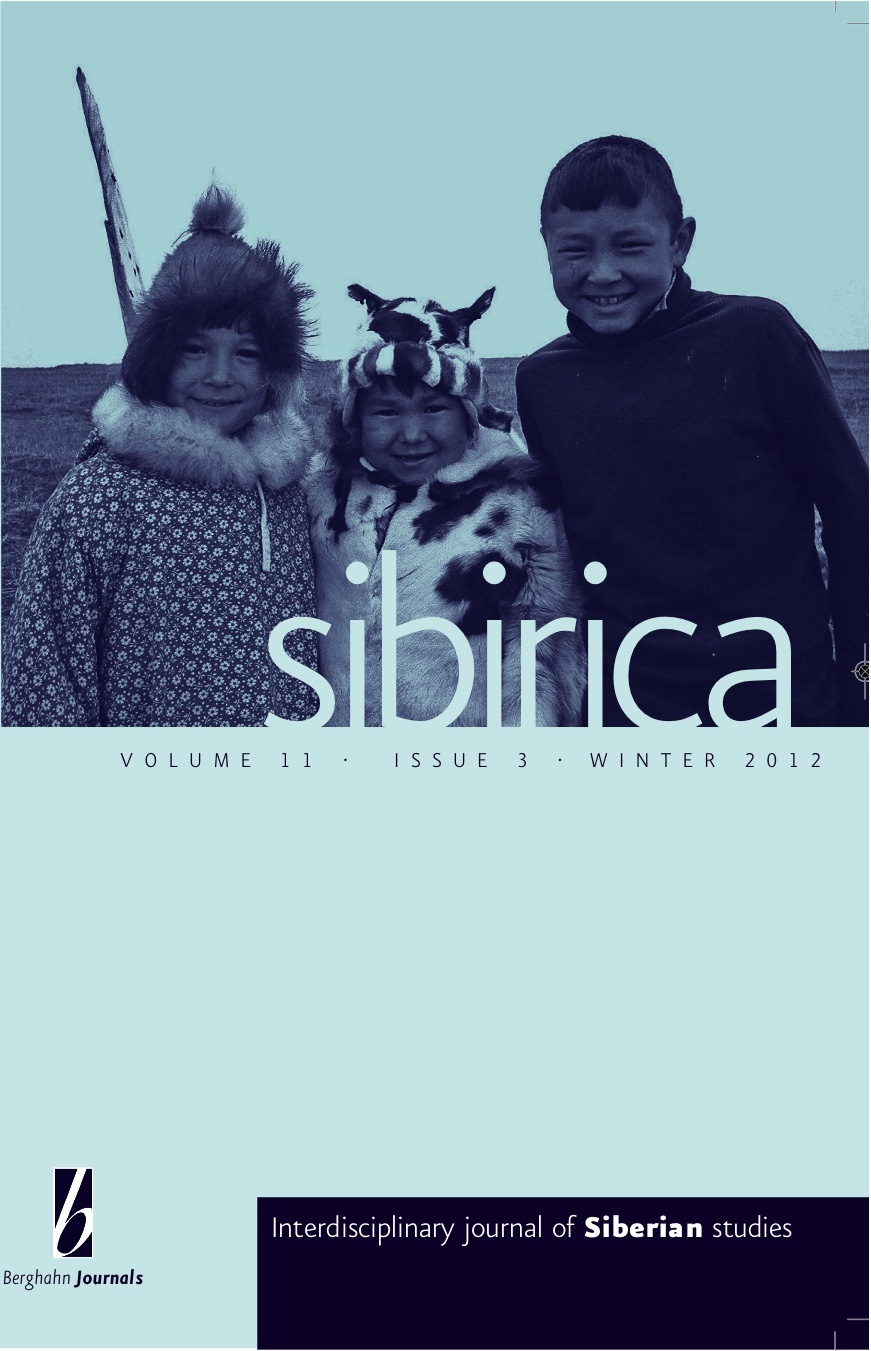
Sibirica
Volume 11, Issue 3, Winter 2012
With articles on alcoholism and suicide among the indigenous peoples of the Russian north, the tradition narratives of Chukotka and Kamchatka, and the new Arctic/Siberian Studies program at the European University at St. Petersburg, as well as book reviews.

A Conversation on Nature and Culture’s Latest Special Issue

The latest issue of Nature and Culture is a Special Symposium on “Nature, Science, and Politics, or: Policy Assessment to Promote Sustainable Development?” This post is a conversation between the issue’s Guest Editors, Sabine Weiland, Vivien Weiss, and John Turnpenny, on why this topic was selected.

The issue is currently available via Ingenta on the Nature and Culture website, here. Continue reading “A Conversation on Nature and Culture’s Latest Special Issue”

Hot Off the Presses: New Journal Releases from Berghahn

Anthropology in Action
Volume 19, Issue 3, Winter 2012
Special issue on Tourism and Applied Anthropology in Theory and Praxis, with articles on village tourism in Cyprus, hospitality in Laos, surf tourism in Costa Rica, and wine tourism in the Temecula Valley.

German Politics and Society
Volume 30, Issue 4, Winter 2012
With articles on “Freie Wähler” in the German political system, migrant interests in Germany, and fairy tale heroes and heroines in an East German Heimat; also featuring a forum on research performance in Germany, and several book reviews.

Girlhood Studies
Volume 5, Issue 2, Winter 2012
Celebrating the tenth issue and the First Annual Day of the Girl (October 11), with articles spanning girls’ aggression and use of violence, quality of life, use of the internet, and book reviews.

Journeys
Volume 13, Issue 2, Winter 2012
Focusing on the places or trails where traumatic or miraculous events took place, and on the significance and meaning people put in the act of walking to and around these sites.

Learning and Teaching
Volume 5, Issue 1, Spring 2012
Special Issue on “Towards and Anthropology of Anthropology: the socialization of aspiring anthropologists”, with articles focusing on the education of anthropologists.

Aspasia
Volume 6, 2012
Celebrating 100 Years of International Women’s Day, with articles focusing on Russia, the Polish lands, and Greece; a review of the book Frauentag! (Women’s Day!); and a report on recent IWD-related events in Ukraine, including two exhibitions.

Behind the Launch of Asia Pacific World with Chief Editor Malcolm J. M. Cooper

Back in 2009, a few faculty members at Ritsumeikan Asia Pacific University (located in Beppu, Oita, Japan), along with the university’s first president, considered that the often promoted concept in the early years of the 21st century of this being the “Asia Pacific Century” needed re-evaluation, not only with respect to possible scenarios for the years to come, but even of what was meant by the term “Asia Pacific.” Even though “Asia Pacific” was being used widely in the media and in academe to describe an emerging region, this usage was often (in fact, usually) imprecise and elusive, and tended to change over the years in line with changes in the global political economy. As we explored the idea of a new refereed journal that would provide a fresh look at the region and its evolving position in the world, one thing which became very clear to us was that the most useful and illuminating academic work on the region is nearly always multidisciplinary, drawing on a range of theories and methods. Analysis using a single narrowly-defined theoretical or methodological perspective is often both highly technical for the non-specialist and ignorant of a large part of the reality on the ground.


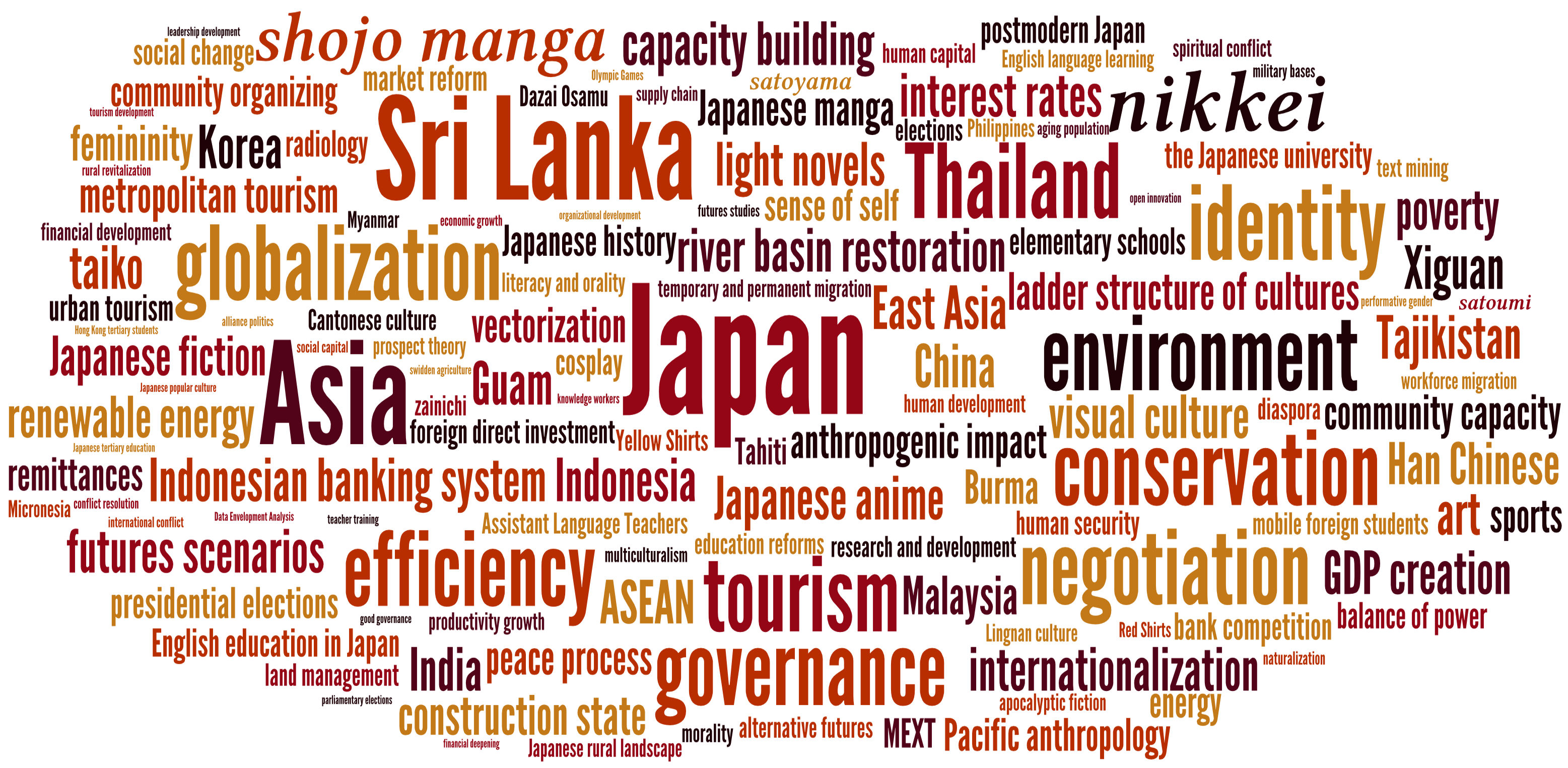
The result of our efforts was Asia Pacific World, a peer-reviewed, scholarly journal that focuses on the social, political, cultural and economic development of the Asia Pacific region.  One of the core reasons for launching Asia Pacific World was the hope of encouraging the publishing of interdisciplinary work accessible to a wide range of regional specialists, which in turn could provide comparative insights into the nature of the processes and changes taking place across the region as a whole. So far we have certainly published interdisciplinary and wide-ranging papers in our three volumes (six issues) to date. The following keyword cloud shows the topic distribution of the published papers. We continue to receive a steady stream of papers and a good response from potential reviewers.


You can receive Asia Pacific World through membership in its parent association: the International Association for Asia Pacific Studies (IAAPS). IAAPS aims to shape and promote Asia Pacific Studies. It focuses on the Asia Pacific from interdisciplinary perspectives, encompassing humanities, social and management sciences and natural sciences. IAAPS has held three annual conferences so far (from which some papers have been published in Asia Pacific World): two at Ritsumeikan Asia Pacific University and the most recent one in November 2012 at the Chinese University of Hong Kong. The 2013 conference will be held in Manila at De La Salle University.


We hope that the journal will provide the academic frame for our quest to redefine and understand the Asia Pacific in the next few years, and we encourage contributions from those reading this post with an interest in Asia Pacific studies.


Malcolm J. M. Cooper

Chief Editor, Asia Pacific World


For the most recent issues of Asia Pacific World, please visit the journal’s website: http://journals.berghahnbooks.com/apw/

The History of Sibirica from Associate Editor Alexander D. King

Alexander D. King served as Managing Editor of Sibirica for six years, and recently stepped into the role of Associate Editor in order to focus on his field research, which is being conducted in Kamchatka over the next ten months. In this post, he discusses the 30-year history of the journal as it moved from home to home and finally landed here at Berghahn, where it has been since 2006.


Sibirica is now finishing up its eleventh volume but it has existed for much longer than just 11 years. The journal started as an occasional publication of the papers from the British Universities Siberian Studies Seminar (BUSSS), which was a regular meeting of mostly historians and geographers starting in the 1980s. The very first issue is an unnumbered publication titled simply Sibirica, with the 1690 Siberian coat of arms and the subtitle British Universities Siberian Studies Seminar, Report of the second meeting held at the Scott Polar Research Institute, University of Cambridge, 15-16 April 1983. These earliest Sibiricas, published through 1989, were edited and produced by Alan Wood at Lancaster University. The production was a modest affair, appearing as a typescript on A5 format, photocopied with a staple binding in the spine.
Continue reading “The History of Sibirica from Associate Editor Alexander D. King”

Jonathan Magonet of European Judaism on the Past and Future of the Journal

For over 40 years, European Judaism has provided a voice for the postwar Jewish world in Europe. It has reflected the different realities of each country and helped to rebuild Jewish consciousness after the Holocaust. Jonathan Magonet took over as Editor in 2004. In this post, he details the foundation and evolution of the journal over its extensive history, as well as his visions for the future.


Given its title, European Judaism has to be as broad-based as its subject area. Every European country is different in history, language, culture and concerns, and the local Jewish community reflects all of these as well as its own particular experience and agenda. Yet across the European continent, there are also broader issues that have an impact on Jews, or to which Jews make significant contributions. How to reflect this complexity yet offer a (relatively) coherent voice has been the challenge faced by the editors over the journal’s now more than forty year history.

Continue reading “Jonathan Magonet of European Judaism on the Past and Future of the Journal”

Hot Off the Presses: New Journal Releases from Berghahn

New journal releases from Berghahn:

Environment and Society: Advances in Research
Volume 3, Number 1, 2012
The six papers in this issue attempt to clearly describe the contemporary relationship between capitalism and the environment by reviewing five distinct and important literatures in the social sciences.


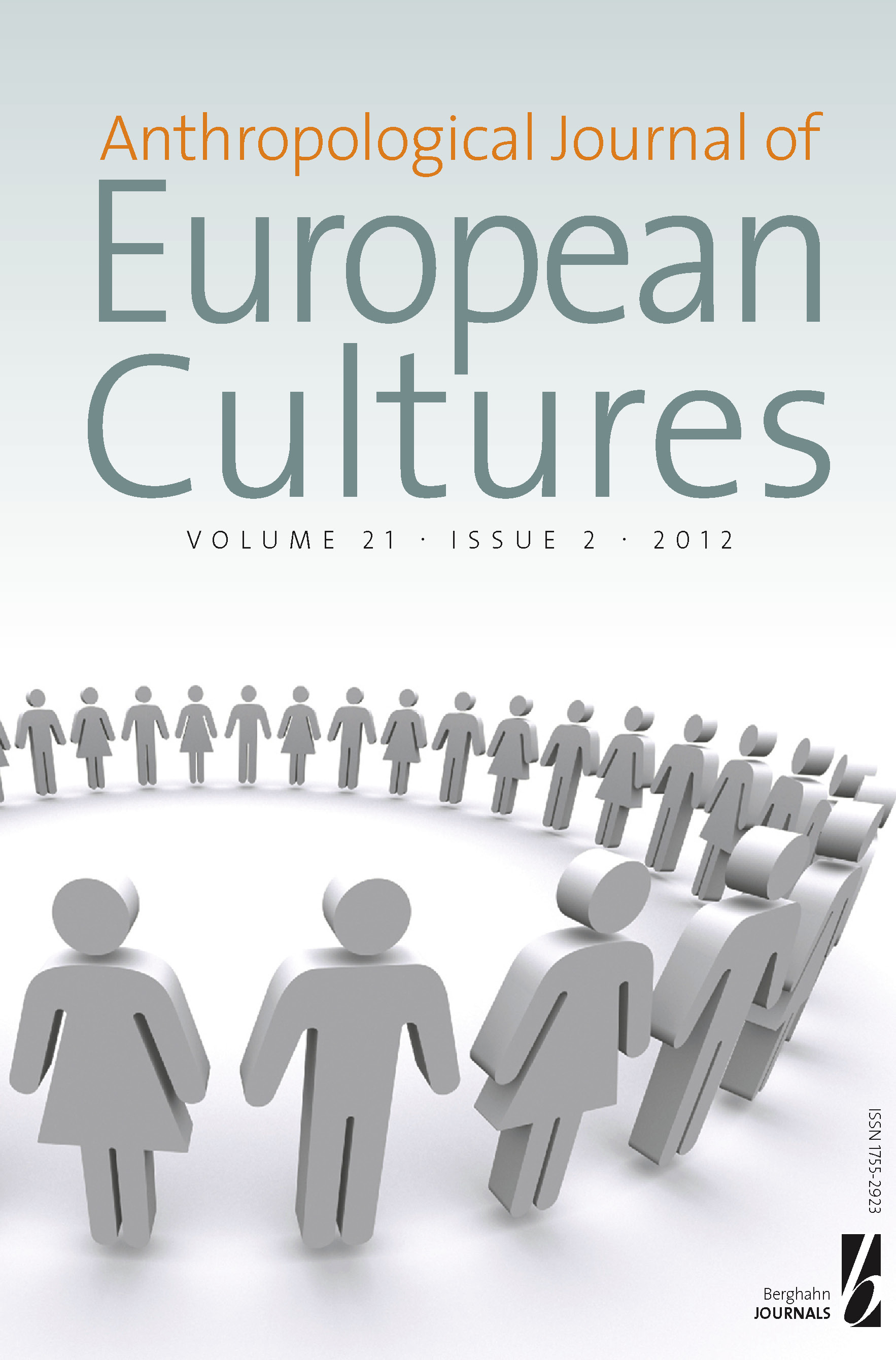
Anthropological Journal of European Cultures
Volume 21, Number 2, Autumn 2012
Celebrating and reflecting on 21 years of AJEC, with a Thematic Focus on “Europeanist Anthropology Beyond and Between”, as well as articles on Slovenia, Portugal, and Catalonia.


Cambridge Anthropology
Volume 30, Number 2, Autumn 2012
Including a special section on “Internal Others: Ethnographies of Naturalism”, with articles on a range of concrete empirical cases – from an international team of climate researchers working in Amazonia, to keepers in a Catalunyan chimpanzee sanctuary; from British ecologists studying earthworms, to behavioural scientists working in the Kalahari, and Guatemalan cooking schools specializing in Western style and taste.


Critical Survey
Volume 24, Number 3, Winter 2012
With articles on the ‘double-body of the sign’, the political engagement with modernity in Thomas Chatterton’s works, commemorating the 1916 Tercentenary of Shakespeare’s death, the history of the treadmill, and celebrity and politics in Gordon Burn’s Born Yesterday.


Durkheimian Studies
Volume 18, Number 1, Winter 2012
Featuring articles in English and French on the latest in Durkheimian scholarship, including Durkheim’s Lost Argument, Pragmatism and Sociology, ‘Dualism of Human Nature’, and understanding morality.


French Politics, Culture & Society
Volume 30, Number 3, Winter 2012
Special issue entitled “DOSSIER: The 2012 Elections in France”, also including an article on Franco-American cultures and a review essay on a film about Algerian independence.


Journal of Educational Media, Memory, and Society
Volume 4, Number 2, Summer 2012
Focusing on “Museums and the Educational Turn: History, Memory, Inclusivity”, this issue probes the claims of the new, purportedly inclusive and horizontal museologies, of catering for inclusive cultural citizenries and of empowering difference and encouraging empathy, in a variety of geographical and disciplinary settings.


Regions and Cohesion
Volume 2, Number 3, Winter 2012
With a special focus on the Arab Spring revolts and past uprisings, including articles on the history of revolts in the Middle East, perceptions of Arab revolts, the Syrian revolution, and the Israeli-Palestinian conflict.


Sartre Studies International
Volume 18, Number 2, Winter 2012
Featuring a theme section on Sartre and Theater, with articles on theatrical ambiguity, Sartre’s conception of theater, and the theatrical audience; also contains four short speeches by Sartre on the Peace Movement, and a piece about Sartre and Engels.


Social Analysis
Volume 56, Number 3, Winter 2012
Including articles on ‘Primitive Mentality’, Punu twin dancing, post-war Mostar, Bosnia, and Herzegovina, intergenerational relations, Agamben’s concept of ‘state of exception’, and the effect of geographic indication brands on jewelry production in Italy.

AJEC @ 21: Editor Ullrich Kockel Reflects on 21 Years of Scholarship

In the latest issue of the Anthropological Journal of European Cultures, Ullrich Kockel opens the discussion on the 21 years of AJEC‘s history with his own reflections:


“As I settle down to put together this issue, it occurs to me that the development of AJEC in its various phases displays an uncanny correspondence with my personal professional trajectory so far. Its inception and first volume happened during my postdoctoral fellowship when I was happy to place one of my first (coauthored) academic articles in its inaugural issue. The remainder of AJEC’s first approximate decade coincides with my time as a lecturer. At the time I took up my first chair, the format of AJEC changed, eventually turning it, for a while, into a Yearbook rather than a journal. And in the year I moved to my second chair, I was invited to take on the editorship of AJEC, which would now be published by Berghahn and returning to the format of two issues per year. This correspondence raises a curious question: What significant turning point for the journal will correspond with my own as I am becoming an emeritus professor?”


To continue reading a free PDF of his editorial in its entirety, click here.


Hot Off the Presses: New Journal Releases from Berghahn

New journal releases from Berghahn:

Nature and Culture
Volume 7, Number 3, Winter 2012
Including articles on the Second Darwinian Revolution, environmentalism in Iran, what is necessary for sustainability in the water sector, and the environmental impacts of militarization.

Transfers
Volume 2, Number 3, Winter 2012
Featuring a Special Section on Cultural Appropriation containing articles that comment on the “cultural appropriation” of, respectively, literary genres, stories, and sausages.

Theoria
Volume 59, Number 133, Winter 2012
With articles on the national debt to Africa, democracy and democide in the Weimar Republic, moral relativism, the politics of theatre, and the revival of political philosophy.

Journal of Romance Studies
Volume 12, Number 3, Winter 2012
With a special focus on Antonia Gramsci, exploring various intersections between culture and politics, fostering the cross-fertilization of new Gramscian specialisms and traditional disciplines.

Focaal
Volume 2012, Number 64, Winter 2012
Featuring a theme section on the anthropology and radical philosophy of Antonio Negri and Michael Hardt, as well as articles on issues in China, West Bengal, and South Korea.

Comics and Contradictions with Laurence Grove, co-editor of European Comic Art

Note: Berghahn recently released the paperback edition of Laurence Grove’s Comics in French and also publishes the journal European Comic Art, which he co-edits. Here he discusses his current work on an exhibit of comics for the Hunterian Art Gallery in Glasgow.

__________________________________________

One of the inspiring things about co-editing European Comic Art, apart from the buzz of working with Ann Miller and Mark McKinney, is the connections it creates.  In recent times we have had the pleasure of receiving scholarship on comic art from England, France, Greece, Canada, Italy, Spain, Argentina and Germany, and from the eighteenth century to the twenty-first. It is not long before you are reminded that whatever your speciality, there are unexpected link-ins elsewhere and contradictions to the knowledge we might have taken for granted.

It may seem strange, therefore, that one of my current projects is to prepare an exhibition whose provisional title, Scotland and the Birth of Comics, could appear to bask in positivist certainties. The display, which will open in Glasgow’s Hunterian Art Gallery before touring, will bring to light a little-known work of primary importance, The Glasgow Looking Glass of 1825. The Looking Glass appears to be the world’s oldest comic, predating the earliest published ‘comics’ by Rodolphe Töpffer by eight years, Le Charivari by seven, and Punch by sixteen.  Building on the historic angle and taking the notion of graphic narrative in its widest sense, the exhibition will allow us to showcase Hunterian treasures from the Roman period to Hogarth and on to contemporary selections, as well as key manuscripts and printed works from Glasgow University Library’s Special Collections and certain related items from Glasgow’s museums.

“Consumption of Smoke: Present” and “Consumption of Smoke: Future” From Vol. 1, no. 8: Northern Looking Glass, 17th September 1825
With the permission of Special Collections, University of Glasgow Library. (Sp Coll Bh14-x.8)

At the initial research stage (I have the Glasgow Looking Glass in front of me as I write) I have been struck by the intertwining connections. The Looking Glass inspired Punch, but its characters—the street musicians, the clergymen, the medics, and so on—also offer firm reminders of the styles of Töpffer, Rowlandson, and Hogarth. It is thus inevitable that the exhibition will lure the visitor in with the promise of newly-found canonical certainties (comics started in a specific time and place, and that is Glasgow in 1825), only then to make it clear that the complexities are so that such certainties must be flawed.

“Domestic Intelligence: Home, Sweet Home”, From Vol. 1, No. 2: Glasgow Looking Glass, June 25th, 1825
With the permission of Special Collections, University of Glasgow Library (Sp Coll Bh14-x.8)

This week I am going to Geneva to meet with the Director of the Bibliothèque de Genève, Alexandre Vanautgaerden, and his team, with a view to a possible loan of a Töpffer manuscript. Ironically, having made the notion that Töpffer did not invent the comic strip (nor did anyone else) a central theme of my Comics in French (Berghahn Books), I am strangely excited about getting to see the Swiss schoolteacher’s creations in the flesh. It is the fact that life is a hybrid art full of contradictions that makes it such fun. A bit like comics.

__________________________________________

Laurence Grove is is Reader in French and Director of the Stirling Maxwell Centre for the Study of Text/Image Cultures at the University of Glasgow.


To view more images from the collection, visit the Glasgow University Library Special Collections Department.