Cinematic Gazing ‘Beyond the Looking Glass’

Ana Salzberg’s newly published monograph, Beyond the Looking Glass: Narcissism and Female Stardom in Studio-Era Hollywood, takes a closer look into the private and public personas of classic Hollywood’s female stars. Following, the authors shares more about her subject and offers a fresh glimpse of the “narcissism” of the female star.


_________________________________



What drew you to the study of the female star in classic cinema? And what inspired you to research and write on this topic?


One of the remarkable things about golden-age stars is that you meet them virtually everywhere these days: Turner Classic Movies, DVD box-sets, biographies, bio-pics – not to mention their digitally animated counterparts in commercials. On a very immediate level that we all – not just researchers – experience, old Hollywood has new life.

Continue reading “Cinematic Gazing ‘Beyond the Looking Glass’”
Simulated Shelves: Browse July’s New Books

We are delighted to present a selection of our newly published, and soon to be published, July titles from our core subjects of Anthropology, Cultural Studies, Film Studies, History and Medical Anthropology.

_________________________________________________________________


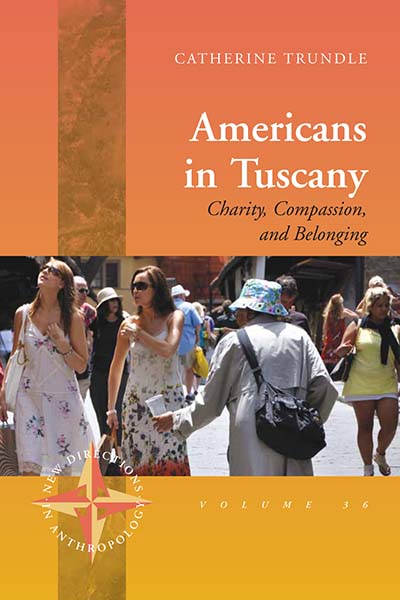
AMERICANS IN TUSCANY
Charity, Compassion, and Belonging
Catherine Trundle


Since the time of the Grand Tour, the Italian region of Tuscany has sustained a highly visible American and Anglo migrant community. Today American women continue to migrate there, many in order to marry Italian men. Confronted with experiences of social exclusion, unfamiliar family relations, and new cultural terrain, many women struggle to build local lives. Continue reading “Simulated Shelves: Browse July’s New Books”

Excerpt Examines ‘Brazil’

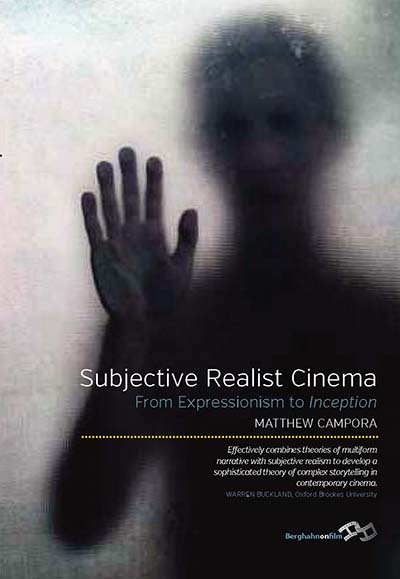
Matthew Campora’s newly published Subjective Realist Cinema focuses in on “fragmented narratives and multiple realities” in films from Mulholland Drive to Eternal Sunshine of the Spotless Mind. Following is an excerpt from the volume, which turns its gaze to Brazil. This is the second entry from the author, the first of which can be read here.


[N. Katherine] Hayles and [Nicholas] Gessler explore what they call “slipstream” fiction, defined as “works that occupy a borderland between mainstream and science fiction because they achieve a science-fictional feeling without the usual defamiliarization devices” (482).

Continue reading “Excerpt Examines ‘Brazil’”

Filmic Multiple Reality Syndrome

The nonlinear narratives of such films as Mulholland Drive, Memento, and Eternal Sunshine of the Spotless Mind come into sharper focus in Matthew Campora’s newly released book Subjective Realist Cinema: From Expressionism to Inception. Following, the author introduces an excerpt to his book, tells the reader of his initial inspiration to write it, and gives insight into “multiform narrative.”


______________________________

What follows is an excerpt from my book Subjective Realist Cinema. I have chosen to present it here because it contains some of the key ideas of the book, as well as a brief analysis of the film that inspired my interest in complex narrative cinema in the first place, Terry Gilliam’s Brazil. Watching it teenager, I found Brazil confusing, even incomprehensible. However, I was also fascinated by it and suspected there was more to the film than I had grasped. When I returned to it years later and discovered that I was able to comprehend it in a way that had eluded me earlier, I was even more intrigued. How could I have NOT grasped what seemed so simple to me now? That the key to understanding the film lay in recognizing the shifts between Sam Lowry’s nightmarish waking world on the one hand, and his imagination, dreams, and hallucinations on the other. The lack of clearly marked shifts between the film’s different ontological levels had created a complexity that I was not accustomed to, and solving the puzzle the film posed had proven tremendously satisfying. I began seeking out similar films in order to understand how they created their effects and what follows is fragment of the work that has grown out of the years spent with these films.

Continue reading “Filmic Multiple Reality Syndrome”

The Author and Ingmar Bergman: Two Legacies Endure

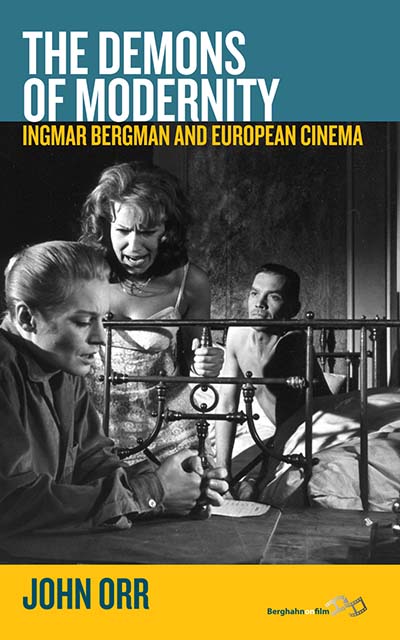
John Orr’s proposal for a text on Swedish director Ingmar Bergman first came to Berghahn in 2009. In September 2010, however, the prominent film scholar passed away with a manuscript in peer review. It was Professor Orr’s wife, Anne, who took up the finalization of the book, shepherding it through stages of review, revision and production to its publication. Now, this month, The Demons of Modernity: Ingmar Bergman and European Cinema will be published. Following, Anne Orr, who wrote about her experience in the volume’s Afterword, briefly introduces the book and what it meant to help bring it to fruition.


_____________________________________

When my husband John Orr died suddenly during the writing of The Demons of Modernity, it was comforting to be assured by two of the foremost experts on Ingmar Bergman – Peter Cowie and Maaret Koskinen – that they considered the manuscript as it stood an original and worthwhile contribution to studies of Bergman.

Continue reading “The Author and Ingmar Bergman: Two Legacies Endure”

The Reciprocal Relationship of Media and Movement

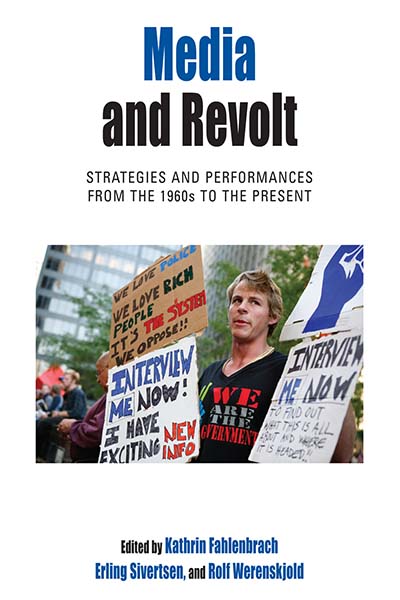
Editors Kathrin Fahlenbrach, Erling Sivertsen and Rolf Werenskjold’s volume Media and Revolt: Strategies and Performances from the 1960s to the Present was published last month. Following, the editors introduce the timely volume and share an excerpt from the Introduction. 


__________________________________________________


Looking at journals, television, or on the internet in these days, news dealing with protests abounds: the upheavals around the Euro-Maidan in the Ukraine, anti-governmental protests in Bangkok, the “Occupy-Gezi-Park”-manifestations in Istanbul or protest actions of NGOs like Greenpeace against oil companies or whale hunters. Obviously protest has an enormous “news value”: it offers spectacular pictures, it makes evident political conflicts and decisions by polarizing their actors, and it offers media the chance to perform as center of society.

Continue reading “The Reciprocal Relationship of Media and Movement”

‘Screening Nature’ Turns the Cinematic Gaze to Mother Earth

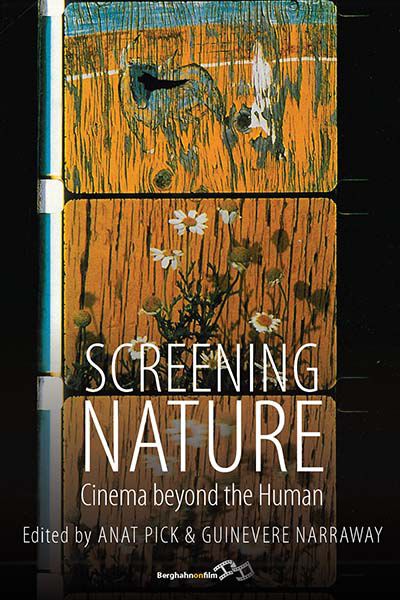
Flora, fauna and film are the foci of Screening Nature: Cinema Beyond the Human, published in November 2013. The collection, edited by Anat Pick and Guinevere Narraway, hopes to open the film-viewers’ gaze to the often-overlooked nonhuman living subjects in film. The following is an interview with Pick and Narraway on the mission of Screening Nature, and on the environmental and ecocritical challenges to the discipline of Film Studies.


________________________________


Berghahn Books: What is the idea behind the collection and how did it come about?


Anat Pick and Guinevere Narraway: Screening Nature is one installment in a bigger project to push Film Studies to engage more closely with the natural world and with issues of ecology. It is fair to say that there is currently an “ecological turn” in Film Studies, and the book is part of what we hope will be a significant paradigm shift in the way we think and talk about film. But despite the growing interest in the ecological dimensions of cinema, both in terms of cinema’s representation of nonhuman nature and animals, and in terms of cinema’s ecological impact as a consumer and emitter of fossil fuels, Film Studies departments remain staunchly humanist and anthropocentric, with most courses theorizing and making films with little regard—in the literal sense of the word—to more-than-human concerns.

Continue reading “‘Screening Nature’ Turns the Cinematic Gaze to Mother Earth”

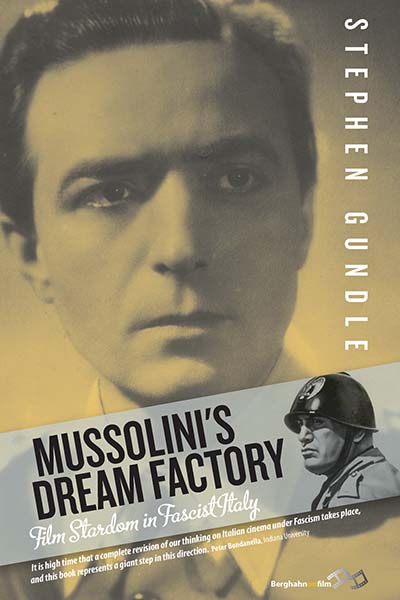
Star-Studded Regime: A Look at Film Celebrity in Fascist Italy

Celebrities today can perform political functions by sponsoring causes, supporting or opposing governments and shaping opinion. In Fascist Italy, celebrities also played an important role and the regime was well aware of the possible uses and dangers of their popularity. This important connection has been overlooked by scholars of both film and of Italian political history. Focusing on a period from the 1920s through 1945, Mussolini’s Dream Factory: Film Stardom in Fascist Italy looks at the star power of these often-overlooked celebrities and the fate of their careers after WWII. Author Stephen Gundle expands on these ideas and shares his thoughts on the subject, below.


_______________________________________________


Berghahn Books: What drew you to the study of film and film stardom in Fascist Italy?


Stephen Gundle: There are lots of books written about fascist Italy and it seems to be a topic that endlessly fascinates.  In the last few years books have appeared on topics such as the police force, diplomacy, road-building, women’s fashions and everyday life. Yet there are few books on fascist cinema – which is largely ignored by historians and neglected by film scholars who tend to concentrate on neorealism or other aspects of postwar cinema.

Continue reading “Star-Studded Regime: A Look at Film Celebrity in Fascist Italy”

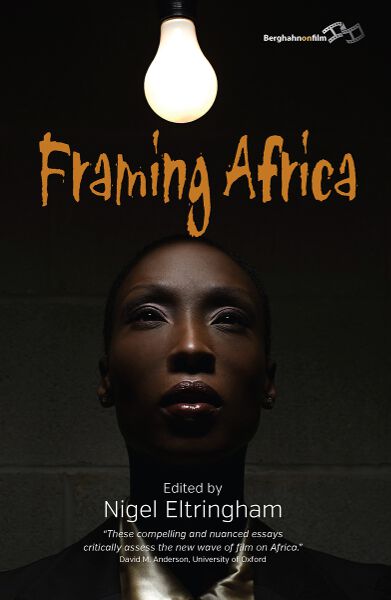
A Moving Picture: The Evolution of Africa on Screen

The perception of Africa through the lens has certainly changed since the films of the 1950s. That change in the way viewers see Africa in twenty-first century film is the topic of Framing Africa: Portrayals of a Continent in Contemporary Mainstream Cinema, published in June 2013. Below, the collection editor Nigel Eltringham discusses the changing frame of Africa in mainstream cinema.

_______________________________________________________

In November 2004, I attended the annual meeting of the African Studies Association in New Orleans. A flier inserted into the conference programme invited participants to a private screening of a new film, Hotel Rwanda, at a small arts cinema nearby.

Continue reading “A Moving Picture: The Evolution of Africa on Screen”

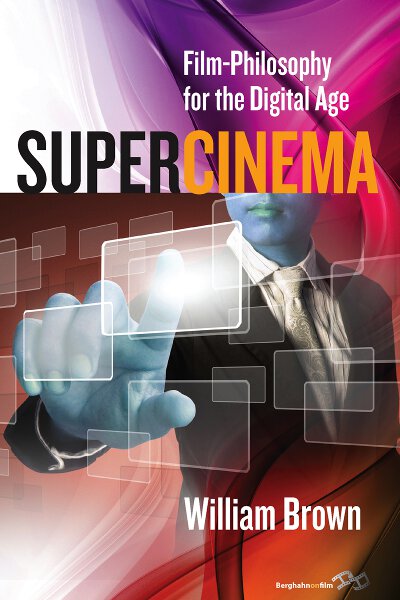
On the Origin of “Supercinema”

It all started in 1999 with a camera that appeared to have superpowers, and that observation led to the publication of Supercinema: Film-Philosophy for the Digital Age in May 2013.  Below, author William Brown examines the digital techniques of modern cinema in his recently published work, in which he tells the story of popular cinema hiding behind analogue cinema techniques, “analogous to that of Superman hiding his powers behind the persona of Clark Kent.”

___________________________________

My monograph, Supercinema, has two principal moments of origin.


The first moment came when watching Fight Club in 1999. I was intrigued by the way in which the camera passed – seemingly without a cut – through solid objects and empty space as if they were both permeable.

Continue reading “On the Origin of “Supercinema””