Simulated Shelves: Browse July’s New Books

We are delighted to present a selection of our newly published, and soon to be published, July titles from our core subjects of Anthropology, Cultural Studies, Film Studies, History and Medical Anthropology.

_________________________________________________________________
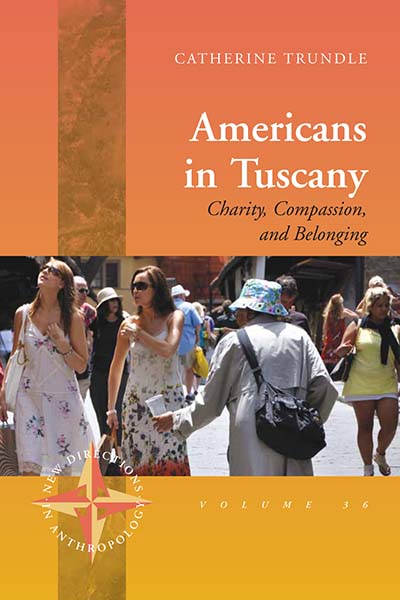
 

AMERICANS IN TUSCANY
Charity, Compassion, and Belonging
Catherine Trundle


Since the time of the Grand Tour, the Italian region of Tuscany has sustained a highly visible American and Anglo migrant community. Today American women continue to migrate there, many in order to marry Italian men. Confronted with experiences of social exclusion, unfamiliar family relations, and new cultural terrain, many women struggle to build local lives. Continue reading “Simulated Shelves: Browse July’s New Books”

A Celebration of Asian-Pacific Heritage

In 1992, a bill was signed into law designating May as Asian-Pacific American Heritage Month. According to the Asian-Pacific Heritage website, “The month of May was chosen to commemorate the immigration of the first Japanese to the United States on May 7, 1843, and to mark the anniversary of the completion of the transcontinental railroad on May 10, 1869.” Commemorate this month with the following selection of Asia-Pacific titles, and view the complete list here.


___________________________________

Asia Pacific World

The Journal of the International Association for Asia Pacific Studies

Chief Editor: Malcolm J.M. Cooper, Ritsumeikan Asia Pacific University (APU)

Published on behalf of the International Association for Asia Pacific Studies Continue reading “A Celebration of Asian-Pacific Heritage”

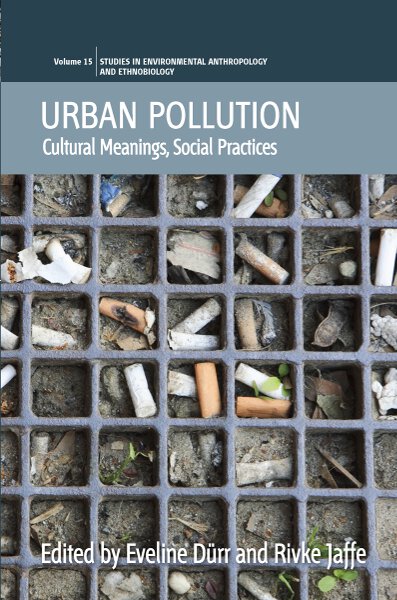
Throwing Out Ideas, The Culture of ‘Urban Pollution’

The celebrated volume of anthropologist Mary Douglas, Purity and Danger (1966), broke ground with its discussion of cleanliness, dirtiness, and sacred ritual. Editors Rivke Jaffe and Eveline Dürr took this up in their 2010-published Urban Pollution: Cultural Meanings, Social Practices. The volume, which was published as a paperback earlier this month, dusts off the concepts of clean and dirty, and looks at modern intersections of pollution and culture. Jaffe and Dürr revisit the origins and makings of the volume, below.
 

_____________________________________________


Berghahn Books: What is the idea behind the collection, and how did the book come about?


Rivke Jaffe and Eveline Dürr: We wanted put together a collection that could help bridge the divide between environmental anthropology and urban anthropology. The bulk of work in environmental anthropology has neglected cities and specifically urban pollution. Meanwhile, urban anthropologists rarely incorporate an environmental dimension in their work.

Continue reading “Throwing Out Ideas, The Culture of ‘Urban Pollution’”

Forest Protection Fail: How ‘Things Fall Apart’

Pauline von Hellermann seeks the root causes of African deforestation in Things Fall Apart? The Political Ecology of Forest Governance in Southern Nigeria, published in September. The volume stems from Hellermann’s ethnographic and historic research within the tropical forest of Nigeria’s Edo State as she digs to uncover the failings of forest protection. The following is an excerpt from the Introduction.


____________________________________________

To international foresters and conservationists, there are clear links between recent management failure and deforestation in Nigeria. The Conservation Atlas of Tropical Forests, for example, states that Nigeria’s ‘natural forests were carefully managed in the early part of the century, [but] they have since been severely over-exploited’ (Lowe, et al. 1992: 230; see also Oates 1999). Nigerians themselves routinely blame corruption and greed amongst foresters and politicians for forest loss and the depletion of timber. Such accounts fit smoothly into the broader perception of Nigerian governments as corrupt and inefficient; into the constant refrain that ‘things fall apart’ in Nigeria.

Continue reading “Forest Protection Fail: How ‘Things Fall Apart’”

Hot Off the Presses – New Book Releases

FelliniJourney

Newly released titles from Berghahn’s Anthropology and Applied Anthropology, Film Studies, and History lists:

Toward Engaged Anthropology, Sam Beck and Carl A. Maida

Pastoralism in Africa: Past, Present, and Future, Michael Bollig, Michael Schnegg, and Hans-Peter Wotzka

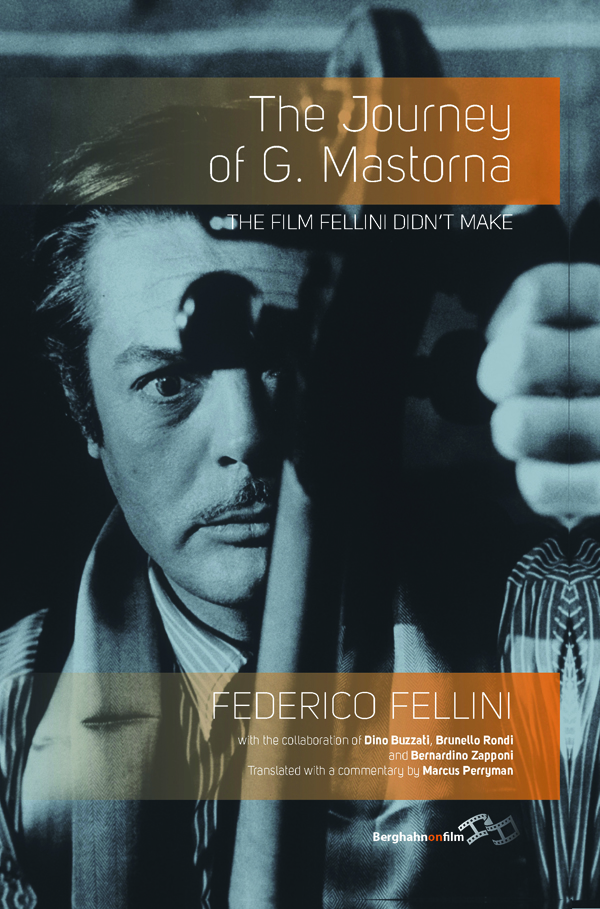
The Journey of G. Mastorna: The Film Fellini Didn’t Make, Federico Fellini, with the collaboration of Dino Buzzati, Brunello Rondi, and Bernardino Zapponi, translated with a commentary by Marcus Perryman

Soldiering Under Occupation: Processes of Numbing among Israeli Soldiers in the Al-Aqsa Intifada, Erella Grassiani

Germany and the Black Diaspora: Points of Contact, 1250-1914, Mischa Honeck, Martin Klimke, and Anne Kuhlmann

Elusive Promises: Planning in the Contemporary World, Simone Abram and Gisa Weszkalnys

Judging “Privileged” Jews: Holocaust Ethics, Representation, and the “Grey Zone”, Adam Brown

Pregnancy in Practice: Expectation and Experience in the Contemporary, Sallie Han

United Germany: Debating Processes and Prospects, Konrad Jarausch

Ethics in the Field: Contemporary Challenges, Jeremy MacClancy and Agustín Fuentes

Hot Off the Presses – New Paperback Releases


HeinonenYouth

Newly released paperbacks from Berghahn:

Youth Gangs and Street Children: Culture, Nurture and Masculinity in Ethiopia, Paula Heinonen

Funerals in Africa: Explorations of a Social Phenomenon, Michael Jindra and Joël Noret

Gardening the World: Agency, Identity and the Ownership of Water, Veronica Strang

Growing Up in Central Australia: New Anthropological Studies of Aboriginal Children and Adolescence, Ute Eickelkamp

Hot Off the Presses – New Book Releases

Newly released titles from Berghahn’s Anthropology, Colonialism, Economics, Politics, and HistoryCorsinAnthropological lists:

Creating a Nation with Cloth: Women, Wealth, and Tradition in the Tongan Diaspora, Ping-Ann Addo

Slavery and Antislavery in Spain’s Atlantic Empire, Josep M. Fradera and Christopher Schmidt-Nowara

An Anthropological Trompe L’Oeil for a Common World: An Essay on the Economy of Knowledge, Alberto Corsín Jiménez

Framing Africa Portrayals of a Continent in Contemporary Mainstream Cinema, Nigel Eltringham

Tax Justice and the Political Economy of Global Capitalism, 1945 to the Present, Jeremy Leaman and Attiya Waris

Routes into the Abyss Coping with Crises in the 1930s, Helmut Konrad and Wolfgang Maderthaner

Bedouin of Mount Sinai: An Anthropological Study of their Political Economy, Emanuel Marx

Empire, Global Coloniality and African Subjectivity, Sabelo J. Ndlovu-Gatsheni

Family Upheaval Generation, Mobility and Relatedness among Pakistani Migrants in Denmark, Mikkel Rytter

Up Close and Personal: On Peripheral Perspectives and the Production of Anthropological Knowledge, Cris Shore and Susanna Trnka

Astonishment and Evocation: The Spell of Culture in Art and Anthropology, Ivo Strecker and Markus Verne

The Gaddi Beyond Pastoralism: Making Place in the Indian Himalayas, Anja Wagner

The Nazi Genocide of the Roma: Reassessment and Commemoration, Anton Weiss-Wendt

Three Case Studies from the Award-Winning Nature of the Miracle Years

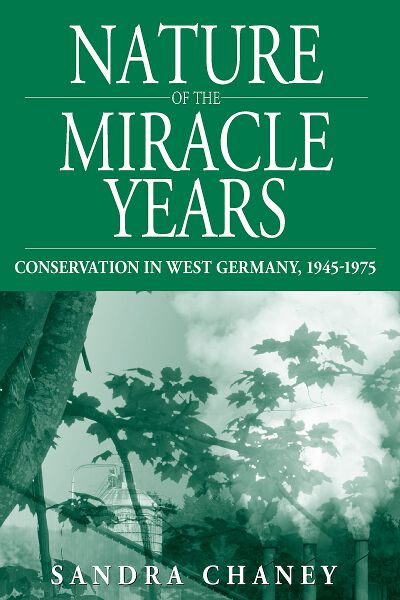
Nature of the Miracle Years: Conservation in West Germany, 1945-1975 by Sandra Chaney, appeared in paperback in August 2012. In the post below, the author discusses the three case studies that form the backbone of the book. Berghahn Books is proud to draw attention once more to Nature of the Miracle Years, which won the  Choice Award for Outstanding Academic Title in 2009. 

____________________________________

A rewarding part of this project involved writing three cases studies which focus on preserving a scenic gorge, landscaping a canalized river, and restoring “wild” nature to a managed forest. Taken together, these stories capture important shifts in West German efforts to restore varying degrees of naturalness in their intensively used landscapes.  Research took me to the Black Forest, the Mosel Valley, and the Bavarian Forest, and to the homes and offices of dedicated conservationists.  Whether perusing Black Forest Society records in the basement of a retired forester or reviewing hundreds of postcards protesting the Mosel Canal in the Foreign Office archives, I was struck by the daunting challenge conservationists faced in promoting sustainable uses of nature when more powerful groups favored exploiting it and when legal and administrative support systems for conservation remained weak.

Continue reading “Three Case Studies from the Award-Winning Nature of the Miracle Years

A Conversation with the Editors of “Civilizing Nature” on the National Park

Patrick Kupper, Bernhard Gissibl, and Sabine Höhler are the editors of Civilizing Nature, published in November 2012 by Berghahn Books.  Civilizing Nature examines the phenomenon of the national park from a historical and transnational perspective.  


Why did you choose a global history approach to studying national parks?


Patrick:

National parks have arguably been the most important tool of nature conservation worldwide. Since the first patches of nature were segregated under that label in the late 19th century, parks have become a global phenomenon – there are thousands of them all over the world, and they occupy an astonishing amount of terrestrial and, more recently, also maritime space. We found a paradoxical relationship between the national and the global in nature conservation, and the connections behind parks a striking and illustrative instance of what we have become accustomed to call globalization. Delving into this genuinely global history says a lot about the making and the nature of global environmentalism.

Continue reading “A Conversation with the Editors of “Civilizing Nature” on the National Park”

Donald C. Wood on Ogata-mura, Japan

As should any item or idea in which its creator has invested more than fifteen years, this book very strongly reflects my own life course and concerns. Having cut my teeth on the canon of English language anthropological studies of Japanese farming villages as an undergraduate student, but then having trouble reconciling what I experienced in Ogata-mura in 1995–1996 with what I had previously encountered in this body of literature, I came to want to make my own contribution to the study of Japanese farming villages in the twentieth (and twenty-first) century, but in my own way. As an anthropologist who earned post–graduate degrees in both the USA and Japan, I have attempted to marry the respective ethnological traditions of these two countries, while aiming for a broad audience of social scientists and students of Japan and its society.


Continue reading “Donald C. Wood on Ogata-mura, Japan”