Portrait of a Storyteller

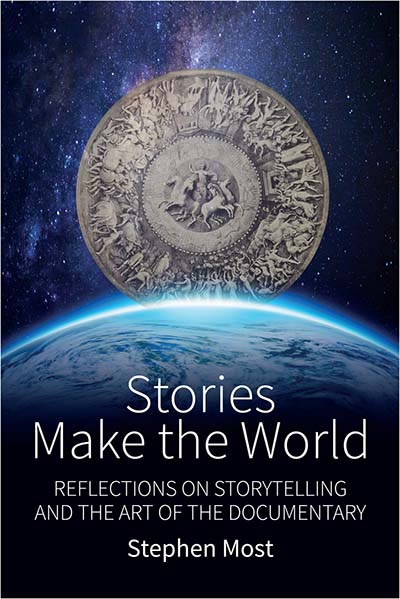
The following is a post by Stephen Most, author of Stories Make the World: Reflections on Storytelling and the Art of the Documentary.

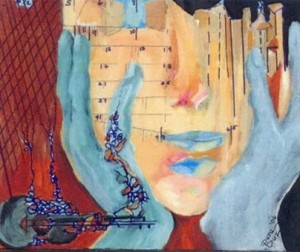
Two portraits of the young man I once was, one oil-painted, the other shaped in clay, watch over my study. More than half a century after they were made I portrayed the painter, Pedro Azabache, and the sculptor, Eduardo Calderón, in the opening chapters of Stories Make the World.

My friendships with them began unexpectedly and unforgettably. As a college student I received a grant I hadn’t applied for to go to a country I knew nothing about where languages I did not understand were spoken. I had not even studied anthropology, the field in which I was supposed to do summer research. However, I did know the destination: a pueblo named Moche.

The only book I could find about Moche mentioned a descendant of Mochica Indians who had studied painting in Lima. When I met him, Pedro Azabache led a school of fine arts in Trujillo. Seen in retrospect, my request, uttered in barely coherent Spanish, was absurd. I told him I wanted to live at his home in Moche and write about his life. The maestro replied, “Encantado.”

My friendship with Eduardo Calderón, who taught wood and ceramic sculpture in Azabache’s school of fine arts, also began encantado, with enchantment. Calderón invited me to his adobe-walled home to make the bust that now rests on my cabinet. Soon after I got there, after he had plopped clay on a small round table and after his wife, María, served us a wooden bowl filled with chicha, a corn liquor, Calderón asked, “Do you know that I am a brujo?” I did know that word, having read, in John Gillin’s Moche, A Peruvian Coastal Community, about brujeria, which means both sorcery and its antidote, a way of healing physical and psychological maladies. On the radio a cumbia was playing as Calderón, gliding into a corner of his open-air studio, pulled the head and wings of a pelican skin over his shoulders and started dancing. Soon we were wearing the bird in turn as we danced to the catchy beat.

“Esteban Most” by Pedro Azabache

That summer, one of Azabache’s students who spoke English, José Li Ning, helped me translate the artist’s journals. A sentence I puzzled over, learning the subjunctive, was something Azabache’s father had said to him: “I hope my son knows to make good use of his time.” Those wise words applied, I felt, to me. Li Ning also came to the first mesa, or all-night healing ceremony, I attended. As Calderón presided over a ritual the pre-Incaic Mochica sculpted on pottery a thousand years ago, I realized that I, the unlikely recipient of a grant to do ethnology, was making good use of my time.

After that summer, wanting better to know my Peruvian friends and their world, I returned to the Trujillo region, starting with a two-year stint in the Peace Corps. Calderón invited me to be the godfather of his daughter Josefina, which made us compadres, friends with family bonds. Years later, his granddaughter Rosi Liliana became my second goddaughter.

Decades after that, while writing the reflections on storytelling and the art of the documentary that comprise Stories Make the World, I realized: both Azabache and Calderón were storytellers. Both combined a visual medium with narrative in different forms and with different techniques than are used in documentary making. And we all moved within a current flowing from cave painting ceremonies tens of thousands of years ago and surely from visual and verbal representations of the world made long before those. I had defined myself in terms of the specific medium in which I worked, whether as a playwright, a screenwriter, or an author. Only while writing Stories Make the World did I grasp a larger identity that potentially connects every human being, for we all tell stories; our lives are shaped by them and by the stories others tell.

Wanting to share memories of Azabache and Calderón with my goddaughters and other Peruvian friends, I asked Li Ning to translate the first two chapters of my book. He and his son, a professor of English, did so. Better yet, Li Ning found a magazine that will publish the Spanish version of those chapters. I’m glad my portraits of the men who portrayed me many years ago, whose friendship enriched my life, will be widely seen in their country before long.


See an earlier blog post from Stephen Most here, and learn more about the book Stories Make the World: Reflections on Storytelling and the Art of the Documentary here. To stream and download films in Stories Make the World, go to www.videoproject.com/Stories.
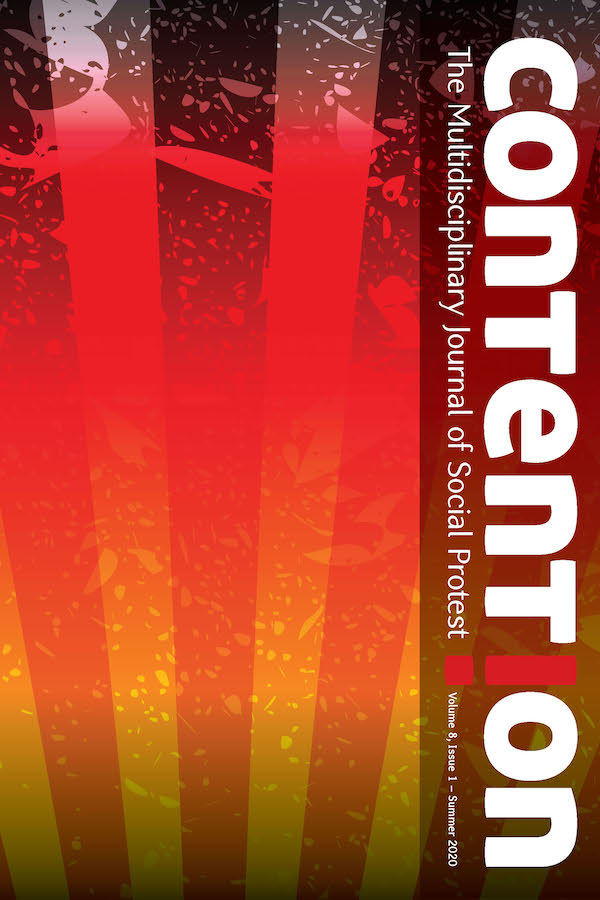
 

Introducing Contention: The Multidisciplinary Journal of Social Protest

In 2011 a global wave of protest changed the way in which people saw contention. January saw two revolutions: first, in Tunisia culminating in the overthrow of then president Ben Ali; and second in Egypt with protests that would end the Mubarak regime within eighteen days. This wave of protest spread to Libya, Syria, Yemen and Bahrain changing the course of history for each country forever.

But protest would not be confined to the Middle East. Later that year the Iberian Peninsula ignited with protest and popular mass movements soon followed. The same could be seen in Italy and Greece. What had spread to Southern Europe would soon cross the Atlantic with the rise of Occupy Wall Street: first, in New York then across Northern America and finally, by 2012, across the globe as a worldwide occupy movement.

In the academic community, a fervent interest in these new protests and the general question of Contention would awaken across disciplines and in October of that year many of us came together at the University of Kent for the first international and interdisciplinary conference on social protest. Attendees ranged from across the social sciences, humanities and arts, as well as a substantial contingent of activists, revolutionaries and NGOs.

This enthusiasm led to the very first issue of Contention: The Multidisciplinary Journal of Social Protest, on Theory, Action and Impact in Social Protest. This issue was merely a collection of abstracts of the almost 200 papers presented at the conference but generated considerable excitement among our colleagues.

This became the springboard for two distinct ventures, first the creation of the Interdisciplinary Network for Social Protest Research which celebrates its fifth anniversary this year. Second, of course, was Contention which had expanded into a fully-fledged academic journal by 2013.

This year marks a similarly important step for Contention, with the move to a new publisher and to a new phase in the journal’s history. We are privileged to count among our editors a distinguished and international advisory board, as well as scholars of the highest calibre from across disciplines. The journal now attracts submissions of the highest quality and prides itself on a careful and inclusive review process.

So what’s next for Contention? Over the next five years we will aim to establish the journal as a world leading resource for social protest across disciplines. In conjunction with our partners at INSPR, we will strengthen our ties with academics and practitioners across the globe. In partnership with our publisher at Berghahn we will bring the journal to new audiences and even greater impact.

We look forward to your help along the way!

Benjamin Abrams and Giovanni A Travaglino

Editors

SIMULATED SHELVES: BROWSE JULY 2017 NEW BOOKS

We’re delighted to offer a selection of latest releases from our core subjects of AnthropologyApplied AnthropologyFilm Studies, Gender Studies, History, and Media Studies, along with our New in Paperback titles.


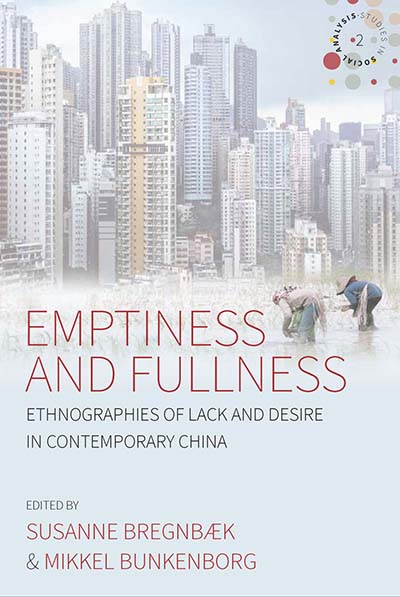
EMPTINESS AND FULLNESS
Ethnographies of Lack and Desire in Contemporary China
Edited by Susanne Bregnbæk and Mikkel Bunkenborg

Volume 2, Studies in Social Analysis

Continue reading “SIMULATED SHELVES: BROWSE JULY 2017 NEW BOOKS”

Book Launch for Stories Make the World

The following is a post about the book launch for Stories Make the World: Reflections on Storytelling and the Art of the Documentary by Stephen Most.

It’s odd to see the result of years of work contained within a small object, whether it is a book, a DVD, or a phone on which films are streaming. Stories Make the World contains, in a sense, ideas I care about, a variety of subjects that interest me, and many of the films I’ve worked on.

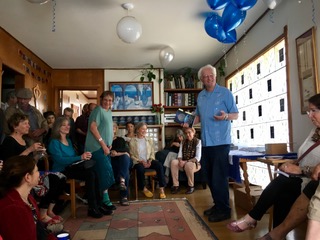
It was odd as well to see a room enclose people from almost every aspect of my life. That happened at the party celebrating the launch of Stories Make the World. If my life were a book, many of its chapters appeared in my living room one Sunday afternoon. Convening beneath balloons were my brother, a cousin, and their wives, my wife, our son and his girlfriend, friends who live on my block, friends whose children grew up with my children, other friends I hadn’t seen in years, and colleagues I have worked with over the years.

That gathering of people I’ve known over a long span of time in disparate situations offered a sense of my life’s unity. But it was an illusion: a snapshot at a moment in time belies the experience of living. As Kierkegaard wrote in his journals, “Life can only be understood backwards, but it must be lived forwards.” Living forwards, it can be impossible to tell what direction one will take and whether pleasure or distress, success or failure will result. That applies to documentary films, almost every one of which is a high-risk project. It applies, of course, to a book from conception to publication and beyond. And it’s true for everyone’s life. The present moment is pregnant with the future. The outcomes and their connection with what came before become evident only in retrospect.

Stories Make the World

Looking around the room, I saw the youngest member of my family, two-year-old Nina, resting in her mother’s arms. I wondered, who will she be? What will the world be like when she is a woman? Across the room from Nina and her mother Katie stood Douglas Sharon, an explorer in Perú who, when we first met in our early twenties, was discovering ancient cities that Andean jungle had covered. His friendship with the shaman Eduardo Calderón inspired a career change: Douglas became an anthropologist.

I caught the eye of Claire Schoen. When we met, I was a playwright working with a comedic theater company and she was a documentary filmmaker. Living with her, I entered the community of independent media professionals in the Bay Area. Members of that community listened as I read passages from Stories Make the World: Judy Irving who, when I met her, was making Dark Circle, a mind-opening film about the nuclear age, with Chris Beaver and Ruth Landy; Ruth, who produced international media for the World Health Organization after Dark Circle premiered; Justine Shapiro, who apprenticed with Judy and Chris, then went on to make Promises, the Emmy-winning, Academy Award-nominated film about Israeli and Palestinian children; Gina Leibrecht, who has edited two films I’ve worked on: A Land Between Rivers and Wilder than Wild; and the director of those films, Kevin White, who arrived late, bringing a bottle of bubbly.

At that moment in time in that place, which seemed to encompass innumerable stories in my life and theirs, I released into the world a small object that I hope will be fruitful.


See an earlier blog post from Stephen Most here, and learn more about the book Stories Make the World: Reflections on Storytelling and the Art of the Documentary here. To stream and download films in Stories Make the World, go to www.videoproject.com/Stories.
 

Celebrating Canada Day

canada-flags-659311_1920


Canada Day is the national day of Canada, a holiday celebrating the anniversary of the July 1, 1867, enactment of the British North America Act which united separate colonies into a “kingdom in its own right” within the British Empire named the Dominion of Canada.

As Canada celebrates its important national milestone, Berghahn is delighted to highlight some of our Canadian authors and editors and those currently based in Canada.


Continue reading “Celebrating Canada Day”

SIMULATED SHELVES: BROWSE JUNE 2017 NEW BOOKS

We’re delighted to offer a selection of latest releases from our core subjects of AnthropologyApplied Anthropology, Environmental Studies, Film Studies, History, Jewish Studies and Medical Anthropology, along with our New in Paperback titles.


Paperback Original

STORIES MAKE THE WORLD
Reflections on Storytelling and the Art of the Documentary
Stephen Most

Continue reading “SIMULATED SHELVES: BROWSE JUNE 2017 NEW BOOKS”

Berghahn Books will be attending NECS 2017!

We are delighted to inform you that we will be attending the NECS conference in Paris, France from the 29th June – 1st July 2017. Please stop by to browse our selection of titles on display at discounted prices, and take away some free journal samples.

If you are unable to attend, we would like to provide you with a special discount offer. Valid through August 1st, use discount code NECS17 at checkout and receive a 25% discount on all Film Studies titles found on our website.


Our most recent and forthcoming releases can be found in our Film and Media Catalogue while the titles featured below include a selection of those which will be highlighted at the conference.


Continue reading “Berghahn Books will be attending NECS 2017!”

Visit Berghahn Books at ECAS 2017!

African-StudiesWe are delighted to inform you that we will be attending the 7th European Conference on African Studies in Basel, Switzerland from the 29th June – 1st July 2017. Please stop by to browse our selection of titles on display, and take away some free journal samples.


If you are unable to attend, we would like to provide you with a special discount offer. Valid through August 1st, use discount code ECAS17 at checkout and receive a 25% discount on all African Studies titles found on our website.


Continue reading “Visit Berghahn Books at ECAS 2017!”

The Berkshire Conference of Women Historians

header-bc2017-1024x341We are delighted to inform you that we will be present at The Berkshire Conference of Women Historians at Hofstra University in Hempstead, NY on June 1-4, 2017. Please stop by our table to browse the latest selection of books at discounted prices & pick up some free journal samples.


If you are unable to attend, we would like to provide you with a special discount offer. For the next 30 days, receive a 25% discount on all Gender Studies titles found on our website. At checkout, simply enter the discount code Berks17. Visit our website­ to browse our newly published interactive online Spring/Summer 2017 New Titles Catalog or use the new enhanced subject searching features­ for a complete listing of all published and forthcoming titles. Continue reading “The Berkshire Conference of Women Historians”

SIMULATED SHELVES: BROWSE April 2017 NEW BOOKS

We’re delighted to offer a selection of latest releases from our core subjects of Anthropology, Educational Studies, Environmental StudiesGenocide Studies, History and Jewish Studies, along with our New in Paperback titles.


Paperback Original

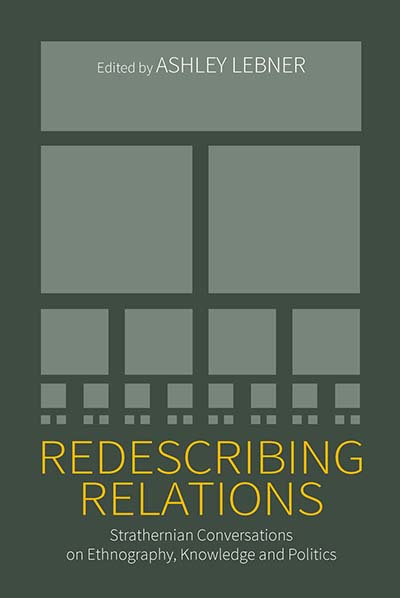
REDESCRIBING RELATIONS
Strathernian Conversations on Ethnography, Knowledge and Politics
Edited by Ashley Lebner
Afterword by Marilyn Strathern

Continue reading “SIMULATED SHELVES: BROWSE April 2017 NEW BOOKS”