Cameras on the Nation’s Darkest Hour

Recent BBC Culture article, Christian Petzold: How Germans today confront the Nazis, takes a look at how the attitude of German filmmakers has changed in the past 15 years and how the cinema is turning the cameras on the nation’s darkest hour in films and TV. Read more on what Nina Hoss, an actress in the latest German film to address the war and its aftermath Christian Petzold’s Phoenix, has to say bbc.com/culture

———————————————————————————————————————————–

Browse some of Berghahn’s relevant titles on the topic of Nazi portrayal and postwar cinema in Germany & Europe.

 

POLISH FILM AND THE HOLOCAUST
Politics and Memory
Marek Haltof
Continue reading “Cameras on the Nation’s Darkest Hour”

Back to School

“Accomplishment will prove to be a journey, not a destination.” – Dwight D. Eisenhower


As the summer ends and the weather turns, the new school year begins. Although the first day varies in different parts of the world, however normal pattern is for school to begin in late August or early September in the northern hemisphere. Berghahn is happy to welcome everyone back with some relevant Education Studies titles.

——————————————————————————————————————–


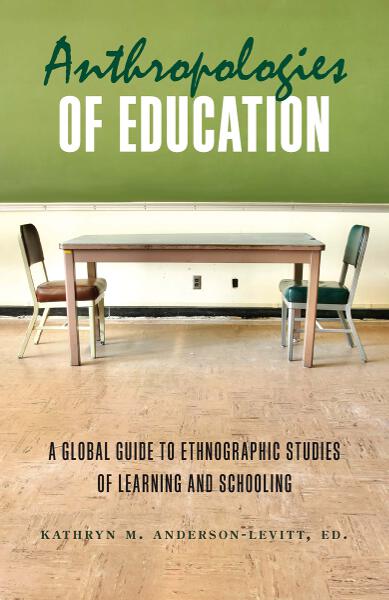
ANTHROPOLOGIES OF EDUCATION
A Global Guide to Ethnographic Studies of Learning and Schooling
Edited by Kathryn M. Anderson-Levitt

Continue reading “Back to School”

Simulated Shelves: Browse June’s New Books

We’re delighted to offer a selection of soon-to-be-published titles from our core subjects of Anthropology, Medical Anthropology, History, Sociology, Travel & Tourism and Urban Studies. The following list of new volumes is complete with brief descriptions of the books and a peek at each cover. 

_________________________________

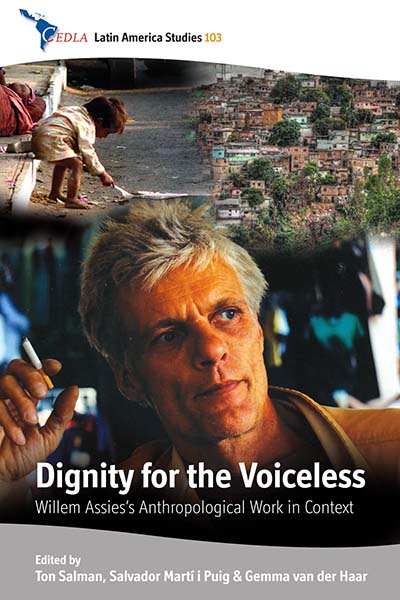
DIGNITY FOR THE VOICELESS

Willem Assies’s Anthropological Work in Context

Edited by Ton Salman, Salvador Marti i Puig, and Gemma van der Haar Continue reading “Simulated Shelves: Browse June’s New Books”

A Celebration of Asian-Pacific Heritage

In 1992, a bill was signed into law designating May as Asian-Pacific American Heritage Month. According to the Asian-Pacific Heritage website, “The month of May was chosen to commemorate the immigration of the first Japanese to the United States on May 7, 1843, and to mark the anniversary of the completion of the transcontinental railroad on May 10, 1869.” Commemorate this month with the following selection of Asia-Pacific titles, and view the complete list here.


___________________________________

Asia Pacific World

The Journal of the International Association for Asia Pacific Studies

Chief Editor: Malcolm J.M. Cooper, Ritsumeikan Asia Pacific University (APU)

Published on behalf of the International Association for Asia Pacific Studies Continue reading “A Celebration of Asian-Pacific Heritage”

Not So Different After All: Connecting British and Bengali Education Systems

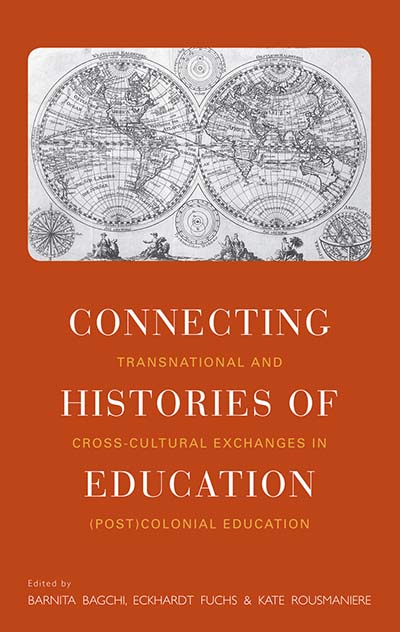
Connecting Histories of Education: Transnational and Cross-Cultural Exchanges in (Post)Colonial Education, edited by Barnita Bagchi, Eckhardt Fuchs and Kate Rousmaniere, has recently been published by Berghahn. The editors previously shared an excerpt from the volume’s Introduction, which can be read here. A second extract, this one from Mary Hilton’s chapter “A Transcultural Transaction: William Carey’s Baptist Mission, the Monitorial Method and the Bengali Renaissance,” gives readers insight into the education system shared between Britain and Bengal.


__________________________________________

To understand the early-nineteenth-century reforming mentality that drove change in both Britain and Bengal, we must first sketch those systems of basic education that prevailed in their traditional rural communities before the English industrial revolution and before the development of the fully evangelical, self-righteous and reforming mercantile thrust of English imperialism.

Continue reading “Not So Different After All: Connecting British and Bengali Education Systems”

Variations on an Educational Theme

When the traditional educational system of colonizing societies was disseminated to indigenous societies, it was not accepted by the colonized “as-is,” but was adopted as merely an underlying framework. This hybridization led to a multitude of varied, yet similar, educational systems across the post-imperialized world. In the following excerpt from the Introduction of Connecting Histories of Education: Transnational and Cross-Cultural Exchanges in (Post)Colonial Education, to be published this month, editors Barnita Bagchi, Eckhardt Fuchs and Kate Rousmaniere further explain the connections within modern educational culture.


______________________________

Connecting Histories of Education bears a double meaning. The volume connects historians of education from South Asia and other parts of the world to enhance a comparative perspective and create a wider research network beyond the Euro-Western world. In addition, it presents local, regional, national and transnational research, with the goal of highlighting the interconnectedness of histories of education in the modern world.

Continue reading “Variations on an Educational Theme”

Blackface in Berlin Play: Racism or Tradition?

In January 2012, a white man was cast for the part of an African American man in “I’m Not Rappaport” for the German adaptation of the U.S. play. The plan to use blackface makeup—common in American theater up until the Civil Rights movement—to change the man’s appearance stirred controversy, and was called out as racist. Co-editor of Germany and the Black Diaspora: Points of Contact, 1250-1914, Martin Klimke addresses the sensitive subject of race in Germany in light of this event.

_________________________________________


Germany’s place in the Black Atlantic might have been peripheral in a geographical sense. Intellectually and discursively, however, it played an often underestimated but significant role in the formation of modern social, racial, and national identities.


Continue reading “Blackface in Berlin Play: Racism or Tradition?”

Hot Off the Presses – New Book Releases

FelliniJourney

Newly released titles from Berghahn’s Anthropology and Applied Anthropology, Film Studies, and History lists:

Toward Engaged Anthropology, Sam Beck and Carl A. Maida

Pastoralism in Africa: Past, Present, and Future, Michael Bollig, Michael Schnegg, and Hans-Peter Wotzka

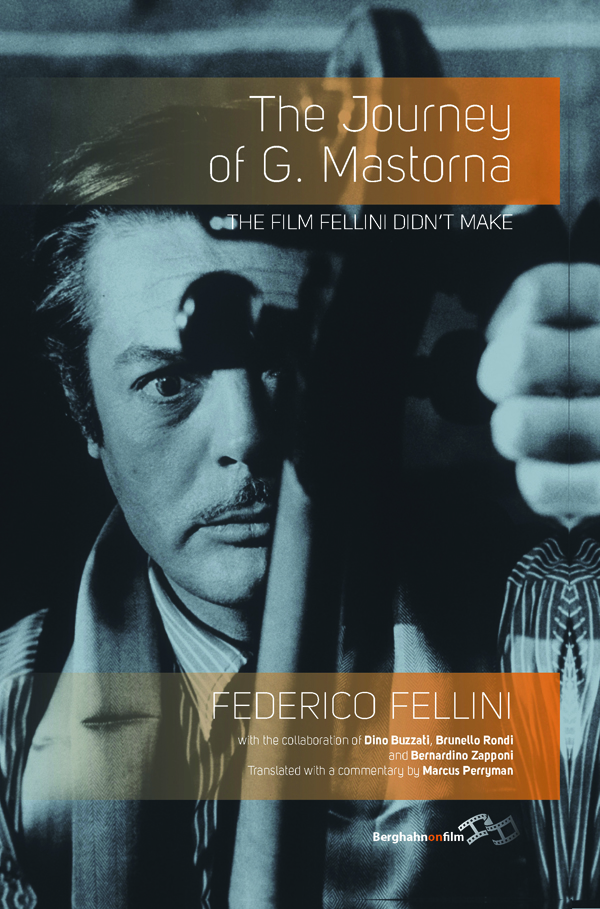
The Journey of G. Mastorna: The Film Fellini Didn’t Make, Federico Fellini, with the collaboration of Dino Buzzati, Brunello Rondi, and Bernardino Zapponi, translated with a commentary by Marcus Perryman

Soldiering Under Occupation: Processes of Numbing among Israeli Soldiers in the Al-Aqsa Intifada, Erella Grassiani

Germany and the Black Diaspora: Points of Contact, 1250-1914, Mischa Honeck, Martin Klimke, and Anne Kuhlmann

Elusive Promises: Planning in the Contemporary World, Simone Abram and Gisa Weszkalnys

Judging “Privileged” Jews: Holocaust Ethics, Representation, and the “Grey Zone”, Adam Brown

Pregnancy in Practice: Expectation and Experience in the Contemporary, Sallie Han

United Germany: Debating Processes and Prospects, Konrad Jarausch

Ethics in the Field: Contemporary Challenges, Jeremy MacClancy and Agustín Fuentes

Remembering African-German Points of Contact

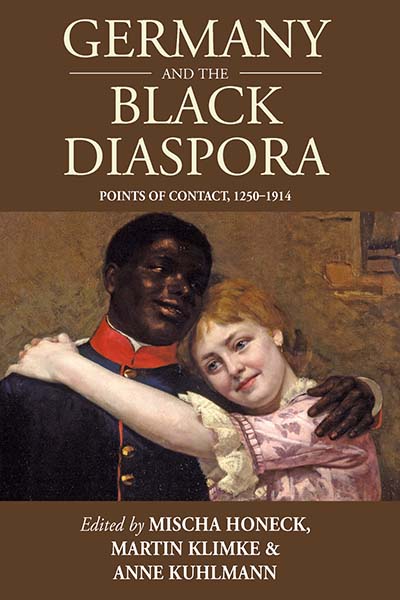
Eight centuries of German and African interactions up until World War I are often glossed over in historical literature.  The contributors to Germany and the Black Diaspora: Points of Contact, 1250-1914, published last month, seek to illuminate these intersections and share popular sentiments of the time. Below, co-editor Martin Klimke describes a significant—and still remarkable—relic of this pre-WWI period.


______________________________________________________


For more than ten years now, visitors to the German Historical Museum in Berlin have paused in amazement before a painting unlike any other in the museum’s collection.

Continue reading “Remembering African-German Points of Contact”

Hot Off the Presses – New Book Releases

Newly released titles from Berghahn’s Anthropology, Colonialism, Economics, Politics, and HistoryCorsinAnthropological lists:

Creating a Nation with Cloth: Women, Wealth, and Tradition in the Tongan Diaspora, Ping-Ann Addo

Slavery and Antislavery in Spain’s Atlantic Empire, Josep M. Fradera and Christopher Schmidt-Nowara

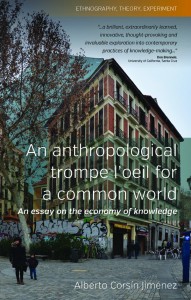
An Anthropological Trompe L’Oeil for a Common World: An Essay on the Economy of Knowledge, Alberto Corsín Jiménez

Framing Africa Portrayals of a Continent in Contemporary Mainstream Cinema, Nigel Eltringham

Tax Justice and the Political Economy of Global Capitalism, 1945 to the Present, Jeremy Leaman and Attiya Waris

Routes into the Abyss Coping with Crises in the 1930s, Helmut Konrad and Wolfgang Maderthaner

Bedouin of Mount Sinai: An Anthropological Study of their Political Economy, Emanuel Marx

Empire, Global Coloniality and African Subjectivity, Sabelo J. Ndlovu-Gatsheni

Family Upheaval Generation, Mobility and Relatedness among Pakistani Migrants in Denmark, Mikkel Rytter

Up Close and Personal: On Peripheral Perspectives and the Production of Anthropological Knowledge, Cris Shore and Susanna Trnka

Astonishment and Evocation: The Spell of Culture in Art and Anthropology, Ivo Strecker and Markus Verne

The Gaddi Beyond Pastoralism: Making Place in the Indian Himalayas, Anja Wagner

The Nazi Genocide of the Roma: Reassessment and Commemoration, Anton Weiss-Wendt