On the Origin of “Supercinema”

It all started in 1999 with a camera that appeared to have superpowers, and that observation led to the publication of Supercinema: Film-Philosophy for the Digital Age in May 2013.  Below, author William Brown examines the digital techniques of modern cinema in his recently published work, in which he tells the story of popular cinema hiding behind analogue cinema techniques, “analogous to that of Superman hiding his powers behind the persona of Clark Kent.”

___________________________________

My monograph, Supercinema, has two principal moments of origin.


The first moment came when watching Fight Club in 1999. I was intrigued by the way in which the camera passed – seemingly without a cut – through solid objects and empty space as if they were both permeable.

Continue reading “On the Origin of “Supercinema””

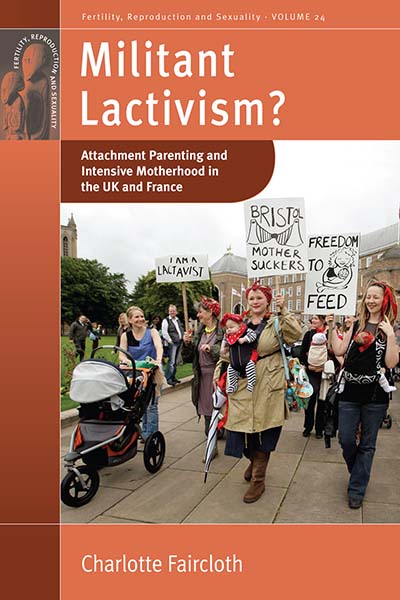
What is “Militant Lactivism?”

More than a simple parenting choice, breastfeeding becomes a matter of feminist and activist discussion in Charlotte Faircloth’s book Militant Lactivism? published in March 2013 by Berghahn Books. Below, the author introduces us to the movement for public breastfeeding with an excerpt from her book.


Militant Lactivism? is a book based on research with women in London and Paris who are members of La Leche League (LLL), an international breastfeeding support organisation. The text focuses on the accounts of a small but significant population of mothers within LLL who practise ‘attachment parenting’. This is a style of care which endorses close parent-child proximity and typically involves long-term, on-cue breastfeeding, baby ‘wearing’ and co-sleeping as part of a ‘family bed’ philosophy. It is becoming increasingly popular in both the US and the UK, and has recently received a lot of publicity following a particularly provocative TIME magazine feature, amongst other coverage.

Continue reading “What is “Militant Lactivism?””

Three Case Studies from the Award-Winning Nature of the Miracle Years

Nature of the Miracle Years: Conservation in West Germany, 1945-1975 by Sandra Chaney, appeared in paperback in August 2012. In the post below, the author discusses the three case studies that form the backbone of the book. Berghahn Books is proud to draw attention once more to Nature of the Miracle Years, which won the  Choice Award for Outstanding Academic Title in 2009. 

____________________________________

A rewarding part of this project involved writing three cases studies which focus on preserving a scenic gorge, landscaping a canalized river, and restoring “wild” nature to a managed forest. Taken together, these stories capture important shifts in West German efforts to restore varying degrees of naturalness in their intensively used landscapes.  Research took me to the Black Forest, the Mosel Valley, and the Bavarian Forest, and to the homes and offices of dedicated conservationists.  Whether perusing Black Forest Society records in the basement of a retired forester or reviewing hundreds of postcards protesting the Mosel Canal in the Foreign Office archives, I was struck by the daunting challenge conservationists faced in promoting sustainable uses of nature when more powerful groups favored exploiting it and when legal and administrative support systems for conservation remained weak.

Continue reading “Three Case Studies from the Award-Winning Nature of the Miracle Years

Will “the real Vienna” please stand up?

Anne Marie Scholz’s From Fidelity to History: Film Adaptations as Cultural Events was published by Berghahn Books in April 2013. In what follows, Scholz discusses the experience of touring Vienna and seeing parts of the city made famous by The Third Man. 

_____________________________

The still on the cover of my book—from the 1949 British/U.S. co-production The Third Man–depicts the American Holly Martins (Joseph Cotten). He’s had a few too many drinks, and has just seen his old friend Harry Lime—a friend he believed dead— disappear somewhere on the square “Am Hof” in post-WWII Vienna. He is torn between doubts over his own sanity, unrequited love for Lime’s Czech girlfriend Anna, relief that his friend may still be alive, and near certainty that Harry is mixed up in a vicious black market racket. The darkness and mysterious aura of the Vienna square reinforces the haunted expression on Holly’s face. His predicament—that of an enterprising but unwelcome American pulp fiction writer stumbling through the labyrinth of postwar Europe–is inextricably linked with the city where he finds himself.

Continue reading “Will “the real Vienna” please stand up?”

Jonathan Magonet of European Judaism on the Past and Future of the Journal

For over 40 years, European Judaism has provided a voice for the postwar Jewish world in Europe. It has reflected the different realities of each country and helped to rebuild Jewish consciousness after the Holocaust. Jonathan Magonet took over as Editor in 2004. In this post, he details the foundation and evolution of the journal over its extensive history, as well as his visions for the future.


Given its title, European Judaism has to be as broad-based as its subject area. Every European country is different in history, language, culture and concerns, and the local Jewish community reflects all of these as well as its own particular experience and agenda. Yet across the European continent, there are also broader issues that have an impact on Jews, or to which Jews make significant contributions. How to reflect this complexity yet offer a (relatively) coherent voice has been the challenge faced by the editors over the journal’s now more than forty year history.

Continue reading “Jonathan Magonet of European Judaism on the Past and Future of the Journal”

Donald C. Wood on Ogata-mura, Japan

As should any item or idea in which its creator has invested more than fifteen years, this book very strongly reflects my own life course and concerns. Having cut my teeth on the canon of English language anthropological studies of Japanese farming villages as an undergraduate student, but then having trouble reconciling what I experienced in Ogata-mura in 1995–1996 with what I had previously encountered in this body of literature, I came to want to make my own contribution to the study of Japanese farming villages in the twentieth (and twenty-first) century, but in my own way. As an anthropologist who earned post–graduate degrees in both the USA and Japan, I have attempted to marry the respective ethnological traditions of these two countries, while aiming for a broad audience of social scientists and students of Japan and its society.


Continue reading “Donald C. Wood on Ogata-mura, Japan”

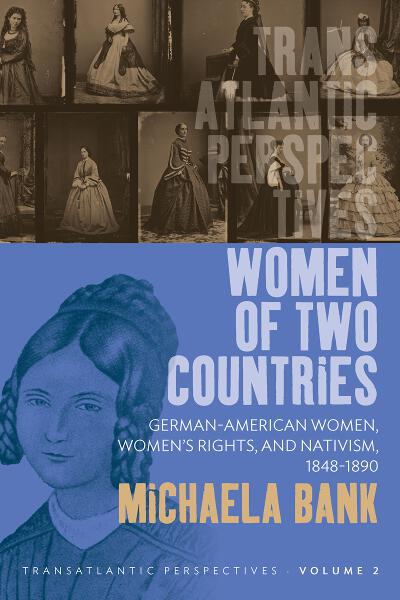
The fantasy of a historical source

Michaela Bank’s Women of Two Countries: German-American Women, Women’s Rights and Nativism, 1848-1890 has just been released by Berghahn. The second volume in our new series Transatlantic Perspectives, it focuses on the challenges faced by three German-American feminists not only with the US women’s rights movement itself but also within their own ethnic community. In the following post, the author recounts the discovery of a seemingly significant event while undertaking her research.

_______________________________

When I first spent long days in libraries and archives to find out more about German-American women’s participation in the US women’s rights movement I stumbled over an extensive report of a German women’s rights convention that took place in 1868 near Boston. Reading the report, which had been published in a German-language paper by Karl Heinzen, who was one of the rather more radical political editors of the time, I found the presented ideas clear and expressed in sharp language. To give an example, here is what one female speaker is recorded as having said to the audience:

“I predict that, if women are granted the right to vote, the political party that seeks to limit the freedom of social life by moral police and seeks to expand the authority of the clerics by religious coercion will be significantly strengthened. What it has not achieved so far, it will conceivably achieve now with the help of American women who are generally more dependent on the representatives of religion than American men. This party’s goal will be achieved if those women’s additional votes are not made powerless by a pull in the opposite direction. And who shall and will provide this pull? Only the German women!”

Such an openly aggressive opposition to the US-American women’s rights movement among German-American women struck me as rather exceptional. I was thrilled as this convention report was a marvelous source for my study on German-American women, nativism and women’s rights in this period, and so I continued to dig deeper into the sources to find out more about it. How did the grand ladies of the US-American movement, Elizabeth Cady Stanton, Lucy Stone and other prominent advocates of women’s rights, react to this opposition?

…Yet, not all paths in historical research lead to success: I could not find any records of the Roxbury convention anywhere. Then, a few weeks later, I found a short note revealing that Karl Heinzen’s report had actually been a fictional one. Suddenly the shockingly clear and sharp language made sense to me.

Although a fantasy, it remained a fascinating report for me because it illustrated pointedly what a group of German-Americans interested in reform politics thought of the women’s rights movement and why conflict arose so often between the two groups. As I discovered, only a few German-American women were willing to stand up and raise their voice strongly and even aggressively. Such were the women who could endure the tension between their ethnic community, which was often at odds with the US-American women’s rights movement because of its nativist and prohibition stances, and the women’s rights movement that they wanted to be a part of. The efforts of Clara Neymann, Mathilde Wendt, and Mathilde Franziska Anneke for an idea of equal women’s rights are special – special, because they were not at all common while still being powerful and influential. In the end, I was still more than happy that I had found the report of the fictional convention even if it was just a „Hirngespinst“ – a pipe-dream – as a newspaper article called it.

_______________________________

 Michaela Bank received her doctoral degree in American Studies from Goethe-University in Frankfurt/Main, Germany in 2009. She was a fellow in the graduate research training group “Public Spheres and Gender Relations” funded by the German Research Foundation from 2005 to 2008. From 2008 to 2010 she was a Lecturer of American History and Gender Studies at Goethe-University in Frankfurt/Main.


Interview with the Author – Britta McEwen, author of Sexual Knowledge: Feeling, Fact, and Social Reform in Vienna, 1900-1934

Britta McEwen is author of Sexual Knowledge: Feeling, Fact, and Social Reform in Vienna, 1900-1934, published earlier this year by Berghahn. Her work uncovers the transformation of sexual knowledge from the realm of specialized medical science to that of social reform for the wider populace. Here she discusses her work, some of the challenges she faced in writing about some of the key historical figures, and how she would utilize her apple pie making skills if she weren’t a historian.

1. What drew you to the study of sexual knowledge in the early twentieth century?

I actually got into this field through architecture!  Vienna has these amazing public housing projects from the interwar period, and as I investigated them I learned that they were intended for a new kind of people – upright, moral, hardworking small families.  This seemed to entail a new sexual system, starting with birth control at the very least.  That, combined with a well-timed read of Isabel Hull’s “Sexuality, State, and Civil Society in Germany,” made me think that there was a story to tell in Vienna’s early twentieth century about attitudes towards sex.

2. Did any perceptions on the subject change from the time you started your research to the time you completed the book?

On of my assumptions at the beginning of my project was that science was always a liberating voice vis-à-vis sexuality.  While scientific discourse was used to challenge Church teachings about sex, I found that many authors in the early twentieth century were actually using melodramatic language, rather than scientific language, to express the call to sexual and social justice.  At first I thought this was just a trick to popularize complex ideas, but as I went on I came to believe that melodrama offered people writing about sex a way to talk about ignorance, shame, and consequences in a way that would be convincing to a wide audience.

3. What aspect of writing this work did you find most challenging?  Most rewarding?

I’ll answer that one by combining the questions and talking about what was both challenging AND rewarding…  some of the historical characters I met in my research were so very colorful and compelling that they threatened to overshadow the “knowledge” they sought to impart.  Here I’m thinking of Wilhelm Reich, Johann Ferch, and above all, Hugo Bettauer.  Bettauer became a personal hero of mine as I wrote, which made it difficult to really focus on his journalism, rather than his person, for the book.  In another world, I think I would have ditched the reams of research I had collected and simply written about Bettauer’s humanism and his outrageous career.

4. To what extent do you think the book will contribute to debates among academics within the field?

Although one of the arguments of my book is that Vienna was a special site for the production and distribution of sexual knowledge in the early twentieth century, I think it would be interesting to see comparative work done on this issue.  How unusual were places like Vienna, Paris, and Berlin?  What made them unique?  I also wonder if books like mine will help dispel the belief that there was only one sexual revolution.  Finally, the debate in the German-speaking world about the “repressive” sexual regimes of the twentieth century is really heating up, and I think books like mine will help contextualize what sexual “liberation” meant to different historical actors.

5. If you weren’t a historian, what would you have done instead?

Although I am a hardly an entrepreneur, I do think I might have been able to run a public space.  Lord knows I waitressed enough to know a good cup of coffee when I see it, and I make a mean apple pie.  So some days I fantasize about running a bookstore specializing in science fiction and mysteries, where you could get something sweet to eat and sit all day (just like in Vienna), reading and gabbing.  I imagine it to be the kind of place with a bad pun in the title and a standing feminist knitting circle – come to think of it, the kind of place that could be lampooned on “Portlandia.”

Britta McEwen teaches European History at Creighton University in Omaha, Nebraska.

In their own words: The broader context of Small Town and Village in Bavaria

Note: Berghahn recently published Peter H. Merkl’s Small Town and Village in Bavaria: The Passing of a Way of Life, a study of that region’s modernization efforts in the 1970s and 1980s that led to a considerable reduction in the autonomy of its small communities. Here the author discusses how the decline of iconic village life (and the broader implications) motivated his study:
Immense changes have occurred in German agriculture and in the economic and social life of very small towns, which I explore in my work Small Town and Village in Bavaria: The Passing of a Way of Life. In many ways, these changes mirror transformations occurring in small towns across the industrialized world. While many people in today’s urbanized society actually come from small town backgrounds or grew up in the countryside and feel nostalgia for the closeness of small communities or for a family farming way of life, these settings have nearly vanished in the last 100 years or so. Where once a majority of the German population were farmers, only a tiny percentage remain so today and most of them are part-time farmers. The majority of really small places have lost their taverns and other local businesses while both schoolchildren and adults commute daily to distant, larger towns.

While the populations of small places decline, the charms of their old historical structures endure, highlighted in art and literature. When we travel through very old towns we are struck by the medieval walls, gates and turrets, and ancient churches that manifest the venerable age of communities that have witnessed centuries of political and social change. Tourists have discovered such places all over Europe, especially in the United Kingdom, France, and Germany where such well-known medieval towns as Rothenburg on the Tauber River or the small villages along the Romantic Road in Bavaria still enchant the visitor.

My book not only focuses on the long-term changes in German agriculture and in fifteen old Franconian mini-towns but also examines the effects of an ambitious modernization project by the Bavarian state that sought to deprive all communities under a certain size of their autonomy and to force them into “administrative unions” with other small places. It was a process not unfamiliar in the U.S. and many European countries, though usually in a more voluntary form, but resulting in far fewer, modernized local units in either case.

The tension between the preservation of these small communities amid the slow dynamics of social change on the one hand and the massive state intervention to modernize Bavarian local government at the periphery on the other is what drew me to this project. It seemed preposterous to force groups of medieval, independent small towns to merge for the sake of modernization. Through my research, which included several mail surveys of mayors, interviews with state and local officials, and statistical materials, I have created a fuller picture of these micro-towns and placed them within the larger hierarchy of German and European levels of government, providing a clearer context for the changes in these localities.

Peter H. Merkl is Professor Emeritus of Political Science at the University of California, Santa Barbara. He has published extensively on comparative and German government and politics, in particular the origin of the West German Republic and German unification.

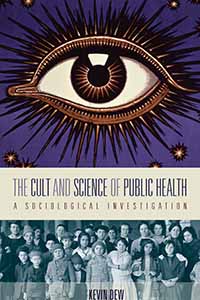
From Idea to Book- The Cult and Science of Public Health

From Idea to Book is an occasional series in which Berghahn authors discuss the origins of their work. Here, Kevin Dew describes how a discussion with a student about Durkheim planted the seed that would eventually become The Cult and Science of Public Health: A Sociological Investigation, which was published by Berghahn this spring.

The impetus to write my book developed over a long period of time, but there were occasions that particularly focused my thinking. A pivotal moment was a discussion I had with a PhD student when I was a lecturer in a Department of Public Health at a medical school. She was using the work of Emile Durkheim to consider the role of neighbourhoods in relation to health. We were throwing around ideas about what sort of social factors foster solidarity or cohesion at a neighbourhood level, and we mentioned religion but moved on quickly as religion does not generally operate at a neighbourhood level. It was then that I had an ‘aha’ moment. Continue reading “From Idea to Book- The Cult and Science of Public Health”