Landscapes beyond La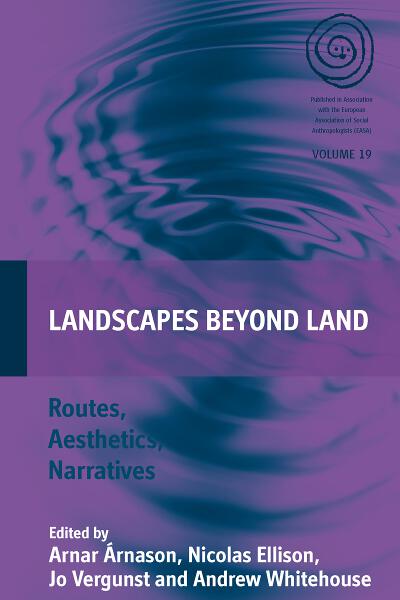 nd: Routes, Aesthetics, Narratives, edited by Arnar Árnason, Nicolas Ellison, Jo Vergunst, and Andrew Whitehouse has recently been released as part of the EASA series. Here Andrew Whitehouse takes us behind the makings of the volume and shares how through his involvement he overcame his own skepticism for the usefulness of landscape as an idea in anthropology.
________________________
1. What drew you to the study of how landscapes are constituted and recollected?
We were initially encouraged by getting some funding from the UK Arts and Humanities Research Council to run a series of workshops on the theme of landscape. The four of us (myself, Jo Vergunst, Nicolas Ellison and Arnar Arnason) were all interested in environmental anthropology and we were keen to see how different anthropologists were thinking about landscapes. Nicolas is from France and one of our aims was to compare French and British approaches. This really came to the fore when we had a workshop in Paris. We also wanted to see how ethnographic writing about landscape could draw together different elements, from very direct perception to large scale and long-term structural dimensions.
2. What aspect of writing or assembling this work did you find most difficult?
Probably just the sheer task of communicating with all of the different people who have been involved in the book. That’s one of the challenges of an edited volume, I guess. Sometimes there were different perspectives within the editorial team, but in many ways we wanted the book to reflect different ideas about landscape, so that wasn’t a problem.
3. How did your perceptions of the book’s topic change from the time you started your research to the time you completed the book?
I definitely learnt a lot about landscape! When we began the series of workshops on which the book was based, I’ll confess to being a bit skeptical about the usefulness of landscape as an idea in anthropology. I thought it was a problem that it had so much baggage and that it lacked precision. I’ve come to rather like that baggage though, because it tends to take things in an interesting direction. I love the way that landscape seems to encourage us to draw nature, culture and history together.
4. If you weren’t an anthropologist, what would you have done instead?
I used to work on a nature reserve and in fact became an anthropologist initially as a way to think about that sort of landscape. I certainly wouldn’t mind working on a reserve these days. As anyone who knows me will tell you, I’m fairly obsessed with wildlife and it would be good to work outdoors a bit more than I do.
____________________
Andrew Whitehouse is a Teaching Fellow in Anthropology at the University of Aberdeen. He has conducted research in various parts of Britain and elsewhere on conservation issues and human–animal relations, with a particular focus on relations with birds through sound.
 Join our Email List




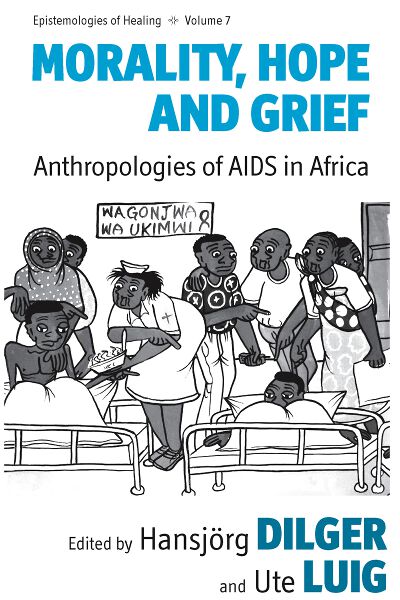 Hansjörg Dilger is the editor, along with Ute Luig, of Morality, Hope and Grief: Anthropologies of AIDS in Africa, which was published by Berghahn Books in paperback in December 2012.
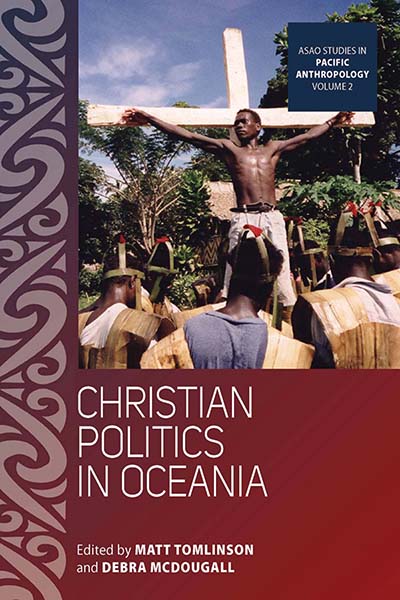 As anthropologists who have worked in the Pacific Islands since the 1990s, we both felt that most political analyses of the region have been flawed for one simple reason: they overlook the enormous but complex political influence of Christian churches. This influence does not always take the form that observers of American politics might expect, where particular churches take explicit stances on political issues or support particular candidates or parties. The political influence of churches in Oceania is both more subtle and more pervasive than that. Time and again during our fieldwork in Fiji and Solomon Islands, we saw how the words of preachers and pastors, activities of Christian organisations, and interpretations of the Bible shaped how people understood their place in political communities. In Oceania, like everywhere else, there is no single Christianity, making it frustratingly difficult to generalize about ‘Christian politics’. Although anthropologists have increasingly turned attention to Christianity, little attention has yet been given to the ways that rival churches position themselves against each other. Our ethnographic research led us to see denominationalism as key source of social friction and creative energy, essential to any understanding of politics in the region.
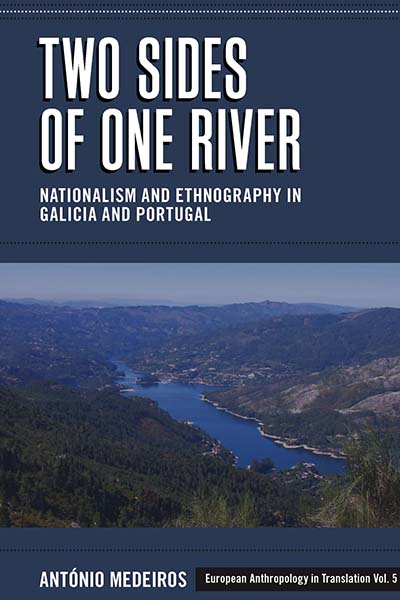 Berghahn has just released Two Sides of One River: Nationalism and Ethnography in Galicia and Portugal, an English translation by Martin Earl of the original Portuguese volume by António Medeiros. This book explores the historical intersections between nationalism and the emergence of ethnographic traditions in Portugal and Galicia, and plays this history against the author’s own ethnographic research in both places at the turn of the 20th century.
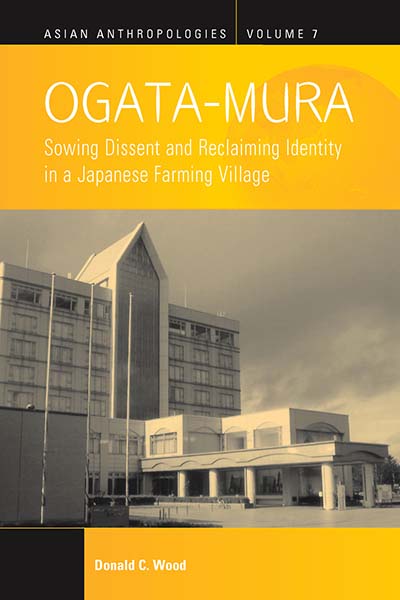 As should any item or idea in which its creator has invested more than fifteen years, this book very strongly reflects my own life course and concerns. Having cut my teeth on the canon of English language anthropological studies of Japanese farming villages as an undergraduate student, but then having trouble reconciling what I experienced in Ogata-mura in 1995–1996 with what I had previously encountered in this body of literature, I came to want to make my own contribution to the study of Japanese farming villages in the twentieth (and twenty-first) century, but in my own way. As an anthropologist who earned post–graduate degrees in both the USA and Japan, I have attempted to marry the respective ethnological traditions of these two countries, while aiming for a broad audience of social scientists and students of Japan and its society.
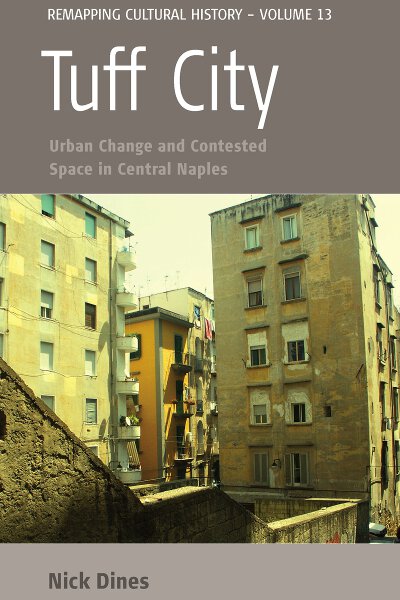 the 1990s under the stewardship of the city’s first directly elected mayor, former communist Antonio Bassolino. Through the study of two major piazzas and a squatted centro sociale (social centre), the book explores the pivotal role of public space in the administration’s efforts to reorder and redefine a city that had hitherto been commonly regarded as an urban outcast. It thus sets out to investigate how changes to the built environment were, on the one hand, produced and publicly endorsed and, on the other, experienced and contested by different groups of people. Understanding public space means grappling with the messy and perhaps ugly pluralism that constitutes urban life, rather than unwittingly confirming normative and institutional ideals about a ‘good’ (and, especially in the case of Naples, ‘well-behaved’) city.
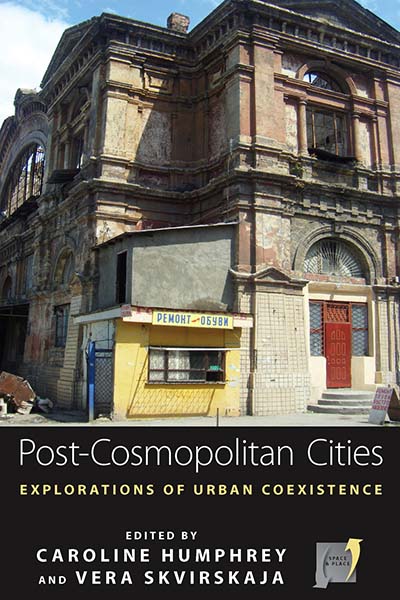 Post-Cosmopolitan Cities: Explorations of Urban Coexistence