Fresh Ink on a Classic: Going ‘Beyond “Writing Culture”’

In 1986, Writing Culture: The Poetics and Politics of Ethnography was published, and it changed the perception of ethnographic study from then on. Little more than 20 years later, Olaf Zenker and Karsten Kumoll took its reach further with Beyond Writing Culture: Current Intersections of Epistemologies and Representational Practices, published originally in 2010 and published as a paperback last month. Below, the editors share how their work engages with the inspiration piece, how they came to publish the collection, and the ways in which their work corresponds to and challenges the original.


_____________________________


Berghahn Books: Tell us about the original Writing Culture? How does your volume expound on the principles set forth in this groundbreaking work, and how does your volume differ?
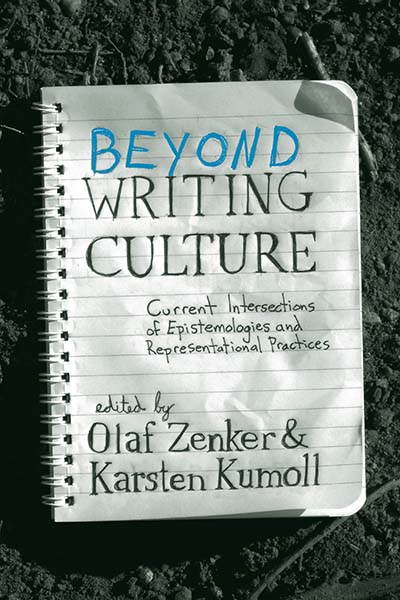
 

Olaf Zenker: The publication in 1986 of Writing Culture by James Clifford and George Marcus was crucial for the discipline of anthropology as a whole. Continue reading “Fresh Ink on a Classic: Going ‘Beyond “Writing Culture”’”
Good Borders Make Good Neighbors

What are the social impacts as European political borders are being redefined? Using a variety of case studies, editors William Kavanagh and Jutta Lauth Bacas seek to answer that question in Border Encounters: Asymmetry and Proximity at Europe’s Frontiersto be published this month. The editors and contributors examine the implications as borders are strengthened in some parts of the continent, and weakened in others. Below, Kavanagh and Lauth Bacas share their thoughts on the volume.


________________________________________________


Berghahn Books: What drew you to the study of political and social borders? Why is this study important?
 

Jutta Lauth Bacas: The core experience which triggered my interest in border studies and in the topic of irregular crossing at a maritime border was my encounter with destroyed inflatable dinghies having been used by refugees to enter a Greek border island clandestinely.

Continue reading “Good Borders Make Good Neighbors”

Likelihood of Contact Depends on the Lifetimes of Civilizations

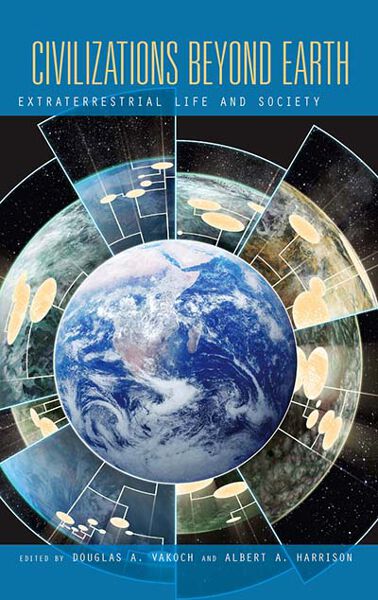
If alien civilizations are anything like terrestrial civilizations, earthly beings may never encounter beings from outer space. Civilizations Beyond Earth contributor Alan J. Penny says our greatest chance for interaction will hinge on the longevity and attention span of an alien society — which must be long enough to give us a chance to interact.


________________________________________

To consider the number of extraterrestrial civilizations that may be out there and which we can detect by their emission of radio signals, we need to think about the likelihood that a star may host a planet with a civilization that can broadcast such signals.


But we also need to think about how long such civilizations last.

Continue reading “Likelihood of Contact Depends on the Lifetimes of Civilizations”

Looking ‘Against the Grain’ at German-Jewish Intellectuals

German-Jewish intellectuals in the twentieth century are the focus of Against the Grain: Jewish Intellectuals in Hard Times, published this month. The volume, edited by Ezra Mendelsohn, Stefani Hoffman, and Richard I. Cohen, looks at the key figures of German-Jewish thought: Scholem, Strauss, and Kohn, and examines how such thinkers reacted to, and were impacted by, the collection of crises lived by Central European Jews. Below, co-editor Mendelsohn speaks about the volume’s potential to “stir” the field and what brought him to the study in the first place.


____________________________________________


Berghahn Books: What drew you to the study of the trials and tribulations of Jewish men and women in the twentieth century?


Ezra Mendelsohn: The main reason resides in my  interest in the history of my own family.  Both my parents were born in Tsarist Russia, and both ended up in the United States, having lived for some time in British Palestine. 

Continue reading “Looking ‘Against the Grain’ at German-Jewish Intellectuals”

Reconstructing the Measure and Meaning of Obesity

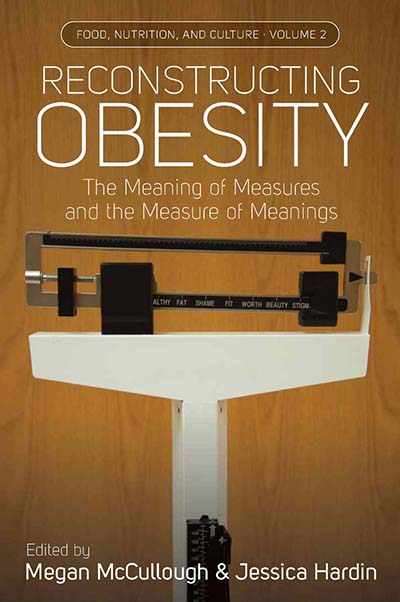
Obesity is a worldwide problem, and affecting more people all the time. In their timely collection, editors Jessica Hardin and Megan McCullough examine this growing epidemic in their soon-to-be-released book, Reconstructing Obesity: The Meaning of Measures and the Measure of Meanings.The editors analyze the cultural causes and effects to open a new discussion about fatness and obesity.

_________________________________

I asked my students, fresh off a lively discussion about dieting and religious fasting, if any of them would consider taking a new course I was designing called,“Fatness and Obesities.” Only one student raised her hand. What if I change the course’s title – but not its content – to “The Politics of Body Size”? At this suggestion, they all raised their hands. What is the difference?

-Jessica Hardin

Continue reading “Reconstructing the Measure and Meaning of Obesity”

A New Model for Interstellar Communication

Communication between great distances is nearly instantaneous and is becoming faster every day. But when discussing communication with beings outside of our solar system, emails and text messages are still not fast enough to span the light-years of distance in one person’s lifetime. Civilizations Beyond Earth: Extraterrestrial Life and Society contributor Carl L. DeVito proposes that perhaps communication to the far reaches of space is about leaving a mark or a legacy, much like great civilizations of yore left for modern-day humans.


________________________________


The laws of physics and the discoveries of astronomy place serious restrictions on interstellar communication.


Stars are light-years apart, and the special theory of relativity tells us that there are restrictions on the speed at which information can be exchanged. The times involved in sending and receiving messages, which may exceed many generations, rule out a dialogue.

Continue reading “A New Model for Interstellar Communication”

European Thought: The ‘Gift’ that Keeps Giving

Is the spread of Western, specifically European, thought truly a gift to the rest of the world, or is this dissemination simply a way of exerting cultural power? Vassos Argyrou seeks an answer to this question in his newly released volume The Gift of European Thought and the Cost of Living. Below, the author explains his inspiration for—and the challenges and rewards of—writing the book, published September 2013.


_________________________________________


Berghahn Books: What drew you to the study of “European Thought” and what are some examples of this?


Vassos Argyrou: “European thought” is a term that in a certain sense was imposed on me as it was used to make the highly contentious claim that it’s a gift to the rest of the world. It refers not only to an intellectual tradition but also to a way of life or culture—European or,  more broadly, Western culture.

Continue reading “European Thought: The ‘Gift’ that Keeps Giving”

Extra-Terrestrial Life: Good or Bad News?

Is there life beyond Earth? And how will the human race — specifically our media — react if there is? Civilizations Beyond Earth: Extraterrestrial Life and Society, which will be released as a paperback this month, is a collection of essays that address the (plausible) possibility that we are not alone in the universe. If that is true, and if we do one day make contact — wonders contributor Morris Jones — how will news outlets portray such an event? And will that lead to worldwide awe or global panic?


________________________________________________________


Let’s assume that evidence of intelligent extraterrestrial life is discovered tomorrow.


Continue reading “Extra-Terrestrial Life: Good or Bad News?”

Aloha to Beginnings: Writing ‘Legacies of a Hawaiian Generation’

A talk-story, or mo`olelo, is an informal and traditionally Hawaiian way of sharing stories to preserve them for posterity. In The Legacies of a Hawaiian Generation, to be published this month, author Judith Schachter pairs these informal conversations with fieldwork observations to give readers a view into the island culture post-U.S. annexation. Below she shares the story of her beginning in Hawai`i, and how her work took root. 


____________________________________


My work in Hawai`i began “in small,” with the idea of adding a chapter to my book on American kinship, family, and adoption. I intended to see what happened to Polynesian customs when the U.S. brought its legal system to the Pacific Island state.

Continue reading “Aloha to Beginnings: Writing ‘Legacies of a Hawaiian Generation’”

Life Beyond Earth? Survey Says…

In 2005, a survey of 1,000 U.S. men and women of various backgrounds revealed that 6 in 10 Americans believe in the possibility of extraterrestrial life. If this slice of the public is correct, what does it mean for our world? That is one of the questions editors Douglas A. Vakoch and Albert A. Harrison attempt to answer through the collection Civilizations Beyond Earth: Extraterrestrial Life and Society, which was released in paperback August 2013. Below, volume contributor George Pettinico begs the question of the American reaction: How will the U.S. react if we discover life outside of our blue planet?

_____________________________________________


Imagine the day, if and when it should come, that the Search for Extraterrestrial Intelligence (SETI) confirms there is indeed intelligent life on other planets.


Continue reading “Life Beyond Earth? Survey Says…”