Promoting ‘self-reliance’ for refugees: what does it really mean?

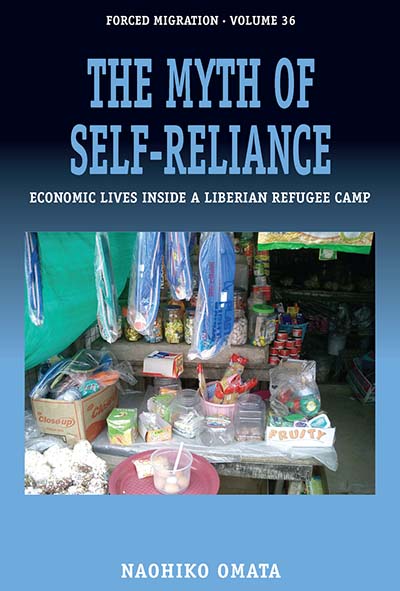
The following is a post by Naohiko Omata, author of The Myth of Self-Reliance: Economic Lives Inside a Liberian Refugee Camp.

Promotion of ‘self-reliance’ for refugees has occupied a central seat in the policy arena of the international refugee regime in recent years. The United Nations High Commissioner for Refugees (UNHCR) broadly defines self-reliance as ‘the social and economic ability of an individual, a household or a community to meet essential needs in a sustainable manner’. Its guiding philosophy can be summarised as: refugees have the skills, capacity and agency to stand on their own and be able to sustain themselves without depending on external humanitarian aid. This concept has been universally embraced by policy-makers and aid agencies and has now become an increasingly visible part in refugee assistance and protection programmes worldwide.

But on the ground, what does it really mean for refugees to attain self-reliance?

While many policies have rhetorically committed to the importance of ‘helping refugees help themselves’, some fundamental questions remain unanswered.

First, do refugees have enabling conditions to achieve self-reliance? Currently, many refugees in the Global South are unable to fully exercise their right to work and to move freely due to regulations by their host governments. These impediments can severely constrain refugees’ capacity to construct meaningful livelihoods and limit their access to commercial markets. Under these restrictions, is it sensible to assume that refugees can attain self-reliance regardless of how industrious and ingenious they are?

Next, how do we determine whether refugees have achieved self-reliance? Despite its extensive promotion, there are to date no universally agreed systematic and rigorous criteria for measuring refugees’ self-reliance. Instead of using objective benchmarks, UNHCR often perceives refugees as self-reliant when they live without external assistance. Is the situation in which refugees living without aid a plausible indicator of ‘meeting their basic needs in a sustainable manner’, as defined by UNHCR?

Most importantly, for whom is refugees’ self-reliance being promoted? In theory, nurturing refugees’ self-reliance should entail a strategic shift from traditional relief aid to development-oriented support and the provision of enabling conditions for refugees to establish gainful livelihoods. Yet this is not happening in the field. Meanwhile, UNHCR and donor states usually start decreasing assistance for refugees while promoting refugees’ self-reliance. Is refugees’ self-reliance meant to empower refugees’ economic capacities or to justify cutting down aid for refugee populations?

My authored book, The Myth of Self-Reliance, has explored these important but unsolved questions through a study of Buduburam refugee camp in Ghana. This Liberian refugee camp has been commended by UNHCR as an exemplary ‘self-reliant’ model in which refugees were sustaining themselves through robust businesses with little donor support. The UN refugee agency even boasted that the organization had facilitated their economic success by gradually withdrawing its assistance over the period of exile.

The book challenges the reputation of Buduburam refugee camp as a successful model for self-reliance and sheds light on considerable economic inequality between refugee households. Both qualitative and quantitative data reveal that a key livelihood resource for refugees in Buduburam was not their commercial activities but their access to overseas remittances, which had nothing to do with UNHCR’s initiatives to foster refugees’ self-reliance by withdrawing aid. While refugees who were receiving remittances were able to satisfy their basic day-to-day needs, those who had no connections to the diaspora were deeply impoverished.

There is increasing support for the idea that refugees are active and capable players with ingenuity and resilience. I agree wholeheartedly with this view in principle. However, it is irresponsible to assume that this can entirely replace the need for humanitarian aid and protection, in the absence of an enabling environment and adequate resources. Over-emphasis on the resilience, agency and capacity of refugees can obscure internal differentiations in their economic capacities, and universal celebration of refugees’ self-reliance can even undermine refugee protection and welfare. While we should certainly acknowledge and respect refugees’ capabilities and resourcefulness in the face of adversity, we should not dump all responsibilities on the shoulders of refugees alone.

Given the daunting scale of refugees globally, it is undeniable that we need to pioneer new ways to support and enable their socio-economic independence in the long-term. However, making refugee self-reliance a reality necessitates a strong commitment and investment from not only refugee but host governments, the donor community, development agencies, UNHCR, and other relief organizations.


Learn more about The Myth of Self-Reliance: Economic Lives Inside a Liberian Refugee Camp here and read the Introduction for free online.
SIMULATED SHELVES: BROWSE JULY 2017 NEW BOOKS

We’re delighted to offer a selection of latest releases from our core subjects of AnthropologyApplied AnthropologyFilm Studies, Gender Studies, History, and Media Studies, along with our New in Paperback titles.


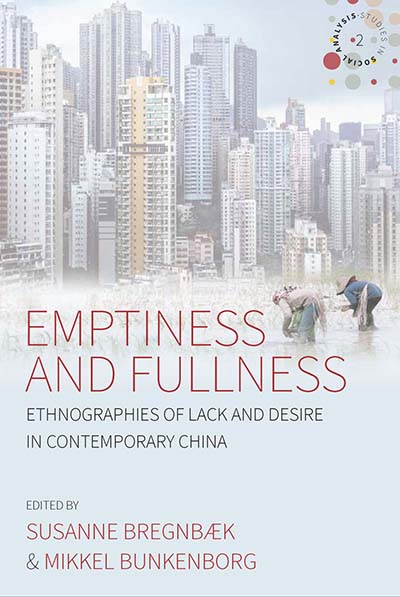
EMPTINESS AND FULLNESS
Ethnographies of Lack and Desire in Contemporary China
Edited by Susanne Bregnbæk and Mikkel Bunkenborg

Volume 2, Studies in Social Analysis

Continue reading “SIMULATED SHELVES: BROWSE JULY 2017 NEW BOOKS”

Recreating universities to help revive democracy

The following is a post by Davydd J. Greenwood, Goldwin Smith Professor of Anthropology Emeritus, Cornell University

The following are some management verities that abound in current university administrations:

  • Good universities require highly-paid leaders hired by Boards of Trustees through executive search services.
  • Good universities have large administrative staffs, often outnumbering the faculty.
  • Good university leaders must impose accountability and quality control to make their university rise in the rankings.
  • The cost of higher education will always go up.

All these verities are false as a single example can show. The Mondragón University in the Basque Country with 4,000 students and 4 colleges operating 8 campus locations throughout the Basque Country has a central administrative staff of 3 senior administrators and their secretaries. Highly ranked and successful, it operates daily through collaborative governance including the students, faculty, and staff who “run” the university. If this is possible, then having more managers than workers, having vast administrative overheads, and governing from the apex by imposed authority, are not laws of nature. Mondragón University shows that a successful university business model can be unlike any of our currently over-administered and radically inefficient universities. In science, an exception to the rule demonstrates that the rule is false.

Most explanations of the decline and fall of public higher education blame the corporatization of our institutions and implementation of business models for the problems. First-hand knowledge of innovative private sector organizations show they share more features with Mondragón University than with our current universities.

Successful businesses do not resemble our current universities. These institutions are poorly organized, over-staffed with administrators, and suffer from huge pay disparities and runaway costs. Successful businesses generally are team-based matrix organizations whose cross-disciplinary, cross-functional teams focus on products or key processes. Each team has experts from all relevant stakeholder/functional areas in the organization. The business leaders are coordinators and process champions, not authoritarian bosses. Salary differentials are generally modest. In these well-run organizations, the people who produce the “value” for the organization play a role in structuring and managing operations.

This contrasts sharply with the administrative bloat in universities, the authoritarianism of “parachuted in” academic leaders, and salaries for senior academic administrators that often are 40-50 times higher than those of the secretarial staff and groundskeepers. The power apex is remote from daily work processes and thus leaders cannot make competent management decisions. Nor can they understand why their decisions fail to produce the desired results. Failure instead is blamed on the faculty and the students. Ultimately, these policies prevent working and middle class students from having a high-quality education and gaining the consequent social mobility and civic awareness it can produce.

We are reaching the nadir in this race to the bottom. The only way forward is to create higher education anew through the democratic practices of participatory democracy, as in the Mondragón University. These practices are the core of Action Research. They require all the relevant stakeholders to collaborate in establishing the mission, structures, and practices of the institution. Together they must enact these missions and keep constant evaluation processes going to see how well they are accomplishing the goals they agreed on, making the necessary adjustments to improve on a continuing basis.

The “freedom to teach” and the “freedom to learn” essential to Bildung involves the ongoing recreation and reinforcement of universities that respect and practice academic freedom, academic integrity, and participatory democracy in every organizational dimension. These recreated universities would be schools for democracy and organized to produce Neue-Bildung for the university stakeholders and for society at large.

Critique and wringing of hands is easy; action research to create democratic universities is not. Where a powerful few currently dominate, they will react to any threat to their power and money and fight back. Changing universities into such organizations requires radical moves, the first being understanding that such change is possible. We have laid out the analysis and needed actions in our book, Creating a New Public University and Reviving Democracy: Action Research in Higher Education.

The current quagmires created by the neo-liberals in universities (and most other institutions) offers some hope. Most of the stakeholders, regardless of their politics, are aware that the current university system is broken. What matters now is to have concrete plans for a way out of the quagmire and to be ready for an arduous campaign to recreate universities, an essential element in the rebirth of democracy itself.


Learn more about Davydd J. Greenwood’s new book Creating a New Public University and Reviving Democracy: Action Research in Higher Education here.

Book Launch for Stories Make the World

The following is a post about the book launch for Stories Make the World: Reflections on Storytelling and the Art of the Documentary by Stephen Most.

It’s odd to see the result of years of work contained within a small object, whether it is a book, a DVD, or a phone on which films are streaming. Stories Make the World contains, in a sense, ideas I care about, a variety of subjects that interest me, and many of the films I’ve worked on.

It was odd as well to see a room enclose people from almost every aspect of my life. That happened at the party celebrating the launch of Stories Make the World. If my life were a book, many of its chapters appeared in my living room one Sunday afternoon. Convening beneath balloons were my brother, a cousin, and their wives, my wife, our son and his girlfriend, friends who live on my block, friends whose children grew up with my children, other friends I hadn’t seen in years, and colleagues I have worked with over the years.

That gathering of people I’ve known over a long span of time in disparate situations offered a sense of my life’s unity. But it was an illusion: a snapshot at a moment in time belies the experience of living. As Kierkegaard wrote in his journals, “Life can only be understood backwards, but it must be lived forwards.” Living forwards, it can be impossible to tell what direction one will take and whether pleasure or distress, success or failure will result. That applies to documentary films, almost every one of which is a high-risk project. It applies, of course, to a book from conception to publication and beyond. And it’s true for everyone’s life. The present moment is pregnant with the future. The outcomes and their connection with what came before become evident only in retrospect.

Stories Make the World

Looking around the room, I saw the youngest member of my family, two-year-old Nina, resting in her mother’s arms. I wondered, who will she be? What will the world be like when she is a woman? Across the room from Nina and her mother Katie stood Douglas Sharon, an explorer in Perú who, when we first met in our early twenties, was discovering ancient cities that Andean jungle had covered. His friendship with the shaman Eduardo Calderón inspired a career change: Douglas became an anthropologist.

I caught the eye of Claire Schoen. When we met, I was a playwright working with a comedic theater company and she was a documentary filmmaker. Living with her, I entered the community of independent media professionals in the Bay Area. Members of that community listened as I read passages from Stories Make the World: Judy Irving who, when I met her, was making Dark Circle, a mind-opening film about the nuclear age, with Chris Beaver and Ruth Landy; Ruth, who produced international media for the World Health Organization after Dark Circle premiered; Justine Shapiro, who apprenticed with Judy and Chris, then went on to make Promises, the Emmy-winning, Academy Award-nominated film about Israeli and Palestinian children; Gina Leibrecht, who has edited two films I’ve worked on: A Land Between Rivers and Wilder than Wild; and the director of those films, Kevin White, who arrived late, bringing a bottle of bubbly.

At that moment in time in that place, which seemed to encompass innumerable stories in my life and theirs, I released into the world a small object that I hope will be fruitful.


See an earlier blog post from Stephen Most here, and learn more about the book Stories Make the World: Reflections on Storytelling and the Art of the Documentary here. To stream and download films in Stories Make the World, go to www.videoproject.com/Stories.


SIMULATED SHELVES: BROWSE JUNE 2017 NEW BOOKS

We’re delighted to offer a selection of latest releases from our core subjects of AnthropologyApplied Anthropology, Environmental Studies, Film Studies, History, Jewish Studies and Medical Anthropology, along with our New in Paperback titles.


Paperback Original

STORIES MAKE THE WORLD
Reflections on Storytelling and the Art of the Documentary
Stephen Most

Continue reading “SIMULATED SHELVES: BROWSE JUNE 2017 NEW BOOKS”

Visit Berghahn Books at ECAS 2017!

African-StudiesWe are delighted to inform you that we will be attending the 7th European Conference on African Studies in Basel, Switzerland from the 29th June – 1st July 2017. Please stop by to browse our selection of titles on display, and take away some free journal samples.


If you are unable to attend, we would like to provide you with a special discount offer. Valid through August 1st, use discount code ECAS17 at checkout and receive a 25% discount on all African Studies titles found on our website.


Continue reading “Visit Berghahn Books at ECAS 2017!”

The Berkshire Conference of Women Historians

header-bc2017-1024x341We are delighted to inform you that we will be present at The Berkshire Conference of Women Historians at Hofstra University in Hempstead, NY on June 1-4, 2017. Please stop by our table to browse the latest selection of books at discounted prices & pick up some free journal samples.


If you are unable to attend, we would like to provide you with a special discount offer. For the next 30 days, receive a 25% discount on all Gender Studies titles found on our website. At checkout, simply enter the discount code Berks17. Visit our website­ to browse our newly published interactive online Spring/Summer 2017 New Titles Catalog or use the new enhanced subject searching features­ for a complete listing of all published and forthcoming titles. Continue reading “The Berkshire Conference of Women Historians”

SIMULATED SHELVES: BROWSE April 2017 NEW BOOKS

We’re delighted to offer a selection of latest releases from our core subjects of Anthropology, Educational Studies, Environmental StudiesGenocide Studies, History and Jewish Studies, along with our New in Paperback titles.


Paperback Original

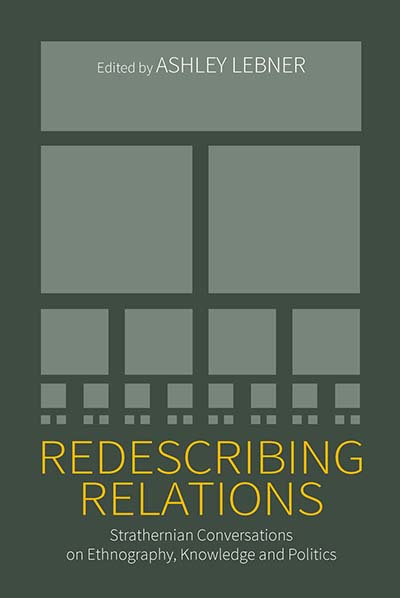
REDESCRIBING RELATIONS
Strathernian Conversations on Ethnography, Knowledge and Politics
Edited by Ashley Lebner
Afterword by Marilyn Strathern

Continue reading “SIMULATED SHELVES: BROWSE April 2017 NEW BOOKS”

Marcel Mauss: Between Sociology and Anthropology

mauss

Marcel Mauss, (born May 10, 1872—died Feb. 10, 1950), nephew of Émile Durkheim, French sociologist and anthropologist whose contributions include a highly original comparative study of the relation between forms of exchange and social structure. His views on the theory and method of ethnology are thought to have influenced many eminent social scientists.

Learn more about the life and legacy of this influential sociologist with these books from Berghahn:

Continue reading “Marcel Mauss: Between Sociology and Anthropology”