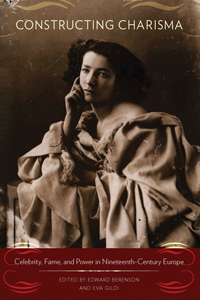
Edward Berenson and Eva Giloi on 19th Century Celebrity

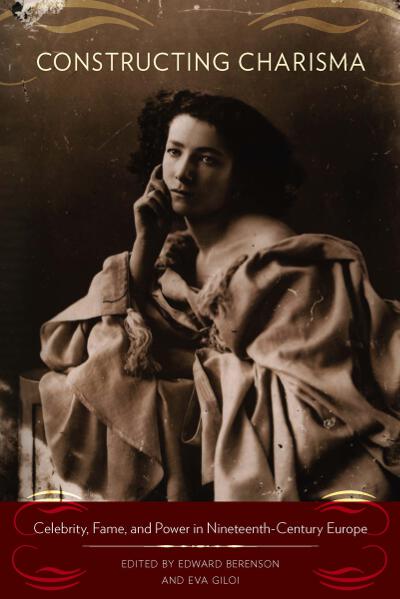
In the collection Constructing Charisma, editors Edward Berenson and Eva Giloi have brought together a series of essays exploring the growth of the idea of celebrity in 19th century Europe. In this lengthy interview, the editors discuss the roots of their ideas, and how the study of the 19th century is still significant for understanding celebrity today. 

__________________________________

What drew you to the study of celebrity, especially in 19th Century Europe?


1. Both of us had been working on certain celebrated individuals in 19th century Europe. In Ed’s case, it was colonial figures like Henry Morton Stanley; in Eva’s it was the German Kaiser. We each saw that our historical subjects owed a large part of their renown to forms of media new to the 19th century, especially photography and the mass press. The Kaiser would, of course, have been well known in any case, but Eva showed that photography helped make him not just a household name, but a household object, as individuals collected pictures of him. As for Stanley and other “colonial heroes,” they became celebrities because the mass press obsessively promoted them and their exploits. Through our individual works, we both perceived that that celebrity became a hugely important social and cultural phenomenon in the 19th century; to investigate it further, we decided to bring together colleagues from a variety of disciplines with expertise in the key European countries.

Continue reading “Edward Berenson and Eva Giloi on 19th Century Celebrity”

A Conversation on Nature and Culture’s Latest Special Issue

The latest issue of Nature and Culture is a Special Symposium on “Nature, Science, and Politics, or: Policy Assessment to Promote Sustainable Development?” This post is a conversation between the issue’s Guest Editors, Sabine Weiland, Vivien Weiss, and John Turnpenny, on why this topic was selected.

The issue is currently available via Ingenta on the Nature and Culture website, here. Continue reading “A Conversation on Nature and Culture’s Latest Special Issue”

Exploring the Arab Spring with Regions & Cohesion Editors Harlan Koff and Carmen Maganda

The Arab uprisings of 2011 are among those rare events that shake the world and capture our attention because they are largely unexpected and because their significance remains a mystery. Often we get used to everyday situations, and politics can become routine so that we conveniently forget that change is the only constant in global affairs. These revolts, which caught most world leaders off-guard, confirm this view. They became popularized in public debate as the “Arab Spring”, since many outsiders viewed them as refreshing change in a region where it was thought that time had frozen, and hierarchical societies were unchangeable. Continue reading “Exploring the Arab Spring with Regions & Cohesion Editors Harlan Koff and Carmen Maganda”

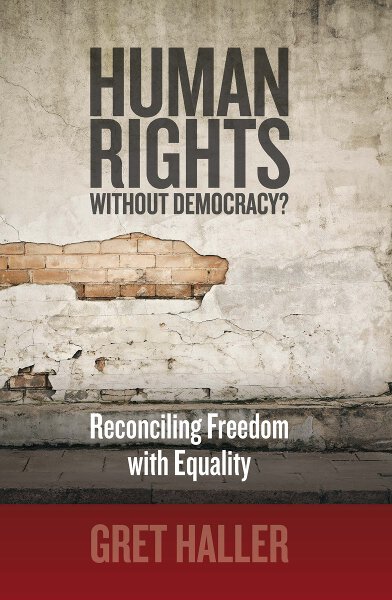
Juridical Human Rights – An Excerpt from Gret Haller’s Human Rights Without Democracy?

In Human Rights Without Democracy?, published in an English translation by Berghahn Books in December 2012, Swiss politician, diplomat, and human rights activist Gret Haller interrogates why human rights are defined in a certain manner internationally. 

_________________________

Do Human Rights really reflect the interests of the people? Can citizens in a democracy decide what human rights are? Or do we leave it up to experts and the courts to define human rights? I believe that human rights are something that the people of any given society should be able to establish democratically. Human rights are the outcome of a struggle to right what has gone wrong. To explain my view, I sketch the history of the concept of human rights that must be seen as separate from the historical development of factual rights. One of the many insights that emerge is that there is a significant difference in how human rights are understood in the United States of America on the one hand and in Great Britain and Continental Europe on the other.


I take a look at theory from John Locke to Immanuel Kant to explain why, from a philosophical point of view, liberty and equality need not be mutually exclusive. We need freedom and equality for all. The end of the Cold War gives us a new opportunity to see how equality can be constitutive of freedom.  The West has not yet seized this opportunity. Instead, we let self-appointed experts drawing on individual court rulings prescribe human rights for us. Taken to ever higher courts that eventually revise political decisions, we end up with citizens that are discouraged from participating in the democratic shaping of political will.


Gret Haller


Continue reading “Juridical Human Rights – An Excerpt from Gret Haller’s Human Rights Without Democracy?

Hot Off the Presses: New Journal Releases from Berghahn

Anthropology in Action
Volume 19, Issue 3, Winter 2012
Special issue on Tourism and Applied Anthropology in Theory and Praxis, with articles on village tourism in Cyprus, hospitality in Laos, surf tourism in Costa Rica, and wine tourism in the Temecula Valley.

German Politics and Society
Volume 30, Issue 4, Winter 2012
With articles on “Freie Wähler” in the German political system, migrant interests in Germany, and fairy tale heroes and heroines in an East German Heimat; also featuring a forum on research performance in Germany, and several book reviews.

Girlhood Studies
Volume 5, Issue 2, Winter 2012
Celebrating the tenth issue and the First Annual Day of the Girl (October 11), with articles spanning girls’ aggression and use of violence, quality of life, use of the internet, and book reviews.

Journeys
Volume 13, Issue 2, Winter 2012
Focusing on the places or trails where traumatic or miraculous events took place, and on the significance and meaning people put in the act of walking to and around these sites.

Learning and Teaching
Volume 5, Issue 1, Spring 2012
Special Issue on “Towards and Anthropology of Anthropology: the socialization of aspiring anthropologists”, with articles focusing on the education of anthropologists.

Aspasia
Volume 6, 2012
Celebrating 100 Years of International Women’s Day, with articles focusing on Russia, the Polish lands, and Greece; a review of the book Frauentag! (Women’s Day!); and a report on recent IWD-related events in Ukraine, including two exhibitions.

Behind the Launch of Asia Pacific World with Chief Editor Malcolm J. M. Cooper

Back in 2009, a few faculty members at Ritsumeikan Asia Pacific University (located in Beppu, Oita, Japan), along with the university’s first president, considered that the often promoted concept in the early years of the 21st century of this being the “Asia Pacific Century” needed re-evaluation, not only with respect to possible scenarios for the years to come, but even of what was meant by the term “Asia Pacific.” Even though “Asia Pacific” was being used widely in the media and in academe to describe an emerging region, this usage was often (in fact, usually) imprecise and elusive, and tended to change over the years in line with changes in the global political economy. As we explored the idea of a new refereed journal that would provide a fresh look at the region and its evolving position in the world, one thing which became very clear to us was that the most useful and illuminating academic work on the region is nearly always multidisciplinary, drawing on a range of theories and methods. Analysis using a single narrowly-defined theoretical or methodological perspective is often both highly technical for the non-specialist and ignorant of a large part of the reality on the ground.


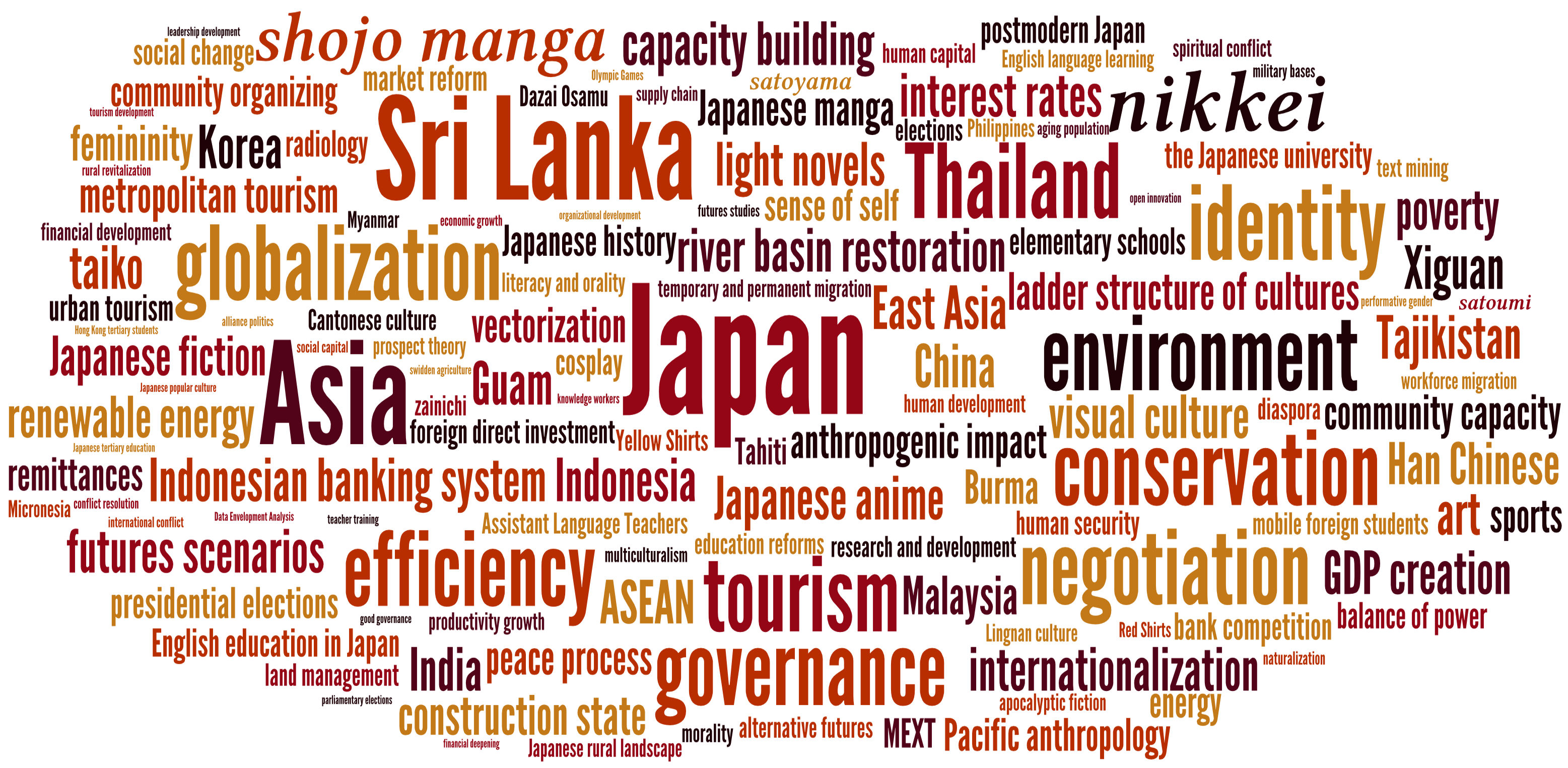
The result of our efforts was Asia Pacific World, a peer-reviewed, scholarly journal that focuses on the social, political, cultural and economic development of the Asia Pacific region.  One of the core reasons for launching Asia Pacific World was the hope of encouraging the publishing of interdisciplinary work accessible to a wide range of regional specialists, which in turn could provide comparative insights into the nature of the processes and changes taking place across the region as a whole. So far we have certainly published interdisciplinary and wide-ranging papers in our three volumes (six issues) to date. The following keyword cloud shows the topic distribution of the published papers. We continue to receive a steady stream of papers and a good response from potential reviewers.
 

You can receive Asia Pacific World through membership in its parent association: the International Association for Asia Pacific Studies (IAAPS). IAAPS aims to shape and promote Asia Pacific Studies. It focuses on the Asia Pacific from interdisciplinary perspectives, encompassing humanities, social and management sciences and natural sciences. IAAPS has held three annual conferences so far (from which some papers have been published in Asia Pacific World): two at Ritsumeikan Asia Pacific University and the most recent one in November 2012 at the Chinese University of Hong Kong. The 2013 conference will be held in Manila at De La Salle University.


We hope that the journal will provide the academic frame for our quest to redefine and understand the Asia Pacific in the next few years, and we encourage contributions from those reading this post with an interest in Asia Pacific studies.


Malcolm J. M. Cooper

Chief Editor, Asia Pacific World


For the most recent issues of Asia Pacific World, please visit the journal’s website: http://journals.berghahnbooks.com/apw/

Hot Off the Presses – New Book Releases

Newly released paperbacks from Berghahn:

Constructing Charisma: Celebrity, Fame, and Power in Nineteenth-Century Europe, edited by Edward Berenson and Eva Giloi
Comics in French: The Bande Dessinée in Context, Laurence Grove
News as Culture: Journalistic Practices and the Remaking of Indian Leadership Traditions, Ursula Rao
Human Nature as Capacity: Transcending Discourse and Classification, Nigel Rapport
State Practices and Zionist Images: Shaping Economic Development in Arab Towns in Israel, David A. Wesley, with a foreword by Emanuel Marx
The Ethnographic Self as Resource: Writing Memory and Experience into Ethnography, edited by Peter Collins and Anselma Gallinat