In History: Churchill delivers Iron Curtain speech

On March 5th 1946, in one of the most famous orations of the Cold War period, former British Prime Minister Winston Churchill condemned the Soviet Union’s policies in Europe and declared, “From Stettin in the Baltic to Trieste in the Adriatic, an iron curtain has descended across the continent.” Churchill’s speech is considered one of the opening volleys announcing the beginning of the Cold War. Read More

———————————————————————————————————————————–

Berghahn presents a selection of relevant Cold War titles:


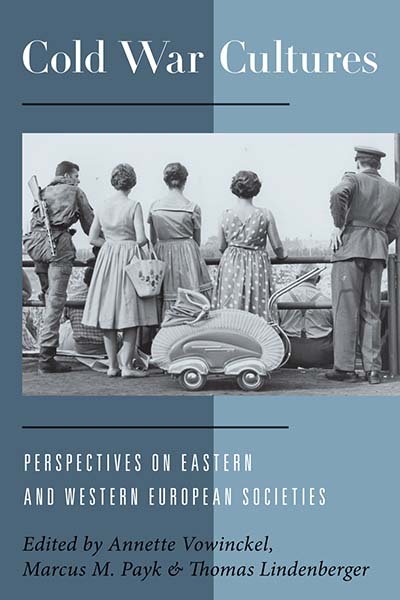
COLD WAR CULTURES
Perspectives on Eastern and Western European Societies
Edited by Annette Vowinckel, Marcus M. Payk, and Thomas Lindenberger

Continue reading “In History: Churchill delivers Iron Curtain speech”

Author of ‘Jesus Reclaimed’ Earns German Decoration

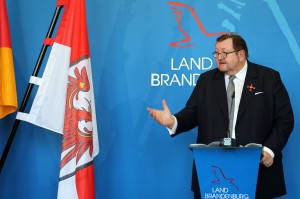
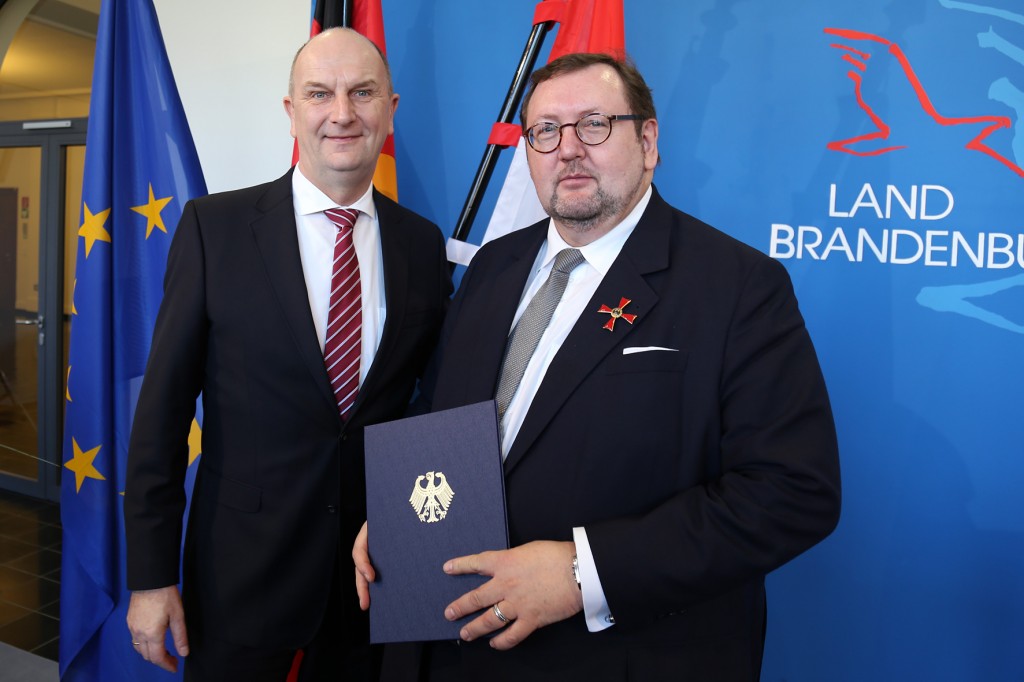
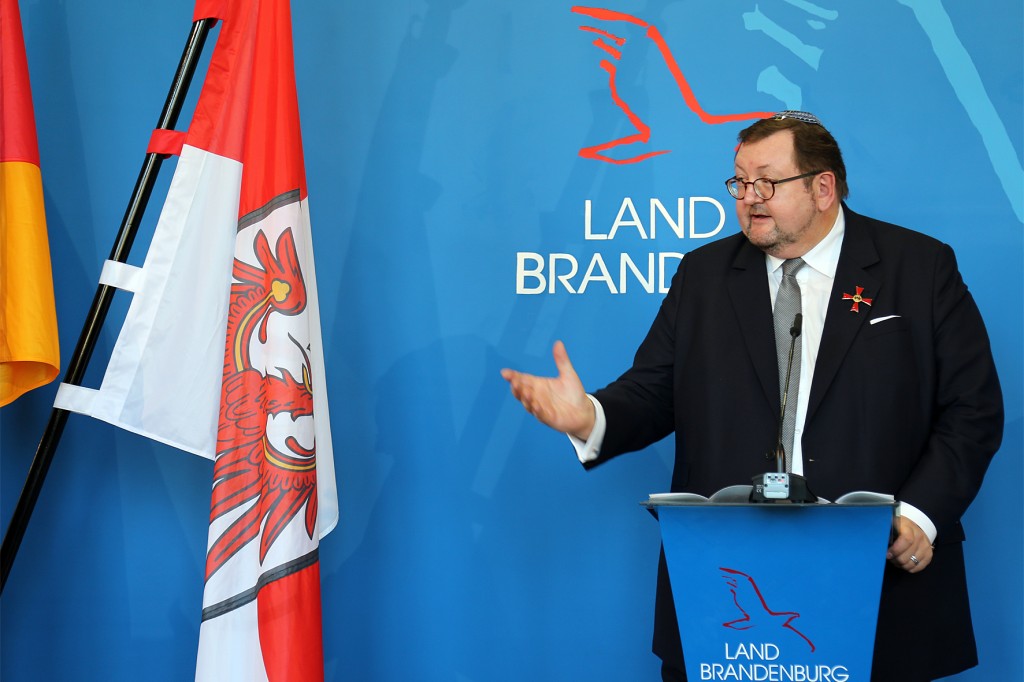
The President of the Federal Republic of Germany, Joachim Gauck, honoured Rabbi Walter Homolka with the Officers Cross of the Federal Merit Order.


On February 27, 2015, the Prime Minister of the State of Brandenburg, Dr. Dietmar Woidke, handed over the insignia in the state chancellery in Potsdam.


Woidke thanked Rabbi Homolka for the establishment of the Abraham Geiger  College in 1999 as the first rabbinical school in Continental Europe after the Holocaust.
Homolka’s initiative in 2013 also formed the School of Jewish Theology of the University of Potsdam, Germany’s Jewish Divinity School. Rabbi Homolka is a professor of Modern Jewish Thought there.


On the day of the honour Germany’s nationwide tabloid BILD voted Homolka “winner of the day.”


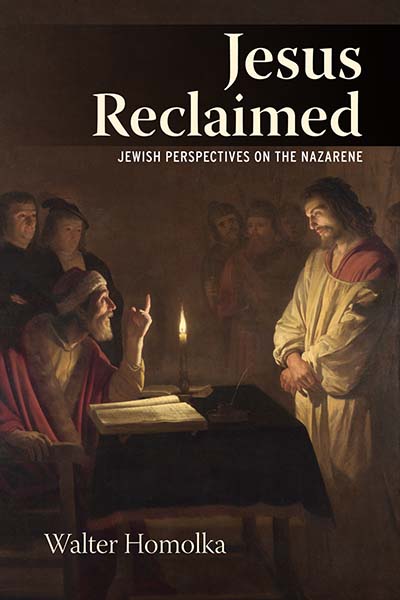
Rabbi Walter Homolka is author of Jewish Identity in Modern Times: Leo Baeck and German Protestantism (1995) and Jesus Reclaimed: Jewish Perspectives on the Nazarene (2015), and co-editor, with Albert Friedlander, of The Gate to Perfection: The Idea of Peace in Jewish Thought (1994). He is the rector of the Abraham Geiger College, Germany’s first rabbinical seminary after the Holocaust, and a professor of Modern Jewish Thought at the School of Jewish Theology of the University of Potsdam in Germany.


Artisan Society and Struggles in the Ottoman Empire

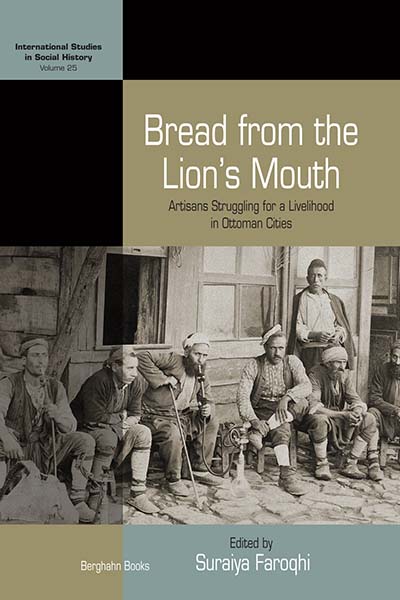
In recent years, there has been renewed interest in the history of the lives and work of middle eastern artisans. Bread from the Lion’s Mouth: Artisans Struggling for a Livelihood in Ottoman Cities, soon to be published, uses archival documents to re-create a scene of life in the Ottoman Empire from the fifteenth through twentieth centuries. Following, editor Suraiya Faroqhi discusses the history of this project and her interest in this region.


__________________________


What drew you to the study of artisans in Ottoman cities? Why do you think there is a renewed interest in this field today?


Perhaps because I am fond of my own work, as a historian I have for a long time been interested in people that work – as opposed to those that pray, govern, or fight. Moreover I like to see the things that artisans/artists have made; and we must keep in mind that the beautiful things we admire in museums did not come into being ‘just like that’ but are the product of human work, especially that of artisans and artists.

Continue reading “Artisan Society and Struggles in the Ottoman Empire”

Getting Reacquainted with The Cambridge Journal of Anthropology

The Cambridge Journal of Anthropology


We are delighted to announce that 2015 marks the fourth volume year that the Cambridge Journal of Anthropology has been published through Berghahn. The original journal of this name was an in-house publication based at Cambridge University, with a remit to provide a space in which innovative material and ideas could be tested.


The new Cambridge Journal of Anthropology builds on that tradition and seeks to produce new analytical tool-kits for anthropology or to take all such intellectual exploration to task. Re-acquaint yourself with the journal by exploring the special sections outlined below.


We hope you’ll be inspired by these innovative approaches that push at the boundaries of anthropology to bring you fresh insights from pioneering scholars in the field.


Volume 32
Number 2, Autumn 2014
Special Section: Risks, Ruptures and Uncertainties: Dealing with Crisis in Asia’s Emerging Economies
Asia’s ongoing economic transformation has created a variety of unexpected ruptures, discontinuities and opportunities in the lives of local citizens across the region. The articles in this section contribute to an understanding of local responses to, and strategies for coping with, risk and uncertainty as multidimensional, interwoven aspects of daily life, guided by social, economic and moral considerations.

  
Volume 32
Number 1, Spring 2014
Special Section: Epidemic Events and Processes
The articles in this collection bring together epidemiology and social anthropology. They take us through epidemics critically distinguished as crises and as events, and through epidemics understood analytically as syndemics and as productive of both proliferating ‘projects’ and a compelling quest for ever-growing intelligence and ‘real-time’ surveillance. In this collection, we see the importance of a social anthropological understanding of the human subjects that epidemics, and responses to them, can constitute–and we glimpse some of the interagentivity in the treatment responses through which the lethal problem of ‘resistance’ can be created. In the case of ‘epidemics’ in this present issue, we see the import of anthropological material as it brings to the fore issues which, in another disciplinary language, are the historically contingent ‘externalities’ of ‘disease events’.

  
Volume 31
Number 1, Spring 2013
Special Section – Climate Histories and Environmental Change: Evidence and its Interpretation. Guest Editor David Sneath
The papers in this special section explore different visions of the environment and how they engender particular ways of seeing evidence of climatic and environmental change. A key aspect of such distinctive understandings seems to be the attribution of agency within conceptions of the environment that in each case are entangled with humans. Notions of the anthropogenic and non-equilibrial environments are explored in several of the papers collected here, along with ongoing debates surrounding the concept of the Anthopocene. An awareness of climate change has brought new urgency to the project of grasping our entangled environments in the diversity of their human understandings.

  
Volume 30
Number 2, Autumn 2012
Special Section
Thisspecial section reconsiders recent anthropological accounts of ‘Naturalism’, a term increasingly used as a shorthand for a bundle of purportedly western attitudes to nature, reality and mind/body distinctions. Anthropologists and others tend to invoke ‘Naturalism’ as a foil for descriptions of alternative ontologies elsewhere (such as animism or perspectivism), or alternatively, as a philosophical account of the world which is belied by Euroamericans’ own practices. By contrast, the papers in this section attempt to take naturalism seriously as an ethnographic object in its own right: who, if anyone, is a ‘naturalist’ and what do naturalist commitments look like and entail in practice?


For a free sample issue of the journal, click here.

Honoring Polish Cinema

A Polish film “Ida” directed by Paweł Pawlikowski and written by Pawlikowski and Rebecca Lenkiewicz wins Oscar Award for Best Foreign Language Film.

The drama tells a story of a young novitiate nun Anna in 1960s Poland,  who is on the verge of taking her vows when she discovers a dark family secret dating back to the years of the Nazi occupation. Read more on the plot, cast & production.

———————————————————————————————————————————–

To celebrate Berghahn Books is proud to present a selection of titles on Polish Cinema:


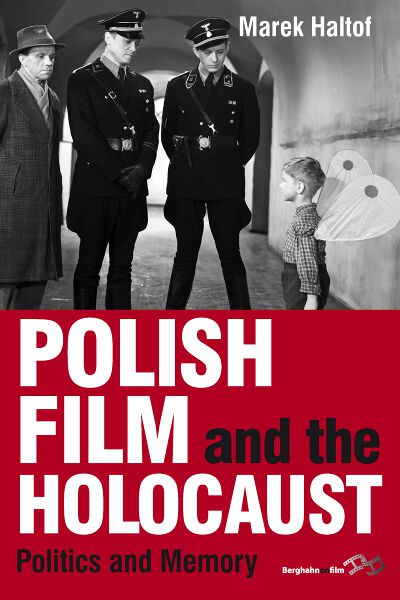
POLISH FILM AND THE HOLOCAUST
Politics and Memory
Marek Haltof

Continue reading “Honoring Polish Cinema”

Identity at the Intersection of Science and Culture

Drawing on the work of medical researchers, anthropologists, historians of science, and sociologists, Identity Politics and the New Genetics: Re/Creating Categories of Difference and Belonging explores how science and culture are used to create and perpetuate ideas of race and ethnicity. The volume was published as a paperback in November. Following, David Skinner, who co-edited the volume with Katharina Schramm and Richard Rottenburg, reflects on the volume’s reception and its distinction from other volumes on genetics and social history.


As the attention devoted to science journalist Nicholas Wade’s recent book A Troublesome Inheritance: Genes, Race, and Human History illustrates, discussion of race and genetics is habitually deemed ‘difficult’ or ‘controversial’. Wade is one of a long line of writers who portray themselves as fearless truth-seekers battling the politically correct consensus that races are social not biological types.

Continue reading “Identity at the Intersection of Science and Culture”

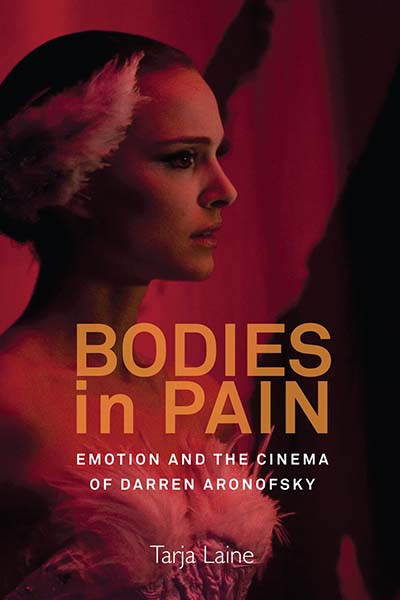
Seeing is Feeling: Tangible Emotion in the Work of Aronofsky


In Bodies in Pain: The Emotion and Cinema of Darren Aronofsky,  Laine explores the emotionally engaging nature of this prominent director’s work, which includes Requiem for a Dream and Black Swan, Pi and The Fountain. Following, the author explains how she came to write this book, as well as some emotional nuances in the director’s oeuvre.


In 2011 when I was asked by Mark Stanton, then-senior editor at Berghahn Books to write a book about emotion and film aesthetics in the cinema of Darren Aronofsky, my book entitled Feeling Cinema had just been released a month before. At that point I was not planning to start a new book project any time soon, and nor did I have a clue where the next idea for a book would come from, so his proposal almost appeared to me as a gift from the universe. Furthermore, since Aronofsky as a filmmaker was not an obvious choice for me to write about, it was an extra challenge to come up with an aesthetically meaningful starting point, without falling into the trap of cheap auteurism.

Continue reading “Seeing is Feeling: Tangible Emotion in the Work of Aronofsky”

Using Mental Maps to Locate Austen

The following is the second in a series of posts on Jane Austen. This is a guest post written by James Brown, contributor to a special issue of Critical Survey which is devoted to the subject of Jane Austen. James Brown is the author of the article titled “Jane Austen’s Mental Maps.”


The idea of mental maps was planted in my mind when I was a research student in Oxford. It comes from geography, especially from Peter Gould and Rodney White’s 1974 book, Mental Maps.


I’d also been an undergraduate at Oxford – one of Terry Eagleton’s students. I followed up the ideas he threw out about all manner of topics besides English literature. But as a postgraduate, things were different. I was writing about seventeenth-century drama, and Emrys Jones was my supervisor.


Emrys’s interests were wide-ranging. In the faculty’s list of research expertise, Emrys’s entry was ‘English literature 1500 to 1800’, with some later topics thrown in for good measure. He was an expert on Byron, for example. Though there were no degrees in drama at Oxford, Emrys took an obvious delight and interest in theatre. He could look forbiddingly donnish (as he does in Al Pacino’s Looking For Richard), but if he was talking about a performance he’d liked, his delight was infectious. At one of our meetings we got onto the topic of farce, and Emrys thought of a show in which Sheila Steafel had made an entrance that was side-splittingly funny because she was wearing sensible shoes. I can’t remember exactly how or why the sensible shoes were funny, but I do remember Emrys, in his book-lined room in New College, succumbing to a fit of giggles, struggling to gasp out the words ‘sensible shoes’, and wiping away tears of laughter.


Emrys proposed all manner of connections between the drama I was researching and other literature and theatre. But, to me at any rate, he seldom suggested reading something from quite another discipline. So when he recommended Gould and White’s Mental Maps the title lodged in my mind. I thought of using it in my doctoral work as a way of understanding late seventeenth-century playgoers’ perceptions of London. But in the end I didn’t use it in my thesis. So the idea remained filed away at the back of my mind, waiting for its cue. The cue was just over twenty years coming. When I saw the call for papers for the ‘Locations of Austen’ conference at Hatfield a couple of years ago, the phrase ‘mental maps’ popped back up.


As it happens, the way I’ve used the concept shows the influence of Terry Eagleton as well as of Emrys Jones. Though they were both Oxford professors of English, I suspect they felt they had little in common. Even though he’d been at Oxford for 14 years when I met him, and would remain for another 18, Terry gave the impression he was just passing through, and he’s since left. Emrys, on the other hand, seemed wedded to the place. Having been C.S. Lewis’s student, in 1955 he had been chosen by Lewis as his successor at Magdalen, and he only left Magdalen in 1984 to take up the Goldsmiths’ Chair at New College a quarter of a mile away, just the other side of Longwall Street. Yet it dawned on me, as I revised ‘Jane Austen’s Mental Maps’ for Penny Pritchard’s special issue of Critical Survey on Austen, that I had finally succeeded in bringing the two of them together. Emrys had alerted me to the idea of mental maps. But the way I describe them in my essay as performative – as being about what one can do with them rather than simply reflecting false consciousness  goes back to what I learned about ideology from Terry. Having struggled as postgraduate to reconcile what I learned from each of them, there’s a private satisfaction in finally bringing them together.


___________________________________________________________________________

James Brown is an associate research fellow in the Department of Politics at Birkbeck, and a lecturer in theatre at IES Abroad, having previously taught politics and sociology at Birkbeck and film and literature at Middlesex University.

ACCESS JAMES BROWN’S ARTICLE HERE

GET A FREE SAMPLE ISSUE OF CRITICAL SURVEY HERE