NEW & NOTABLE BOOKS
Continue reading “New and Notable Titles from Berghahn Books & Journals”
 Join our Email List





Continue reading “New and Notable Titles from Berghahn Books & Journals”
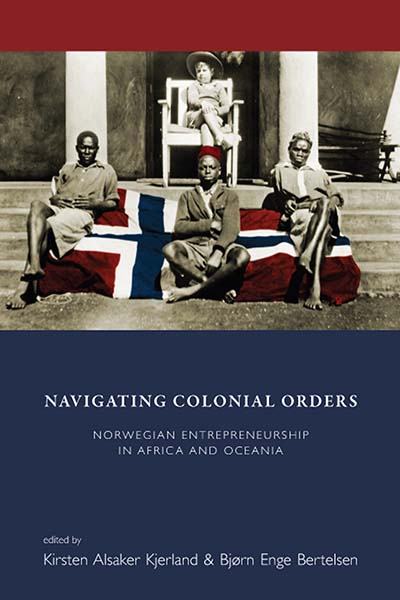 When considering powerhouses of colonization, most do not rank Norway among the likes of England and France. However, this country did have numerous outposts and much influence in Africa and Oceania. These territories come into focus in Navigating Colonial Orders: Norwegian Entrepreneurship in Africa and Oceania, which was published this month. Following, editors Kirsten Alsaker Kjerland and Bjørn Enge Bertelsen share insights into their book.
_______________________________
What drew you to the study of the entrepreneurial efforts of Norwegians in colonial Africa and Oceania? How was Norway’s involvement different from its counterparts in the rest of Europe at the time? How were they the same?
When looking at classical representations of colonial Africa, Oceania or, also, Latin America, one is struck by how the large colonizing countries have monopolized history. What struck us when starting to follow Norwegians that went abroad in the late 1800s and early 1900s was that this was simply not the case: The various colonial settings that we have examined have uncovered great diversity in terms of non-indigenous inhabitants and, thus, revealed different forms of colonial dynamics than what has often been contained in colonial histories of the major countries.
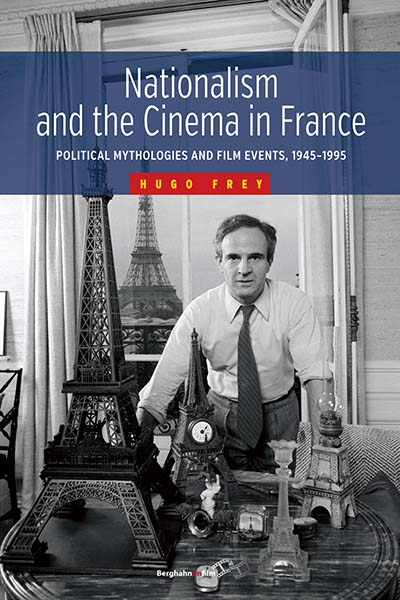
Fifty years of French cinema get their close-up in Hugo Frey’s Nationalism and the Cinema in France: Political Mythologies and Film Events, 1945-1995, published in July. Following, the author offers readers a new angle on the volume, which is itself a fresh perspective on French film against a nationalistic backdrop.
____________________________
Why did you write this book? What were your original aims?
The motivations for undertaking this research are complicated and now date from some time ago. Having written a study of the director Louis Malle (2004), I wanted to continue to develop my knowledge of French cinema, while still connecting to my other interests in national historiography and the collective memory of the Vichy period. However, I did not want to work on a conventional book about either ‘great French films of recent times’ or indeed something that just rehashed familiar debates already presented in titles such as Henry Rousso’s The Vichy Syndrome.
 Berghahn is pleased to announce the launch of an exciting new journal in 2014, Democratic Theory – An Interdisciplinary Journal. The first issue has been published this month!
Democratic Theory is a peer-reviewed journal that encourages philosophical and interdisciplinary contributions which critically explore democratic theory – in all its forms. Below is the transcript of an electronic interview between the Berghahn blog editor and the journal’s editors, Mark Chou and Jean-Paul Gagnon.
Continue reading “Q&A for Democratic Theory: An Interdisciplinary Journal”
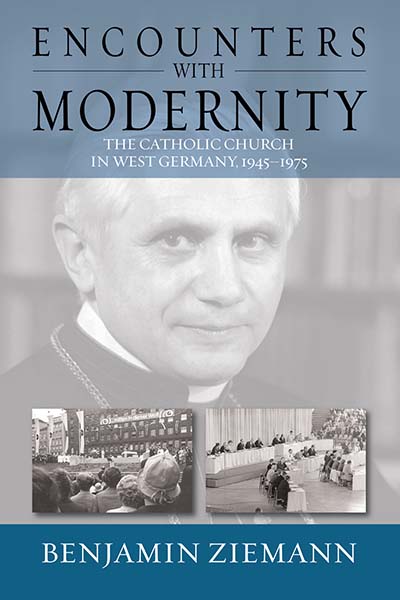
In Benjamin Ziemann’s historical account Encounters with Modernity: The Catholic Church in West Germany 1945-1975, to be published next month, the author explains how the church attempted to systematically — using the tools of social science — maintain its relevance in post-war German society. Following, the author explains how he, almost completely by accident, happened upon this research that would lead to his future book.
_____________________________
Rather than being the result of meticulous planning, I stumbled over this topic by chance. Originally, I had an interest in writing about the Catholic milieu in 1950s West Germany, and thought that starting with the miners at the Ruhr would be a good idea, not least because I taught at Bochum at the time. One of the challenges that I faced was to gather data on the practiced piety of Catholic workers such as church attendance or Easter Communions, which I thought were difficult to obtain. While I spent time pursuing other hints in the Essen municipal library, I found reports by the “Pastoral Sociological Institute of the Diocese in Essen” (PSI) for the late 1950s. This institute had broken down a count of churchgoers in Essen according to social strata, gender and other social characteristics. Here, I had all the data that I seemed to need.
Continue reading “Researching Relevance, or How Sociology Preserved the Church”
Policies have their own lives, and these lives are not “a-cultural, rational, and straightforwardly technical,” puts forth Catherine Kingfisher in her volume, A Policy Travelogue: Tracing Welfare Reform in Aotearoa/New Zealand and Canada, published in September. Following is an excerpt from the monograph’s Introduction in which the author sets the scene for her discussion of how policy lives within welfare reform in two distinct countries.
______________________________________
I use the frames of translation and assemblage to gain insight into a range of policy-related phenomena in particular spaces and contexts of occurrence. First, I explore the transformation of objects as they are translated from one philosophical and political framework—Keynesianism—into another—neoliberalism. Brodie (2002:100) points out in this regard that the privatization characteristic of neoliberalism: “[i]nvolves much more than simply removing things from one sector and placing them in another….the thing moved is itself transformed into something quite different. Objects become differently understood and regulated.”
Continue reading “The Life of Policy in Canada and New Zealand”
In Between Yesterday and Tomorrow: German Visions of Europe, 1926-1950, published last month, author Christian Bailey seeks to understand how Germans became such “good Europeans” after 1945. Whereas many histories of European integration tend to largely focus on the diplomatic goings-on between elites, this book focuses on how support for a united Europe was cultivated in civil society. Below, the author and his colleague Benno Gammerl share a dialogue about Bailey’s recent volume.
________________________________________
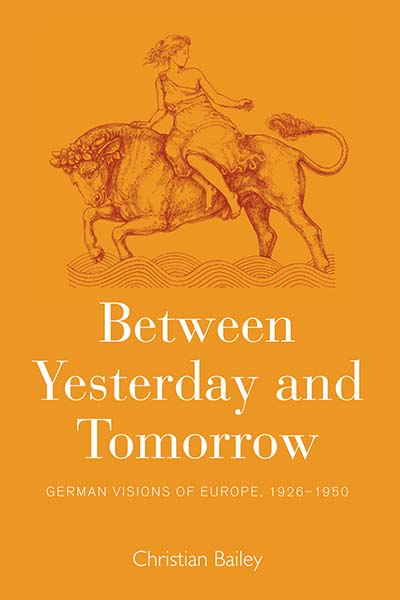
Benno Gammerl: Your book convincingly challenges what one could call the negative founding myth of post-1945 European integration. According to this well-established narrative the European Union ultimately resulted from the wish to once and for all prevent falling back into the perils of fascism and total war. You highlight earlier visions of Europe instead that date back to the interwar period and that have at times commanded much wider popular support than the let-us-avoid-our-earlier-mistakes-rhetoric. Which positive aims and motivations sustained these European projects?
The release of the July 2012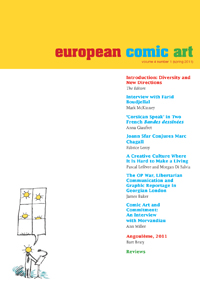 issue of European Comic Art has been a big deal around our offices because it marks the journal’s relaunch as a Berghahn title. Published in partnership with the American Bande Dessinée Society and the International Bande Dessinée Society, it is the first English-language journal devoted to European graphic novels and comic strips. Continue reading “New to Berghahn Journals- European Comic Art”
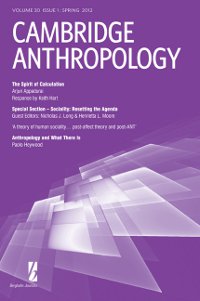 Among the most recent new journal releases, one title stands out as being especially significant- Cambridge Anthropology, Volume 30, Issue 1. This issue marks the relaunch of the journal, which had been an in-house production of the Cambridge University Department of Social Anthropology, as a Berghahn Journal. The relaunch represents both a continuation of and break with the journal’s past. Continue reading “New to Berghahn Journals- Cambridge Anthropology”