The Life of a Religious Movement: Steps in a Trajectory

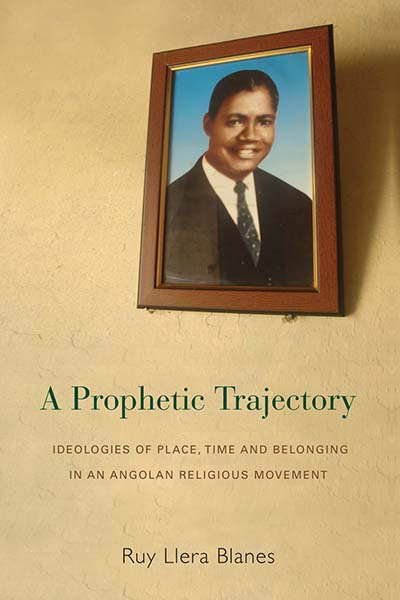
Ruy Blanes’ A Prophetic Trajectory follows the life of Simão Toko and the dissemination of the religious movement he founded. While conducting his research, the author worked in Angola, Portugal, and the United Kingdom, where he gathered facts and a collection of photographs — which are introduced and displayed below.


_______________________________


My recently published book, A Prophetic Trajectory, highlights the life and memory of an Angolan prophet, Simão Gonçalves Toko (1918-1984). Continue reading “The Life of a Religious Movement: Steps in a Trajectory”

In History

June 6th marked the 70th anniversary of The Normandy landings, the day when Western Allies landed in northern France, opening the long-awaited “Second Front” against Nazi Germany. The largest seaborne invasion in history, the operation began the invasion of German-occupied Western Europe, led to the restoration of the French Republic, and contributed to an Allied victory in the war.


On related topic, please take a look at some of Berghahn’s WWII books.


_________________________________________
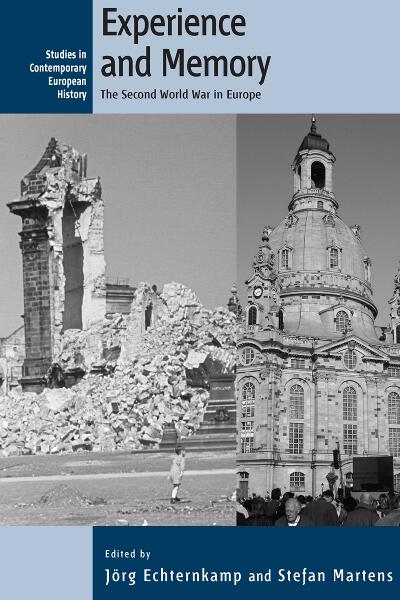
 

EXPERIENCE AND MEMORY
The Second World War in Europe
Edited by Jörg Echternkamp and Stefan Martens

Modern military history, inspired by social and cultural historical approaches, increasingly puts the national histories of the Second World War to the test. New questions and methods are focusing on aspects of war and violence that have long been neglected. What shaped people’s experiences and memories? What differences and what similarities existed in Eastern and Western Europe? How did the political framework influence the individual and the collective interpretations of the war? Finally, what are the benefits of Europeanizing the history of the Second World War? Experts from Belgium, Germany, France, Great Britain, Italy, Luxembourg, Poland, and Russia discuss these and other questions in this comprehensive volume.


Continue reading “In History”

Cultivating Communication between Cultures

Later this month, Sonya Pritzker’s monograph Living Translation: Language and the Search for Resonance in U.S. Chinese Medicine will be published. Within this volume, Pritzker explains that translation is not a static exercise, but is instead a variable and experiential undertaking. Following, the author shares how she became enamored of Chinese culture and discovered the life of language.


____________________________________


I went to China for the first time in 1995. I was 19. The skies in Beijing were blue then, and the remnants of a stark and closed era were everywhere. I look back on the things of that time with nostalgia, the ever-present red thermoses with flowers, cheap rubber shoes, mian bao che or “bread box” cars, flying pigeon bicycles. My passion for China, in particular the Chinese language, had arisen over time.


Continue reading “Cultivating Communication between Cultures”

Photographed History: Exposing the Holocaust


In an earlier post (which can be read here), author Tomas Sniegon shared the events that led him to study the Holocaust in a post-World War II context, a course of study which has led to a publication of Vanished History: The Holocaust in Czech and Slovak Historical Culture. Following is a selection of his photographs from his travels during his study to illuminate this hidden Holocaust history. 

Continue reading “Photographed History: Exposing the Holocaust”

Simulated Shelves: Browse June’s New Books

We’re delighted to offer a selection of soon-to-be-published titles from our core subjects of Anthropology, Medical Anthropology, History, Sociology, Travel & Tourism and Urban Studies. The following list of new volumes is complete with brief descriptions of the books and a peek at each cover. 

_________________________________

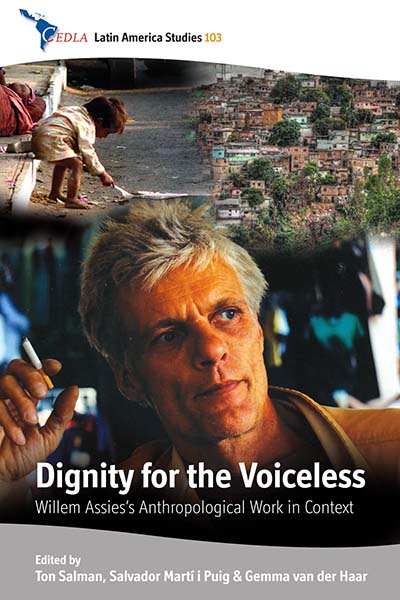
DIGNITY FOR THE VOICELESS

Willem Assies’s Anthropological Work in Context

Edited by Ton Salman, Salvador Marti i Puig, and Gemma van der Haar Continue reading “Simulated Shelves: Browse June’s New Books”

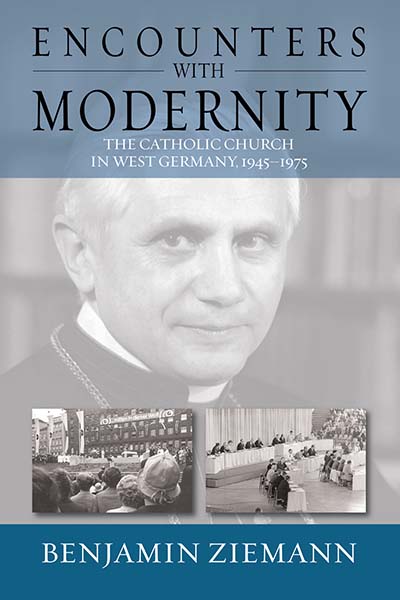
Researching Relevance, or How Sociology Preserved the Church

In Benjamin Ziemann’s historical account Encounters with Modernity: The Catholic Church in West Germany 1945-1975, to be published next month, the author explains how the church attempted to systematically — using the tools of social science — maintain its relevance in post-war German society. Following, the author explains how he, almost completely by accident, happened upon this research that would lead to his future book.

_____________________________

Rather than being the result of meticulous planning, I stumbled over this topic by chance. Originally, I had an interest in writing about the Catholic milieu in 1950s West Germany, and thought that starting with the miners at the Ruhr would be a good idea, not least because I taught at Bochum at the time. One of the challenges that I faced was to gather data on the practiced piety of Catholic workers such as church attendance or Easter Communions, which I thought were difficult to obtain. While I spent time pursuing other hints in the Essen municipal library, I found reports by the “Pastoral Sociological Institute of the Diocese in Essen” (PSI) for the late 1950s. This institute had broken down a count of churchgoers in Essen according to social strata, gender and other social characteristics. Here, I had all the data that I seemed to need.

Continue reading “Researching Relevance, or How Sociology Preserved the Church”

A Celebration of Asian-Pacific Heritage

In 1992, a bill was signed into law designating May as Asian-Pacific American Heritage Month. According to the Asian-Pacific Heritage website, “The month of May was chosen to commemorate the immigration of the first Japanese to the United States on May 7, 1843, and to mark the anniversary of the completion of the transcontinental railroad on May 10, 1869.” Commemorate this month with the following selection of Asia-Pacific titles, and view the complete list here.


___________________________________

Asia Pacific World

The Journal of the International Association for Asia Pacific Studies

Chief Editor: Malcolm J.M. Cooper, Ritsumeikan Asia Pacific University (APU)

Published on behalf of the International Association for Asia Pacific Studies Continue reading “A Celebration of Asian-Pacific Heritage”

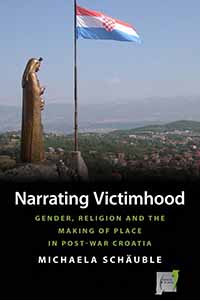
Picturing Post-War Croatia

In Michaela Schäuble’s ethnographic account, Narrating Victimhood: Gender, Religion and the Making of Place in Post-War Croatia, she examines religion, gender relations, and nation building in the newly independent country. Following, the author gives readers a photographic glimpse into the Republic of Croatia after its war for independence. See the other photos in the gallery here.
Continue reading “Picturing Post-War Croatia”

The Historic Influence of Intellectuals

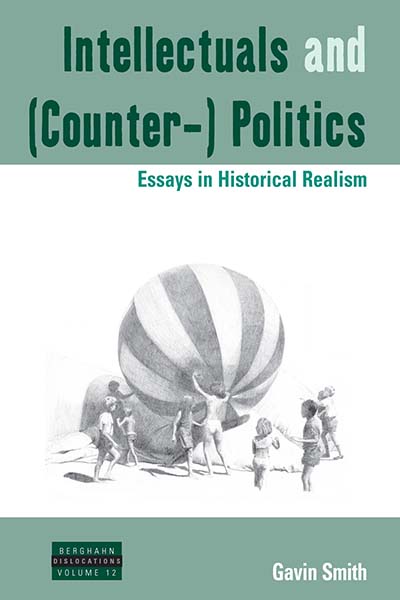
In Gavin Smith’s Intellectuals and (Counter-) Politics: Essays in Historical Realism, which was published earlier this month, the author takes a look at the role of the intellectual (specifically the social scientist) in three important areas — studying capitalism, making histories, and producing places. According to the author, “Reflexivity for the social scientist, Bourdieu argued, involves an objectivist ethnography of ethnographers,” a task Smith himself undertook in both Spain and Peru. Following, he reflects on his time spent conducting ethnographic research in Peru.


Continue reading “The Historic Influence of Intellectuals”

Revealing the ‘Vanished History’ of the Holocaust

Although in Slovakia, Bohemia and Moravia (parts of Czechoslovakia), more than a quarter million lives were claimed during the Holocaust, these deaths have been mostly concealed in post-World War II Czech and Slovak history. A Czech native himself, author Tomas Sniegon shines a light on this cover up in Vanished History: The Holocaust in Czech and Slovak Historical Culture, to be published this month. Following, Sniegon uses the example of Oskar Schindler — famous as the protagonist of the 1993 film Schindler’s List — to explain just how much was hidden from citizens of the Czech Republic and Slovakia.


_____________________________

Film hero Oskar Schindler, played by Liam Neeson, entered the 1990s in the Steven Spielberg’s film Schindler’s List as a new symbol of a so-called “Good citizen of the Third Reich,” which provoked both positive and negative reactions worldwide. However, very few at the same time knew that the real Oskar Schindler — far more complicated than the film character — had never lived in Germany until the World War II and thus actually had never been a “genuine-German German.”

Continue reading “Revealing the ‘Vanished History’ of the Holocaust”