Forest Protection Fail: How ‘Things Fall Apart’

Pauline von Hellermann seeks the root causes of African deforestation in Things Fall Apart? The Political Ecology of Forest Governance in Southern Nigeria, published in September. The volume stems from Hellermann’s ethnographic and historic research within the tropical forest of Nigeria’s Edo State as she digs to uncover the failings of forest protection. The following is an excerpt from the Introduction.


____________________________________________

To international foresters and conservationists, there are clear links between recent management failure and deforestation in Nigeria. The Conservation Atlas of Tropical Forests, for example, states that Nigeria’s ‘natural forests were carefully managed in the early part of the century, [but] they have since been severely over-exploited’ (Lowe, et al. 1992: 230; see also Oates 1999). Nigerians themselves routinely blame corruption and greed amongst foresters and politicians for forest loss and the depletion of timber. Such accounts fit smoothly into the broader perception of Nigerian governments as corrupt and inefficient; into the constant refrain that ‘things fall apart’ in Nigeria.

Continue reading “Forest Protection Fail: How ‘Things Fall Apart’”

Jünger in Paris: A Writer’s Wartime Account in the City of Lights

Allan Mitchell takes a look at Ernst Jünger, an under-appreciated twentieth century writer, but an important social figure. The Devil’s Captain: Ernst Jünger in Nazi Paris, 1941-1944 follows the writer at wartime, where he spent his stint in Paris as a military officer whose chief duty was to “mingle with French intellectuals.” Below is an excerpt from the volume, which was originally published in May 2011 and is soon to be released in ebook format.


________________________________________

Very few, if any, critics of German literature would rank Ernst Jünger among the greatest writers of the twentieth century. He simply does not compare, as a novelist, with giants like Thomas Mann, Franz Kafka, or Robert Musil. His signature work, Auf den Marmorklippen, has been often justly praised for its chiseled language and allegorical imagination. But for later generations raised on soaring flights of science fiction, Jünger’s 1939 work must seem brief, rather stilted, and now somewhat dated. In any event, it pales beside Buddenbrooks and Der Zauberberg, Das Urteil and Das Schloss, or Der Mann ohne Eigenschaften.

Continue reading “Jünger in Paris: A Writer’s Wartime Account in the City of Lights”

How Social Movements in Reality (Hopefully) Revitalize Theory

Protest beyond Boders: Contentious Politics in Europe since 1945, recently published in paperback, examines protest culture since the second World War from a variety of angles — historical, political, social, and cultural. But much has changed in worldwide politics since the volume’s original March 2011 publication. Below, the editors reflect on how the reality of the political protest sphere has renewed interest in studying the underlying theories of social movements.


___________________________________________________


In recent years, we have been all caught by surprise. A sudden outbreak of confrontations and protests erupted in unrelated places, such as Bulgaria, Spain, Greece, Hungary and beyond Europe, in Tunisia, Egypt, Thailand, United States and Brazil. Most often lacking clarity in terms of organization, membership, protest demands and goals, this rise of contention erupting across the globe is far from completed. Something new is unfolding, which could not have been predicted and cannot easily fit in our categories of thinking and classifying the world.

Continue reading “How Social Movements in Reality (Hopefully) Revitalize Theory”

Past, Present, Future Changes: An Anthropologist Looks at Africa

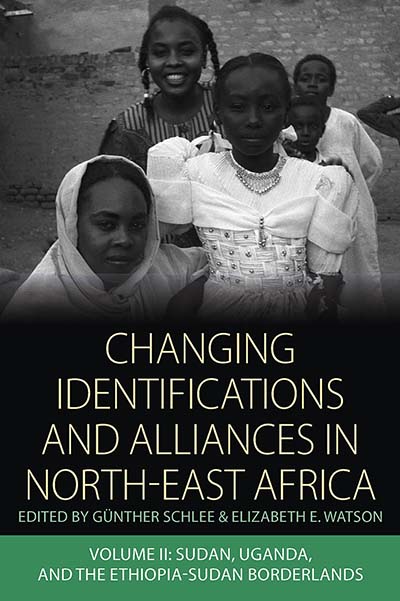
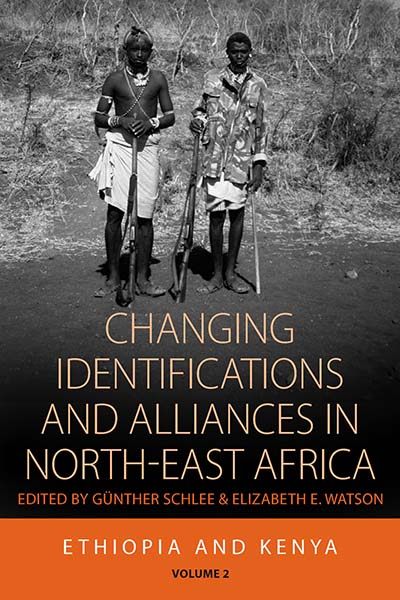
Günther Schlee traces old steps and tracks steps forward since the original publication of Changing Identifications and Alliances in North-East Africa, Volume 1 and Volume 2. The paperback versions were published in October. Following, Schlee rounds out the two-part interview with a reflection on the book’s release, and where he is proceeding within the field.


The first half of this interview is available here.

_____________________________________________________


Berghahn Books: To what extent did the initial release of the book contribute to debates among current and future academics within the field?


Günther Schlee: People use these two books as an introduction to the region. But it has also been taken up by people who have little to do with Africa. They have taken an interest in the theoretical issues we make.


Continue reading “Past, Present, Future Changes: An Anthropologist Looks at Africa”

Africa, from an Anthropologist’s-Eye View

Changing Identifications and Alliances in North-East Africa, originally published in 2009, was published in paperback in October. The two-volume collection, made up of Volume I: Ethiopia and Kenya and Volume II: Sudan, Uganda, and the Ethiopia-Sudan Borderlands, gives an overall view of the North-East of the continent and addresses the importance of the group dynamic, as it plays into politics, cultural identity, and war and peace. Co-editor Günther Schlee discusses the beginning of the collection, with its roots planted where his studies of Africa began — and how they are growing.


___________________________________________

Berghahn Books: What drew you to the study of Africa, specifically northeast Africa?


Günther Schlee: Like many students in the 1970s, I was fascinated by South America. When I studied anthropology and linguistics at Hamburg, I took Spanish up to the highest level. I read a lot about South America and followed the volatile politics of that continent very closely. When it was time to think about a PhD project, I was determined to do field research in South America. In order to identify a location and to enable myself to write a decent research proposal, I decided to go there on an exploratory visit on my own expense.

Continue reading “Africa, from an Anthropologist’s-Eye View”

Star-Studded Regime: A Look at Film Celebrity in Fascist Italy

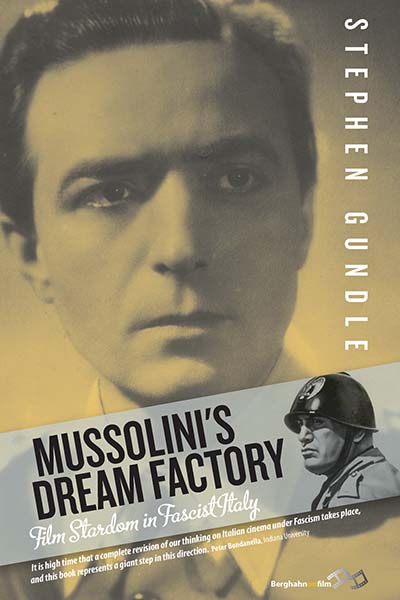
Celebrities today can perform political functions by sponsoring causes, supporting or opposing governments and shaping opinion. In Fascist Italy, celebrities also played an important role and the regime was well aware of the possible uses and dangers of their popularity. This important connection has been overlooked by scholars of both film and of Italian political history. Focusing on a period from the 1920s through 1945, Mussolini’s Dream Factory: Film Stardom in Fascist Italy looks at the star power of these often-overlooked celebrities and the fate of their careers after WWII. Author Stephen Gundle expands on these ideas and shares his thoughts on the subject, below.


_______________________________________________


Berghahn Books: What drew you to the study of film and film stardom in Fascist Italy?


Stephen Gundle: There are lots of books written about fascist Italy and it seems to be a topic that endlessly fascinates.  In the last few years books have appeared on topics such as the police force, diplomacy, road-building, women’s fashions and everyday life. Yet there are few books on fascist cinema – which is largely ignored by historians and neglected by film scholars who tend to concentrate on neorealism or other aspects of postwar cinema.

Continue reading “Star-Studded Regime: A Look at Film Celebrity in Fascist Italy”

The Myriad Measures of Achievement

Achievement is commonly defined as a successful completion of a given undertaking, but what it means to “achieve” is not a static idea the world over. Contributors to The Social Life of Achievement, published last month, examine meanings of achievement in countries and cultures throughout the world. Below, co-editor Nicholas J. Long addresses the term and provides insight into the background of the volume, from its inception to its subjects to its methodology.


_______________________________________________


Berghahn Books: What drew you to the study of achievement? And what inspired you to research and write about it?


Nicholas J. Long: Fieldwork! In the Riau Islands – the region of Indonesia where I’ve conducted most my research – people talk and think about achievement all the time. It’s become an integral component of the citizenship syllabus: students are taught that a good Indonesian should try to seize any opportunities for ‘achievement’ that they can. And it’s an incredibly widespread trope in public culture. I quickly realised that I wasn’t going to be able to write a good ethnography of the region without engaging in some way with this achievement discourse and how it was shaping people’s lives.

Continue reading “The Myriad Measures of Achievement”

Care and Anti-Care in Greece

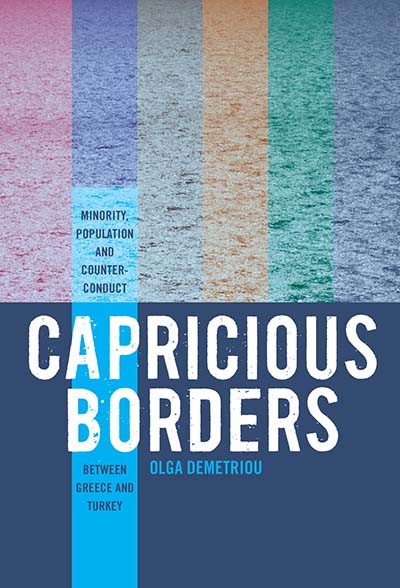
In her book Capricious Borders: Minority, Population, and Counter-conduct between Greece and Turkey, published earlier this year, Olga Demetriou examines the mechanisms through which particular groups of people are turned into “minorities.” At the center of these processes she identifies naming, genealogy and state care, as key modes of governmentality. Discussing a recent incident of biopolitical policing, the author shows here how “state care” continues to have more relevance as a repressive rather than an empowering mechanism in the minoritization context.


 ______________________________________


In Greece, the “management of population” (in the sense of a Foucauldian biopolitics of demography, spatial order, classification, and knowledge production) has long been racialized.


This racialism has fluctuated through different political conjunctures yielding differing policies of birth rate monitoring and incentivization. Last month “care” emerged as a tool of biopolitical policing in a discussion that went well beyond the bounds of Greece, after authorities arrested a couple raising a child who was “not their own.” The couple was Roma, the child at first assumed not, and much of the racialized presentation of the incident turned on the stereotypical discourse about “Gypsies stealing children.”

Continue reading “Care and Anti-Care in Greece”

Are Law-Maker, Law-Breaker So Different?

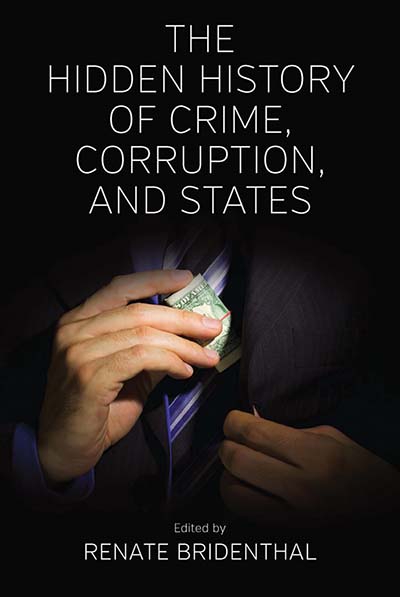
In the past, the world’s political economy has not always been built through honorable dealings. In fact, not much may have been, according to the recently published volume The Hidden History of Crime, Corruption, and States, which sheds light on such shadowy parts of economic history. Below, editor Renate Bridenthal develops this idea to share how those in power and those illicitly taking power may not be so different after all.


____________________________________


A specter is haunting history. The ghostly presence of economic crime as political power has been all but absent in history writing, but not in history itself.


Like dark matter, its synergy has been palpable if not always visible. Yet in our time, more and more emerges from the shadows, exposed in newspapers and tried in courts, and compels us to consider the history of the illicit political economy and its effects in past and present.

Continue reading “Are Law-Maker, Law-Breaker So Different?”

The New Namibia: Building a Nation after Apartheid

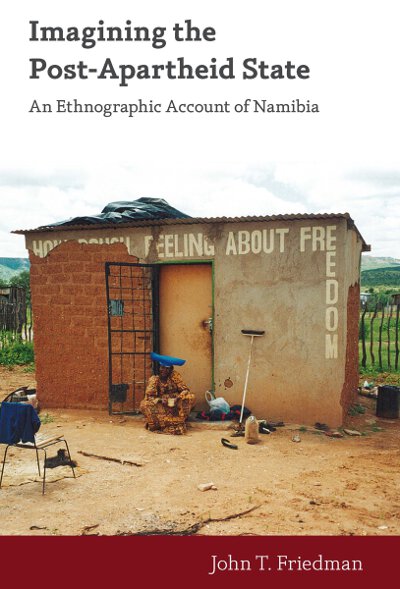
In 1990, Namibia gained its independence as a democratic state from the South African apartheid regime. Author John T. Friedman reflects on what this realistically meant and currently means for the making of a Namibian state in Imagining the Post-Apartheid State: An Ethnographic Account of Namibia, the paperback version of which was published last month after the original was published July 2011. Below the author explains his ethnographic method in an excerpt from the Introduction.


___________________________________


http://www.berghahnbooks.com/covers/FriedmanImagining.jpg

At first reading, the title of this book is likely to arouse some scepticism. How is it possible for an anthropologist to present an ethnographic account of Namibia, of an entire country? As anthropologists we are accustomed to investigate the localised, the small-scale, the village community. We are specifists, not generalists. The critic will thus be quick to suggest that any such attempt can yield only two possible outcomes: either a generalised account of ‘the Namibian people’, or a superficial survey of Namibia’s ethnic groups.

Continue reading “The New Namibia: Building a Nation after Apartheid”