Marking Museum Week: #AskTheCurator or View the Book

This week hundreds of museums across the United Kingdom and Europe are participating in Twitter’s first Museum Week campaign. Each day during this week is associated with a hashtag, from #DayInTheLife to #MuseumMemories, all intended to hit on various delightful aspects of the museum world. Today’s hashtag, #AskTheCurator is an opportunity to engage with museum experts. But for those who prefer to engage with experts the classic way — by way of their books — we have curated a collection of some of our Museum Studies titles in the following gallery.

_______________________________________

EXTREME COLLECTING

Challenging Practices for 21st Century Museums

Edited by Graeme Were and J. C. H. King

By exploring the processes of collecting, which challenge the bounds of normally acceptable practice, this book debates the practice of collecting ‘difficult’ objects, from a historical and contemporary perspective; and discusses the acquisition of objects related to war and genocide, and those purchased from the internet, as well as considering human remains, mass produced objects and illicitly traded antiquities. Much of the book engages with the question of the limits to the practice of collecting as a means to think through the implementation of new strategies. Continue reading “Marking Museum Week: #AskTheCurator or View the Book”
The Reciprocal Relationship of Media and Movement

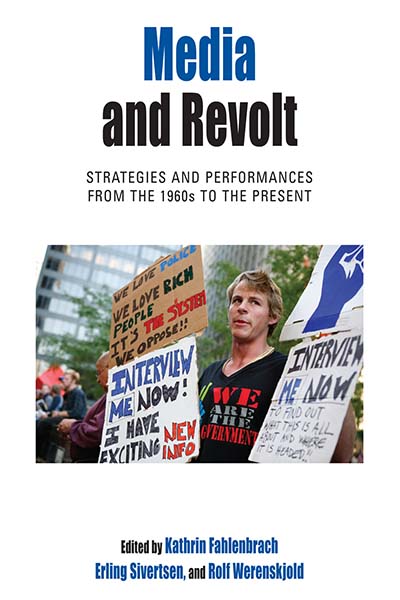
Editors Kathrin Fahlenbrach, Erling Sivertsen and Rolf Werenskjold’s volume Media and Revolt: Strategies and Performances from the 1960s to the Present was published last month. Following, the editors introduce the timely volume and share an excerpt from the Introduction. 


__________________________________________________


Looking at journals, television, or on the internet in these days, news dealing with protests abounds: the upheavals around the Euro-Maidan in the Ukraine, anti-governmental protests in Bangkok, the “Occupy-Gezi-Park”-manifestations in Istanbul or protest actions of NGOs like Greenpeace against oil companies or whale hunters. Obviously protest has an enormous “news value”: it offers spectacular pictures, it makes evident political conflicts and decisions by polarizing their actors, and it offers media the chance to perform as center of society.

Continue reading “The Reciprocal Relationship of Media and Movement”

Vienna, Dream City within a ‘Paradoxical Republic’

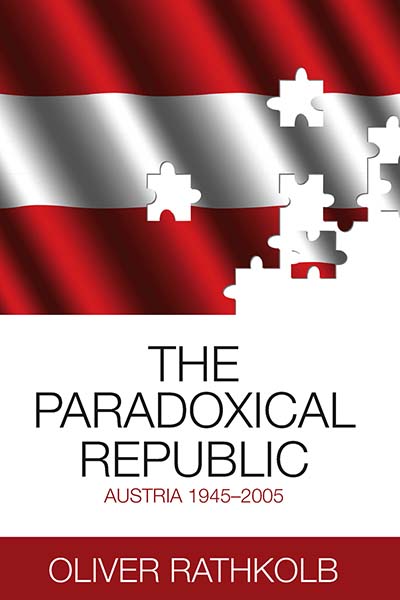
For the next three weeks, New York City will resonate with the energy of Austria. Vienna: City of Dreams will feature a slate of events presented by Carnegie Hall. Capping the festival will be symphony performances of the Vienna Philharmonic, an orchestra which has been celebrated since its first concert in 1842. This arrangement of musicians became a cultural beacon in post-World War II Austria, the subject of Oliver Rathkolb’s The Paradoxical Republic: Austria 1945-2005. Following, in an excerpt from the volume, which will soon be published as a paperback, Rathkolb discusses the Philharmonic’s presence in a discordant time.


_________________________________________________

In 1953 . . . neither the Vienna Staatsoper nor the Burgtheater had yet been rebuilt; they were not yet functional as memory sites. However, this did not detract from the importance of the aesthetic role music, notably classical music, played in the postwar era. The sense of purpose felt when the old and new political and economic elites gathered for the first Philharmonic concerts on 27 and 28 April 1945 was highly significant. There was a strong admixture of the Soviet military in the audience, deliberately encouraged by the liberal dispensation of free tickets by the Philharmonic.


Continue reading “Vienna, Dream City within a ‘Paradoxical Republic’”

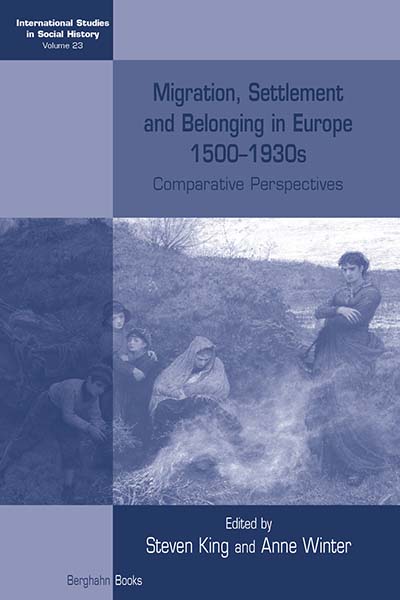
Old World Topic, New Discussion: A Look at Migration and Belonging

Who migrates, when they migrate, where they migrate, and why they migrate has a huge effect on cultural identity, acceptance and belonging. This is a hot current topic on news cycles worldwide, but it is certainly not a new phenomenon. Looking from a European perspective, editors Steven King and Anne Winter add an important contribution to this discussion with Migration, Settlement and Belonging in Europe, 1500-1930s: Comparative Perspectives, to be published this month. Below, the editors discuss the volume and their aim to make sense of these experiences across borders of place and time.


________________________________________


The British print and online media has for the last year been awash with compelling stories about abuses of the welfare system: the mother who has 11 children and feels the state should fund her life choices; the recent immigrants who are entitled to welfare benefits notwithstanding a lack of accumulated contribution; the ‘disabled’ welfare claimants who are exposed as professional dancers or scuba divers.
Continue reading “Old World Topic, New Discussion: A Look at Migration and Belonging”

An Uprising of Historical Importance

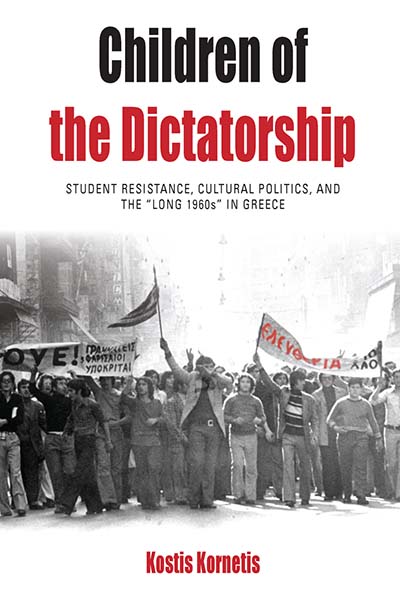
The cyclical course of history comes into sharp focus when one looks at Greek political uprisings. The widely publicized youth dissent in recent years is nothing new, but actually has earlier roots in 1973 — with different players, but with the same activist vigor. This 1970s group — later to be known as the Polytechnic Generation — comes into clear focus in newly published Children of the Dictatorship: Student Resistance, Cultural Politics and the “Long 1960s” in Greece, by Kostis Kornetis. Following is the opening to the volume’s introduction. 


___________________________________

In 2010 the well-known British Pakistani writer and political activist Tariq Ali commented that “were there a Michelin Great Protest guide, France would still be top with three stars, with Greece a close second with two stars.” Ali did not only refer to the 2005 riots in France and the 2008 civil disturbances in Greece, but to a longue durée structure of civil disobedience in the two countries that dates back to the 1960s and 1970s.


Continue reading “An Uprising of Historical Importance”

Care and Anti-Care in Greece

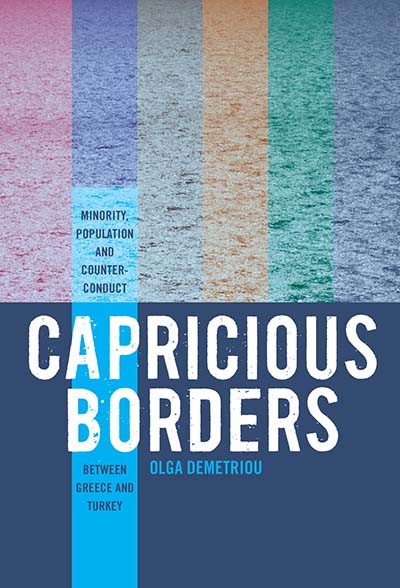
In her book Capricious Borders: Minority, Population, and Counter-conduct between Greece and Turkey, published earlier this year, Olga Demetriou examines the mechanisms through which particular groups of people are turned into “minorities.” At the center of these processes she identifies naming, genealogy and state care, as key modes of governmentality. Discussing a recent incident of biopolitical policing, the author shows here how “state care” continues to have more relevance as a repressive rather than an empowering mechanism in the minoritization context.


 ______________________________________


In Greece, the “management of population” (in the sense of a Foucauldian biopolitics of demography, spatial order, classification, and knowledge production) has long been racialized.


This racialism has fluctuated through different political conjunctures yielding differing policies of birth rate monitoring and incentivization. Last month “care” emerged as a tool of biopolitical policing in a discussion that went well beyond the bounds of Greece, after authorities arrested a couple raising a child who was “not their own.” The couple was Roma, the child at first assumed not, and much of the racialized presentation of the incident turned on the stereotypical discourse about “Gypsies stealing children.”

Continue reading “Care and Anti-Care in Greece”

Berghahn Author Asks: ‘Quo Vadis FEMEN?’

FEMEN is a Ukrainian feminist protest group that has become infamous for its topless protests against patriarchy. The group, founded in 2008, has since grown to be a worldwide phenomenon, and not simply because its protests are often seen as “sextreme.” Marian Rubchak, editor of Mapping Difference: The Many Faces of Women in Contemporary Ukraine, takes a look into the history and meaning of the movement, and asks: Where is it going? 


________________________________________


Marian Rubchak

The year was 2008; 17 years had passed since Ukraine declared its independence and early advocates of change began to espouse high-minded ideals designed to promote women’s rights. These incipient feminists laid the groundwork for raising an awareness of discrimination against women, and were instrumental in advancing the passage of some of the most progressive pro-women legislation Ukraine had yet seen. Fast forward to 2008 — the promising beginnings were moving very slowly, too slowly. Clearly the work of reform would need to proceed to a higher level.

Continue reading “Berghahn Author Asks: ‘Quo Vadis FEMEN?’”

Where High Housing Prices Meet Activism

Earlier this year, Sam Beck, co-editor of Toward Engaged Anthropology, earned the Daisy Lopez Award of Churches United for Fair Housing. He earned the award for his work to help further the mission of CUFFH—that is, to provide affordable housing in North Brooklyn, where property values have skyrocketed in recent decades. Below, Beck discusses the work that helped him earn the award and why it is important.


_________________________________________

I received the 2013 Daisy Lopez Leadership Award of Churches United for Fair Housing (CUFFH). This organization’s mission is to promote the sustainability of the North Brooklyn Latino community by advocating affordable housing. This part of Brooklyn experienced the dramatic withdrawal of capital and city services in the 1970s, whose Puerto Rican and Dominican population suffered the consequences of low incomes, dilapidated housing, poor schools, and inadequate health care.

Continue reading “Where High Housing Prices Meet Activism”

Paul Stoller: Retzius Reflections

Paul Stoller, whose article “Embodying Knowledge: Finding a Path in the Village of the Sick” appeared in Ways of Knowing, edited by Mark Harris, earned the 2013 Anders Retzius medal for excellence in anthropology—an honor bestowed every three years—April 24. Below, Stoller reflects on his life’s work that helped him earn the award.


__________________________________________


stoller
Paul Stoller

Milestones in life compel you to think about where you’ve been, where you are and where you are going.


In 2012 I received an email, marked as “possible spam,” that invited me to Stockholm in April 2013 to receive the Anders Retzius Gold Medal in Anthropology, which is given once every three years.

Continue reading “Paul Stoller: Retzius Reflections”

“A Spotlight on Directors” Virtual Issue

ProjectionsIn the spirit of the Tribeca Film Festival, Berghahn Journals is delighted to offer limited-time free access to our special virtual issue that focuses on several influential directors. This special issue includes five articles from our journal, Projections: The Journal for Movies and Mind.

Projections is the winner of the 2008 AAP/PSP Prose Award for Best New Journal in the Social Sciences & Humanities. It is published in association with The Society for Cognitive Studies of the Moving Image and The Forum for Movies and Mind.

To access the special issue, click the following link: http://bit.ly/10dgD7D

Free access to the issue will end 5/22/13.