 Join our Email List




Category: Blog

Prose and Economic Development in an African Village
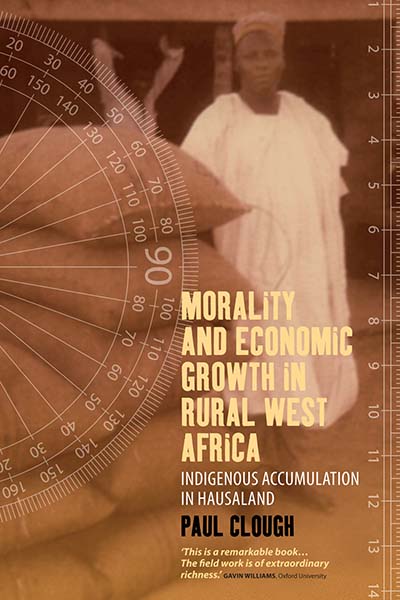 Paul Clough spent many years studying the economic situation of the Marmara village, in Hausaland, northern Nigeria. His work there began in 1977-1979, then was followed by stints in 1985, 1996, and 1998. In Morality and Economic Growth in Rural West Africa: Indigenous Accumulation in Hausaland, his book based on that fieldwork, the author explores the economic growth and accumulation of this non-capitalistic, polygynous society through boom and bust periods. Following is the author’s reflection on his book, fieldwork, and forged relationships.
________________________________
What drew you to the field of African studies? Specifically, what drew you to Hausaland in Nigeria?
All of this happened by accident when I was very young. I wanted to be a volunteer, to work in the field of development. Since the Peace Corps in early 1970 would not send me to Latin America (perhaps because I had no Spanish), I managed through other channels to find a teaching post in northern Nigeria. I arrived at Kano Airport in late 1970, when I was only twenty-two, knowing next to nothing about Africa or Hausaland.
But I fell in love immediately.
Continue reading “Prose and Economic Development in an African Village”
Hot Off the Presses – New Journal Issues for November

Journal of Educational Media, Memory, and Society
Volume 6, Issue 2
This special issue of JEMMS focuses on conflicts and identity politics in school textbooks in the regional contexts of South Asia.
Continue reading “Hot Off the Presses – New Journal Issues for November”
International Migrants Day
On December 18, the international community recognizes and celebrates the rights of migrants around the world. In 1990 the UN General Assembly approved the International Convention on the Protection of the Rights of All Migrant Workers and Members of Their Families (commonly referred to as the Migrant Worker’s Convention or Migrant Rights Convention). This is the day to express our support and solidarity with all immigrants.
———————————————————————————————————————————–
In honor of this observance, Berghahn Journals presents a special virtual issue dedicated to migration with hope that this will contribute to the overall discussion of the lives of migrants.
Click Here to Access the Special Virtual Issue!
———————————————————————————————————————————–
Berghahn is also delighted to present a selection of titles on Refugee & Migration Studies:
 THE POLITICAL ECONOMY OF BORDER DRAWING
Arranging Legality in European Labor Migration Policies
Regine Paul
Awards, Authors, Anthropology: AAA 2014 Conference Recap
This year’s American Anthropological Association conference in Washington, D.C. was quite a success for Berghahn Books.
The conference started Wednesday, December 3, with an awards ceremony, at which our publisher Marion Berghahn earned the AAA Executive Director’s Award.

Continue reading “Awards, Authors, Anthropology: AAA 2014 Conference Recap”
Learning from Comics: An Interview with Philippe Willems
 This post is the transcript of an electronic interview between Philippe Willems and Berghahn blog editor Lorna Field. Philippe Willems is the author of the article Perspective Games: Cham’s Heritage and Legacy which appeared in European Comic Art, Volume 7, Number 1.
Continue reading “Learning from Comics: An Interview with Philippe Willems”
Simulated Shelves: Browse November’s New Books
We are delighted to present a selection of our newly published November titles from our core subjects of History, Media Studies, Medical Anthropology, Sociology and Urban Studies, along with a selection of our New in Paperback titles.
———————————————————————————————————————————–
 U.S. FOREIGN POLICY AND THE OTHER
Edited by Michael Patrick Cullinane and David Ryan
Continue reading “Simulated Shelves: Browse November’s New Books”
Dilemma after Dark: Balancing Sleep and Breastfeeding
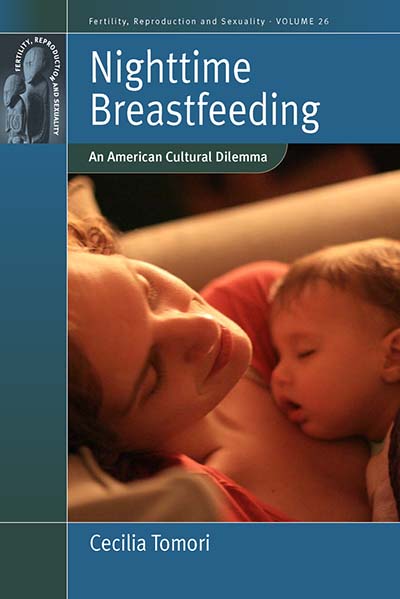 In her newly published book, author Cecília Tomori explores a major challenge for new parents, the nighttime balance of sleep and breastfeeding. Nighttime Breastfeeding: An American Cultural Dilemma, published in October, is the result of her long-term ethnographic study alongside new parents and how they cope with the pressures of parenthood. Following, the author gives insight into this in-depth study which eventually became her book.
As an anthropologist seeking to learn about breastfeeding, I had the privilege of visiting new parents who had just returned home from the hospital after the birth of their first child. During these visits, the joy of becoming parents was visible in the way parents gazed upon one another and held their newborns in their arms. Their joy, however, was often complicated by exhaustion and uncertainty over some fundamental concerns: breastfeeding and sleeping at night.
Continue reading “Dilemma after Dark: Balancing Sleep and Breastfeeding”
Literary Readings of Home
 The below is a special guest post written by Stella Butter, contributor to Anthropological Journal of European Cultures, Volume 23 (Issue 2), and author of ‘The Literary Making of Home(land): Transnational Fictions of Home in Lloyd Jones’ Mister Pip.’
Today in History of Performance Art
On this day in 1947, first-ever performance of Tennessee Williams’ play A Streetcar Named Desire thrilled the audience during it’s opening on the Broadway stage of Ethel Barrymore Theatre.
Produced by Irene Mayer Selznick and directed by Elia Kazan, the play shocked mid-century audiences with its frank depiction of sexuality and brutality onstage. When the curtain went down on opening night, there was a moment of stunned silence before the crowd erupted into a round of applause that lasted 30 minutes. On December 17, the cast left New York to go on the road. The show would run for more than 800 performances, winning numerous prizes and in 1951 was made into a movie.
———————————————————————————————————————————–
In relevance to the event Berghahn is delighted to offer an array of titles on Performance Studies:
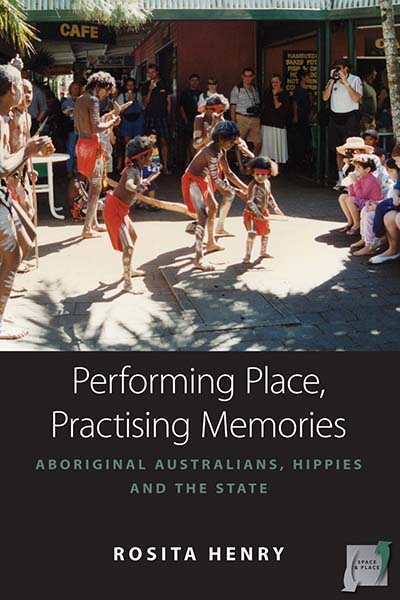 PERFORMING PLACE, PRACTISING MEMORIES
Aboriginal Australians, Hippies and the State
Rosita HenryDuring the 1970s a wave of ‘counter-culture’ people moved into rural communities in many parts of Australia. This study focuses in particular on the town of Kuranda in North Queensland and the relationship between the settlers and the local Aboriginal population, concentrating on a number of linked social dramas that portrayed the use of both public and private space. Through their public performances and in their everyday spatial encounters, these people resisted the bureaucratic state but, in the process, they also contributed to the cultivation and propagation of state effects.