EXCERPT: THE BEST WE SHARE

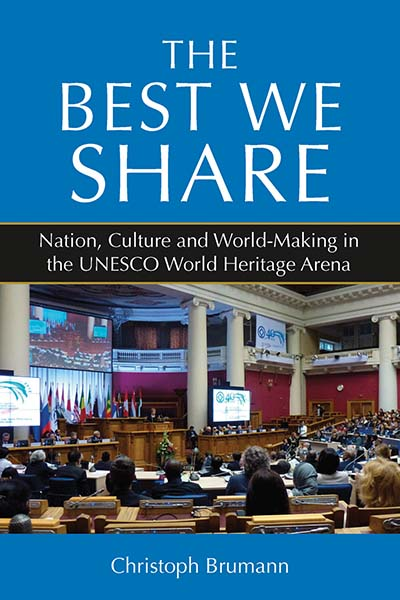
In connection with the 50th anniversary of the World Heritage Convention, celebrated November 16th, Berghahn is excited to feature an excerpt from The Best We Share: Nation, Culture and World-Making in the UNESCO World Heritage Arena by Christoph Brumann. The paperback edition is forthcoming April 2023!

Take advantage of the 25% discount on eBook and related paperbacks. Use code WHC22 at checkout, valid through end of November 2022.

Continue reading “EXCERPT: THE BEST WE SHARE”

Neriko Musha Doerr discusses “Fairies, Ghosts, and Santa Claus”

Neriko Musha Doerr is Assistant Professor at Ramapo College. Her publications include Transforming Study Abroad: A Handbook (Berghahn, 2020), The Global Education Effect and Japan: Constructing New Borders and Identification Practices (Routledge, 2020), The Romance of Crossing Borders: Studying and Volunteering Abroad (Berghahn, 2017, with Hannah Taïeb), and Meaningful Inconsistencies (Berghahn 2009).

Continue reading “Neriko Musha Doerr discusses “Fairies, Ghosts, and Santa Claus””

Spotlight: Hannah Arendt

Hannah Arendt (14 October 1906 – 4 December 1975), German-American philosopher and political theorist, was the first to argue that there were continuities between the age of European imperialism and the age of fascism in Europe. In her pivotal work The Origins of Totalitarianism (1951), she established that theories of race, notions of racial and cultural superiority, and the right of ‘superior races’ to expand territorially were themes that connected the white settler colonies, the other imperial possessions, and the fascist ideologies of post-Great War Europe.

Continue reading “Spotlight: Hannah Arendt”

Talking Ritual with Robbie Davis-Floyd

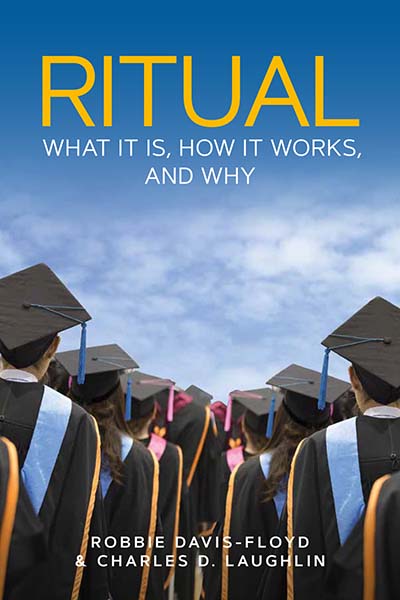
Robbie Davis-Floyd is Adjunct Professor in the Department of Anthropology at Rice University, and Fellow of the Society for Applied Anthropology. She is the author of many books including Ways of Knowing about Birth: Mothers, Midwives, Medicine, and Birth Activism (2018, Waveland) and Birth as an American Rite of Passage (1992,2003, 2022). Her new book, co-authored with Charles D. Laughlin, is Ritual: What It Is, How It Works, and Why.

Continue reading “Talking Ritual with Robbie Davis-Floyd”

Excerpt: EXTINCT MONSTERS TO DEEP TIME

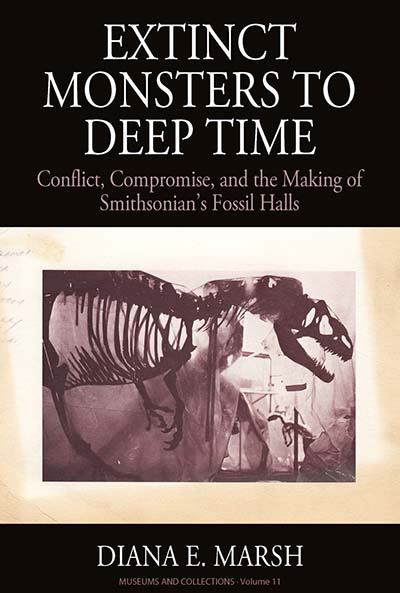
Following up on Smithsonian Day last week, an event hosted by ‘Smithsonian’ magazine where participating museums and various cultural centers across the US provide free entry, Berghahn is excited to feature an excerpt from Extinct Monsters to Deep Time: Conflict, Compromise, and the Making of Smithsonian’s Fossil Halls by Diana E. Marsh.

Describing participant observation and historical research at the Smithsonian’s National Museum of Natural History as it prepared for its largest-ever exhibit renovation, Deep Time, the author provides a grounded perspective on the inner-workings of the world’s largest natural history museum and the social processes of communicating science to the public.

Continue reading “Excerpt: EXTINCT MONSTERS TO DEEP TIME”

An interview with David Zeitlyn, author of An Anthropological Toolkit

Can you give some background to yourself, and how you became an anthropologist in the first place?
Well, I was born in 1958 in Cambridge and brought up there. I went to the Perse School (which incidentally is the origin of the name Free School Lane, where the Cambridge Anthropology Department is based). As an undergraduate I studied physics and philosophy at Wadham College, Oxford, where I first encountered anthropology indirectly from Rom Harré who taught the philosophy of science. I came to feel that I knew more about the structures of the atom than the structures of society (sorry: I know this comes across as portentous, and now, a long time afterwards, I am little better off – but a little nonetheless!). This led me to a conversion Masters degree in anthropology at the LSE.
After that I returned to Cambridge to study for a PhD supervised by Esther Goody. This was on “Mambila Traditional Religion”. I first went to Cameroon in 1985 and I have managed to continue going every year until COVID stopped travel.
I know you’ve asked about the deep background but to continue, as it were, talking you through my CV, I then had two successive postdocs at Oxford (a Wolfson College postdoc followed by a British Academy fellowship) before eventually being appointed as lecturer at the University of Kent at Canterbury in 1995. Continue reading “An interview with David Zeitlyn, author of An Anthropological Toolkit”

Disasters, Risks, Responses, and Recovery

“As disasters are increasing in number and intensity, so too will be the need for reconstruction…”

So reads a line from the blurb of Making Things Happen, Jane Murphy Thomas’ account of post-earthquake reconstruction in Pakistan. And, sadly, how prescient it was, for her book was published just weeks before the same nation experienced a new disaster, the terrible flooding that left more than 10% of it underwater.

Here we have gathered our most recent volumes on the subject of disaster in its many awful forms (earthquakes, typhoons, tsunamis, nuclear accidents, chemical spills, and more), and on our approaches to risk management, and the many challenges of post-disaster reconstruction.

Continue reading “Disasters, Risks, Responses, and Recovery”

Making Connections: Reflections on Writing Towards a Collaborative Memory

Sara Jones, University of Birmingham

The idea for Towards a Collaborative Memory came when I was researching my last book on memories of the East German Stasi. I was reading press releases from the Stasi Prison Memorial at Berlin Hohenschönhausen and came across one in which the then Director of the Memorial used a visit to memorials in the Czech Republic to criticise German memory culture. I had spent a long time researching memorials in Germany – especially Hohenschönhausen –  but had never really considered how they collaborated with partners in other countries and how they might use those collaborations to further their own politics of memory.

Continue reading “Making Connections: Reflections on Writing Towards a Collaborative Memory”