Does Every Vote Count In America? Emotions, Elections, and the Quest for Black Political Empowerment

by Britta Waldschmidt-Nelson

The following excerpt was adapted from chapter 11 in the book Emotions in American History: An International Assessment edited by Jessica C. Gienow-Hecht, published in 2010.


The history of emotions provides important keys to understanding human behavior and can be of great assistance in explaining wider political, social, and economic trends in American history.1 This applies in particular to the history of African Americans, as racial conflicts in general and the black struggle for freedom and equality in particular repeatedly stirred public emotions in the United States to a degree hardly ever reached by other domestic issues. Thus, interracial relations have always been identified as an extremely emotionally charged aspect of American history, and in view of the new approaches to historical research proposed by the history of emotion, a closer examination of this phenomenon can offer significant additional insights into the close connection between emotions and politics. A broad and multifaceted cluster, such as the Civil Rights Movement or any other social protest movement, encompasses emotions on various levels and should therefore be analyzed from more than one perspective. Continue reading “Does Every Vote Count In America? Emotions, Elections, and the Quest for Black Political Empowerment”

I Want To Be Greedy for the United States

drumpfThis is a post by Jared Poley, author of The Devil’s Riches: A Modern History of Greed (Now in Paperback!). The Financial Times called this book “…a thought-provoking study of a subject that is too often taken for granted, rather than subjected to critical examination.”

Back in late January 2016, just before the Iowa caucus, Donald Trump held an event in support of military veterans. Exhorting the crowd to donate to veteran’s charities and critiquing the power held by lobbyists over the political system, Trump took the opportunity to express what might be called his theory of financial success and how it related to larger geopolitical realities.

Continue reading “I Want To Be Greedy for the United States”

The Colonial Governance of the Natural World: A History of Tanzanian Wildlife Conservation

Bernhard Gissibl is author of The Nature of German Imperialism. Conservation and the Politics of Wildlife in colonial East Africa, published this July by Berghahn. His work analyses the role of hunting and game conservation in the making of the col0nial state in what was then German East Africa. The book reveals the years of German colonial rule prior to World War I as the foundational period of Tanzania’s extensive wildlife conservation regime. Here he discusses his work, some of the surprises and challenges that the topic entailed, and what he found most rewarding about following the archival tracks left by the elephants and lions of the past. Continue reading “The Colonial Governance of the Natural World: A History of Tanzanian Wildlife Conservation”

The Capitol Building (Under Construction)

By Michael Minkenberg 

The Capitol Building is in the midst of a $60 million renovation project, the first time work has been done on the iconic dome in fifty years. The renovation will be completed by January 2017, for the next presidential inauguration, but it is safe to say the inner workings of the building will still be in great disrepair after the scaffolding comes off.  Tours of the dome have been suspended, but television networks and producers still rely on the dome to signal their correspondent or pundit is based in DC. We have become familiar to seeing the dome, covered in a wiry shell, while the work is being done during this tumultuous election year.

Continue reading “The Capitol Building (Under Construction)”

At the Threshold of Modernity: Vienna’s pivotal years in the 1870s

by Ulrich E. Bach

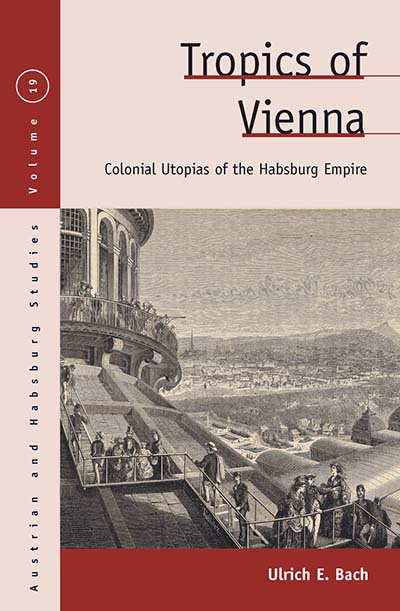
Tropics of ViennaFrom the digital perspective of today, visual media reproduced in 19th century publications often appear quaint if not antiquated. To be sure, daguerreotypes and photographs could already capture cityscapes, but due to technological limitations, these reproductions were too static and timeless in order to represent contemporary life in newspapers. The busy everyday life in the contemporary metropolis was better captured in graphic illustrations, which were printed and distributed in huge quantities. For this reason, I chose Franz Kollarz’ xylograph “Auf dem Dach der Rotunde” (1873) as the book cover of Tropics of Vienna: Colonial Utopias of the Habsburg Empire. For me, the optimistic World Exhibition visitors—gazing like explorers—encapsulate not only the optimistic spirit of the time, but also give a glimpse into the general societal aspirations of the Habsburg Empire.

Continue reading “At the Threshold of Modernity: Vienna’s pivotal years in the 1870s”

The Rowdy Boy & the Deviant Girl: Constructing Youth in Munich, 1942-1973

by Martin Kalb

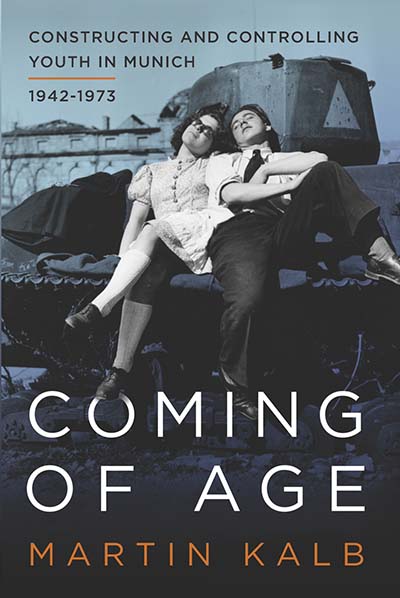
Coming of AgeI did not anticipate that I would focus on images or constructs of youth in Munich. My research was originally tied to denazification in Nuremberg, later Bavaria more broadly. That interest took shape as I was working in the Stadtarchiv City Archive in Nuremberg for several months, and while I was helping organize a database tied to individuals with connections to National Socialism. I dug deeper, looked into the main study on denazification in Bavaria at the time, and wondered how Nuremberg might fit into all that. Later on, once I began my Ph.D. program in the United States, I continued to look into the scholarship, maybe with a fresh mind given a broader change in scenery. In this context I was reading through Die Süddeutsche Zeitung newspaper on microfilm in the library one evening. At the time, it was among the few daily newspapers I could access for Bavaria. One headline struck me: “Bavarian Problems: Youth-Food-Export.” I wondered, how could the state of the young be as important as economic recovery? What was the obsession tied to youth about?

Continue reading “The Rowdy Boy & the Deviant Girl: Constructing Youth in Munich, 1942-1973”

Youth in Revolt: Radicalism & Revolution in European Film

by Benjamin Halligan


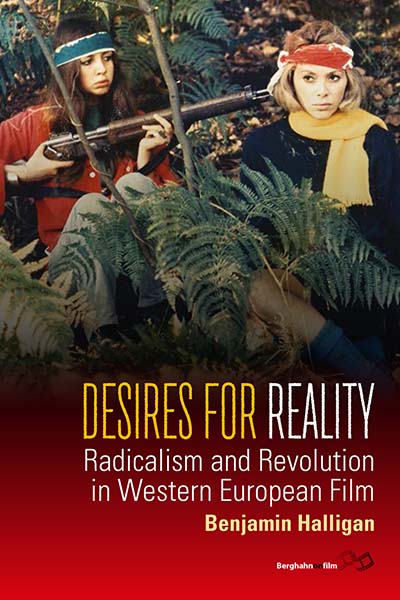
My new book concerns Western European film, as allied to protest – around the “Summer of Love” of 1967, and then the “events” of 1968. The book ends with a consideration of film-making as a forum for the regrouping of radical sensibilities, and laboratory for the development of new strategies of political film-making. This latter phase occurred in the immediate aftermath of the failure of the seemingly revolutionary upheavals of that time.


Continue reading “Youth in Revolt: Radicalism & Revolution in European Film”